


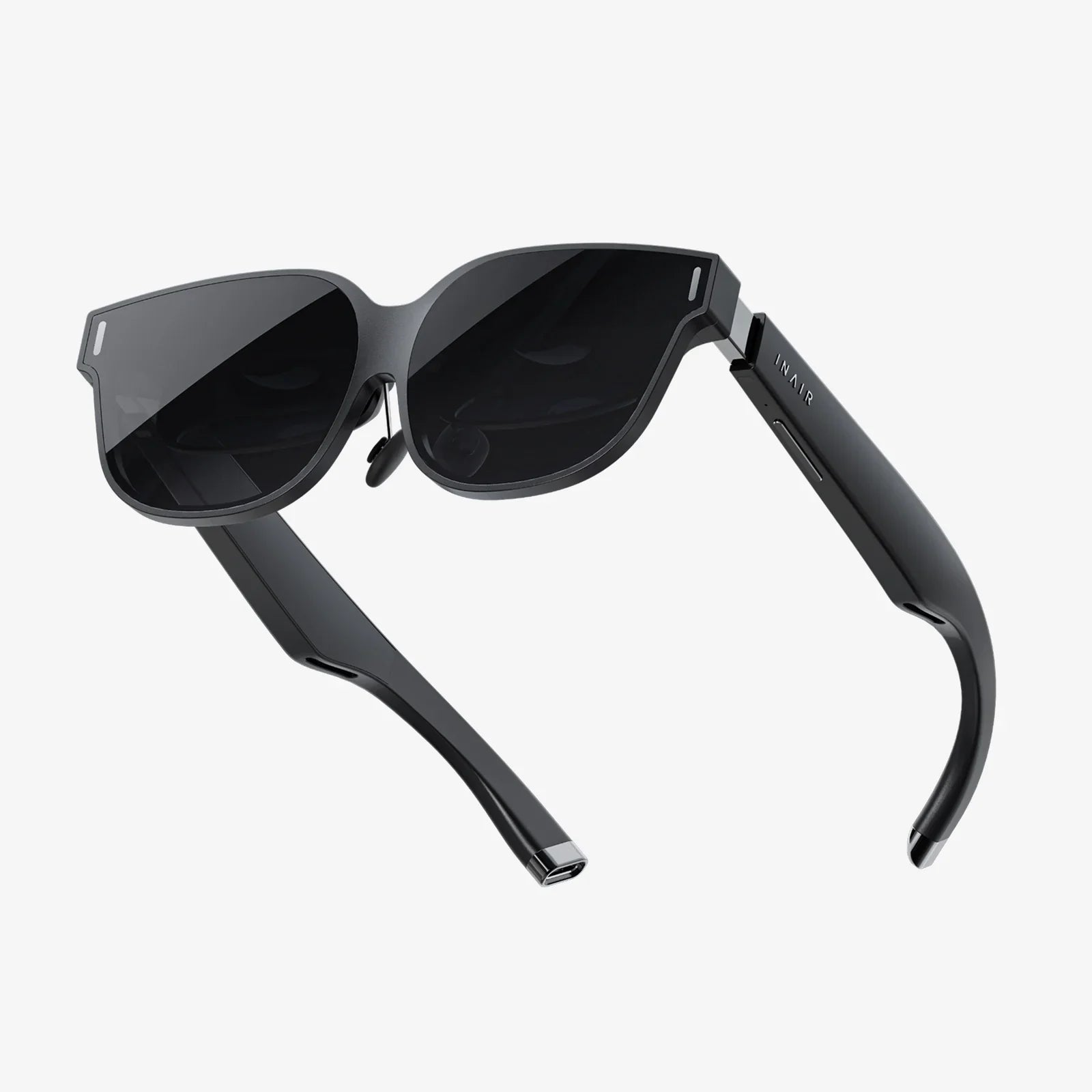
Imagine a world where your surroundings are not just static objects but a dynamic canvas of information, and the device that orchestrates this symphony of data isn't just following your commands but anticipating your needs. This is not a distant sci-fi fantasy; it's the emerging reality at the powerful intersection of two of the most disruptive technologies of our time: Artificial Intelligence and Augmented Reality. While often mentioned in the same breath as pillars of future tech, their battle is not one for supremacy, but a dance of complementary forces that, when combined, will fundamentally redefine our relationship with the digital and physical worlds.
Defining the Titans: Core Concepts Unpacked
Before we dive into their interplay, it's crucial to establish a clear understanding of what each technology represents at its core. They are fundamentally different in their nature and primary function.
Artificial Intelligence: The Invisible Engine
At its simplest, Artificial Intelligence (AI) is the theory and development of computer systems able to perform tasks that normally require human intelligence. This includes learning from data (machine learning), reasoning to solve problems, understanding natural language, recognizing patterns in images and sounds, and making decisions. AI is primarily software. It is the brain—the cognitive layer—that processes information, finds insights, and generates instructions. You don't "see" AI in the way you see a screen or a button; you experience its output. It's the recommendation algorithm on your streaming service, the voice assistant in your smart speaker, the fraud detection system in your bank, and the predictive text on your phone. Its realm is data, logic, and computation.
Augmented Reality: The Visible Interface
Augmented Reality (AR), on the other hand, is a technology that superimposes a computer-generated image, overlay, or information onto a user's view of the real world. Unlike Virtual Reality (VR), which creates a completely artificial environment, AR uses the existing environment and overlays new information on top of it. AR is both hardware and software. It requires cameras, sensors, and often a display mechanism (like smart glasses, a smartphone screen, or a head-up display) to blend the digital and the physical. You directly "see" and interact with AR. It's the furniture previewed in your living room through your phone, the navigation arrows projected onto the road through your car's windshield, or the repair instructions overlaid on a malfunctioning engine part. Its realm is perception, visualization, and spatial awareness.
The Great Dichotomy: A Comparative Analysis
The "vs" in "AI vs AR" signifies a contrast in their fundamental purposes, not a conflict. They operate in different domains and solve different classes of problems.
Purpose and Primary Function
AI's Purpose: To think, analyze, and decide. Its goal is cognitive augmentation. It processes vast amounts of data to find meaning, make predictions, and automate complex cognitive tasks. It answers the questions: "What does this data mean?" and "What should be done next?"
AR's Purpose: To show, overlay, and interact. Its goal is perceptual augmentation. It takes information (which could be generated by AI or elsewhere) and presents it in a spatial context that is immediately intuitive and actionable for the user. It answers the question: "How can I visually present this information in the real world?"
Interaction Paradigm
AI Interaction: Often happens in the background. The interaction can be via text (chatbots), voice (smart assistants), or simply through seamless automation (predictive maintenance systems that order a replacement part before a machine fails). The user might not even be aware of the AI's work.
AR Interaction: Inherently visual and spatial. Interaction is direct and contextual. A user might gesture in the air to manipulate a digital object, look at a real-world item to get information about it, or move through physical space to see digital content from different angles.
Underlying Technology Stack
AI's Stack: Relies on massive computational power for training complex neural networks, vast datasets, and sophisticated algorithms for machine learning, deep learning, and natural language processing. The focus is on data centers, GPUs, and APIs.
AR's Stack: Relies on advanced optics, camera systems, motion sensors (IMUs), depth sensors (like LiDAR), and simultaneous localization and mapping (SLAM) software to understand and map the environment in real-time. The focus is on miniaturization, battery life, and low-latency rendering.
Beyond the Dichotomy: The Powerful Synergy of AI and AR
While they can exist independently, the true magic happens when AI and AR converge. AI becomes the brain, and AR becomes the eyes and the visual cortex. This synergy creates systems that are not just smart, but also contextually aware and intuitively interactive.
AI as the Brain for AR's Eyes
On its own, an AR device can see the world, but it doesn't understand it. It can recognize a flat surface to place a digital object, but it doesn't know if that surface is a table, a floor, or a car hood. This is where AI, specifically computer vision, comes in.
- Object Recognition and Scene Understanding: AI algorithms can analyze the video feed from an AR device's camera to identify and classify objects, people, and environments in real-time. This allows the AR system to understand context. For instance, pointing your phone at a restaurant menu could not just translate it (a simple AR task) but use AI to highlight the most popular dishes, warn of allergens based on your health profile, or suggest a wine pairing.
- Persistent and Semantic Mapping: AI can help AR systems create a persistent, semantic map of a space. Instead of just remembering the geometry of a room (where the walls are), an AI-powered AR system would remember that "this is the kitchen," "that specific object is the coffee maker," and "this is the power outlet." This allows for digital content to remain anchored to meaningful objects across multiple sessions.
- Gesture and Gaze Recognition: AI enables more natural user interfaces. Instead of clunky controllers, AI can interpret hand gestures, body language, and even where a user is looking (gaze tracking) to allow for intuitive control of the AR experience.
AR as the Interface for AI's Intelligence
Conversely, AI can be incredibly powerful, but its insights are often trapped in dashboards, spreadsheets, or text reports. AR provides the perfect visual and spatial medium to bring those insights into the real world where they can be immediately acted upon.
- Visualizing Data and Insights: An AI that predicts mechanical failure can send an alert to a technician's tablet. But with AR, that same alert can be projected directly onto the faulty component, highlighting the exact bolt that needs tightening with step-by-step animated instructions overlaid onto the machinery itself. This transforms abstract data into actionable guidance.
- Enhancing Training and Remote Assistance: An expert in another country can see what a field technician sees through an AR headset. AI can then automatically highlight tools and parts in the technician's field of view, annotate the live video feed with instructions, and even translate speech or text in real-time, all within the context of the task.
- Personalized Experiences: AI that knows your preferences, schedule, and habits can use AR to personalize your world. Walking through a supermarket, AR glasses could highlight recipes for dinner based on the ingredients you already have at home (tracked by your smart fridge), guide you to the items on your list, and show you coupons for products you actually buy.
Separate Paths, Convergent Futures: Application Domains
The combined force of AI and AR is already creating waves across numerous industries, while each also continues to evolve on its own distinct path.
Healthcare Revolution
AI Alone: Analyzes medical images (X-rays, MRIs) with superhuman accuracy to detect early signs of diseases like cancer. It sifts through patient records to identify patterns and suggest personalized treatment plans.
AR Alone: Provides surgeons with patient vitals and 3D anatomical models visible in their periphery during an operation, without needing to look away at a screen.
AI + AR Synergy: A surgeon wearing AR glasses can see a AI-generated 3D reconstruction of a tumor (based on scan data) perfectly aligned with the patient's actual body on the operating table. AI can provide real-time guidance, warning the surgeon if they are getting too close to a critical artery, effectively creating a "GPS for surgery."
Industrial and Manufacturing Metamorphosis
AI Alone: Optimizes supply chains, predicts demand, and performs predictive maintenance on factory equipment by analyzing sensor data.
AR Alone: Provides warehouse workers with "pick-by-vision" instructions, showing them the most efficient route and highlighting the exact shelf and bin for an item.
AI + AR Synergy: A factory technician wearing smart glasses is alerted to a machine that AI has predicted will fail within 48 hours. The glasses then guide the technician to the machine, overlay the repair manual directly onto the components, and provide a real-time video feed to a remote expert who can annotate the technician's view. The AI also automatically logs the repair and orders the replacement part.
The Future of Retail and Commerce
AI Alone: Powers recommendation engines and dynamic pricing on e-commerce websites.
AR Alone: Allows customers to "try on" clothes, glasses, or see how furniture would look in their home before buying.
AI + AR Synergy: Enter a physical store, and your AR device, guided by an AI that knows your size, style, and past purchases, highlights items you're likely to love. You can point your phone at a garment to see its materials, available colors, and styling suggestions. The AI handles inventory, ensuring the size you want is in stock and can be brought to a fitting room instantly.
Challenges and Ethical Considerations on the Horizon
The fusion of an all-seeing eye (AR) with an all-knowing brain (AI) raises profound questions that society must address.
- Privacy and Surveillance: Always-on, AI-powered AR devices could continuously capture and analyze everything and everyone in their field of view. The potential for mass surveillance, facial recognition in public spaces, and the erosion of personal privacy is immense and requires robust legal and ethical frameworks.
- Data Security: These devices will collect unprecedented amounts of sensitive biometric, locational, and visual data. Securing this data from breaches is a monumental challenge.
- Reality Dilution and Addiction: If a personalized, algorithmically-curated world is constantly overlaid on reality, will we become disconnected from the shared, objective physical world? Could we develop a dependency on these digital augmentations?
- Safety and Reliability: If we rely on AR overlays for critical tasks like surgery or driving, what happens if the system lags, fails, or is hacked? The consequences of a malfunction could be dire.
The journey of AI and AR is not a race with a single winner. It is a story of two parallel evolutions, one focused on crafting an invisible digital mind and the other on creating a new visual language for that mind to communicate with us. One processes the world, the other projects onto it. The most profound transformations will occur not when we choose one over the other, but when we finally learn to weave them together seamlessly, creating a future where technology enhances our reality not by replacing it, but by making it more understandable, efficient, and magical. The next time you hear about AI and AR, don't think of a battle; imagine the conversation, and prepare for a world where your environment doesn't just respond to you—it understands you.
Share:
Hologram Computer Monitor: The Future of Immersive Computing is Here
Interaction HCI: The Invisible Bridge Between Humans and Machines