


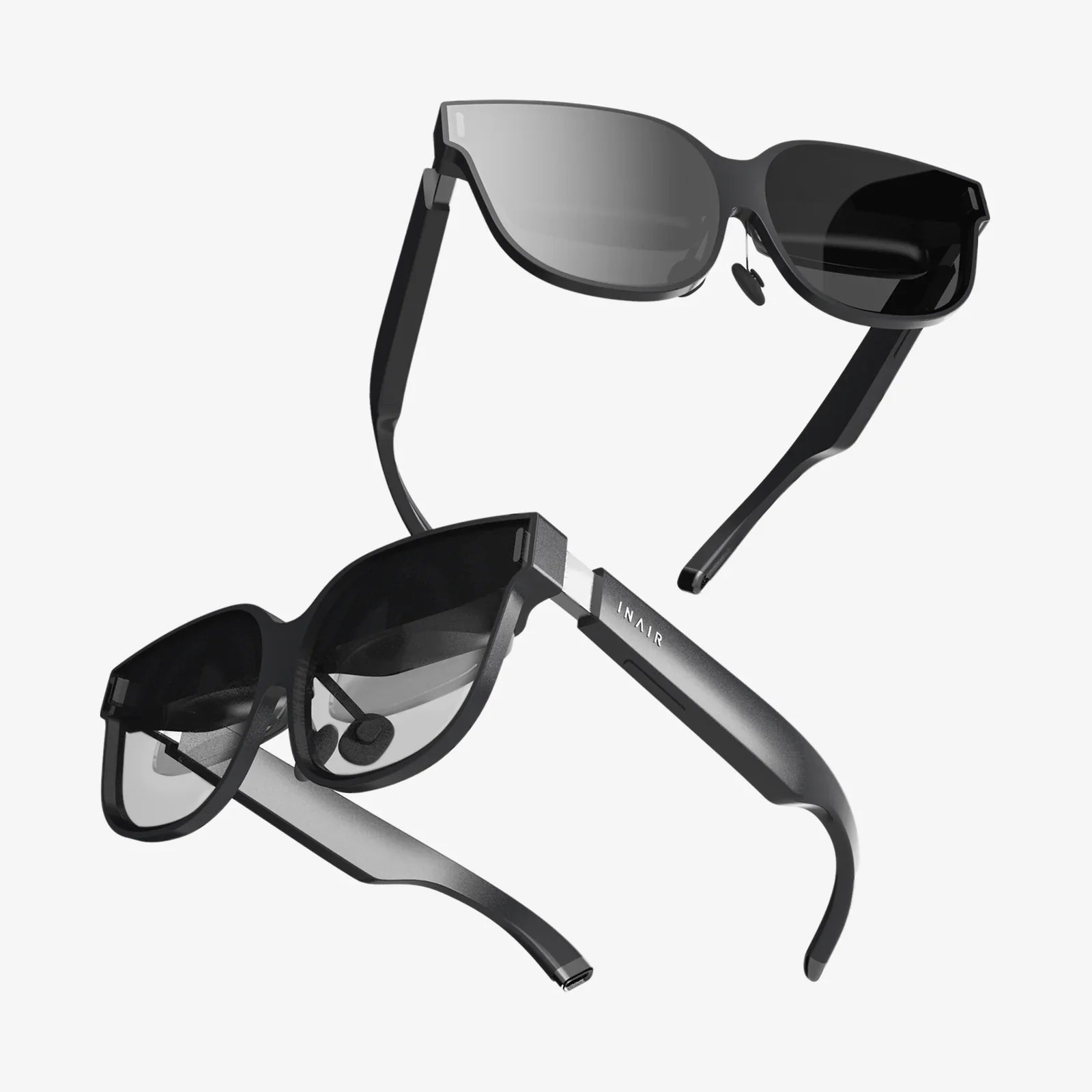
Imagine a world where your devices don't just obey your commands but anticipate your needs, understand your emotions, and respond to your presence with seamless, almost magical, intuition. This isn't a distant sci-fi fantasy; it's the rapidly approaching reality being forged in the crucible of modern interaction HCI. The way we communicate with our technology is undergoing its most profound transformation yet, moving beyond screens and keyboards into a realm of ambient, intelligent, and deeply personal interfaces. The journey to this future is a story of relentless innovation, human-centered design, and a fundamental rethinking of the very nature of interaction itself.
The Core Principles: Building for the Human
At its heart, interaction HCI is not about the computer; it's about the human. It is a multidisciplinary field sitting at the intersection of computer science, behavioral psychology, design, linguistics, and social science. Its primary goal is to make interactions usable, useful, and, ultimately, invisible. This ambition is guided by several core principles.
Usability is the foundational pillar. A usable system is one that is effective (does what it's supposed to do), efficient (does it with minimal effort and time), and easy to learn. This principle demands that systems be designed with clear feedback, intuitive navigation, and error prevention and recovery mechanisms. When a user instinctively knows how to navigate an interface without reading a manual, usability has been achieved.
Affordance is a concept borrowed from perceptual psychology. It refers to the properties of an object that suggest how it can be used. A button affords pushing, a scroll bar affords sliding. In digital interfaces, designers use visual cues—shadows, bevels, colors—to suggest these affordances, guiding the user's actions. A well-designed digital button looks pressable, signaling its function without explicit instruction.
Feedback is the system's way of communicating with the user. Every action must have a perceptible reaction. This can be as simple as a button changing color when clicked, a sound confirming a sent message, or a haptic vibration acknowledging a touchscreen tap. Feedback closes the loop of interaction, confirming that the user's command has been received and is being processed, preventing uncertainty and frustration.
Consistency and standards are crucial for reducing the cognitive load on users. When similar actions are performed in similar ways across different parts of an application or different applications altogether, users can transfer their knowledge and skills, making new systems easier to master. This is why most software uses a floppy disk icon for 'save' and a magnifying glass for 'search'—these are established conventions that users understand.
Finally, accessibility ensures that interactive systems are designed for people with the widest possible range of abilities. This includes providing alternative input methods for those who cannot use a mouse, screen readers and sufficient color contrast for the visually impaired, and captioning for the hearing impaired. True interaction HCI is inclusive by design, recognizing that a diverse user base requires diverse interaction methods.
A Journey Through Time: The Evolution of Interaction Paradigms
The history of interaction HCI is a story of abstraction, moving users further away from the machine's binary core and closer to a more natural, human-centric form of communication. Each new paradigm has expanded who can use computers and what they can be used for.
The Age of Batch Processing and Command Lines
In the earliest days, interaction was a privilege reserved for a technical elite. Users interacted with room-sized mainframes through punch cards and, later, command-line interfaces (CLI). This was a text-based dialogue where users had to memorize a complex lexicon of commands and syntax. The interaction was powerful for experts but completely impenetrable for the average person. The user had to think like the machine.
The Graphical User Interface (GUI) Revolution
The 1980s brought about a seismic shift with the mass adoption of the Graphical User Interface. Pioneered by research labs, the GUI introduced the metaphorical desktop, complete with windows, icons, menus, and a pointer (the WIMP model). This was a move from a syntax-driven to a direct manipulation paradigm. Users could now point at what they wanted and manipulate digital objects visually. This abstraction lowered the barrier to entry exponentially, personalizing computing and bringing it into homes and offices worldwide. The focus shifted from commands to visual exploration.
The Rise of the Web and Ubiquitous Computing
The 1990s and 2000s saw the internet weave computers into the fabric of daily life. Web browsers became the new universal GUI, and interaction HCI had to contend with hyperlinks, page navigation, and, eventually, e-commerce and social media. Concurrently, Mark Weiser's vision of ubiquitous computing (or "calm technology") began to materialize. Computers were shrinking and disappearing into the environment—into phones, appliances, and cars. Interaction was no longer confined to a single screen; it was becoming pervasive and context-aware.
The Multi-Touch Era and Natural User Interfaces
The launch of the smartphone marked the next great leap. Multi-touch screens enabled gestural interaction—pinching, swiping, tapping—making the interaction more tactile and immediate. This was a step towards Natural User Interfaces (NUIs), which aim to leverage skills we have acquired from a lifetime of interacting with the physical world. Voice assistants like Siri and Alexa further pushed this boundary, introducing conversational interfaces where interaction was through spoken natural language, a far cry from the typed commands of the CLI era.
The Cutting Edge: Where Interaction HCI is Headed
Today, the field is exploding with new modalities and intelligent capabilities, pushing the boundaries of what is possible.
Voice and Conversational Interfaces: Voice User Interfaces (VUIs) are moving beyond simple command-and-response to sustained, contextual conversations. The challenge lies in designing for the invisibility of the interface—without a screen, providing clear feedback and navigational cues through sound and speech alone is a complex HCI problem.
Gesture and Motion Control: Cameras and sensors can now track human movement with high precision, allowing users to control systems with waves, pinches, or full-body gestures. This is crucial for applications in virtual reality (VR) and augmented reality (AR), where traditional input devices are impractical.
Haptics and Tactile Feedback: This technology simulates the sense of touch. Advanced vibration motors can create the illusion of pressing a physical button on a flat screen, and more complex systems can simulate the texture of a fabric or the resistance of a object in a VR environment, adding a rich new layer to digital interaction.
Brain-Computer Interfaces (BCIs): The most futuristic frontier, BCIs aim to create a direct communication pathway between the brain and an external device. While still largely in the research phase, early applications show promise for assisting individuals with paralysis, allowing them to control cursors or robotic limbs through thought alone. This represents the ultimate goal of making the interface disappear completely.
Underpinning many of these advances is Artificial Intelligence and Machine Learning. AI enables systems to learn from user behavior, predict intent, and personalize interactions. It powers the speech recognition in VUIs, the hand-tracking in VR, and the recommendation algorithms that shape our digital experiences. This moves interaction from being reactive to being proactive and adaptive.
The Human Factor: Psychology, Ethics, and Responsibility
As interaction becomes more powerful and pervasive, the ethical responsibilities of HCI practitioners grow exponentially. The field must grapple with profound questions.
Dark Patterns: These are interfaces carefully crafted to trick users into doing things they might not otherwise do, such as signing up for recurring payments or sharing more data than they intend. This is a gross violation of HCI's human-centered ethos, prioritizing corporate gain over user wellbeing.
Addictive Design: The endless scroll of social media, notification systems, and variable rewards are all designed to maximize user engagement and screen time. Interaction HCI must find a balance between creating engaging experiences and protecting users' mental health and attention spans.
Privacy and Data Security: As systems become more anticipatory, they require more personal data. Designing interfaces that are transparent about data collection, give users meaningful control over their information, and securely handle that data is a critical modern HCI challenge.
Algorithmic Bias: AI-powered systems are only as unbiased as the data they are trained on. If that data reflects societal prejudices, the interactions and recommendations generated by the system can perpetuate and even amplify discrimination. Ensuring fairness and equity in intelligent systems is a paramount concern.
This places a tremendous responsibility on the shoulders of designers, researchers, and engineers. They are no longer just building tools; they are shaping human behavior, social structures, and access to information. A deep understanding of ethics, psychology, and sociology is now a non-negotiable part of the interaction HCI toolkit.
Designing the Future: A Human-Centered Imperative
The process of creating these interactions is rigorous and iterative. It begins not with code, but with empathy. The human-centered design process involves extensive user research to understand needs, pain points, and contexts of use. Low-fidelity prototypes—sketches and wireframes—are created and tested with real users early and often. This iterative cycle of testing and refinement continues through high-fidelity designs and functional prototypes, ensuring the final product is truly built for human use, not just technical possibility.
The future of interaction HCI lies in its continued disappearance. The goal is ambient intelligence—where technology recedes into the background of our lives, silently and seamlessly supporting our goals without demanding our constant focus. It's a future of interfaces that understand not just our commands, but our context, our state of mind, and our intentions.
This journey from punch cards to anticipatory intelligence is a testament to the power of focusing on the human element. The most profound technology is not the one that boasts the most features, but the one that integrates so smoothly into our lives that it feels like a natural extension of our own human capabilities. The true measure of success in interaction HCI is an experience so intuitive, so effortless, and so empowering that the complex technology enabling it vanishes from our consciousness altogether, leaving only the pure fulfillment of our intent.
The next time your phone suggests your destination as you get in the car, or your smart lights adjust to the time of day without a second thought, recognize the invisible hand of interaction HCI at work. This silent symphony of design, psychology, and engineering is quietly building a world where technology doesn't stand as a barrier to be commanded, but evolves into a responsive partner, an intelligent environment that understands us better than we understand it, waiting for nothing more than a glance, a word, or a thought to spring into action and transform our daily reality.
Share:
AI vs AR: The Invisible Intelligence and the Visible World
Bluetooth Eye Glasses: The Invisible Revolution in Your Daily Life