


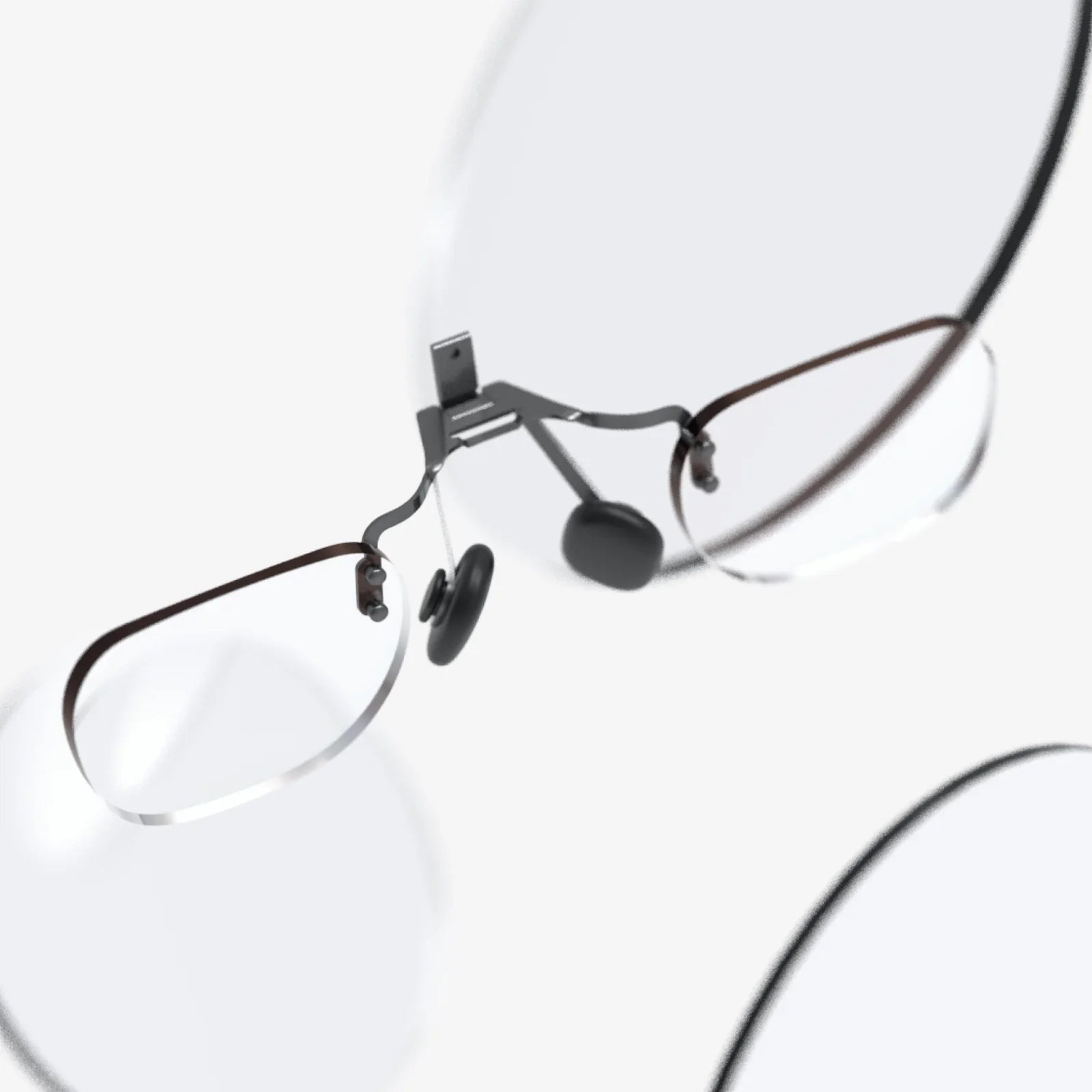
Imagine a world where your most personal device isn't something you hold in your hand or stash in your pocket, but something you wear on your face—seamlessly integrating with your vision and your world. This isn't a scene from a sci-fi movie; it's the reality offered by bluetooth eye glasses, a technological leap that is quietly dissolving the boundaries between the digital and physical realms. For the uninitiated, the concept might seem novel, even strange. But for a growing number of users, these sophisticated frames have become an indispensable part of their daily existence, offering a glimpse into a future where technology is worn, not carried, and is always there, yet never obtrusive.
The Anatomy of Invisible Tech
At first glance, a pair of bluetooth eye glasses looks remarkably like any other stylish pair of spectacles. The magic lies in the meticulous engineering hidden within the frame. The core components are miniaturized to the point of near invisibility, a testament to advancements in micro-electronics.
The most critical element is a tiny, powerful microchip that acts as the brain of the device. This chip manages the wireless connection, audio processing, and power distribution. Flanking the wearer's head, discreetly integrated into the temples, are the speakers. These are not bulky headphones but advanced bone conduction or miniature directional speakers. Bone conduction technology transmits sound waves through the bones of the skull directly to the inner ear, bypassing the eardrum entirely. This allows the wearer to hear audio from their device while still being fully aware of ambient noises—a critical feature for safety and situational awareness. Alternatively, ultra-directional speakers fire sound waves directly into the ear canal, minimizing sound leakage and allowing for a private listening experience even in quiet rooms.
Of course, none of this works without power. A slim, high-density battery is seamlessly embedded within the frame, often in a thickened portion of the temple. Despite its small size, modern power management ensures these devices can last a full day on a single charge, handling hours of calls and audio streaming. Charging is typically achieved via a discreet magnetic or pogo-pin connector. Finally, an array of microphones, often using beamforming technology, is strategically placed to isolate the user's voice from background wind and crowd noise, ensuring crystal-clear call quality whether you're walking down a busy street or sitting in a home office.
Beyond the Phone Call: A Multitude of Uses
While the hands-free phone call is the most obvious application, it merely scratches the surface of what bluetooth eye glasses can do. Their true value is unlocked in the myriad ways they integrate into the rhythm of daily life.
- The Ultimate Productivity Tool: For professionals, they are a game-changer. Imagine participating in a conference call while referencing documents on your computer, hands-free. You can dictate emails, set reminders, and control your smart home devices with simple voice commands, all without ever reaching for your phone. This creates a state of fluid productivity, minimizing distractions and context-switching.
- An Immersive Audio Companion: For the audiophile and podcast enthusiast, they offer a new way to consume media. You can listen to music, audiobooks, or your favorite podcast while cooking, commuting, or working out, all while remaining completely aware of your surroundings. This is a significant safety advantage over noise-canceling headphones, especially for cyclists or runners.
- Accessibility and Inclusion: This is perhaps one of the most powerful applications. For individuals with certain types of hearing impairment, audio glasses can stream audio directly from a television or a public assistance system, acting as a personalized, discreet hearing aid alternative. They break down barriers, allowing for greater engagement with media and conversation.
- Language Translation on the Fly: When paired with a smartphone's translation app, some models can near-instantaneously translate spoken language directly into the wearer's ear. While still evolving, this technology points to a future where language barriers are significantly reduced.
The Seamless Integration with the Digital Ecosystem
Bluetooth eye glasses don't exist in a vacuum; their power is magnified by their connection to the broader ecosystem of devices. The ubiquitous Bluetooth protocol is the linchpin, creating a stable, low-energy connection to your smartphone. This allows for seamless call handling, music control, and access to voice assistants.
Voice assistants are the true orchestrators of this experience. A simple voice command—often activated by a subtle touch on the temple—can summon a digital helper to read your messages, give you the weather forecast, navigate you to your next appointment, or add items to your shopping list. This creates a layer of ambient computing, where information is available on demand without the need to look at a screen. Furthermore, their compatibility extends to other devices like laptops and tablets, allowing users to switch audio sources effortlessly, making them the central audio hub for all your tech.
Navigating the Considerations: Style, Fit, and Privacy
Adopting any new technology comes with considerations, and bluetooth eye glasses are no different. Unlike a disposable gadget, these are a wearable item, making style a primary concern. Fortunately, the market has responded with a wide array of designs, from classic and professional to modern and sporty, ensuring there's a frame to suit nearly every face and personal aesthetic. The goal is to look like you're wearing glasses, not a computer.
Fit is equally crucial. Because they house electronics, the temples might be slightly thicker than traditional frames. A proper fitting by an optician is recommended to ensure comfort throughout the day, especially for those who already wear prescription lenses. The prescription lens compatibility is a key feature, allowing users to have their exact vision correction integrated, making them a true all-in-one solution.
Privacy is another topic that naturally arises. The always-on potential of a microphone on your face raises questions for some. Reputable manufacturers address this with clear hardware and software solutions. Physical mute buttons, LED indicators that show when the microphone is active, and robust data encryption protocols are standard features designed to give the user complete control and peace of mind.
The Future is Clear: What's Next for Audio Glasses?
The current iteration of bluetooth eye glasses is impressive, but it is likely just the beginning. The trajectory of technology points toward even greater integration and capability. We can anticipate improvements in battery technology, perhaps incorporating solar charging or kinetic energy harvesting to extend battery life indefinitely.
Audio fidelity will continue to improve, with spatial audio and even more advanced noise cancellation for the listener's ear alone. The most exciting frontier is the potential integration of augmented reality (AR) displays. Imagine tiny, virtually invisible waveguides project navigation arrows onto the road ahead, display subtitles for a real-world conversation, or overlay informational graphics about a landmark you're viewing. This would merge the auditory benefits of today's glasses with a visual digital layer, truly fulfilling the promise of a comprehensive wearable computer.
This evolution will further blur the lines between a specialized device and a universal accessory. As the technology becomes smaller, more powerful, and more affordable, bluetooth eye glasses have the potential to become as commonplace as wireless earbuds are today, but with the added benefit of correcting your vision and sitting on your face all day, every day.
So, the next time you see someone seemingly talking to themselves on the street, take a closer look. They might not be having a solitary conversation; they might be effortlessly connected to another person, a world of information, or a symphony—all through a piece of technology so discreet it's hiding in plain sight. The revolution isn't coming; it's already here, perched on the bridge of our noses, waiting for us to hit connect.
Share:
Interaction HCI: The Invisible Bridge Between Humans and Machines
Virtual Game Headset: The Ultimate Portal to Immersive Digital Realms