


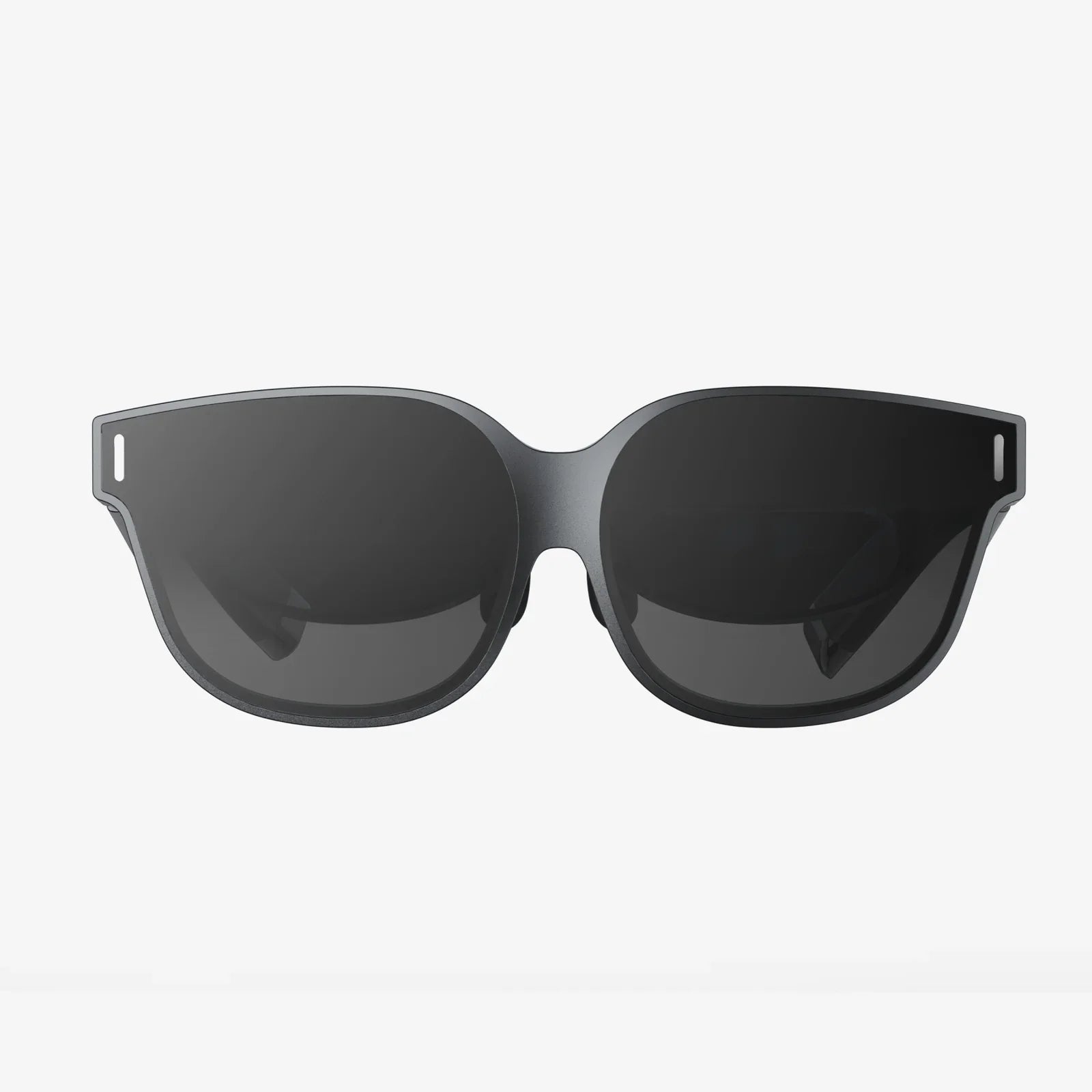
Imagine a world where your watch doesn't just count your steps but anticipates a migraine hours before the pain begins, where your glasses don't just correct your vision but translate a street sign in real-time and overlay historical facts about the building behind it, and where your ring doesn't just beep for notifications but senses your stress levels and subtly guides you through a breathing exercise. This is not a distant sci-fi fantasy; it is the tangible, rapidly approaching reality of AI wearables in 2025. We are on the precipice of a revolution that will move technology from our pockets and onto our bodies, weaving artificial intelligence so seamlessly into the fabric of our daily existence that it becomes an invisible, indispensable extension of our own minds and capabilities.
The Evolution: From Passive Tracking to Proactive Intelligence
The journey to 2025 is built upon the foundation of today's wearable technology, but the leap in capability is monumental. Current devices are largely passive data loggers. They record what we do—how we sleep, our heart rate, the number of steps taken—and present this data for us to interpret. The AI component is often limited to basic pattern recognition or simple suggestions. The year 2025 marks the definitive shift from reactive data logging to proactive contextual intelligence.
This transformation is powered by a confluence of technological advancements. First, the miniaturization of sensors will accelerate, allowing for more sophisticated biometric monitoring—continuous non-invasive blood glucose monitoring, advanced electrodermal activity for stress, core body temperature, and even early biomarkers for illness—all from a device on your wrist or ear. Second, the development of specialized low-power AI chips, known as neuromorphic processors, will enable complex machine learning models to run directly on the device itself, a concept known as on-device AI or edge computing. This eliminates the latency and privacy concerns of cloud processing, allowing for real-time analysis and response. Your wearable will process your data the moment it's collected, making instant, intelligent decisions without ever needing to ping a remote server.
Finally, the evolution of AI algorithms from simple classifiers to large foundational models, similar to the technology behind advanced language models, will enable a deeper, more holistic understanding of the user. These models won't just see a elevated heart rate; they will synthesize that data with context: time of day, location, calendar appointments, recent activity, and even audio cues from the environment to determine if the spike is due to stress, excitement, or physical exertion. This move from siloed data points to a unified, contextual model of the user is the true heart of the 2025 AI wearable revolution.
The Form Factor Revolution: Beyond the Wrist
When we think of wearables today, the smartwatch dominates. By 2025, the landscape will be vastly more diverse and integrated. The wrist will remain a key location, but it will be joined by a plethora of other form factors, each designed for a specific purpose and level of discreteness.
- Smart Rings: Already gaining traction, rings will become powerful health and authentication devices. Their constant contact with the skin and low profile make them ideal for continuous, medical-grade biometric monitoring and for serving as a secure key for your home, car, and computer.
- Advanced Hearables: Earbuds will evolve beyond music and calls into intelligent auditory assistants. They will use advanced beamforming microphones to amplify the person speaking in front of you in a noisy room while dampening background chatter. They will provide real-time language translation in a natural conversation flow and use biosensors in the ear canal to monitor core body temperature and heart rate variability.
- Smart Glasses (The Invisible Frontier): While full-fledged augmented reality glasses for all-day wear may still be emerging, 2025 will see the rise of more subtle smart glasses. These will look like standard prescription glasses but will feature a small, discreet heads-up display projected onto the lens, offering notifications, navigation, and contextual information without the social awkwardness of bulkier designs. AI will be crucial here, curating only the most essential information to display to avoid overwhelming the user.
- Smart Fabrics and Patches: Clothing woven with conductive fibers will monitor muscle activity, posture, and a wider array of biometrics than a single-point device. Disposable, stick-on electronic patches will provide clinical-level monitoring for post-operative care or chronic disease management, transmitting data seamlessly to a primary wearable or a healthcare provider.
The defining characteristic of these 2025 form factors will be their focus on ambient computing. They will retreat into the background, becoming unnoticeable until their intelligence is required, making the technology feel less like a tool and more like a innate ability.
The Health and Wellness Paradigm Shift: From Treatment to Prediction
Perhaps the most profound impact of AI wearables in 2025 will be felt in the domain of health and wellness. The healthcare model will shift dramatically from a reactive, symptom-based system to a proactive, predictive, and personalized one.
These devices will act as a continuous, AI-powered health guardian. By establishing a deeply personalized baseline of your health metrics, the AI can detect subtle deviations that signal a problem long before any symptoms are perceptible to you. It could notify you of a potential atrial fibrillation episode, suggest you might be coming down with a virus based on a slight elevation in resting heart rate and body temperature, or warn an asthmatic of poor air quality conditions before they step outside.
For mental health, AI wearables will use a combination of heart rate variability, sleep quality, voice stress analysis, and physical activity to build a picture of your mental wellbeing. They won't just tell you you're stressed; they will recognize patterns and triggers, and then proactively offer evidence-based interventions, such as guiding you through a one-minute mindfulness exercise or suggesting a walk in nature based on your schedule and preferences.
This data, owned and controlled by the user with appropriate privacy safeguards, will revolutionize the patient-doctor relationship. Instead of trying to describe how you've been feeling over the last month, you can share a detailed, objective report of your physiology, giving medical professionals unprecedented insight and enabling truly data-driven diagnoses and treatment plans.
The Seamless Interface: Redefining Human-Computer Interaction
AI wearables in 2025 will fundamentally change how we interact with the digital world. The touchscreen will no longer be the default interface. Instead, interaction will become more natural, intuitive, and invisible.
- Voice and Conversational AI: Voice assistants will become truly conversational, context-aware, and anticipatory. Instead of saying "Hey Assistant, set a timer for 10 minutes," you might simply say, while cooking, "I need to remember to check the roast in ten minutes," and the AI, understanding the context, will set the reminder without a specific wake word or command structure.
- Gesture and Movement: Smart rings and glasses will interpret subtle hand gestures for controlling interfaces, scrolling through text, or dismissing notifications without ever touching a device.
- Implicit Authentication: Your combination of wearables will create a unique biometric signature that continuously authenticates you. Walking up to your laptop will unlock it, approaching your car will open the door, and entering a secure building will grant access, all without passwords, keys, or badges. The concept of authentication will shift from a conscious action to a passive, ongoing state of being verified.
This creates a user experience where the technology recedes, and the user's intent takes center stage. The friction of managing technology is replaced by a seamless flow of information and action.
The Ethical Imperative: Navigating Privacy, Bias, and Autonomy
This powerful future does not arrive without significant challenges and ethical dilemmas. The very intimacy of these devices—their access to our most personal physiological and behavioral data—creates unprecedented privacy and security risks.
The industry in 2025 must operate on a foundation of privacy-by-design. This means most data processing must happen on the device itself, with raw biometric data never leaving the user's control. Any data sharing, particularly with third parties like insurers or employers, must be governed by strict, transparent, and user-centric consent models. The specter of biometric surveillance and data exploitation is the single biggest threat to widespread adoption.
Furthermore, the AI models themselves must be rigorously audited for bias. If an AI is trained on data from a narrow demographic, its health predictions or recommendations may be inaccurate or even harmful for underrepresented groups. Ensuring fairness and equity in these systems is not just a technical challenge but a moral obligation.
Finally, there is the risk of over-reliance and the erosion of human intuition. If we always look to our AI for guidance on health, social, and personal decisions, do we risk dulling our own innate senses and judgment? The goal must be to create AI that augments human intelligence and autonomy, rather than replacing it. These devices should serve us, not the other way around.
The path to 2025 is being paved today in research labs and design studios. The AI wearables that emerge will be more than just gadgets; they will be the lens through which we perceive the world and the bridge that connects our biological selves to the vast potential of digital intelligence. They promise a future of unparalleled health, convenience, and understanding. The question is no longer if this future will arrive, but how carefully and wisely we will choose to build it. The era of the intelligent, invisible digital self is dawning, and it will redefine what it means to be human in a technologically saturated world.
Share:
Wearable PC Monitor: The Ultimate Guide to Portable, On-the-Go Computing Freedom
AR Benefits: How Augmented Reality is Revolutionizing Industries and Enhancing Human Experience