


- by wangfred
Wearable PC Monitor: The Ultimate Guide to Portable, On-the-Go Computing Freedom
- by wangfred
Imagine a world where your digital workspace is no longer chained to a desk, where your secondary screen folds neatly into your pocket, and where expansive, multi-tasking productivity follows you from the coffee shop to the conference room. This isn't a glimpse into a distant sci-fi future; it's the reality offered by the rapid evolution of the wearable PC monitor. This revolutionary category of personal computing accessories is shattering the traditional paradigms of how and where we interact with our machines, promising an unprecedented level of freedom and flexibility for professionals, creators, and gamers alike. The era of being tethered to a single, static monitor is coming to an end, and the age of personalized, portable visual computing is dawning.
At its core, a wearable PC monitor is a compact, lightweight display designed to be worn or carried with ease, connecting to a computer, smartphone, or gaming console to provide a portable secondary screen. Unlike traditional monitors with their bulky stands and power bricks, these devices prioritize portability above all else, often weighing less than two pounds and measuring mere millimeters in thickness. They achieve this sleek form factor through advanced display technology, typically utilizing high-quality IPS or OLED panels that offer vibrant colors and wide viewing angles despite their minimal footprint.
The magic of these devices lies in their connectivity. Most modern units leverage a single USB-C cable that handles both video signal and power delivery, creating a beautifully simple plug-and-play experience. This eliminates the need for a separate power source, making setup instantaneous whether you're at a library, on a train, or in a hotel room. For devices lacking a USB-C port with video output, compact HDMI adapters are often employed to bridge the gap. This streamlined approach is a cornerstone of their design philosophy: maximum utility with minimal fuss.
The most immediate and powerful application for a wearable monitor is in the realm of productivity. For the modern professional, the ability to create a dual-screen workstation anywhere is nothing short of transformative. Picture a financial analyst extending their spreadsheet across a primary laptop screen and a portable secondary display, analyzing real-time data on a cross-country flight. Envision a software developer coding on their main screen while documentation or a live debug console runs seamlessly on the wearable display at a café.
The benefits are profound. Studies on workplace efficiency consistently show that multiple monitors can increase productivity by significant margins, sometimes by as much as 30-50%. This boost comes from reduced context switching—the mental load and time lost when constantly minimizing and maximizing windows. With a second screen always available, users can keep their email, communication apps, research materials, or reference guides permanently in view, streamlining workflows and dramatically cutting down on frustrating alt-tab cycles. This portable command center empowers remote workers, digital nomads, and students to replicate a high-performance office environment from any location on Earth with a flat surface and a Wi-Fi connection.
While productivity is a key driver, the utility of these displays extends far beyond spreadsheets and word processors. For visual artists, photographers, and videographers, a high-color-accuracy portable monitor becomes a indispensable tool for on-location work. It allows for a larger, more accurate preview of edits than a laptop screen can typically provide, enabling clients to view proofs in real-time during a shoot or giving a digital painter a more expansive canvas while away from the studio.
The gaming community has also embraced this technology with fervor. For console gamers, a wearable display offers a private, high-quality screen for immersive gameplay in any room, free from the need to commandeer the household television. PC gamers, particularly those involved in complex simulation or strategy games, use these monitors as dedicated dashboards for displaying maps, stats, streams, or Discord chats, keeping the primary screen focused on the action. The low latency and high refresh rates offered by many models ensure that the gaming experience remains smooth and responsive, critical for competitive play.
Navigating the market for a wearable monitor requires careful consideration of several factors to find the perfect match for your needs. The first and most crucial specification is the display quality itself. Resolution is paramount; a 1080p Full HD display is often sufficient for most tasks, but 2K or 4K options provide stunning clarity for detailed work and media consumption. Panel type is another critical choice: IPS panels offer excellent color reproduction and wide viewing angles, while OLED technology provides perfect blacks, incredible contrast, and faster response times, albeit often at a higher cost.
Size and form factor are equally important. Screens typically range from 13 to 17 inches, striking a balance between usability and portability. A built-in smart cover or stand is a highly desirable feature, transforming the monitor into its own kickstand for stability. Some innovative models even incorporate a touchscreen, adding a layer of interactivity that can be particularly useful for designers or anyone looking to navigate without a mouse. Durability is also a key concern for a device designed for travel; a robust frame and protective carrying case are essential investments to ensure your mobile workstation survives the rigors of life on the go.
As impressive as current technology is, the future trajectory of wearable displays points toward even greater integration and convenience. The next evolutionary leap is the complete removal of the physical tether. Wireless connectivity standards are rapidly advancing to the point where low-latency, high-bandwidth video transmission is becoming a reality. Imagine simply placing your monitor on a stand, with no cables in sight, and having it instantly mirror or extend your desktop through a secure wireless connection. This will further simplify setup and increase flexibility.
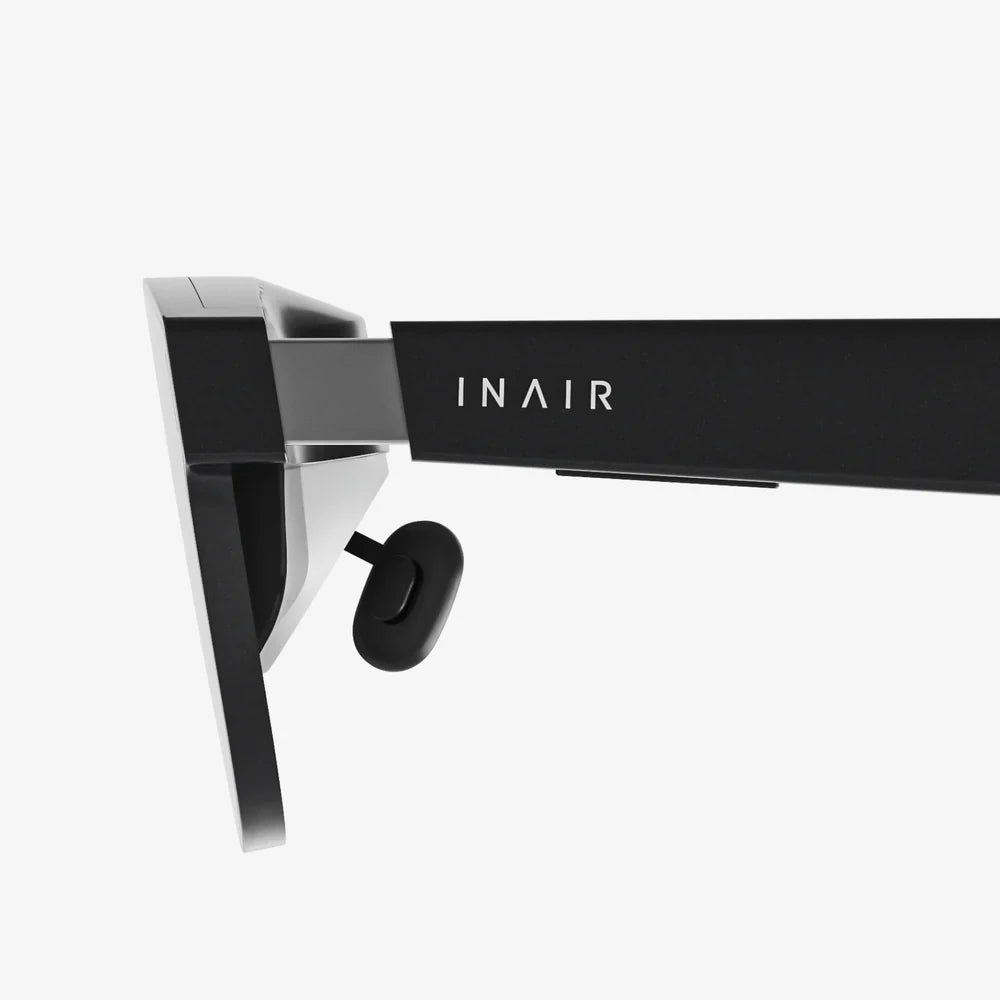
Furthermore, we are on the cusp of seeing these displays evolve from being merely wearable to being truly wearable. While current models are portable screens, the term "wearable" hints at a future where displays are integrated into eyewear or other form factors, projecting a large virtual screen into the user's field of view through augmented reality (AR) technology. This would represent the ultimate convergence of mobility and utility, offering a massive, private display that exists only for the wearer, anywhere they go. This technology, already in its nascent stages, promises to fundamentally redefine our relationship with digital information.
The humble computer monitor, once a monolithic fixture of the desk, has been set free. The wearable PC monitor is more than just a gadget; it is a key that unlocks a new paradigm of flexible, personalized, and boundless computing. It empowers individuals to craft their ideal digital environment irrespective of their physical location, blurring the lines between the office, the home, and the great beyond. It represents a fundamental shift towards a more human-centric computing experience, where technology adapts to our lives, our movements, and our workflows, rather than dictating them. For anyone who has ever felt constrained by the four corners of their laptop screen or the static nature of their desk, the liberation you've been waiting for is now available, folded neatly into a slim, powerful, and profoundly transformative package.