


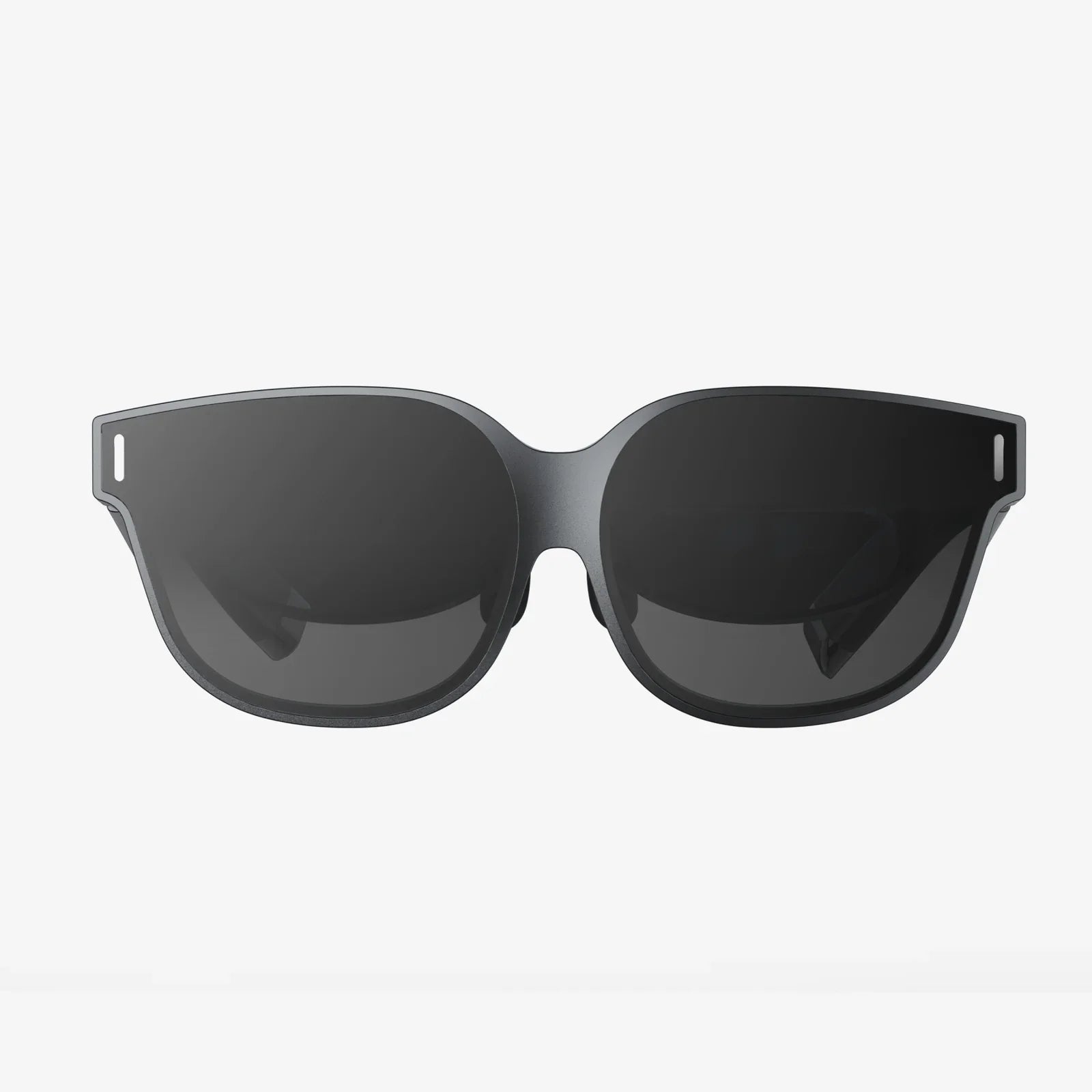
Imagine pointing your device at a city street and seeing its history unfold before your eyes, watching a complex engine assembly animate from a static manual, or trying on a new piece of furniture that perfectly fits your living room space before it’s even built. This is no longer the stuff of science fiction; it is the burgeoning reality powered by a sophisticated and often overlooked technological core: the Augmented Reality Model, or AR Model. This digital framework is the silent architect building a bridge between our tangible world and the vast potential of digital information, and its evolution is set to redefine everything from how we work and learn to how we connect and create.
Deconstructing the Illusion: What Exactly is an AR Model?
At its simplest, Augmented Reality (AR) is the real-time integration of digital information with a user's environment. But the magic that makes this possible is far from simple. An AR Model is the comprehensive digital representation and set of rules that allows a system to understand, interact with, and augment the physical world. It is not merely a 3D object to be placed in a scene; it is the entire brain and nervous system of the AR experience.
Think of it this way: if AR is a play, the AR Model is the script, the stage directions, the set design, and the actor's motivations all rolled into one. It dictates what digital content is shown, how it behaves, and, most critically, how it contextually relates to the physical space and objects around it. This involves a complex interplay of several technological pillars.
The Core Components of a Robust AR Model
A functional and immersive AR experience relies on a model built upon several foundational layers:
- Environmental Understanding and Mapping: This is the first and most crucial step. The AR system, often through a device's camera and sensors, must perceive the world. It does this by identifying feature points—distinct patterns, edges, and textures—in the physical environment. Using Simultaneous Localization and Mapping (SLAM) algorithms, the system constructs a real-time geometric map of the space. This map allows the device to understand its own position and orientation within that space, creating a shared coordinate system between the real and the digital.
- Tracking and Registration: Once the environment is mapped, the digital content must be anchored to it with precision. This process is called registration. The AR Model contains the data that ensures a virtual dinosaur appears to be standing firmly on your lawn, not floating above it or sinking into the ground. This involves continuous, low-latency tracking of the device's movement (6 degrees of freedom: x, y, z axis movement and rotation) to adjust the digital overlay perfectly with the user's perspective.
- Occlusion: For true immersion, digital objects must behave like real ones. This means they must be hidden by physical objects that are closer to the viewer. A advanced AR Model includes depth perception, allowing a virtual character to walk behind your real sofa, disappearing and reappearing correctly. This subtle cue is incredibly powerful in selling the illusion of coexistence.
- Rendering and Interaction: The model also defines the visual and interactive properties of the digital content. This includes high-fidelity 3D graphics, textures, animations, and, importantly, physics. Does the virtual ball bounce when it hits the real floor? Does the digital interface respond to a user's touch or gaze? The AR Model holds these rules, enabling believable and intuitive user interaction.
Beyond the Hype: The Pervasive Applications of AR Models
The theoretical framework of AR Models finds its true value in its practical, world-changing applications. We are moving beyond simple filters and games into domains where AR is solving real-world problems and creating new paradigms for industry and society.
Revolutionizing Industry and Manufacturing
Perhaps the most mature application of AR is in the industrial sector. Here, AR Models are boosting efficiency, enhancing safety, and reducing errors.
- Assembly, Maintenance, and Repair: Technicians can look at a complex piece of machinery through a headset or tablet and see digital arrows, instructions, and animated overlays guiding them through each step of a process. The AR Model aligns the instructions perfectly with the physical components, highlighting exactly which bolt to turn and in what direction. This reduces training time, minimizes errors, and allows less experienced workers to perform complex tasks.
- Design and Prototyping: Engineers and designers can project full-scale 3D models of their creations into the real world. An architect can walk clients through a virtual building on the empty plot of land. A car designer can place a life-size hologram of a new vehicle model in a studio to assess its proportions and aesthetics in real space, long before a physical prototype is ever built, saving immense time and resources.
- Logistics and Warehousing: In massive distribution centers, AR glasses powered by sophisticated models can visually guide warehouse workers to the exact shelf location for an item, display optimal packing instructions, and verify that the correct products have been selected, dramatically speeding up order fulfillment.
Transforming Healthcare and Medicine
In healthcare, the precision of AR Models can be a matter of life and death, offering new tools for diagnosis, treatment, and training.
- Surgical Planning and Guidance: Surgeons can use AR to overlay 3D reconstructions from CT or MRI scans directly onto a patient's body during surgery. This provides an "X-ray vision" effect, allowing them to see precisely where a tumor is located or avoid critical blood vessels and nerves, increasing surgical accuracy and improving patient outcomes.
- Medical Training and Education: Medical students can practice procedures on detailed, interactive AR Models of the human body, dissecting virtual layers without the need for a cadaver. This allows for repetition, mistake-making, and learning in a risk-free environment.
- Patient Education and Rehabilitation: Doctors can use AR visualizations to explain a complex medical condition or procedure to a patient, making it far easier to understand. In physiotherapy, AR games and exercises can make the repetitive process of rehabilitation more engaging and measurable.
Redefining Retail and E-Commerce
The retail sector is being reshaped by AR Models that allow consumers to "try before they buy" in an unprecedented way.
- Virtual Try-On: Customers can see how glasses, makeup, or clothes will look on their own face or body using their smartphone camera. The model must accurately track facial features or body movements to ensure the virtual item moves and looks natural.
- Placement and Preview: Shoppers can project virtual furniture into their homes to check for size, style, and fit. They can see how a new appliance would look on their kitchen counter or how a paint color would appear on their wall. This reduces purchase anxiety and significantly lowers return rates.
Enhancing Education and Cultural Experiences
AR Models are turning passive learning into an active, immersive discovery process.
- Interactive Learning: Textbooks come alive. Students can point their device at a diagram of the solar system and watch the planets orbit in 3D, or explore a historical site through their screen, seeing it rebuilt to its former glory with historical figures animating key events.
- Museum and Tourism Augmentation: Visiting a museum? Point your phone at an artifact to see its history, how it was used, or a reconstruction of its original appearance. In a city, AR guided tours can overlay historical photographs and information onto present-day locations, creating a rich, layered understanding of place.
The Invisible Challenges: Building and Optimizing AR Models
Creating a seamless and compelling AR experience is a significant technical challenge. The development of a robust AR Model grapples with several hurdles:
- Computational Power and Battery Life: The processes of environmental mapping, tracking, and rendering are computationally intensive. Performing these tasks in real-time, especially on mobile devices with limited battery capacity, requires incredibly optimized algorithms and efficient hardware.
- Environmental Variability: An AR Model must perform reliably in a wide range of lighting conditions, on various surfaces (reflective, transparent, blank walls), and in both static and dynamic environments with moving people and objects. A model that works perfectly in a well-lit office might fail in a dimly lit, crowded factory floor.
- Latency and Precision: Any lag between the user's movement and the update of the digital overlay can break immersion and cause user discomfort (even nausea). The registration must be pixel-perfect; even a misalignment of a few millimeters can be glaringly obvious and undermine the utility of the application, especially in medical or industrial contexts.
- Content Creation: Developing high-quality, interactive 3D content is expensive and time-consuming. For AR to scale, there is a need for better tools to easily create and manage these complex digital assets and their behavioral rules.
The Future is Overlaid: Where AR Models Are Headed
The current state of AR is impressive, but it is merely a precursor to a more integrated future. The evolution of the AR Model will be driven by advancements in several key areas:
- The Spatial Web and Persistent AR: Future AR Models will not be isolated to a single device or session. They will be part of a persistent "spatial web" where digital information is permanently anchored to locations and objects. The model of a virtual art installation in a park would exist in the cloud, and anyone with AR glasses could see it, interact with it, and even leave their own digital mark for others to find.
- Advanced AI Integration: Artificial Intelligence will become the core intelligence of future AR Models. AI will enable superior scene understanding—not just mapping geometry, but truly comprehending the semantics of a scene (identifying a chair, a table, a person). It will allow for more natural interaction through gesture and voice, and even enable predictive AR, where the system anticipates a user's needs and surfaces relevant information automatically.
- Wearable Revolution: The ultimate goal is to move beyond handheld screens to comfortable, socially acceptable eyewear. Advances in waveguide displays, micro-LEDs, and miniaturized sensors will eventually produce AR glasses that are as lightweight and functional as regular eyeglasses. This will make AR a constant, ambient layer of reality rather than an app you open.
- Collaborative and Multi-User Experiences: The future of AR is social. AR Models will support shared experiences where multiple users in different locations can see and interact with the same digital objects in a real space simultaneously. This will revolutionize remote collaboration, design reviews, and multiplayer gaming.
The journey of the AR Model is just beginning. From its foundational role in translating our world into a language machines can understand to its future as the backbone of a digitally-augmented human experience, this invisible engine is quietly powering a revolution. It promises a world where information is not something we go to a screen to find, but something that is contextually woven into the very fabric of our reality, enhancing our abilities, enriching our understanding, and fundamentally expanding the possibilities of human potential. The line between what is real and what is digital is not being erased, but rather, masterfully blended.
Share:
Smart Mobility Device: The Future of Personal Urban Transportation
Wearable PC Monitor: The Ultimate Guide to Portable, On-the-Go Computing Freedom