


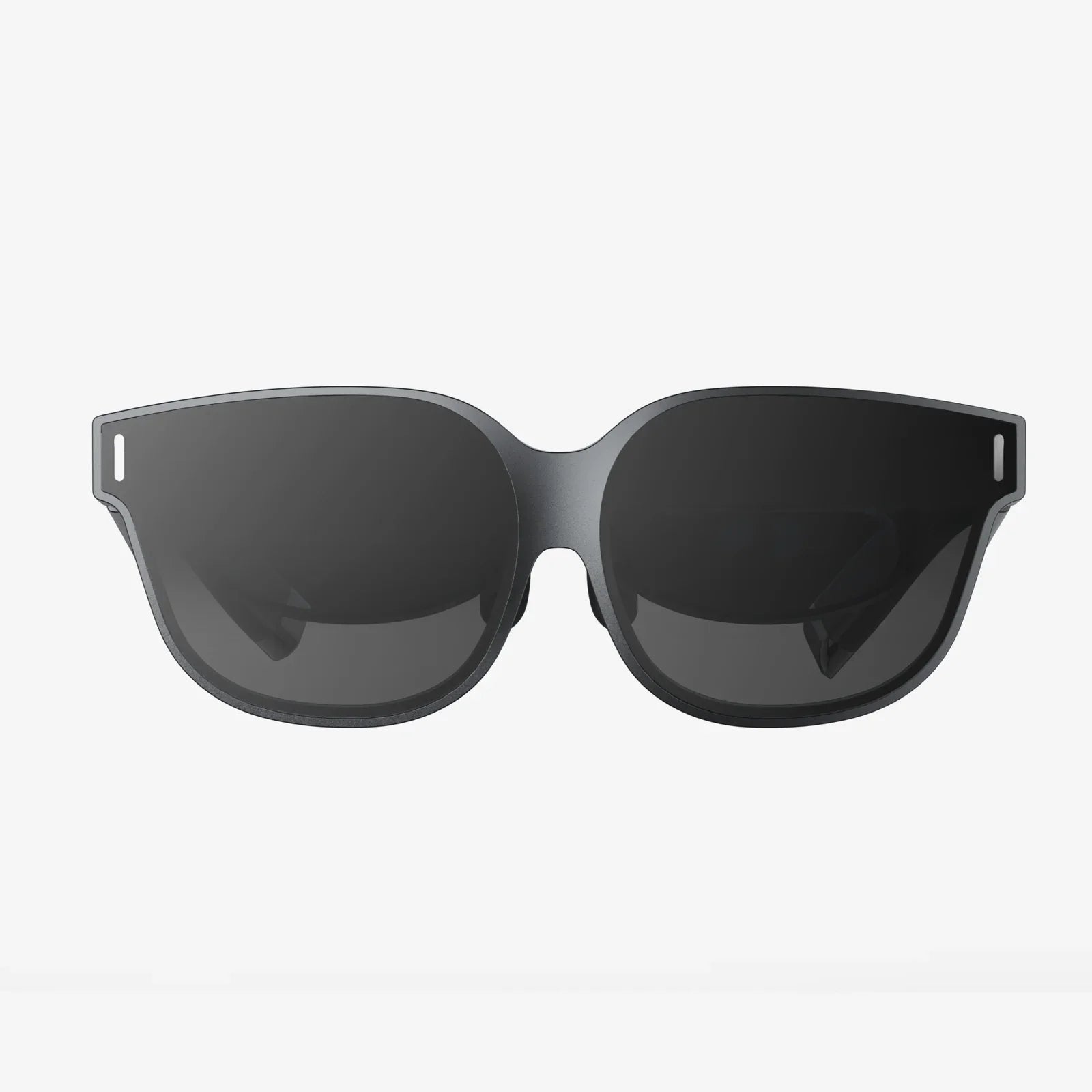
Imagine a world where the line between what is real and what is digital has not just blurred, but has been fundamentally redefined. This is no longer the stuff of science fiction; it is the dawn of a new technological epoch, driven by two powerful but distinct forces: the immersive escape of Alternate Realities and the digitally-enhanced lens of Augmented Reality. Understanding the chasm between them is not just about tech specs—it’s about comprehending the future of human experience itself.
Defining the Digital Divide: Core Concepts Unveiled
At first glance, the terms might seem interchangeable to the uninitiated, both hinting at a departure from our conventional reality. However, their philosophies, applications, and impacts on the human psyche are worlds apart.
What is Augmented Reality (AR)?
Augmented Reality operates on a principle of enhancement and annotation. It takes our existing, physical world—the world you see right now—and layers digital information atop it. This is achieved through a device, typically a smartphone, tablet, or a set of smart glasses. The key tenet of AR is that it does not replace your environment; it supplements it. The physical world remains the primary stage, while digital elements—be they 3D models, text, data, or animations—play a supporting role. Think of it as a dynamic, interactive heads-up display for life.
What is Alternate Reality?
Alternate Reality (often used interchangeably with Virtual Reality or VR in a broad sense) is a far more immersive and substitutive technology. Its goal is not to enhance the real world but to transport the user entirely to a new, fabricated world. This is typically achieved through a head-mounted display that blocks out the physical environment, replacing it with a computer-generated simulation. In a true Alternate Reality experience, your surroundings are completely replaced. You are no longer in your living room; you are on the surface of Mars, deep in a fantasy dungeon, or attending a concert with avatars of people from across the globe. It is an escape, a substitution, a total sensory diversion.
The Technological Chasm: How They Work
The fundamental difference in purpose leads to a stark divergence in the technology that powers these experiences.
The AR Tech Stack: Bridging the Digital and Physical
Augmented Reality is a feat of convergence. It requires a sophisticated blend of hardware and software to work seamlessly:
- Computer Vision: This is the brains of the operation. AR systems use cameras to capture the real world and algorithms to understand it. They identify surfaces (planes), objects, and even spatial depth through techniques like SLAM (Simultaneous Localization and Mapping).
- Display Technology: Digital content must be rendered and displayed in a way that aligns with the real world. This can be through a smartphone screen (the most common method), transparent glasses that project light onto the retina, or more advanced waveguide technology in dedicated AR headsets.
- Sensors: Accelerometers, gyroscopes, and GPS are crucial for tracking the device's movement and orientation in space, ensuring the digital objects remain locked in place.
The challenge for AR is making the digital appear convincingly part of the physical—getting the lighting, shadows, and occlusion (where real objects pass in front of digital ones) just right.
The Alternate Reality Tech Stack: Building New Worlds
Alternate Reality technology is focused on one thing: fooling the senses to achieve maximum immersion.
- Head-Mounted Displays (HMDs): These are fully enclosed units with high-resolution screens placed mere centimeters from the user's eyes. They completely block out external light and vision.
- Precise Head Tracking: Using a combination of internal and external sensors, the system tracks the rotation and translation of your head in real-time. This allows the virtual world to respond perfectly to your movements, preventing disorientation and nausea.
- High-Fidelity Rendering: Creating believable worlds requires immense graphical processing power to generate complex 3D environments at high frame rates (often 90Hz or higher).
- Audio and Haptics: Spatial 3D audio and haptic feedback controllers complete the illusion, making you feel truly present in the virtual space.
The challenge for AR is creating a world so compelling and responsive that the user's brain accepts it as real, a phenomenon known as "presence."
A Tale of Two Experiences: Applications and Use Cases
The practical applications of these technologies highlight their philosophical differences even further, carving out unique and sometimes overlapping territories in various industries.
Augmented Reality: The Tool for the Real World
AR excels in contexts where the physical world is central, but needs a digital assist.
- Retail and E-commerce: Visualizing how a new sofa would look in your living room or "trying on" glasses or makeup virtually before purchasing.
- Industrial Maintenance and Repair: A technician wearing AR glasses can see schematics, instructions, or warning labels overlaid directly onto the machinery they are fixing, hands-free.
- Education: Bringing textbooks to life. Students can point their tablet at a diagram of the human heart and see a beating, interactive 3D model spring forth.
- Navigation: AR wayfinding arrows can be projected onto the real world through your phone, guiding you through a complex airport or city street.
- Healthcare: Surgeons can use AR to visualize patient data, like MRI scans, superimposed onto the patient's body during a procedure.
Alternate Reality: The Portal to New Worlds
Alternate Reality thrives in domains that require deep focus, simulation, and escapism.
- Gaming and Entertainment: This is the most prominent use case. VR games place you directly inside the action, and virtual cinemas allow you to watch films on a screen the size of a skyscraper.
- Training and Simulation: Pilots train in flight simulators, but VR allows for safe, cost-effective training in high-risk fields like surgery, military combat, or hazardous material handling.
- Virtual Social Spaces and Remote Work: Platforms exist where people can meet, socialize, and collaborate as avatars in a shared virtual space, offering a sense of co-presence that video calls cannot match.
- Therapy and Rehabilitation: Used for exposure therapy to treat phobias or PTSD in a controlled, safe environment. It's also used for physical rehab, turning exercises into engaging games.
- Architectural Visualization: Instead of looking at blueprints or a 3D model on a screen, architects and clients can literally walk through a full-scale, photorealistic rendering of a building before it's built.
The Human Factor: Psychological and Social Implications
As these technologies become more pervasive, their impact on our minds and society demands careful consideration.
The AR Effect: Contextual Computing and Attention
AR has the potential to make technology more intuitive and less intrusive. Instead of looking down at a phone, information is presented contextually within your environment. However, this raises questions about attention and overload. Will we become distracted by a constant stream of data overlaying our reality? The design of AR systems will need to be incredibly thoughtful to avoid "notification hell" in the physical world, ensuring that augmentations are helpful, not hindrances.
The Alternate Reality Effect: Presence and the Proteus Effect
The power of Alternate Reality is its ability to induce "presence," the convincing feeling of being in another place. This can be profoundly positive for empathy, education, and connection. However, it also introduces the risk of addiction and dissociation. If a virtual world is more appealing than the real one, will people retreat into it? Furthermore, the "Proteus Effect" describes how behavior within a virtual environment is influenced by the characteristics of one's avatar. This has powerful implications for identity, social interaction, and even morality in digital spaces.
The Future is Convergent: The Blurring Line and the Metaverse
The most exciting development on the horizon is not the triumph of one over the other, but their convergence. The concept of the "metaverse"—a persistent, shared network of virtual spaces—is often envisioned as a spectrum of experiences, not a single type.
In this future, you might start your day using sleek AR glasses to see the weather forecast on your window and read messages on your coffee mug. You might then enter a fully immersive Alternate Reality for a collaborative design meeting with colleagues from across the world, interacting with 3D models as if they were physically present. Later, you might attend a virtual concert in AR, where digital effects and performers are superimposed onto your real-world environment.
The line between AR and Alternate Reality will likely dissolve into a continuum of Mixed Reality (MR), where digital and physical objects co-exist and interact in real-time. Your device will simply dial the level of immersion up or down based on the task at hand, seamlessly blending realities to serve your needs.
The journey into our digitally-mediated future has already begun, and it promises to be a fascinating one. The choice between augmenting our world or escaping to another is no longer binary; it will become a fluid, contextual decision we make countless times a day, reshaping not just our screens, but the very fabric of our reality.
Share:
Difference Between 3D Model and Augmented Reality: A Comprehensive Guide to Digital Realities
Cognitive Augmented Reality: The Next Evolution in Human-Computer Interaction