


Imagine holding a photorealistic heart in your hands, turning it over to examine every artery, or seeing a dinosaur roar to life in your living room. These aren't scenes from a distant sci-fi future; they are the tangible realities made possible by two powerful digital technologies. While often mentioned in the same breath, 3D modeling and augmented reality represent distinct stages in the digital creation pipeline, each with its own purpose, process, and profound impact. Understanding the difference between a 3D model and augmented reality is not just a technical exercise—it's the key to unlocking how we will interact with information, entertainment, and each other in the years to come. One is the digital skeleton; the other is the magical lens that brings it into our world.
The Fundamental Distinction: Creation vs. Experience
At its most basic level, the core difference is one of creation versus experience. A 3D model is a static, digital asset—a file on a computer. It is the product of a meticulous design process. Augmented reality (AR), on the other hand, is not an object but a dynamic technology—a method of experiencing and interacting with digital content, including 3D models, in a real-world context.
Think of it like this: a 3D model of a chair is the digital blueprint, the design. It exists in a virtual space, defined by its vertices, edges, and textures. Augmented reality is the mechanism that allows you to use your smartphone's camera to see that very chair placed perfectly in the corner of your actual room, letting you walk around it, assess its size, and even change its fabric color. The model is the what; AR is the how and where.
Defining the 3D Model: The Digital Blueprint
A 3D model is a mathematical representation of any three-dimensional object or surface, created using specialized software. It is a purely digital construct that exists within a coordinate system (X, Y, Z axes). It has no inherent connection to the physical world until it is deployed through a medium like AR, virtual reality (VR), a video game, or an animation.
The Anatomy of a 3D Model
Creating a 3D model is a complex, multi-stage process that involves several key components:
- Modeling: This is the core process of shaping the object. Artists use various techniques like polygonal modeling (connecting vertices to form a mesh), NURBS modeling (using curves to create smooth surfaces), and digital sculpting to build the object's form.
- Texturing: A wireframe model is like a colorless sculpture. Texturing is the process of applying color, patterns, and surface details (like wood grain, scratches, or fabric weave) to make it appear realistic. This involves creating and mapping 2D images onto the 3D surface.
- Rigging: For models that need to move or be animated (like a character or an animal), a digital skeleton, known as an armature or rig, is built inside the model. This rig defines how different parts of the model can move and deform.
- Materials and Shaders: These define how the model's surface interacts with light. Is it glossy like plastic, rough like stone, or metallic? Shaders simulate properties like reflection, refraction, subsurface scattering, and bump mapping to achieve photorealistic or stylized looks.
3D models are the foundational assets for a vast array of industries beyond entertainment. Architects use them to create detailed building plans, engineers use them for prototyping and stress-testing parts, and medical professionals use them to visualize complex anatomical structures.
Defining Augmented Reality: The Interactive Lens
Augmented reality is a technology that superimposes computer-generated perceptual information—including visuals, sound, and haptic feedback—onto the user's view of the real world. Unlike Virtual Reality (VR), which creates a completely immersive digital environment, AR enhances reality by adding digital layers to it. The goal of AR is to blend digital and physical worlds in a way that feels seamless and interactive.
The Technology Behind the Magic
For AR to work, it requires a sophisticated combination of hardware and software:
- Sensors and Cameras: These are the eyes of an AR system. They continuously scan the physical environment to understand the space, detect surfaces (floors, walls, tables), and track the user's position and movement.
- Processing: Powerful processors analyze the data from the sensors in real-time to map the environment and calculate exactly where and how to place digital objects so they appear anchored in the real world.
-
Display: This is how the user sees the augmented world. It can be through:
- Screen-Based AR: Using the screen of a smartphone or tablet. The camera captures the real world, the software augments it, and the screen displays the combined image.
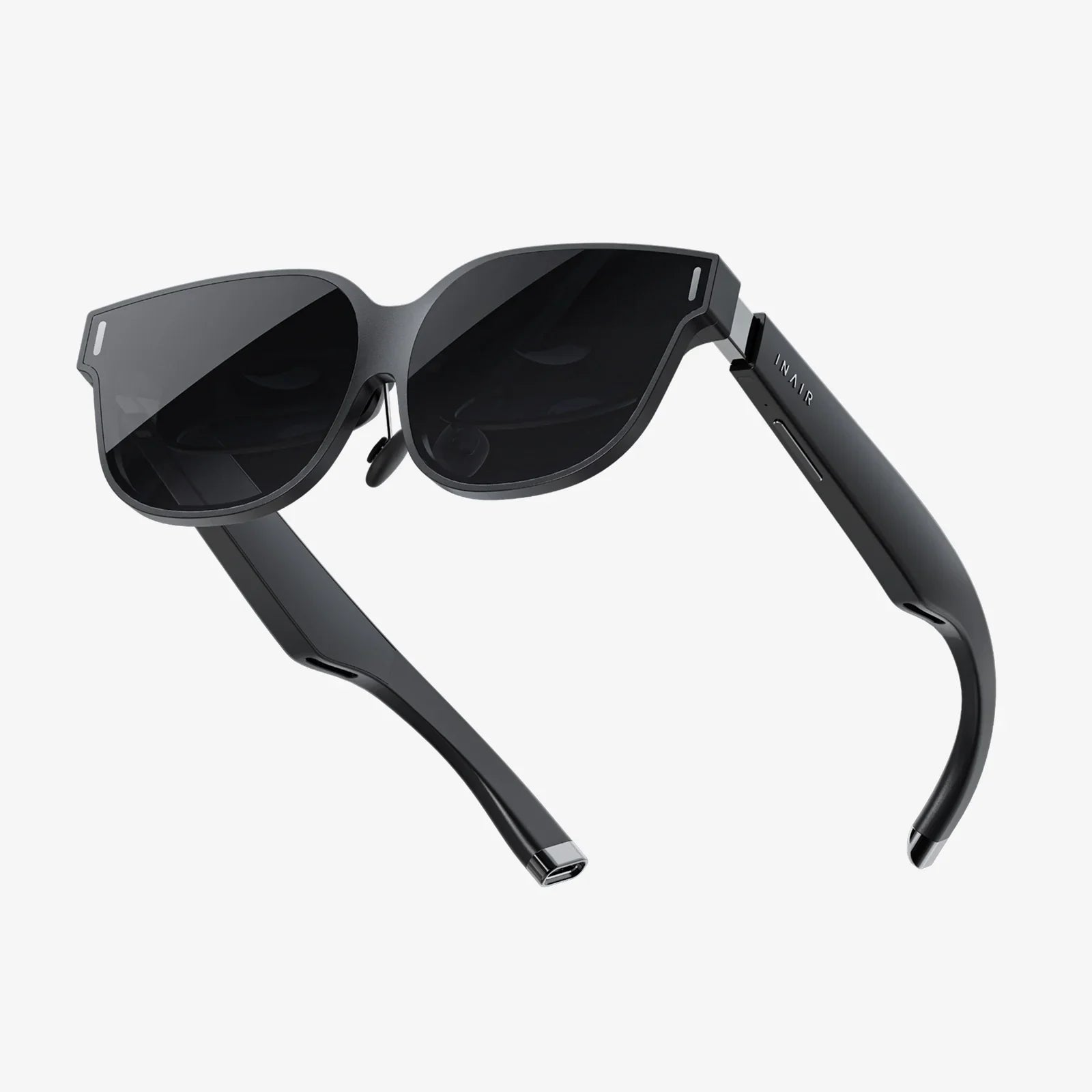
- Smart Glasses and Headsets: Wearable devices like optical head-mounted displays that project digital images directly onto the user's field of view, allowing for a more hands-free and immersive experience.
- Software and Algorithms: This is the brain, including computer vision algorithms, SLAM (Simultaneous Localization and Mapping) technology, and AR development platforms that orchestrate the entire experience.
AR's power lies in its contextuality. It delivers information and experiences that are directly relevant to what the user is looking at and where they are located, from navigation arrows on a city street to repair instructions overlaid on a malfunctioning engine.
The Symbiotic Relationship: How 3D Models and AR Work Together
This is where confusion often arises, and it's the most critical point to understand: 3D models and AR are not competitors; they are collaborators. High-quality 3D models are the essential fuel that powers compelling AR experiences. You cannot have a visual AR experience without digital content, and that content is very often a 3D model.
Consider the popular furniture shopping apps that use AR. The company's designers first create meticulous 3D models of their sofas, tables, and chairs within modeling software. These models are optimized for real-time rendering—striking a balance between visual detail and performance so they can be displayed smoothly on a mobile device. The AR application then acts as a delivery vehicle. It uses the phone's camera to understand your room and then accurately places and scales the pre-made 3D model within that live video feed.
The AR technology handles the tracking, lighting estimation (trying to match the virtual object's lighting to the room's real lighting), and occlusion (allowing real-world objects to pass in front of the virtual one). The 3D model provides the beautiful, detailed object itself. Without the model, the AR app would have nothing to show. Without the AR technology, the model would remain trapped on a designer's computer screen.
Key Differences at a Glance
| Aspect | 3D Model | Augmented Reality (AR) |
|---|---|---|
| Nature | A digital asset or object (a noun). | A technology or experience (a verb). |
| Existence | Exists in a virtual, coordinate-based space. | Exists as an overlay in the real, physical world. |
| Primary Purpose | To represent, design, and visualize form. | To contextualize, inform, and interact. |
| Creation Process | Modeling, texturing, rigging, lighting. | Environment tracking, sensor fusion, real-time rendering. |
| Dependency | Can stand alone as a file. | Dependent on hardware (camera, sensors, display) and software to function. |
| Interaction | Static or animated, but interaction is limited to its software environment. | Inherently interactive within the user's real-world environment. |
Choosing the Right Tool: It's All About the Goal
Understanding the difference helps in selecting the right technology for a project. The question is not "Which is better?" but "What do I want to achieve?"
You need a 3D model if:
- Your goal is to design a new product.
- You need to create high-quality renderings or animations for film or marketing.
- You are 3D printing a physical object.
- You are developing a video game or VR experience (where the model will be used).
- You require precise engineering schematics or architectural visualizations.
You need an AR solution if:
- You want to visualize how a product will look in a specific real-world location.
- You need to provide step-by-step instructions overlaid on real-world machinery.
- You wish to create an interactive marketing campaign that engages users in their environment.
- You are developing navigation aids or tourist information guides.
- You want to enhance live events with digital effects and information.
Often, the answer is both: you need to create a high-fidelity 3D model and then deploy it through an AR application to achieve the final goal.
The Future of Digital Interaction
The lines between the digital and physical will continue to blur. As 3D modeling tools become more powerful and accessible, creating hyper-realistic assets will become faster and easier. Concurrently, AR technology is advancing rapidly towards more seamless form factors like lightweight glasses and even contact lenses, powered by improvements in 5G connectivity, edge computing, and artificial intelligence.
The convergence of these fields will redefine entire industries. Surgeons will practice on 3D models of their patient's organs projected via AR directly onto the patient's body before making an incision. Factory workers will see wiring diagrams and torque specifications hover directly over the assembly they are building. Our homes will become dynamic spaces where information, art, and communication are anchored to our walls and furniture. The 3D model provides the content for this new reality, and augmented reality provides the indispensable window through which we will see it all.
The next time you see a digital creature stomping through your park or a virtual sofa sitting in your lounge, you'll see more than just magic. You'll see the elegant partnership of two distinct technologies: the meticulously crafted 3D model and the sophisticated augmented reality engine that gave it a place in your world. This powerful synergy is quietly building the framework for a future where our physical and digital lives are not just connected, but beautifully and functionally intertwined, forever changing how we work, learn, and play.
Share:
Wearable AR VR Tech: Blurring the Lines Between Our Digital and Physical Realities
Alternate Reality vs Augmented Reality: The Ultimate Guide to Our Digital Future