


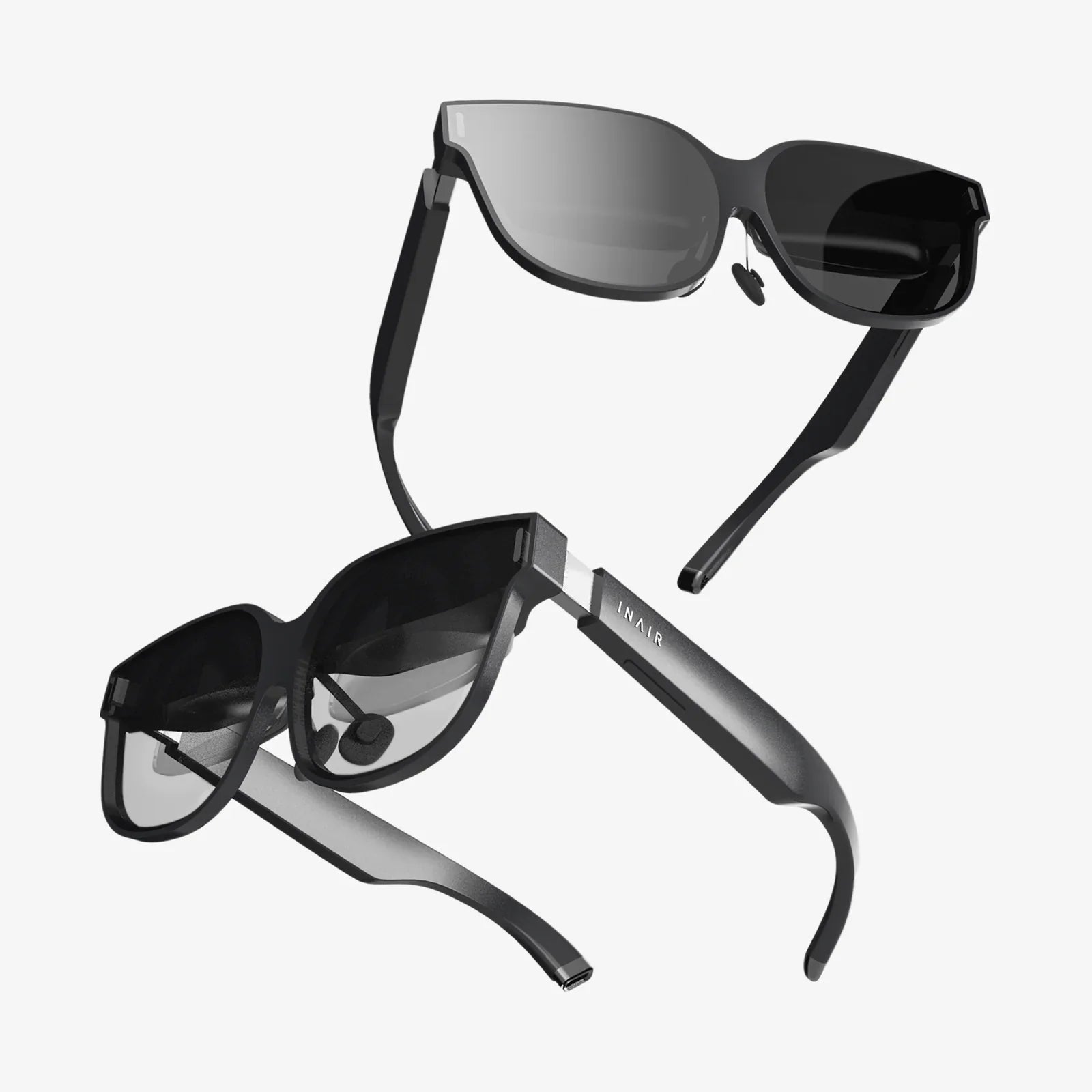
Imagine a world where digital information doesn’t just live on a screen but is seamlessly woven into the fabric of your daily life, where learning a new skill, collaborating with colleagues, or exploring a new city is enhanced by a digital layer of intelligence and imagination. This is no longer the realm of science fiction; it is the burgeoning reality being built by the rapid and convergent evolution of wearable augmented and virtual reality technology. This technological revolution is poised to redefine our relationship with computing, information, and each other, moving us beyond the confines of the rectangle in our pockets and into a world of boundless, contextual, and immersive experiences.
To understand this landscape, we must first delineate the distinct realities these wearables create, though the lines between them are increasingly blurring. Virtual Reality (VR) is the most immersive of the two. By completely occluding your vision with a head-mounted display, it transports you to a fully digital, computer-generated environment. Whether you’re piloting a starship, standing on the surface of Mars, or undergoing training in a hyper-realistic simulation, VR’s primary goal is to isolate you from the physical world and convince your senses that you are somewhere else. The experience is all-encompassing, driven by precise head-tracking, stereoscopic 3D visuals, and immersive spatial audio.
Augmented Reality (AR), on the other hand, does not seek to replace the real world but to augment it. AR wearables, which range from smart glasses to more advanced headsets, overlay digital information—text, images, 3D models, animations—onto your view of your physical surroundings. Think of navigation arrows painted onto the road in front of you, the name and biography of a new acquaintance floating above their head at a networking event, or a virtual schematic of a complex engine hovering over the actual machinery for a technician. AR’s power lies in its contextuality; the digital layer is relevant to what you are looking at and where you are.
Bridging the gap between these two is a concept often referred to as Mixed Reality (MR). MR is not just about overlaying digital content but about having that content interact with and be aware of the physical world in real-time. A virtual character in an MR experience could sit on your real-world couch, or a digital tennis ball could bounce off your actual walls. This requires a sophisticated understanding of the environment, achieved through a suite of advanced sensors. The spectrum of experiences, from pure physical reality to pure virtual reality, is often called the "virtuality continuum," and wearable tech is now enabling fluid movement across it.
The Engine Room: Core Technologies Powering the Revolution
The magic of these devices is made possible by a complex fusion of hardware and software innovations. Inside these sleek wearables lies a powerhouse of technology.
Visual immersion is paramount. This is achieved through high-resolution micro-displays, often using OLED or MicroLED technology for vibrant colors and deep blacks, projected through sophisticated lens systems. A critical challenge is creating a comfortable, "holographic" effect where digital objects appear solid and fixed in space. Techniques like varifocal lenses, which adjust for different depths, and light-field technology are being developed to solve the vergence-accommodation conflict—a primary source of eye strain where your eyes focus on a virtual object but must accommodate for the fixed distance of the screen.
Spatial tracking is the unsung hero. For AR and VR to feel real, the device must understand its position and orientation in space with millimetric precision and millisecond latency. This is accomplished through Inside-Out Tracking, where cameras and sensors on the device itself (inertial measurement units, or IMUs) continuously map the environment and track its own movement within it, eliminating the need for external base stations. Simultaneous Localization and Mapping (SLAM) algorithms are the complex software brains that process this sensor data to create a real-time 3D map of the room, allowing digital objects to be "locked" in place.
Furthermore, advanced sensors are becoming standard. LiDAR (Light Detection and Ranging) scanners fire out laser pulses to measure distances and create incredibly detailed depth maps of the environment, enabling precise occlusion (where a real-world object can pass in front of a digital one). Eye-tracking cameras not only enable more intuitive UI control (where you look is where you select) but also allow for foveated rendering—a revolutionary graphics technique that renders the area of the screen you are directly looking at in high detail while subtly reducing the detail in your peripheral vision. This dramatically reduces the computational power needed, a key hurdle for mobile devices.
Finally, processing this immense amount of data in real-time requires immense computational power. While some devices are tethered to powerful external computers, the industry trend is toward standalone, untethered freedom. This is pushing the boundaries of mobile processors, which are now being designed with dedicated cores for AI processing, computer vision tasks, and complex spatial calculations, all while managing stringent thermal and power constraints.
Beyond Gaming: The Enterprise and Industrial Metamorphosis
While consumer entertainment captures headlines, the most profound and immediate impact of wearable AR/VR tech is happening in enterprise and industry. Here, the technology is not for play but for solving real-world problems, increasing efficiency, reducing errors, and enhancing safety.
In manufacturing and field service, AR smart glasses are becoming indispensable tools. A technician repairing a complex piece of equipment can have the schematic, instruction manual, and a live video feed from a remote expert overlaid directly onto their field of view. They can work hands-free, following animated instructions that show them exactly which bolt to turn next, drastically reducing training time and error rates. This "see-what-I-see" remote collaboration is transforming how expertise is distributed globally.
The design and architecture industries have been revolutionized. Instead of viewing a building design on a 2D screen, architects and clients can don a VR headset and walk through a full-scale, photorealistic virtual model of the structure before a single foundation is poured. They can experience the flow of space, test lighting conditions at different times of day, and make changes in real-time, saving millions in potential post-construction modifications.
Healthcare is another frontier witnessing transformative applications. Surgeons are using AR to visualize patient anatomy, such as CT scans or MRI data, projected directly onto the patient during procedures, effectively giving them X-ray vision. Medical students are using VR to practice complex surgical procedures in a risk-free simulated environment, accelerating their learning curve. Furthermore, VR is proving to be a powerful therapeutic tool for treating phobias, PTSD, and chronic pain through controlled exposure therapy.
The Human Factor: Social Adoption and Ethical Considerations
For this technology to transition from professional tool to ubiquitous platform, it must overcome significant human and social hurdles. The current form factor of many headsets, while improving, is still often described as bulky, uncomfortable, and socially isolating. The quest for the perfect pair of AR glasses—something as lightweight, stylish, and socially acceptable as regular eyeglasses—is the holy grail for the industry. Until then, wearing a conspicuous device in public remains a barrier to mass social adoption.
This leads to a host of ethical and societal questions that we are only beginning to grapple with. The concept of attention is paramount. If we are constantly surrounded by a personalized digital stream, how do we remain present in our physical lives and connected to the people around us? The potential for distraction, especially in situations like driving or walking in a city, is a serious safety concern that requires thoughtful design solutions.
Data privacy and security enter a new dimension. These devices are arguably the most intimate data-harvesting tools ever created. They have the potential to see what you see, hear what you hear, and continuously map your personal environment—your home, your office, your daily habits. The question of who owns this data, how it is used, and how it is secured is paramount. The risk of unauthorized surveillance, data breaches, and sophisticated phishing attacks (imagine a malicious AR overlay on a real-world ATM) creates a new frontier for cybersecurity.
Furthermore, the digital divide could evolve into a "reality divide." If these devices become essential for work, education, and social interaction, what happens to those who cannot afford them? There is a risk of creating a new class of information haves and have-nots, further stratifying society along economic lines.
The Next Frontier: Where Do We Go From Here?
The trajectory of wearable AR and VR tech is pointing toward a future of even greater integration and invisibility. The next generation of devices will be defined by a few key trends. Neural interfaces represent the ultimate frontier, moving beyond hand controllers and voice commands to direct brain-computer interaction. Early-stage research is already demonstrating the ability to control digital interfaces with thought, promising a future of truly seamless control.
The concept of the "metaverse," a persistent and interconnected network of shared virtual spaces, is the grand vision that many of these technologies are building towards. Wearable AR and VR devices are the primary gateways to this envisioned future, where our digital and physical identities and assets become increasingly intertwined. While the full vision is likely decades away, the foundational layers are being laid today.
Haptic technology will also advance, moving beyond simple controller vibrations to full-body suits and gloves that simulate the sense of touch. Imagine feeling the texture of a virtual fabric or the impact of a virtual object, adding an entirely new layer of sensory fidelity to digital experiences.
Ultimately, the goal is for the technology to fade into the background. The most successful tools are those we stop thinking about as tools—like the smartphone that became an extension of our hand. The future of wearable AR and VR is not in building bigger headsets, but in creating more intuitive, lightweight, and context-aware systems that enhance our human capabilities without isolating us from our humanity. They promise to augment our intellect, extend our creativity, and connect us in ways we are only beginning to imagine, fundamentally reshaping the human experience in the process.
The path forward is not just one of technological refinement, but of careful and considered choices. The potential of wearable AR and VR is limitless, offering a new lens through which to learn, work, heal, and create. Yet, its responsible adoption hinges on our ability to navigate the profound ethical questions it raises, ensuring that this powerful technology serves to enhance our reality, not escape from it, building a future that is not only more technologically advanced but also more human-centric and equitable for all.
Share:
Augmented Reality Smart Glasses Concept: Redefining Reality and Human Potential
Difference Between 3D Model and Augmented Reality: A Comprehensive Guide to Digital Realities