


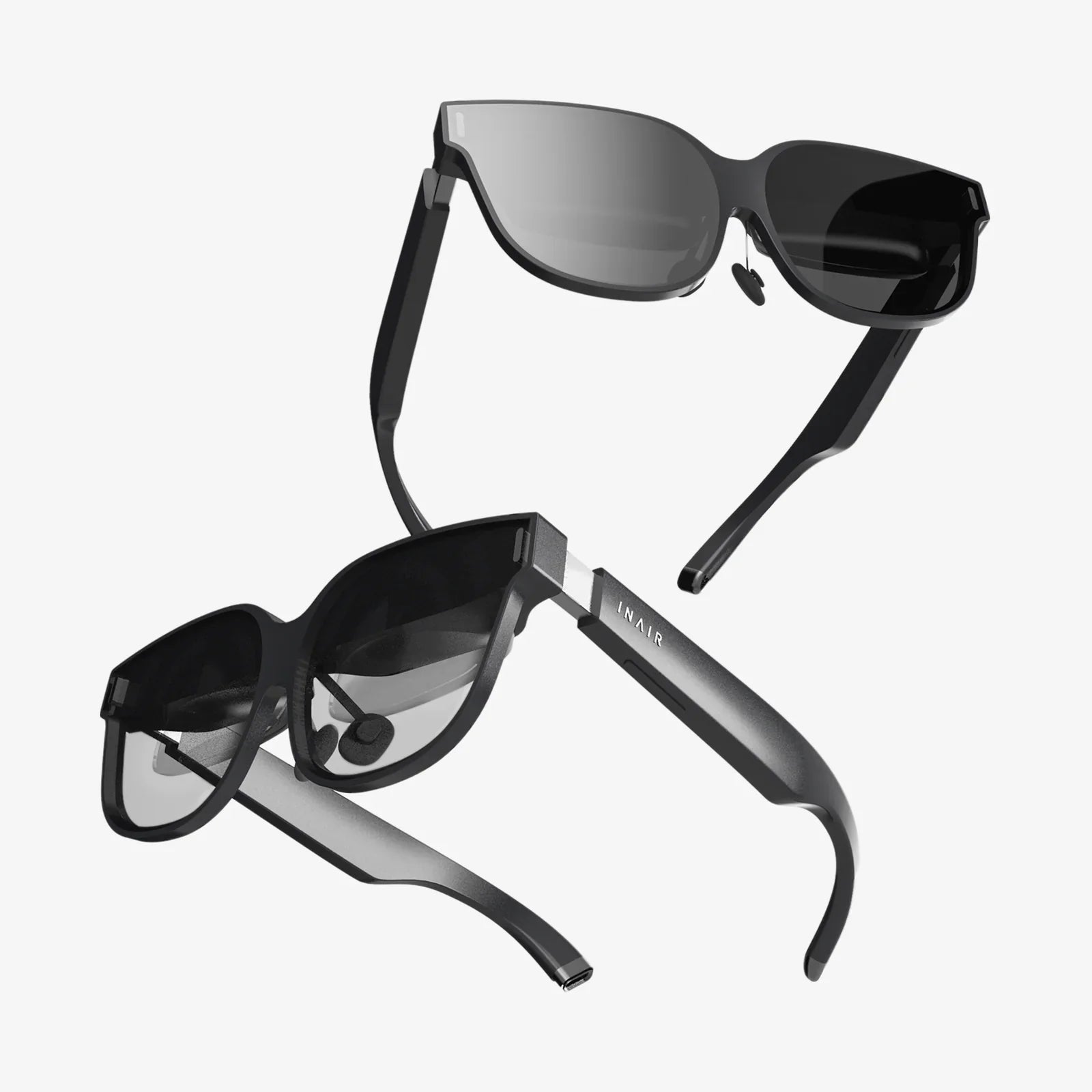
Imagine a world where information flows over your field of vision like water, where digital assistants appear as holographic companions, and the very fabric of your environment becomes interactive and alive with data. This is not the distant future of science fiction; it is the imminent reality promised by the mature development of the augmented reality smart glasses concept. This next great leap in personal computing is poised to dissolve the barrier between the digital and the physical, fundamentally altering how we work, learn, connect, and perceive the world around us. The journey from clunky prototype to sleek, everyday wearable is one of the most compelling technological narratives of our time, heralding a revolution that will touch every aspect of human existence.
The Architectural Pillars of Digital Overlay
At its core, the augmented reality smart glasses concept is a feat of miniaturized engineering, integrating a symphony of advanced technologies into a form factor light enough to wear all day. The magic begins with a complex array of sensors—cameras, depth sensors, LiDAR, and inertial measurement units (IMUs)—that constantly scan the environment. These sensors work in concert to create a precise, real-time 3D map of the user's surroundings, understanding not just the geometry of a room but also identifying objects, surfaces, and their spatial relationships. This process, known as simultaneous localization and mapping (SLAM), allows the glasses to anchor digital content convincingly to the physical world.
The second critical component is the display technology. Unlike virtual reality headsets that completely occlude vision, AR glasses must project images onto transparent lenses, allowing the real world to remain in full view. Several competing technologies are vying for dominance. Waveguide displays use microscopic gratings to bend light from a projector on the temple into the eye, while holographic optical elements can create complex light fields for more natural depth perception. The ultimate goal is to generate bright, high-resolution, and wide-field-of-view graphics that can seamlessly blend with reality, a significant challenge given the constraints of power consumption and heat generation.
Underpinning this hardware is a powerful software and processing ecosystem. On-device processors handle the immense computational load of environmental understanding and rendering, often assisted by distributed computing that offloads heavier tasks to a connected device or the cloud. Artificial intelligence is the silent brain of the operation, enabling object recognition, gesture tracking, and natural language understanding. This AI layer transforms raw sensor data into actionable context, allowing the glasses to intelligently understand user intent and serve up relevant information at precisely the right moment.
Transforming Industries and Redefining Professions
The practical applications of this technology extend far beyond novelty or entertainment, promising profound gains in efficiency, safety, and capability across numerous sectors.
The Industrial Metropolis
In manufacturing and field service, the augmented reality smart glasses concept is already proving its value. Technicians repairing complex machinery can see animated repair instructions overlaid directly on the equipment, highlighting the specific bolt to turn or the wire to check. Remote experts can see what the on-site worker sees and annotate their field of view with arrows and notes, guiding them through procedures without needing to travel. This "see-what-I-see" capability drastically reduces downtime, minimizes errors, and democratizes expertise. For warehouse logistics, workers can be guided along optimal picking routes with digital arrows on the floor and have item locations and quantities displayed before them, supercharging efficiency and accuracy.
The Revolution in Healthcare
In medicine, the potential for saving lives and improving outcomes is staggering. Surgeons could have vital signs, ultrasound data, or 3D anatomical models from pre-op scans projected into their vision during procedures, allowing them to operate with superhuman precision without ever looking away from the patient. Medical students could learn anatomy by walking around a life-sized, interactive hologram of the human body. For first responders, AR glasses could instantly display a victim's medical history or guide a novice through CPR steps during a critical emergency.
The Future of Education and Collaboration
The classroom of the future could be anywhere. Students studying history could walk through a digitally reconstructed ancient Rome. Chemistry students could manipulate virtual molecules that appear to float on their desk, observing reactions without any risk. This shift from abstract learning to experiential, contextual learning has the potential to unlock deeper understanding and engagement. Furthermore, remote collaboration will be transformed. Instead of a grid of faces on a flat screen, colleagues from across the globe could be rendered as realistic avatars in your living room, interacting with shared 3D models of a new product design as if they were physically present.
The Human Factor: Navigating a New Social Contract
As with any transformative technology, the widespread adoption of augmented reality smart glasses introduces a complex web of societal and ethical questions that我们必须 confront.
The Privacy Paradox
The most pressing concern is privacy. A device that records everything you see and hear is a powerful surveillance tool. The constant capture of the environment means that bystanders, often unaware, could be recorded and analyzed. This raises monumental questions about consent, data ownership, and security. Who has access to this continuous stream of visual and auditory data? How is it stored, processed, and used? Robust legal frameworks and transparent corporate policies will be essential to prevent a dystopian future of perpetual monitoring and data exploitation. The concept of "AR etiquette" will need to emerge, with clear visual indicators showing when recording is active to inform those in the vicinity.
The Attention Economy's Final Frontier
Smartphones already fracture our attention, but AR glasses could complete the job of mediating our entire reality. The risk of becoming overwhelmed by digital spam—competing notifications, advertisements, and virtual clutter—is very real. The technology must be designed not to distract but to augment, providing information that enhances the present moment rather than pulling us out of it. The line between useful enhancement and cognitive overload will be thin and highly personal. Furthermore, a "digital divide" could evolve into a "perceptual divide," where those who can afford advanced AR have access to a layer of information and capability that is invisible to others, creating new forms of inequality.
Redefining Human Connection
How will constant access to a digital overlay affect our social interactions? Will we be present with the people in front of us, or distracted by emails floating in the air? The technology could either enhance connection—by providing real-time translation of foreign languages during a conversation or displaying helpful context about a person you just met—or it could erode it further. The design of these systems must prioritize human-centric values, ensuring they serve to connect us more deeply to our environment and each other, rather than isolating us in a personalized digital bubble.
The Road Ahead: From Concept to Ubiquity
The path to creating a pair of augmented reality smart glasses that people will actually want to wear all day is fraught with technical hurdles. Battery life remains a significant constraint, as powering high-resolution displays and powerful processors for extended periods is immensely challenging. The form factor must continue to shrink, moving from bulky goggles to something indistinguishable from regular eyewear, a goal that requires breakthroughs in optics and material science. Finally, creating a intuitive and natural user interface is paramount. Input methods will likely evolve beyond voice commands and touchpads to include advanced gesture recognition, eye-tracking, and even neural interfaces for silent, thought-based commands.
Ultimately, the success of this technology will not be determined by its computational power alone, but by its ability to become invisible. The goal is to create a calm technology that fades into the background, enhancing our perception and capabilities without demanding our constant attention. It must understand context so deeply that it provides information proactively but never intrusively, acting as a true cognitive partner.
The true promise of this technology lies not in replacing our reality, but in enriching it. It offers a chance to deepen our understanding of the world, to connect with global knowledge in a local context, and to extend our abilities in ways we are only beginning to imagine. The challenge ahead is not just one of engineering, but of philosophy and design: to build a future where technology amplifies our humanity rather than replaces it, creating a world that is not less real, but more meaningful.
Share:
Augmented Reality Display Types: A Deep Dive into the Tech Shaping Our Reality
Augmented Reality Display Types: A Deep Dive into the Tech Shaping Our Reality