


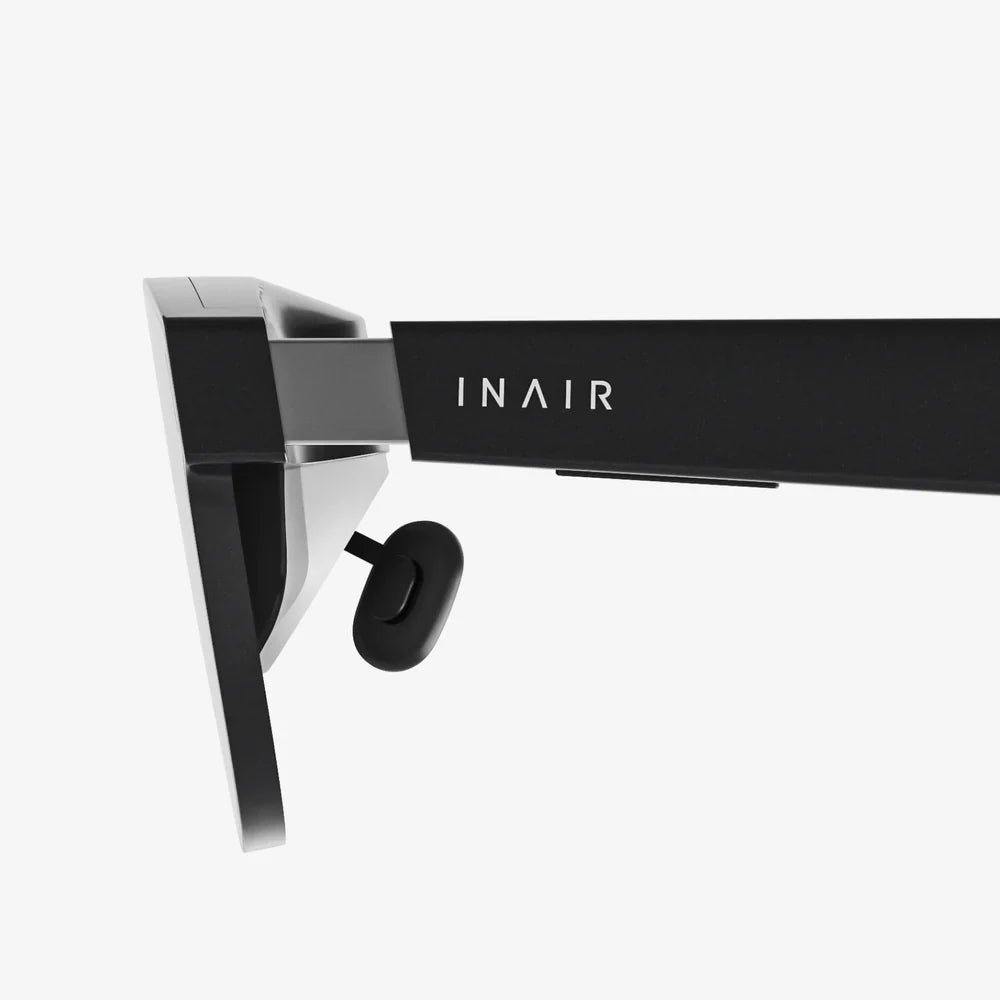
Imagine a world where digital information doesn't just live on a screen but is seamlessly woven into the fabric of your physical reality, where instructions float over a complex machine you're repairing, historical figures walk the very streets you stand on, and data visualizations help you make sense of the world in real-time. This is the promise of augmented reality (AR), a technology poised to revolutionize everything from medicine and manufacturing to entertainment and everyday life. But this magic doesn't happen by itself; it is fundamentally enabled by the complex and varied hardware that projects these digital phantoms into our field of view. The gateway to this merged existence is the display, and understanding the different augmented reality display types is key to comprehending both the present capabilities and the breathtaking future of this transformative technology.
The Fundamental Divide: See-Through vs. Non-See-Through
At the most foundational level, all AR displays can be categorized by their approach to blending the digital with the physical. This creates the first major classification, splitting the technology into two distinct camps.
Optical See-Through (OST) Displays
Often considered the "true" AR experience, Optical See-Through displays allow users to look directly at their real-world environment through a transparent combiner, typically a waveguide, beamsplitter, or semi-reflective mirror. Digital images are projected onto this combiner, which then reflects the light into the user's eyes, overlaying it onto their unaltered view of reality.
How it works: A miniature display engine (like an LCoS or OLED microdisplay) generates an image. This image is then relayed through an optical system and bounced off or coupled into a transparent combiner lens. The user sees both the real world through the lens and the projected image reflected off it.
Key Advantages:
- Uncompromised Real-World View: Since users see the actual world directly with their own eyes, the resolution, brightness, and dynamic range of the real environment are preserved perfectly.
- Enhanced Safety: The direct optical path is crucial for applications where situational awareness is paramount, such as surgery, piloting, or navigating a busy street.
- No Motion Sickness: There is zero latency or lag in the real-world view because it's not being processed by a camera and screen, eliminating a primary cause of simulator sickness.
Key Challenges:
- Complex Optical Alignment: The system requires precise calibration to ensure virtual objects are placed correctly in the real world and remain stable.
- Contrast in Bright Light: Virtual content can appear faded or washed out in very bright environments (like outdoors) because the real-world light is so dominant.
- Limited Field of View (FoV): Historically, achieving a wide FoV with OST systems has been difficult and expensive, often creating a "binoculars" or "letterbox" effect.
Video See-Through (VST) Displays
Video See-Through displays take a fundamentally different approach. They use outward-facing cameras to capture the user's real-world environment. This video feed is then combined with computer-generated graphics on an internal, non-transparent display (like a micro-OLED) positioned in front of the user's eyes.
How it works: Stereo cameras mounted on the device capture a live video feed of the world. A processor fuses this video with rendered AR content. The final composited image is then displayed on a screen that the user looks at, completely replacing their direct view.
Key Advantages:
- Precise Occlusion: The system can digitally manipulate the video feed, allowing virtual objects to convincingly hide behind real ones (and vice-versa), creating a much more believable and immersive blend.
- Flexible Reality Manipulation: Since the entire world is a digital video stream, it can be filtered, altered, or enhanced in real-time (e.g., applying a night-vision filter, changing wall colors, highlighting specific objects).
- Consistent Experience: The appearance of virtual content is consistent regardless of ambient lighting conditions, as it's rendered directly onto the display.
Key Challenges:
- Latency and Safety Concerns: The time delay between the camera capture and the display (latency) can cause a disconnect between user movement and visual feedback, potentially leading to nausea and creating a safety risk in dynamic environments.
- Limited Resolution: The user's view of the world is limited by the resolution and quality of the cameras, which is often lower than the resolving power of the human eye.
- Power Consumption: Processing two high-resolution video streams and rendering complex graphics is computationally intensive and drains battery life quickly.
Diving Deeper: The Core Technologies Behind the Combiner
Beyond the see-through methodology, AR displays are defined by the specific optical technology used to deliver the image to the eye. Each technology represents a different trade-off between factors like FoV, form factor, and image quality.
Waveguide Displays
Waveguides are currently the dominant technology in modern, sleek AR glasses. They function like a futuristic fiber optic cable for your eyes. Light from a microdisplay projector is coupled into a thin, flat piece of transparent glass or plastic (the waveguide). This light travels through the material via total internal reflection until it encounters an optical structure (like a diffractive grating or a half-mirror array) that outcouples the light, directing it toward the user's eye.
Variations:
- Diffractive Waveguides: Use nanostructured gratings to diffract light in and out of the waveguide. They enable very thin and light form factors but can suffer from color uniformity issues (rainbow effects) and limited eyebox.
- Reflective Waveguides: Use arrays of tiny, partially reflective mirrors to bounce light through the waveguide. They often provide better color fidelity and brightness but can be more complex to manufacture.
Pros: Sleek, glasses-like form factor; good sunlight readability; high transparency.
Cons: Complex and expensive manufacturing; challenges with achieving a wide FoV and a large eyebox simultaneously; potential for optical artifacts.
Beam Splitter (or Combiners)
This is a more classical optical approach. A beamsplitter is a semi-transparent mirror placed at an angle between the user's eye and the real world. A projector mounted on the frame of the device shines light onto the beamsplitter, which reflects a portion of it into the eye while allowing most of the real-world light to pass through.
Pros: Excellent image quality with high brightness and contrast; relatively simpler optical design.
Cons: Bulky form factor, as the combiner and projector often sit out in front of the face; can obstruct the user's peripheral view; less suitable for all-day wearable glasses.
Curved Mirror Combiners
This design uses a free-form, semi-reflective curved mirror as the combiner. The mirror serves two purposes: it reflects the image from a projector located near the temple, and it also acts as a magnifying lens, allowing for a potentially wider field of view from a smaller display engine.
Pros: Can achieve a very wide field of view in a relatively compact package compared to flat combiners.
Cons: The curved mirror can create significant distortion that must be corrected computationally; form factor, while improved over flat beamsplitters, is still not as discreet as waveguides.The Cutting Edge: Emerging and Niche Display Types
While waveguides and beamsplitters dominate the current landscape, several innovative technologies are vying to become the next standard.
Retinal Projection (Virtual Retinal Display - VRD)
Perhaps the most sci-fi of all AR display types, retinal projection aims to bypass a combiner altogether. Instead, it scans low-power lasers or LEDs directly onto the user's retina, literally "drawing" the image onto the back of the eye.
How it works: A light source is modulated with image information and then scanned across the retina in a raster pattern using micro-electrical-mechanical systems (MEMS) mirrors. The eye's lens focuses the beam into a sharp image on the retina.
Pros: The potential for infinite depth of focus (images are always sharp regardless of where the user looks); incredibly high theoretical resolution and brightness; can be made very small and efficient.
Cons: Significant technical hurdles in eye-tracking and safety (requiring absolutely fail-safe power limits); currently in early R&D stages with no major consumer products available.
Volumetric Displays
This technology moves away from projecting onto a 2D surface and instead creates visualizations in three-dimensional space. Some systems use a spinning LED array or a fog screen to create points of light that occupy true volume, viewable from multiple angles without a headset.
Pros: Provides true depth cues and a shared experience for multiple viewers; no headset required.
Cons: Extremely limited resolution and color; currently suited only for specific niche demonstrations, not for general AR use; cannot easily occlude real objects.
The Human Factor: Eyebox, Field of View, and Resolution
Evaluating AR displays goes beyond just naming the technology. Several key metrics define the quality of the user experience.
- Field of View (FoV): The angular size of the virtual image, measured diagonally. A small FoV (15-30°) feels like looking through a small window, while a large FoV (50°+) is far more immersive. Expanding FoV without compromising on other factors is the holy grail of AR display design.
- Eyebox: The three-dimensional volume in space where the user's eye can be positioned and still see the full, bright image. A large eyebox is critical for comfort, allowing for different facial structures and preventing the image from cutting out if the glasses shift slightly.
- Resolution and Brightness: The sharpness and luminosity of the virtual content. High resolution is needed for reading text, while high brightness (measured in nits) is essential for visibility in outdoor settings.
- Contrast Ratio: The difference in luminance between the brightest white and the darkest black. A high contrast ratio makes virtual objects appear solid and vivid against the real-world background.
Choosing the Right Tool for the Job
There is no single "best" augmented reality display type. The optimal choice is entirely dependent on the application.
- Enterprise & Manufacturing (e.g., assembly, repair): Optical See-Through waveguides are often preferred for their safety, awareness, and all-day wearability.
- Gaming & High Immersion: Video See-Through headsets currently dominate due to their ability to deliver rich, fully occluded visuals and a controlled environment, despite the heftier form factor.
- Medical (e.g., surgical guidance): Absolute precision and sterility are key. Custom Optical See-Through systems integrated into surgical microscopes or displayed on operating room monitors are common, prioritizing reliability over form factor.
- Consumer Smart Glasses (e.g., navigation, notifications): Discretion is paramount. Thin, lightweight diffractive waveguides are the leading technology to provide subtle, contextual information without isolating the user from their environment.
The evolution of these technologies is a dance of physics, engineering, and human physiology. From the classic elegance of the beamsplitter to the nano-etched magic of diffractive waveguides and the futuristic promise of retinal projection, each display type brings us a step closer to a world where our digital and physical lives are no longer separate. The race is on to create the display that is at once high-resolution, wide-field-of-view, power-efficient, comfortable, and affordable. The winner of that race won't just be a company or a product; it will be the technology that finally unlocks the full, world-changing potential of augmented reality for everyone.
As these optical engines continue to shrink in size while expanding in capability, the very definition of a 'display' is being rewritten. We are moving beyond a screen we look at and towards a dynamic layer of intelligence we look through. The ultimate goal is invisibility—not of the content, but of the technology itself. When the hardware fades from conscious thought, leaving behind only the magical interplay of bits and atoms, that is when augmented reality will have truly arrived. The path to that future is being charted today in research labs and manufacturing facilities, one photon at a time, through the relentless innovation of augmented reality display types.
Share:
Augmented Reality Smart Glasses Concept: Redefining Reality and Human Potential
Augmented Reality Smart Glasses Concept: Redefining Reality and Human Potential