


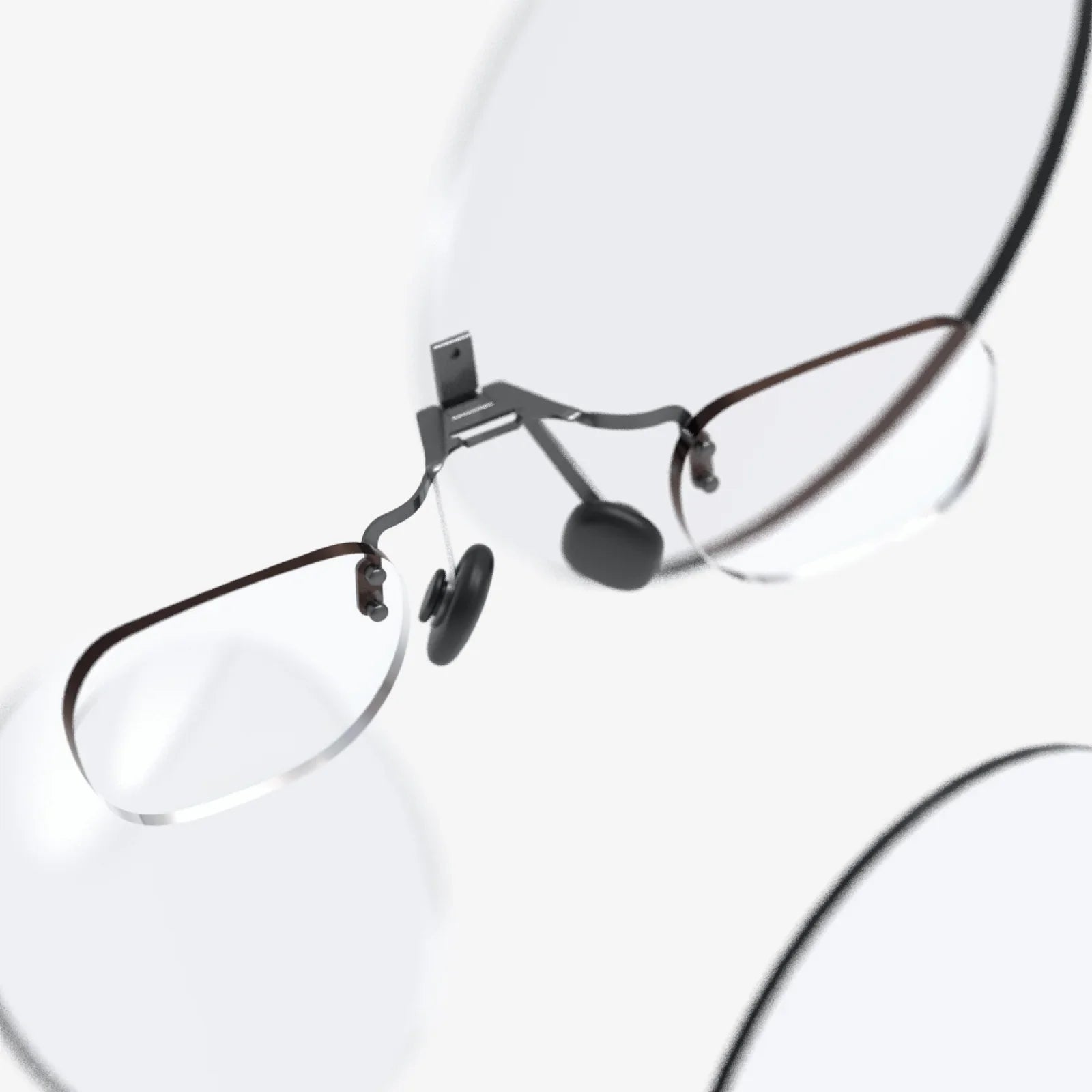
Imagine slipping on a pair of sleek glasses and instantly overlaying your world with a persistent layer of digital information, interactive art, and virtual colleagues. This is the tantalizing promise of next-generation augmented reality, a future so compelling that tech giants and startups are betting billions to make it a reality. But that reality comes with a staggering, often unspoken price tag. For the average consumer, the initial cost of entry into this new frontier is shaping up to be a significant barrier, with early adopters expected to pay a premium that rivals a high-end laptop or even a used car. The dream of ubiquitous AR is here, but its passport is currently priced for a select few.
The Core Components: A Symphony of Miniaturized Precision
To understand the price, one must first appreciate the technological marvel these devices represent. Unlike virtual reality, which immerses you in a fully digital environment, augmented reality must seamlessly blend light from the real world with generated digital imagery. This requires an optical system of incredible complexity and precision.
At the heart of the most advanced headsets are micro-OLED or Laser Beam Scanning (LBS) displays. These are not simple screens; they are microscopic projectors that must be incredibly bright to compete with ambient light and impossibly sharp to create convincing virtual objects that rest convincingly in your physical space. Manufacturing these displays involves processes akin to semiconductor fabrication, driving costs exponentially higher than the panels found in even the best televisions.
Then there are the waveguides. These are clear pieces of glass or plastic etched with nanostructures that act like highways for light, channeling the projected imagery from the side of the glasses directly into the user's eyes. Designing and mass-producing these waveguides with zero defects is a monumental challenge in physics and materials science. Yields are low, and the research and development to perfect them is a multi-year, multi-million dollar endeavor that is directly factored into the price of each unit.
The Brain Behind the Eyes: Spatial Computing Power
A device of this nature is not merely a display; it is a full-fledged computer tasked with a Herculean workload. Dubbed "spatial computers," these headsets must process data from a vast array of sensors in real-time.
Multiple high-resolution cameras, LiDAR scanners, depth sensors, and inertial measurement units (IMUs) constantly map the user's environment. This sensor fusion creates a live 3D mesh of the room, understanding the geometry of walls, the shape of tables, and even the position of people within it. This allows digital objects to occlude correctly behind real-world ones and interact physically with the environment. This entire process must happen with imperceptible latency to avoid user discomfort or nausea, requiring processing power that until recently was only found in powerful desktop computers.
This necessitates custom-built Systems-on-a-Chip (SoCs) designed specifically for AR workloads. These chips integrate a central processing unit (CPU), a graphics processing unit (GPU), a digital signal processor (DSP), and, most critically, a Neural Processing Unit (NPU) for handling machine learning tasks like hand-tracking and object recognition. Developing such specialized silicon is a capital-intensive process with costs running into the hundreds of millions of dollars, another investment recouped over the sale of hardware.
The Immense Burden of Research and Development
The sticker price of a headset is not just a reflection of its physical components; it is a share of the immense research and development (R&D) mountain that companies had to climb to create it. For over a decade, teams of the world's best engineers, software developers, optical physicists, and user experience designers have been working to solve problems that had no known solutions.
How do you make a digital object appear solid in a bright room? How do you track a user's eyes with enough accuracy to enable foveated rendering? How do you design a user interface that feels intuitive in three-dimensional space? These are not trivial questions. The cumulative cost of these salaries, prototype iterations, failed experiments, and patent filings is astronomical. Early products are not just being sold to consumers; they are a means for companies to begin recouping a fraction of this historic investment, funding the next generation of more affordable devices.
Software, Ecosystem, and the Chicken-and-Egg Problem
Hardware is nothing without software. Developing a new operating system from the ground up for a spatial computing environment is a task on the scale of developing a desktop or mobile OS. Furthermore, to attract users, the device needs a robust ecosystem of compelling applications, from productivity tools and games to creative suites and social platforms.
This creates a classic chicken-and-egg problem: developers are hesitant to invest heavily in creating sophisticated apps for a platform with a small user base, but users are hesitant to adopt a costly platform without a rich selection of apps. To break this cycle, headset manufacturers often heavily subsidize development, creating their own flagship applications and funding third-party studios. These costs are also factored into the initial hardware pricing, as the goal is to build a sustainable ecosystem that will drive down costs and drive up adoption in the long term.
Manufacturing at the Bleeding Edge
Even after the design is finalized, manufacturing these devices at any kind of scale presents its own set of costly challenges. The assembly of such precise optical components requires sterile cleanrooms and highly specialized, automated machinery. Tolerances are measured in microns. A tiny misalignment in a waveguide can ruin the entire visual experience.
Initial production volumes for first-generation technology are intentionally kept low. Companies are aware of the high price and limited market size at launch. Low-volume production runs are inherently more expensive per unit than the mass-scale assembly of smartphones. The economies of scale that eventually make technology affordable simply do not apply to the first wave of a groundbreaking product category. The cost of setting up these complex assembly lines and the lower yield rates of cutting-edge components all contribute to the final, premium price point.
The Price Trajectory: A Look to the Future
History provides a reassuring pattern for the cost of new technology. The first cellular phones, personal computers, and high-definition televisions were all prohibitively expensive luxuries upon their release. Through iterations of design, improvements in manufacturing efficiency, and the achievement of mass-market scale, their prices plummeted while their capabilities soared.
The same arc is expected for advanced AR headsets. The first generation is for developers, enterprises, and affluent tech enthusiasts. The second and third generations will benefit from component integration, cheaper and more efficient manufacturing processes, and the ability to spread the R&D costs over a much larger number of units. The goal for the industry remains the same: to eventually create a pair of AR glasses that are as socially acceptable, functionally powerful, and economically accessible as a modern smartphone.
So, while the initial price of admission for true high-fidelity augmented reality may induce sticker shock, it is merely the first step on a long journey. That high cost is the price of funding a revolution, of paying for the collective years of innovation required to take the first clumsy steps into a seamlessly blended world. The investment today paves the way for a tomorrow where this technology is within everyone's reach, transforming how we work, connect, and perceive reality itself.
You've seen the headlines and the breathtaking demos, but the real story isn't just what these devices can do—it's the astronomical sum of physics, engineering, and ambition required to put that magic in a wearable form. The true cost of pioneering a new dimension of computing is hidden in plain sight, reflected in a price tag that promises to redefine our reality before it inevitably becomes a part of it.
Share:
Ready to Use VR Headset: The Ultimate Gateway to Immersive Realities
VR Headset Refresh Rate Comparison: The Ultimate Guide to Smooth Immersion