


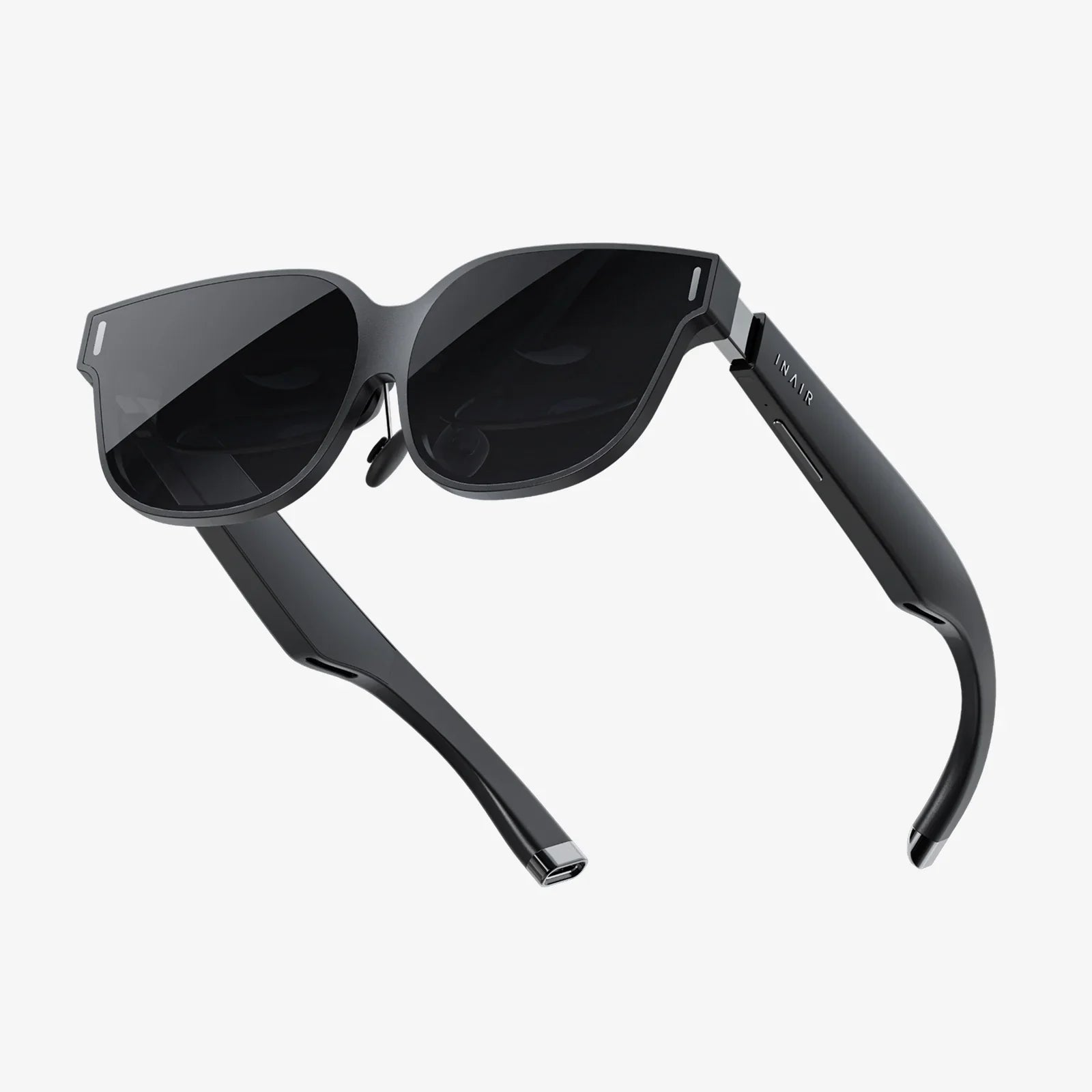
The sleek, futuristic advertisements paint a picture of effortless immersion—a world where digital information dances seamlessly before your eyes, enhancing reality without intruding upon it. The promise is a headset so light and comfortable you’ll forget it’s there, unlocking productivity, creativity, and connection in ways we’ve only dreamed of. But this vision has a literal Achilles' heel, a problem that manifests not in software glitches but in physical discomfort: the alarming and persistent heat generated at your temple. The dream of all-day augmented reality is currently cooled by a stark, technical reality that an AR headset could overheat, and this thermal challenge is the silent battle being waged in laboratories and engineering departments worldwide, a battle that will determine the very shape of our augmented future.
The Inevitable Physics of Power in a Tiny Package
To understand why thermal management is such a formidable opponent, one must first appreciate the incredible concentration of technology packed into the narrow arms and small visor of a modern AR headset. This is not a simple display; it's a full-fledged computer system operating under extreme constraints.
At its core, an AR headset must perform several computationally intensive tasks simultaneously:
- Spatial Mapping and Tracking: Using cameras, LiDAR, and other sensors, the device must constantly scan, map, and understand its 3D environment in real-time to accurately place and anchor digital objects.
- High-Resolution Display: Projecting bright, high-resolution graphics onto waveguides or other optical systems requires significant power, especially to ensure visibility in various lighting conditions.
- Sensor Fusion and Processing: Data from accelerometers, gyroscopes, and magnetometers must be continuously processed to track head movement with flawless precision to avoid latency-induced nausea.
- Wireless Connectivity: Maintaining a constant, high-bandwidth connection to the cloud or other devices for data streaming and low-latency communication.
- Computer Vision and AI Processing: Recognizing objects, gestures, and surfaces demands dedicated, powerful processors that generate substantial heat.
All of this processing power is crammed into a form factor that must, above all else, be lightweight and socially acceptable. There is simply very little physical space for the one component that manages the byproduct of all this computation: heat. This fundamental conflict between performance, size, and thermodynamics is the root cause of the problem. The laws of physics dictate that energy consumed must be dissipated as heat, and an AR headset could overheat when the rate of heat generation exceeds the device's ability to shed it into the surrounding environment.
Beyond Discomfort: The Cascading Consequences of Thermal Failure
The immediate sensation of warmth on the skin is more than just an annoyance; it is the most obvious symptom of a systemic issue that triggers a cascade of negative consequences, each more severe than the last.
1. The User Experience Breakdown
Physical comfort is the foundation of any wearable technology. If a device is unpleasant to wear, no amount of advanced functionality will compel long-term use. A headset that grows uncomfortably warm, especially in the sensitive area around the eyes and temples, creates a powerful psychological and physical barrier to adoption. It reminds the user they are wearing a machine, shattering the illusion of seamless augmentation and pulling them out of the experience. This discomfort is a primary reason many early adopters abandon extended use, preventing the technology from becoming a true "all-day" device.
2. Performance Throttling and the End of Immersion
When passive cooling (simply radiating heat away) is insufficient, devices employ active countermeasures. The most common is performance throttling. The system-on-a-chip (SoC) will automatically reduce its clock speed, effectively slowing down the processor to generate less heat. For the user, this manifests as a degraded experience: graphical fidelity drops, frame rates stutter, and tracking becomes less precise. This latency and visual degradation are the antithesis of immersion and are known to cause cybersickness—a feeling of nausea and disorientation. Therefore, an overheating AR headset doesn't just get warm; it actively becomes worse at its primary function, creating a frustrating feedback loop of declining performance.
3. The Specter of Hardware Degradation and Safety
Sustained high temperatures are the enemy of electronics. Components like batteries, processors, and displays have optimal operating temperature ranges. Consistently pushing beyond these limits accelerates the aging process of internal components, leading to reduced battery lifespan and potential long-term reliability issues. In extreme cases, excessive heat can pose a safety risk. While modern devices have multiple fail-safes to shut down before reaching critical temperatures, the mere perception of risk, however small, is enough to erode consumer trust in the entire category of devices.
The Engineering Arms Race: Cooling the Future
Solving this thermal puzzle is perhaps the most critical engineering challenge facing AR developers. The solution is not a single silver bullet but a multi-faceted approach that attacks the problem from every angle.
Material Science: Building a Better Heat Highway
Innovative materials are on the front lines. Engineers are moving beyond traditional metals and exploring advanced thermal interface materials (TIMs), heat-spreading graphite films, and even vapor chambers—technology borrowed from high-end smartphones—to more efficiently pull heat away from the core processing unit and distribute it across a larger surface area within the device's narrow confines. The goal is to create a highly efficient "heat highway" that transports thermal energy away from the user's skin as quickly as possible.
Architectural Innovation: Rethinking the Form Factor
Some designs are challenging the all-in-one form factor. One promising approach is a split architecture, where the battery and the bulk of the processing power are housed in a separate, larger device that can be worn on a belt or placed in a pocket. This "compute puck" connects to the lightweight glasses via a thin cable, dramatically reducing the thermal load on the headset itself. While this introduces a tether, it effectively exiles the heat-generating components to a location where they can be cooled more effectively, preserving the comfort of the glasses.
Silicon Efficiency: Doing More with Less Energy
The most profound gains will come from the chips themselves. The industry is racing to develop ultra-low-power processors and co-processors specifically designed for the unique workloads of AR. This includes dedicated processors for computer vision (CVPs) and AI (NPUs) that are vastly more efficient at their specific tasks than a general-purpose CPU. Furthermore, the move to more advanced manufacturing processes (e.g., 3nm and 2nm technology) allows for more transistors to be packed into a smaller space while consuming less power and generating less heat. This relentless pursuit of silicon efficiency is a quiet but monumental battle that will ultimately determine the viability of mainstream AR.
Software Optimization: The Intelligence of Cool
Software plays a crucial role in thermal management. Intelligent algorithms can predict thermal load and preemptively manage tasks. For example, the system could schedule heavy computational tasks for moments when the user is stationary or postpone non-essential background processes when temperatures begin to rise. This predictive thermal management, akin to a smart thermostat for the processor, allows the system to maintain a consistent performance level without unexpected thermal spikes, creating a smoother and more comfortable user experience.
A Crossroads for the Industry
The question of thermal management is no longer just an engineering problem; it is a strategic one. It forces a fundamental trade-off between three competing virtues: capability (high performance), form factor (small size and low weight), and endurance (battery life and thermal stability). A company can prioritize any two, but mastering all three simultaneously is the holy grail. This trilemma is shaping the entire market. Some are betting on powerful, tethered systems for professional use where thermal comfort is secondary to performance. Others are aiming for minimalist, socially acceptable glasses that prioritize comfort but offer more limited functionality, at least until the underlying technology matures.
The path forward is one of convergence. The industry must converge on a set of technologies—in materials, silicon, and software—that push the boundaries of this trilemma, enabling devices that are powerful, comfortable, and enduring. This won't happen overnight. It will be a story of incremental gains: a few degrees shaved off here, a few grams of weight saved there, and a few more minutes of usable battery life unlocked. Each small victory is a step closer to the dream.
The warmth you feel on your skin is more than a technical hiccup; it is the friction between our digital aspirations and physical reality. It’s the tangible evidence of the immense computational power required to blend two worlds. Overcoming this challenge is the key that will unlock not just a new product, but a new way of interacting with reality itself. The future of AR doesn't just depend on what we can make these devices do, but on our ability to make them disappear—and keeping them cool is the first, and most critical, step toward making them truly vanish into the background of our lives.
Share:
What Is The Difference Between AR And XR: The Ultimate Guide To Understanding Immersive Technologies
iPhone 15 VR: The Unseen Revolution in Your Pocket