


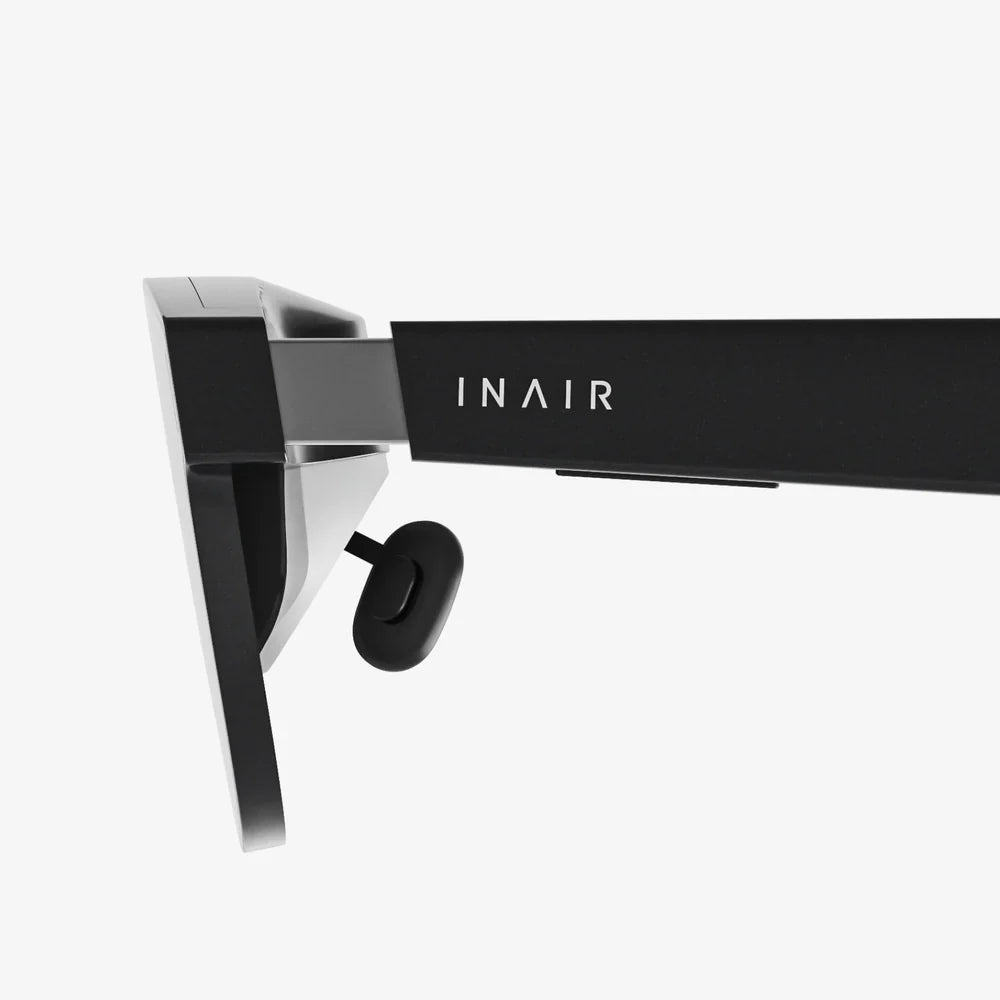
Imagine slipping a window to another dimension into your pocket, a device so advanced it can construct realities as readily as it makes calls. This is the promise of the iPhone 15, not as a mere communication tool, but as the beating heart of a personal virtual reality revolution. While it may not be marketed with bulky headsets as its primary partner, the technological leap it represents is quietly, profoundly, reshaping the very fabric of mobile VR and AR experiences. The fusion of its raw computational power, sophisticated sensor suite, and ubiquitous connectivity is creating a perfect storm, making high-fidelity immersive technology more accessible and powerful than ever before. This isn't about a single accessory; it's about the foundational shift that turns the device millions already own into the most significant VR platform they never knew they had.
The Engine Room: Powering Realities with Raw Silicon
At the core of any credible VR experience lies an uncompromising demand for processing power. It's a discipline of physics and computation: rendering two high-resolution, slightly offset images simultaneously at a blistering frame rate—often 90 or 120 frames per second—to convince the human brain it is looking at a coherent, three-dimensional world. A single dropped frame or a lag in rendering can shatter the illusion, leading to discomfort or nausea. This is where the iPhone 15's internal architecture makes its first, and perhaps most crucial, stand.
The latest iteration of mobile processors represents a quantum leap in graphics and neural processing. Built on an advanced manufacturing process, it packs billions more transistors into an impossibly small space. This translates directly into a GPU capable of handling complex lighting effects, detailed textures, and vast draw distances—the hallmarks of a convincing virtual environment. Unlike dedicated VR consoles tethered to wall power, this immense capability is housed in a device that sips battery power with incredible efficiency, enabling untethered freedom. The Neural Engine, a specialized core dedicated to machine learning tasks, is equally vital. It handles the complex algorithms for inside-out tracking, where the phone uses its cameras to understand its position in space without external sensors, and enables advanced features like hand-tracking and real-world object occlusion, where virtual objects can convincingly pass behind your real-world furniture.
A Window to New Worlds: The Display and Visual Fidelity
If the processor is the engine, the display is the windshield. The visual quality of the iPhone 15's screen sets a new benchmark for what is possible in mobile-based VR. With a pixel density so high that the individual subpixels blend into seamless, razor-sharp images, the dreaded "screen door effect"—where users can perceive the gaps between pixels—is effectively vanquished. This creates a far more immersive and believable visual experience, crucial for spending extended periods in a virtual space.
Furthermore, the promotion technology, with its adaptive refresh rates soaring up to 120Hz, ensures buttery-smooth motion. In VR, this high refresh rate is not a luxury; it is a necessity for comfort. It drastically reduces motion blur and latency, the two primary culprits of simulator sickness. The incredible peak brightness levels, often measured in nits, ensure that virtual worlds are vibrant and lifelike, even when viewed through the optics of a headset, which can often dim the output. Combined with precise color calibration and true-to-life contrast ratios, the display becomes a perfect canvas upon which virtual realities are painted, offering a visual clarity that was once the exclusive domain of high-end, dedicated PC VR setups.
Perceiving Reality: The Sensor Suite That Maps Your World
A VR device is blind without sensors. It must understand its own movement and the environment around it to anchor digital content convincingly. The iPhone 15 is arguably one of the most sensor-rich consumer devices ever created, and this array is a goldmine for immersive technologies. The LiDAR (Light Detection and Ranging) scanner is arguably the star of this show. It fires out invisible laser dots to measure the distance to objects millions of times per second, creating a detailed, real-time depth map of the surrounding room. This allows for astonishingly fast and accurate placement of virtual objects.
In a VR context, this means the headset can understand the geometry of your playspace instantly, creating guardian boundaries to keep you from bumping into walls. It enables mixed reality experiences where a virtual character can jump onto your real coffee table, knowing precisely where it is. The ultra-wideband chip enhances spatial awareness for finding peripherals, while the sophisticated gyroscopes and accelerometers provide millimetre-precise tracking of head movement with ultra-low latency. This fusion of technologies means the barrier between the physical and digital worlds becomes thinner and more permeable than ever before, all powered by the device in your pocket.
The Ecosystem Effect: Democratizing Development and Access
The true genius of using a device like the iPhone 15 as a VR platform lies in its universality. Developers are not building for a niche audience of early adopters who have invested in expensive, specialized hardware. They are building for a massive, existing install base of hundreds of millions of users who already own a powerful computer in their pocket. This dramatically lowers the barrier to entry for consumers; high-quality VR is no longer a separate, costly purchase, but an experience accessible through a relatively affordable accessory—a headset mount.
This vast potential market incentivizes developers to create richer, more polished, and more ambitious content. App stores become bustling marketplaces for VR games, educational tools, virtual travel experiences, and social spaces. This creates a virtuous cycle: better content attracts more users, and a larger user base justifies更大的 development budgets. It democratizes VR, moving it from a hardcore gaming peripheral to a mainstream tool for work, connection, and exploration. The seamless integration with the broader ecosystem also means your virtual experiences can be easily recorded, shared via social media, and backed up to the cloud, further embedding VR into the daily digital lifestyle.
Beyond Gaming: The Expansive Universe of VR Applications
While immersive gaming is a thrilling application, the potential of iPhone 15-driven VR extends far beyond entertainment. Imagine a medical student using a headset to step inside a detailed, interactive 3D model of the human heart, studying anatomy from every angle. An interior designer could walk a client through a photorealistic virtual mockup of their renovated living room, making changes to paint colors and furniture layouts in real-time. Remote collaboration takes on a new meaning; instead of a grid of faces on a video call, team members from across the globe could meet as avatars in a virtual boardroom, interacting with 3D models of their project.
For education, history lessons can become time machines, transporting students to ancient Rome or the surface of Mars. For fitness, immersive VR workouts can make exercise an adventure, boxing with virtual opponents or climbing breathtaking digital mountains. The accessibility of the platform opens these transformative experiences to fields like therapy, real estate, tourism, and engineering, proving that the value of this technology is not just in the worlds it creates, but in the ways it can enhance our understanding of our own.
The Invisible Bridge: Connectivity and the Cloud
The iPhone 15's advanced cellular and Wi-Fi capabilities serve as an invisible bridge, connecting these pocket-powered realities to vast cloud resources. While the device itself is immensely powerful, the future of complex VR may lie in cloud streaming. High-speed, low-latency 5G and Wi-Fi 6 connections allow the phone to act as a sophisticated display and input device, while the heavy lifting of rendering photorealistic graphics is handled by powerful servers in a data center. This paradigm, often called cloud gaming or cloud VR, promises to deliver experiences that far exceed the native processing limits of any mobile device.
This always-connected nature also enables persistent social VR worlds and live events. You could attend a virtual concert with thousands of other avatars, all experiencing the show live and in real-time, or browse a virtual art gallery opening with friends who are physically on another continent. The seamless handoff between networks ensures the experience remains unbroken, whether you're at home, in a park, or on a train. This transforms the device from a self-contained universe into a portal to a persistent, shared digital metaverse, all flowing through the high-bandwidth pipeline the iPhone 15 provides.
The Human Factor: Design, Comfort, and the Future
Of course, the challenge remains in translating this technological potential into a comfortable, user-friendly experience. The design of third-party headset mounts is crucial. They must be lightweight, well-ventilated, and balanced to avoid neck strain during extended use. Innovative solutions like bifurcated battery designs, where a power bank counterweights the phone at the back of the strap, can improve comfort dramatically. The use of advanced materials and magnetic attachment systems will make the process of docking the phone into a headset as simple as snapping on a case.
The future likely holds even deeper integration. Imagine a headset that wirelessly connects to the phone in your pocket, eliminating any wires entirely and leveraging the phone's data connection. Or advanced eye-tracking technology, using the front-facing cameras to understand where you are looking, enabling foveated rendering—a technique where only the area you are directly looking at is rendered in full detail, drastically reducing processing load. Haptic feedback systems could provide tactile sensations, completing the immersion. The iPhone 15's technology provides the foundational pillars upon which these future comforts will be built.
So, the next time you glance at that sleek slab of glass and metal, see it for what it has truly become: a universe in waiting. It is a testament to how the most profound revolutions are often not announced with a bang, but quietly integrated into the fabric of our daily lives, waiting for us to look up from the screen and into a new world entirely. The gateway to these immersive experiences isn't in a specialized store; it's already in your hand, its potential limited only by the reality you choose to explore.
Share:
An AR Headset Could Overheat: The Hidden Challenge Slowing Down Our Augmented Future
AR Headset HoloLens: Redefining Reality and the Future of Human-Computer Interaction