


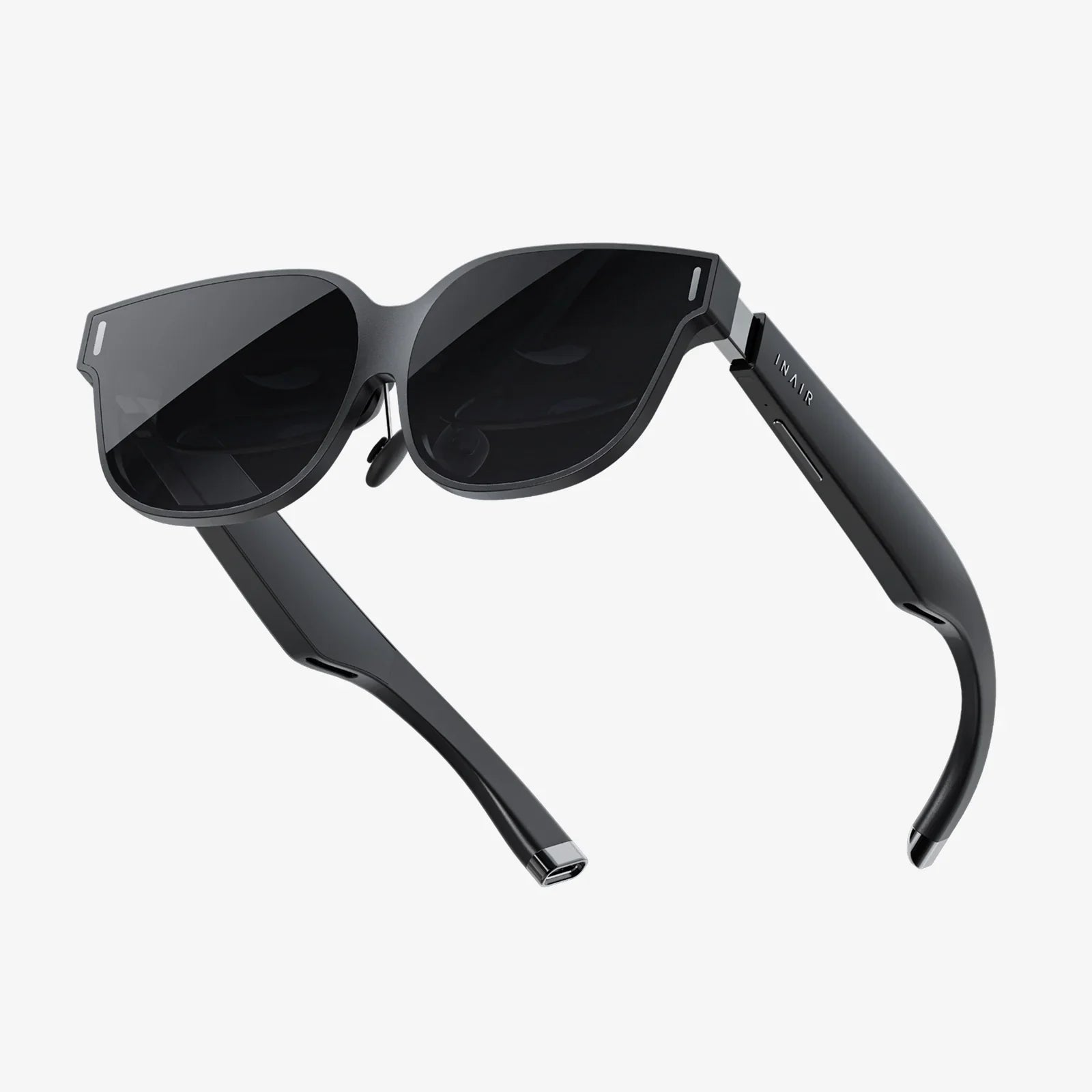
Imagine slipping on a lightweight headset and instantly stepping into a hyper-realistic, fully immersive world where the only limit is your imagination. This is no longer the stuff of science fiction; it is the burgeoning reality being built on the backbone of a technology you likely already hold in your hand. The fusion of the Android ecosystem with advanced 3D graphics and virtual reality principles is not just another tech trend—it is a silent revolution democratizing the very fabric of digital experience, and it is happening right now, all around us.
The Foundational Trinity: Android, 3D, and VR
To understand the magnitude of this shift, we must first deconstruct its core components. This revolution is built upon a powerful trinity of technologies, each playing a distinct and vital role.
The Democratizing Power of Android
At its heart, Android is an open-source, Linux-based operating system. But to label it merely as such is to miss its true significance. Android is a global ecosystem, a ubiquitous platform that powers billions of devices across a staggering array of form factors and price points. This universality is its greatest strength. By providing a stable, scalable, and familiar foundation, Android has drastically lowered the barrier to entry for VR development and consumption. Manufacturers don't need to engineer complex proprietary software from the ground up; they can leverage the robust Android core to build dedicated VR headsets, powerful smartphones that can be transformed into VR portals with simple viewers, and everything in between. This accessibility is the engine pulling VR out of exclusive, high-end research labs and placing it into the hands of the masses.
The Language of Depth: 3D Graphics Rendering
If Android is the stage, then 3D graphics are the set, the props, and the actors. Modern 3D rendering is the art and science of creating the illusion of depth on a two-dimensional screen. It involves complex mathematical models to create wireframe objects, apply textures and lighting, and simulate physics to make a digital world feel tangible. On Android devices, this is primarily powered by graphics APIs like OpenGL ES and Vulkan. Vulkan, in particular, is a game-changer, offering lower overhead and finer control over the device's GPU (Graphics Processing Unit), leading to vastly improved performance and visual fidelity. This efficient rendering is paramount for VR, where maintaining a high, stable frame rate—often 90 frames per second or higher per eye—is non-negotiable to prevent user discomfort and preserve immersion.
The Illusion of Presence: Virtual Reality Principles
Virtual Reality is the ultimate goal: the convincing illusion of being physically present in a non-physical world. This sensation, known as "presence," is the holy grail of VR design. It is achieved through a combination of key technological feats:
- Steroscopic 3D Vision: By presenting slightly different images to each eye, the brain perceives depth, making objects appear solid and voluminous.
- Low-Latency Head Tracking: High-speed gyroscopes, accelerometers, and magnetometers track the user's head movements in real-time. The rendered scene must update with imperceptibly low latency (under 20 milliseconds) to match these movements. Any delay shatters the illusion and can cause nausea.
- Field of View (FoV): A wide FoV, typically over 100 degrees, fills the user's peripheral vision, further enhancing the feeling of being "inside" the experience.
- Audio Spatialization: 3D positional audio ensures sounds come from their correct location in the virtual space, whether it's footsteps behind you or a bird chirping to your left.
The magic happens when these three pillars—Android's accessibility, 3D rendering power, and VR's immersive principles—converge into a single, seamless experience.
From Smartphones to Standalones: The Hardware Evolution
The hardware delivering Android 3D virtual reality has evolved rapidly, moving through distinct generations that have each expanded the technology's reach and capabilities.
The Age of the Smartphone VR Viewer
The initial wave of consumer VR was arguably catalyzed by simple, affordable viewers made of cardboard or plastic. Users would slot their high-end Android smartphones into these headsets, and the phone's screen would become the display, its sensors would handle head tracking, and its processor would run the experience. This model was brilliantly effective at introducing millions to VR with minimal investment. It proved the concept and created a massive initial user base for developers to target.
The Rise of the Standalone Headset
While smartphone viewers were a great entry point, they had limitations: they drained phone batteries, offered limited tracking capabilities, and varied greatly in performance based on the host device. The next logical step was the standalone VR headset—a completely self-contained unit running on a customized version of Android. These devices integrate everything needed for VR: a dedicated high-resolution display, a powerful mobile processor, built-in sensors for head and, crucially, controller tracking, and a battery. By controlling the entire hardware and software stack, manufacturers could deeply optimize the Android OS for the unique demands of VR, resulting in more reliable, higher-performance, and much more user-friendly experiences. This shift marked VR's transition from a novel accessory to a legitimate platform in its own right.
Inside-Out Tracking and the Evolving Interface
Modern standalone headsets have largely adopted "inside-out" tracking. Instead of relying on external cameras or sensors placed around the room, these headsets use multiple embedded cameras to scan the user's environment in real-time. This allows them to map the physical space, understand its boundaries (creating a "guardian" system to prevent users from walking into walls), and track the position of handheld controllers with incredible precision, all without any external setup. This technology, powered by complex computer vision algorithms running on the Android platform, has been instrumental in making VR truly untethered and accessible.
The Software and Development Landscape: Building New Worlds
A platform is nothing without its software. The Android ecosystem provides developers with a mature and powerful toolkit for building immersive 3D VR experiences.
Game Engines: The Powerhouse of Creation
The vast majority of advanced Android VR applications are built using powerful cross-platform game engines. These engines provide the essential tools and frameworks for 3D world-building, physics simulation, lighting, and, most importantly, VR integration.
- Unity: With its extensive asset store, relatively gentle learning curve, and robust VR support, Unity has become a favorite for many VR developers targeting Android. Its flexibility allows for the rapid prototyping and development of everything from games to enterprise applications.
- Unreal Engine: Known for pushing the boundaries of visual fidelity, Unreal Engine is often the choice for developers aiming for photorealistic graphics and high-end experiences. Its powerful rendering pipeline can produce stunning results on capable Android hardware.
These engines handle the incredibly complex tasks of stereoscopic rendering, distortion correction (to account for the headset's lenses), and interfacing with the headset's tracking APIs, allowing developers to focus on creating compelling content.
Android's Native VR Layers
Beneath the game engines, Android itself provides critical layers for VR. While standard for smartphones has been adapted and extended for dedicated VR devices. Furthermore, dedicated VR platforms built on Android have created their own software development kits (SDKs) and runtime environments. These layers handle system-level functions unique to VR, such as managing the VR-specific system interface (or "Oasis"/"Home" environment), handling notifications in VR, and ensuring system stability under the heavy load of immersive 3D rendering.
Beyond Gaming: The Expansive Universe of Applications
While immersive gaming is a flagship application, the impact of Android-powered 3D VR extends far beyond entertainment, seeping into the very core of how we work, learn, and connect.
Revolutionizing Education and Training
VR creates the ultimate interactive learning environment. Imagine:
- Medical students performing virtual dissections or practicing complex surgical procedures on detailed 3D models without risk.
- History classes not just reading about ancient Rome, but walking through a meticulously reconstructed Forum, hearing the sounds and seeing the scale of the architecture.
- Mechanics and engineers training on virtual machinery, learning to assemble and disassemble complex systems before ever touching physical, expensive equipment.
This experiential learning leads to drastically improved knowledge retention and understanding.
Transforming Enterprise and Remote Collaboration
The concept of the "virtual office" is being redefined. With Android VR, teams distributed across the globe can meet in a shared 3D virtual space. They are no longer boxes on a screen but embodied avatars that can gesture, interact with 3D models of products or architectural designs, and write on virtual whiteboards as if they were in the same room. This fosters a level of collaboration and intuition that flat video calls simply cannot match. Architects can walk clients through unbuilt designs, and designers can prototype products in 3D space, saving immense time and resources.
Enhancing Social Connection and Storytelling
Social VR platforms are creating new digital town squares where people can meet, play games, watch movies, and attend live events like concerts or comedy shows together. The sense of shared presence—of actually being next to a friend who is physically thousands of miles away—is profound and represents a new frontier for human connection in an increasingly digital world. Furthermore, filmmakers and artists are exploring "immersive storytelling," placing the audience inside the narrative, allowing them to explore the story environment and choose their own perspective.
Challenges and the Road Ahead
Despite incredible progress, the journey is far from over. Several challenges remain to be solved for Android 3D VR to achieve its full potential.
- Computational and Thermal Constraints: Rendering two high-resolution, high-frame-rate streams of 3D content is incredibly demanding on mobile chipsets. Pushing graphical boundaries is a constant battle against battery life and device overheating, requiring ingenious software optimization.
- The "Simplicity" Paradox: The hardware and software are becoming more user-friendly, but designing intuitive and comfortable user interfaces for an entirely new dimension of computing is an ongoing challenge. Input methods are still evolving beyond controllers towards hand-tracking and eventually, perhaps, neural interfaces.
- Content and the Network Effect: The platform's long-term success hinges on a rich and diverse library of "killer apps"—experiences so compelling that they drive headset adoption. This requires continued investment and faith from developers.
The future, however, is blindingly bright. We are moving towards lighter, more comfortable headsets with even higher-resolution displays (like varifocal lenses) that will eliminate the screen-door effect. Advances in 5G and cloud streaming could eventually offload the intense rendering to remote servers, making high-end VR accessible on even more modest hardware. The lines between AR (Augmented Reality) and VR will blur into a spectrum of mixed reality (MR), all powered by the versatile Android engine.
The quiet hum of your Android device is the sound of a gateway being constructed. It is a portal waiting to be opened, not to a distant galaxy, but to a new layer of reality superimposed upon our own—a layer of immersive education, transformative collaboration, and boundless creativity. This convergence of Android, 3D, and virtual reality is not just building new gadgets; it is meticulously crafting the foundational infrastructure for the next era of human-computer interaction, and it invites every one of us to step through and help shape what comes next.
Share:
AI Assistant Glasses News: The Dawn of a New Era in Wearable Intelligence
Premium AR Glasses Are Redefining Reality and How We Interact With It