


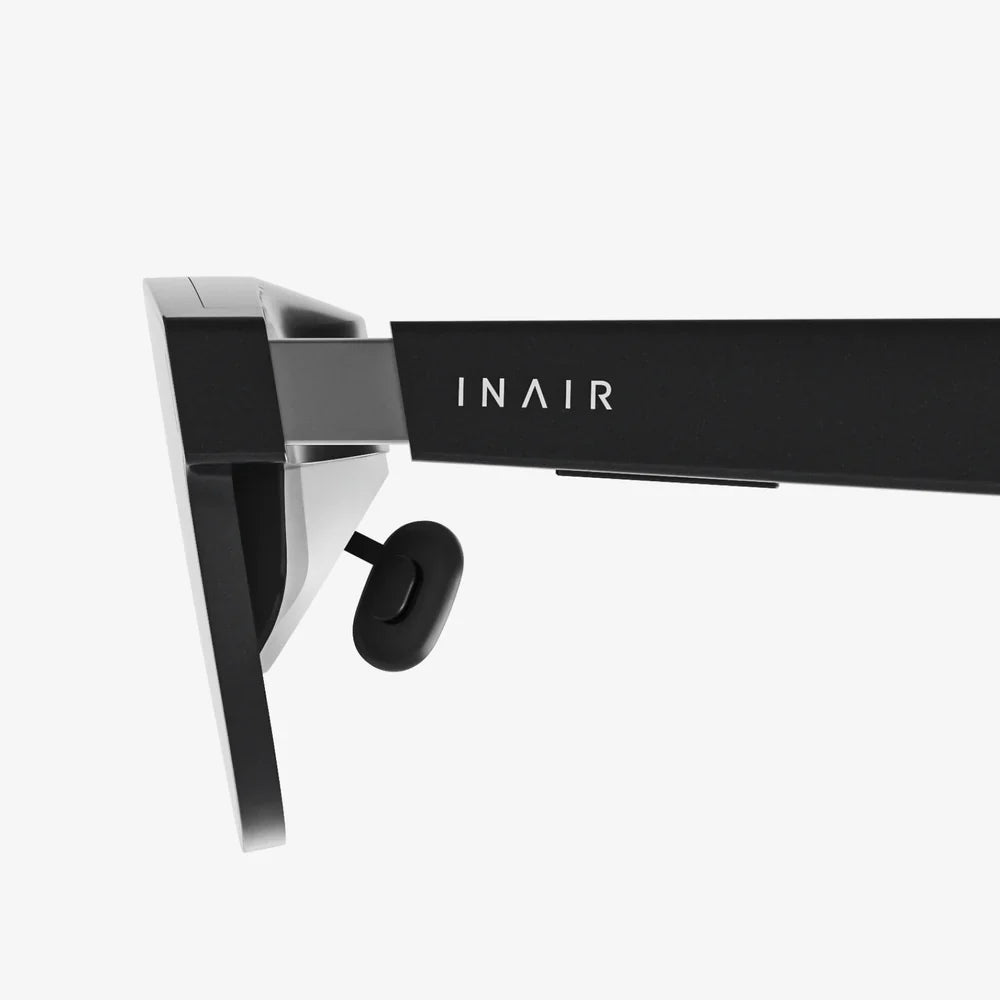
Imagine slipping a sleek, compact headset over your eyes and instantly being transported to a front-row seat at a concert, a guided tour of ancient Rome, or a virtual design studio where you can create with your hands. This isn't a glimpse into a distant, expensive future; it's the accessible, revolutionary reality of Android VR today. This technology has democratized virtual reality, turning the powerful computer already in your pocket into a portal to boundless digital dimensions, and it's changing the way we play, learn, and connect.
The Foundation: What Exactly is Android VR?
At its core, Android VR is a platform for virtual reality experiences that is powered by the Android operating system. Unlike high-end, PC-tethered systems that require external sensors and powerful dedicated graphics cards, the primary processing and display unit for Android VR is the smartphone itself. The headset, often a lightweight shell made from plastic, cardboard, or fabric, acts as a sophisticated holder, equipped with lenses that reshape the phone's display into a stereoscopic, wide-field-of-view image.
The magic lies in the synergy between hardware and software. Modern Android smartphones are technological marvels, packing high-resolution displays, powerful multi-core processors, advanced gyroscopes, accelerometers, and magnetometers. These sensors are crucial; they track the precise rotation of your head in real-time, allowing the software to adjust the virtual viewpoint instantly and create a convincing, immersive sensation of being 'inside' the digital environment. This entire ecosystem is often categorized under the broader term of mobile VR, with Android devices constituting its vast majority.
A Brief Journey Through Time: The Evolution of a Platform
The story of Android VR is one of rapid, consumer-driven innovation. It began not in a corporate lab, but with a grassroots movement. In 2014, the concept exploded into public consciousness with a simple, yet brilliant, open-source project: a headset made from cardboard, rubber, and magnets. This DIY kit demonstrated that a compelling VR experience required not just raw power, but clever software and accessible design. It ignited a global interest in mobile VR and proved there was a massive appetite for affordable virtual reality.
Seeing this potential, major technology companies entered the arena, launching more refined, comfortable, and feature-rich headsets. These consumer-grade products retained the core principle—using a smartphone as the engine—but added crucial improvements like adjustable straps, better lenses, and integrated wireless controllers. These controllers marked a significant leap, evolving the experience from passive viewing to interactive engagement, allowing users to point, grab, and manipulate virtual objects.
Software platforms evolved in tandem. Dedicated application stores emerged, curating a growing library of VR games, 360-degree videos, and educational apps. These platforms provided the essential software development kits (SDKs) that enabled creators to build and optimize experiences specifically for the mobile VR environment, ensuring performance and compatibility across a wide range of Android devices.
How It All Works: The Technology Unpacked
Understanding the inner workings of Android VR demystifies the experience and highlights the engineering marvel it represents. The process can be broken down into several key stages:
Sensing the World (Or Your Head)
The moment you place your phone into the headset and launch a VR application, a symphony of sensors springs into action. The gyroscope measures the orientation and rotational velocity of your head. The accelerometer detects linear movement, understanding if you're leaning forward or backward. The magnetometer acts as a digital compass, correcting for drift and establishing a stable frame of reference. This combination, known as Inertial Measurement Unit (IMU) tracking, is processed through a complex algorithm called sensor fusion, which delivers the smooth, responsive head-tracking that is the absolute baseline for any VR experience.
The Visual Trickery: Lenses and Display
Your smartphone's screen is the window, but the lenses are what make it a world. The high-resolution display is split into two identical images, one for each eye. The specially designed fresnel lenses placed between your eyes and the screen perform two critical functions: they magnify the image to fill your peripheral vision, and they warp the twin images to correct for the pincushion distortion that is inherently created by the process. This warping is pre-calculated by the VR software (a technique called barrel distortion) to ensure the final image perceived by your brain is geometrically correct and comfortable to view.
Interaction: From Gazing to Doing
Early interaction was limited to a user's gaze, but the introduction of controllers transformed Android VR. These Bluetooth controllers are packed with their own IMUs, tracking their movement and orientation in 3D space. They feature buttons, touchpads, and triggers, providing input methods that games and applications can map to virtual actions. This creates a direct, intuitive link between the user's intent and the virtual world, enabling everything from firing a laser pistol to painting a 3D sculpture.
The Digital Playground: Experiences and Applications
The true value of any platform is defined by its content, and Android VR boasts a surprisingly diverse and rich ecosystem that extends far beyond gaming.
Gaming and Interactive Entertainment
This is the most prominent and developed sector. The Google Play Store and other hubs are filled with immersive titles. You can find yourself in the cockpit of a starfighter, solving intricate puzzle rooms, experiencing heart-pounding horror adventures, or engaging in rhythm games where you slash notes to the beat of music. The accessibility of the platform has made it a fertile ground for indie developers, resulting in a vast array of creative and unique experiences.
Educational and Training Simulations
Android VR is a powerful pedagogical tool. Imagine medical students performing virtual dissections, history classes walking through digitally reconstructed historical sites, or mechanics training on the virtual assembly of a complex engine. This form of experiential learning boosts retention and understanding by allowing users to engage with the subject matter directly. Corporations also use it for safe, cost-effective training simulations for high-risk jobs.
Social Connection and Virtual Tourism
One of the most profound applications is the ability to connect with others and explore our world. Social VR platforms allow users to meet as stylized avatars in virtual spaces to watch movies, play games, or simply chat, making physical distance irrelevant. Furthermore, with the proliferation of 360-degree cameras, you can take immersive tours of the Louvre in Paris, swim with whales in the ocean, or stand on the surface of Mars, all from your living room. This has immense potential for those with mobility issues or limited means to travel.
Weighing the Reality: Advantages and Limitations
Like any technology, Android VR presents a mix of incredible strengths and inherent challenges.
The Compelling Advantages
- Accessibility and Low Barrier to Entry: The most significant advantage is cost. Since the primary hardware is a smartphone many already own, the additional investment for a quality headset and controller is relatively small.
- Wireless and Untethered Freedom: The complete lack of wires is liberating. Users can turn, crouch, and move within a limited space without fear of tripping or tangling, enhancing the sense of immersion.
- Simplicity and Portability: The setup is often as simple as inserting a phone and pairing a controller. The entire system is lightweight and portable, making it easy to take VR experiences to a friend's house or on a trip.
The Current Limitations
- Performance Constraints: The experience is ultimately limited by the processing power, thermal management, and battery life of the smartphone. Pushing graphical boundaries can lead to overheating, dropped frames, and a sub-optimal experience.
- Limited Positional Tracking: Most consumer Android VR systems only track rotational head movement (3 degrees of freedom - 3DoF). They cannot track your body as you lean, dodge, or walk around a room (6 degrees of freedom - 6DoF), which is a standard feature on high-end systems and is crucial for the deepest level of immersion.
- Potential for discomfort: Issues like latency (a delay between head movement and on-screen update), low graphical fidelity, or incorrect interpupillary distance (IPD) settings can contribute to simulator sickness in some users.
Gazing into the Crystal Ball: The Future of Android VR
The trajectory of Android VR is inextricably linked to the evolution of the smartphone and emerging technologies. We are already seeing smartphones with vastly improved processing power, dedicated AI chips, and higher-refresh-rate displays that will directly benefit VR. The future likely points towards more standalone, all-in-one devices that offer a more streamlined and powerful experience, yet the philosophy of accessibility pioneered by Android VR will remain.
Furthermore, the lines are blurring with Augmented Reality (AR). Future devices may seamlessly blend the real and virtual worlds, projecting digital information onto your physical surroundings. The development of 5G networks promises to offload heavy processing to the cloud, potentially allowing even less powerful devices to run incredibly complex simulations with minimal latency. This could lead to a new era of cloud-based VR streaming, accessible directly from a mobile device.
The journey of Android VR is a testament to the power of a simple idea: that transformative technology should be for everyone. It took the concept of virtual reality out of the realm of science fiction and expensive research labs and placed it directly into the hands of millions. It has fostered a new generation of creators and given users a new lens through which to see the world—both real and digital. While it may not represent the absolute pinnacle of technical performance, its role as the welcoming, accessible, and revolutionary gateway to virtual worlds is undeniable and profoundly important. The next immersive adventure is waiting, and it's closer than you think—it's already in your pocket.
Share:
Decent VR Headset - Your Portal to Virtual Worlds Without Breaking the Bank
Decent VR Headset - Your Portal to Virtual Worlds Without Breaking the Bank