


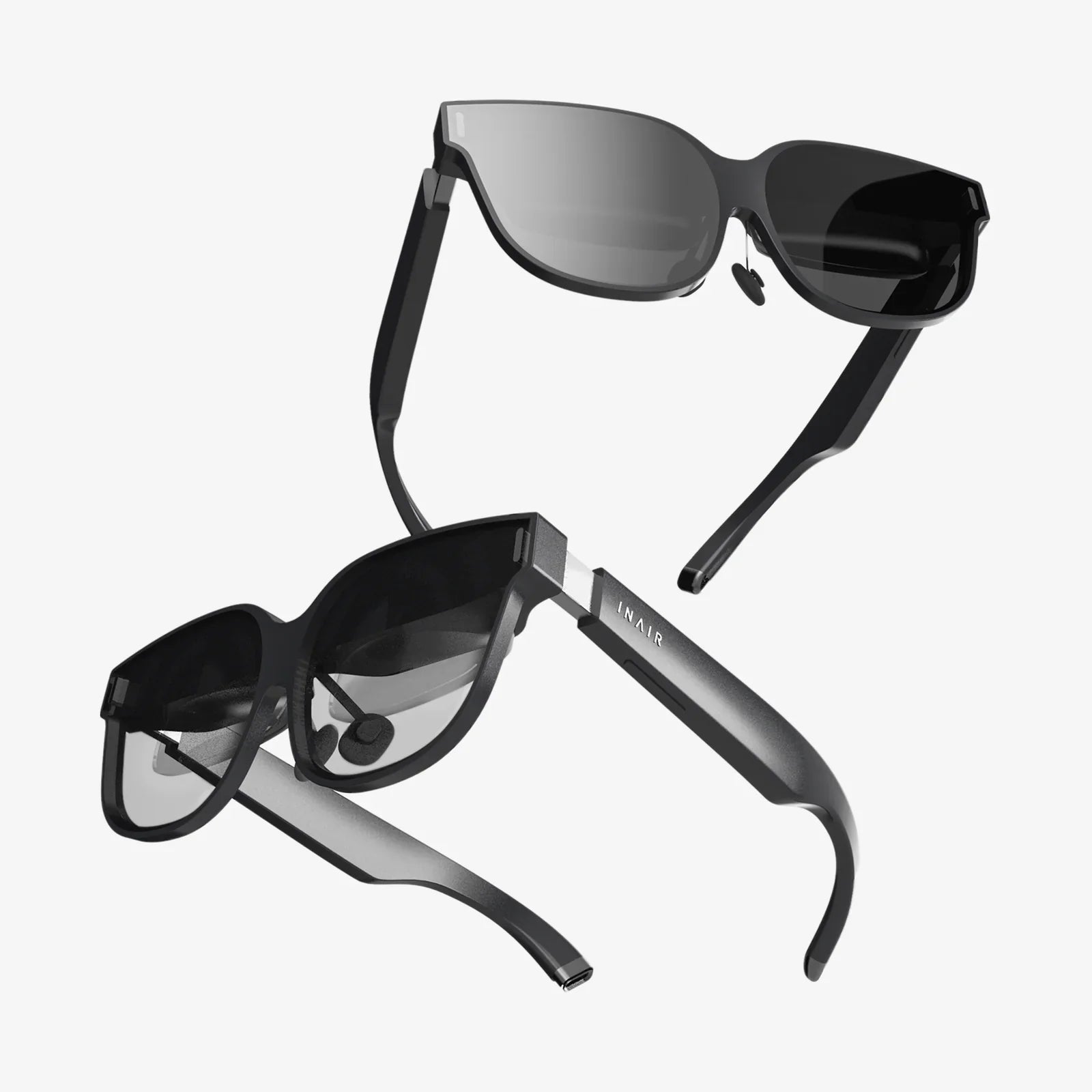
Imagine a world where information doesn’t live on a screen in your hand but is seamlessly woven into the fabric of your reality. Directions float on the pavement before you, the history of a landmark unfolds before your eyes as you gaze upon it, and a colleague from across the globe stands in your living room, discussing blueprints as if they were physically present. This is not a distant science fiction fantasy; it is the imminent future being built today, and it is being powered by a revolution in wearable technology known as Android XR glasses.
The Confluence of Realities: Defining the XR Spectrum
To understand Android XR glasses, one must first decipher the acronym. XR stands for Extended Reality, an umbrella term that encompasses the entire spectrum of immersive technologies.
- Virtual Reality (VR): This is a fully digital, immersive experience. VR headsets block out the physical world entirely, transporting the user to a computer-generated environment, typically for gaming, simulation, or detailed 3D design work.
- Augmented Reality (AR): This technology overlays digital information—images, text, animations—onto the user’s view of the real world. Using a smartphone camera to see a cartoon character dancing on your table is a basic form of AR.
- Mixed Reality (MR): This is a more advanced iteration of AR where digital objects not only overlay the real world but can interact with it in a physically believable way. A virtual ball in MR could bounce off your real table and roll onto the floor, with its path and physics dictated by the environment.
Android XR glasses primarily operate in the AR and MR spaces. They are not about escaping reality but about enhancing it, augmenting our natural capabilities with a constant, contextual, and hands-free stream of computing power.
Beyond the Hype: The Core Technology Inside the Frames
The magic of these devices lies in a sophisticated fusion of hardware and software. While designs vary, several key components are fundamental to their operation.
Optical Systems: Painting Light onto the World
This is arguably the most critical and challenging engineering feat. How do you project a bright, high-resolution digital image onto a transparent lens in broad daylight? Several approaches exist:
- Waveguide Technology: This is a leading method. Tiny gratings or holographic elements etched into the lens guide light from a micro-projector on the temple of the glasses into the user’s eye. This allows for a sleek form factor that resembles traditional eyewear.
- Birdbath Optics: This system uses a combiner—a partially reflective mirror—to fold the image from a projector into the user’s line of sight. It can offer vibrant colors and high contrast but often results in a slightly bulkier design.
Sensing the World: Cameras, LiDAR, and More
To understand the environment and anchor digital content within it, these glasses are equipped with a suite of sensors:
- High-Resolution Cameras: These are used for computer vision, allowing the device to identify surfaces, objects, and people (with appropriate privacy safeguards).
- Depth Sensors (Time-of-Flight or LiDAR): These sensors fire out infrared light and measure the time it takes to return, creating a precise 3D map of the surroundings. This is essential for occlusion (having digital objects hide behind real-world furniture) and realistic interaction.
- Inertial Measurement Units (IMUs): These gyroscopes and accelerometers track the precise movement and orientation of the user’s head, ensuring the digital overlay remains stable and doesn’t drift unnaturally.
Processing Power: On-Device vs. Tethered Compute
There are two primary philosophies for handling the immense computational load required for spatial computing:
- Standalone: The glasses contain their own processor, memory, and battery, functioning as a completely self-contained computer. This offers maximum freedom and mobility but can lead to trade-offs in weight, heat, and ultimate processing power.
- Tethered: The glasses act as a sophisticated display, connected via a high-speed wireless protocol to a more powerful processing unit, often a smartphone or a small dedicated fob. This leverages the power of a user’s existing device, allowing for slimmer, lighter glasses.
Many Android XR glasses adopt the tethered model, seamlessly integrating with the powerful smartphones already in our pockets.
The Android Advantage: Why the Ecosystem Matters
The choice of Android as the underlying operating system is not incidental; it is a strategic decision that unlocks immense potential. The open-source nature of Android has democratized mobile technology, and it is poised to do the same for spatial computing.
- A Massive Developer Community: Millions of developers already know how to build for Android. This drastically lowers the barrier to entry for creating XR applications, ensuring a rapid and diverse expansion of the available software library, or "spatial app store."
- Seamless Device Integration: For tethered glasses, the connection to an Android smartphone is fluid. Notifications, messages, calls, photos, and apps can effortlessly transition from the phone's screen to the user's field of view, creating a unified digital experience.
- Customization and Innovation: The Android ecosystem allows multiple manufacturers to innovate on the core platform. This fosters healthy competition, leading to a wider variety of device form factors, price points, and specialized features tailored to different user needs and markets.
Transforming Industries: The Practical Applications of Android XR
While consumer entertainment often grabs headlines, the most immediate and profound impact of Android XR glasses will be felt in enterprise and specialized fields.
Revolutionizing the Frontline Worker
For mechanics, field technicians, and warehouse operators, these glasses are a game-changer. A technician repairing a complex machine can have schematics, instruction manuals, and live video feed from a remote expert overlaid directly onto the equipment they are working on. This provides contextual, hands-free guidance, drastically reducing errors, improving first-time fix rates, and enhancing training.
The Future of Design and Collaboration
Architects and engineers can step inside their 3D models at scale, walking through virtual buildings before a single brick is laid. Design teams spread across different countries can collaborate around a virtual prototype as if they were in the same room, making real-time adjustments to the model. This "spatial computing" approach unlocks a new level of intuition and understanding that a 2D screen cannot provide.
Enhancing Healthcare and Medical Training
Surgeons could use AR overlays to visualize critical patient data—like heart rate or blood pressure—without looking away from the operating field. Medical students can practice complex procedures on detailed holographic anatomies, and ultrasound data can be projected onto a patient’s body to show exactly what lies beneath the skin.
Redefining Retail and Navigation
Shoppers could point their glasses at a product on a shelf to instantly see reviews, customization options, or similar items. Indoor navigation in vast spaces like airports or shopping malls becomes intuitive, with arrows and directions painted onto the floor. Travelers could gaze at a monument and see its history and significance appear next to it.
Navigating the Obstacles: Challenges on the Road to Adoption
Despite the exciting potential, the path to mainstream adoption is fraught with significant hurdles that must be overcome.
- The Form Factor Dilemma: The ultimate goal is a device that is indistinguishable from regular glasses—lightweight, comfortable, and socially acceptable to wear all day. Current technology often requires compromises in battery life, field of view, or processing power to achieve a smaller size. Striking this balance is the industry's holy grail.
- Battery Life and Thermal Management: High-resolution displays and constant sensor data processing are incredibly power-intensive. Managing battery consumption and dissipating heat from compact devices remains a major engineering challenge.
- The Privacy Imperative:
Devices with always-on cameras and sensors scanning our environments raise profound privacy concerns. Clear and transparent policies on data collection, processing, and storage are non-negotiable. Features like physical camera shutters, clear recording indicators, and on-device processing of sensitive data will be crucial for building public trust.
- Creating the "Killer App": For any new platform to succeed, it needs a compelling use case that drives consumer desire. For smartphones, it was the app store, web browsing, and the camera. For Android XR glasses, the definitive "killer app" that makes them a must-have for the average person is still emerging. It could be a revolutionary social media experience, a new form of immersive fitness, or an application we haven't even conceived of yet.
The Horizon of Possibility: What the Future Holds
The evolution of Android XR glasses will not happen in isolation. It will be accelerated by parallel advancements in other fields.
- Artificial Intelligence (AI): AI is the brain that will make XR glasses truly contextual and intelligent. Instead of just displaying information, future devices will understand what you're looking at, anticipate your needs, and proactively offer assistance. An AI assistant could translate a foreign street sign in real-time, summarize a long document you're looking at, or remind you of a person's name at a networking event.
- 5G and Edge Computing: The high bandwidth and low latency of advanced cellular networks will enable complex rendering to be offloaded to the cloud. This means the glasses themselves can become even lighter, as the heavy computation is handled remotely, with results streamed to the device almost instantaneously.
- Haptic Feedback and Neural Interfaces: The next step in immersion is touch. Future systems may incorporate wearable haptic gloves or even direct neural interfaces that allow you to "feel" virtual objects or control the interface with your thoughts, moving beyond hand gestures and voice commands.
We are standing at the precipice of a fundamental shift in human-computer interaction. Android XR glasses are not merely a new gadget; they are the portal to a spatially aware internet, a tool that will augment human intelligence and redefine how we work, learn, play, and connect with each other and the world around us. The journey from our pockets to our eyes has begun, and it will change everything.
Share:
Smart Glass Technology How It Works: The Science of Transparency
Augmented Reality Powered Intelligent Support: The Invisible Engine Reshaping Human Potential