


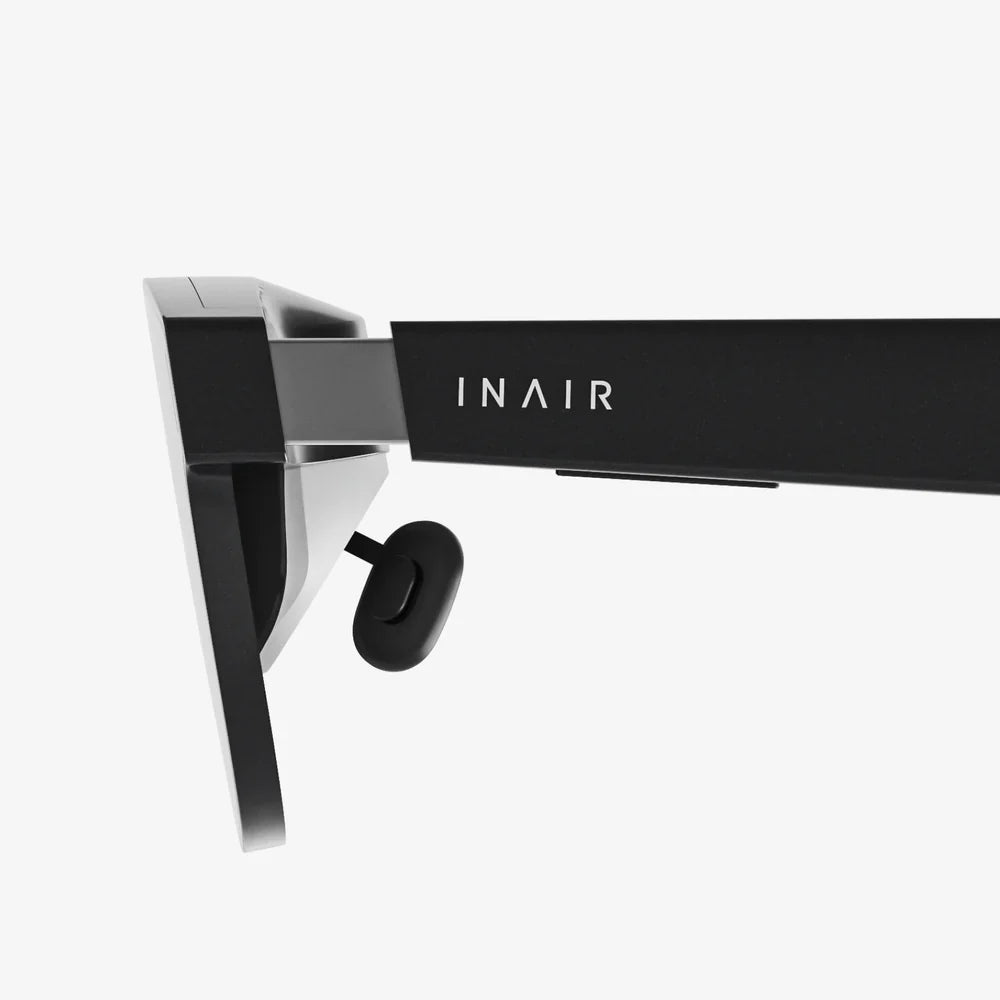
Imagine a world where expert guidance is always at your fingertips, where complex machinery explains its own repairs, and where a surgeon’s hands are steadied by an invisible, all-knowing assistant. This is not a distant science fiction fantasy; it is the emerging reality being built today through the powerful synergy of augmented reality powered intelligent support. This technological fusion is quietly revolutionizing how we work, learn, and solve problems, creating a seamless layer of cognitive and practical aid that amplifies human intelligence and skill to unprecedented levels. We stand at the precipice of a new era of human-machine collaboration, and it promises to be nothing short of transformative.
The Confluence of Vision and Intelligence
At its core, augmented reality powered intelligent support is the marriage of two revolutionary technologies: Augmented Reality (AR) and Artificial Intelligence (AI). AR provides the visual and interactive canvas, superimposing digital information—images, data, 3D models, annotations—onto our perception of the physical world through devices like smart glasses, tablets, or smartphones. It acts as our new sense, a lens that reveals a hidden layer of information.
However, AR on its own is merely a display system, a sophisticated heads-up display. The true magic, the "intelligent" in intelligent support, comes from AI. Machine learning algorithms, computer vision, natural language processing, and vast knowledge graphs provide the brain. AI is what understands the context of what the user is looking at, interprets their needs, retrieves the correct information from a massive database or a live data stream, and decides how and when to present it through the AR interface. It transforms a static overlay into a dynamic, responsive, and context-aware partner.
This creates a continuous feedback loop: the AR device's sensors (cameras, LiDAR, etc.) feed real-world data to the AI engine. The AI processes this data in real-time, understands the environment and the user's actions, and then sends precise instructions back to the AR device to render the most relevant guidance. This loop turns a user from a passive recipient of information into an active participant in a dialogue with an intelligent system.
Architecting the Invisible Assistant: How It Works
The architecture enabling this technology is a sophisticated stack of integrated systems. It begins with Data Acquisition and Environmental Understanding. High-resolution cameras, depth sensors, and inertial measurement units (IMUs) scan the user’s surroundings. Computer vision algorithms then dissect this feed, performing object recognition, spatial mapping, and scene segmentation. The system doesn't just see a "engine"; it identifies a specific model, understands the orientation of each component, and maps the entire workspace in 3D.
Next is the AI-Powered Cognitive Core. This is the central nervous system. It takes the contextual environmental data and combines it with other streams: live data from IoT sensors on equipment, historical maintenance records, user manuals, expert system databases, and even real-time communication feeds from remote colleagues. Using natural language processing, it can understand spoken queries or typed commands from the user. Using predictive analytics, it can anticipate potential problems or next steps in a procedure.
Finally, there is the AR Interface and Rendering Layer. This is where the intelligence becomes actionable. The system renders holographic instructions, such as animated arrows showing the exact sequence to remove bolts, color-coded wiring diagrams overlaid directly onto the correct components, or real-time performance metrics floating next to a operating machine. It can highlight potential hazards in red or outline the optimal path for a warehouse picker. The information is spatially anchored, meaning it stays locked to the physical object it references even as the user moves around it.
Transforming the Industrial Frontline
Perhaps the most profound impact of augmented reality powered intelligent support is being felt on the factory floor, in field service, and on construction sites. These environments are characterized by complex tasks, a widening skills gap as experienced workers retire, and immense pressure for efficiency and uptime.
In manufacturing and maintenance, technicians equipped with AR smart glasses can perform complex repairs and assemblies with expert precision, even if they are novices. The intelligent system can guide them, step-by-step, highlighting the exact tools to use and the components to manipulate. It can display torque settings, safety warnings, and schematic diagrams directly in their line of sight, allowing them to work hands-free. This drastically reduces errors, cuts training time, and improves first-time fix rates. For a remote expert, the same technology allows them to "see what the on-site technician sees" and provide guidance by drawing annotations into the shared AR space, effectively teleporting their expertise anywhere in the world without the cost and delay of travel.
In logistics and warehousing, intelligent AR systems optimize the picking and packing process. They can visually guide workers along the most efficient route, highlight the exact shelf and item to be picked, and even verify the correct item is selected through barcode scanning or image recognition. This eliminates guesswork, reduces walking time, and virtually eliminates mis-picks, leading to massive gains in supply chain accuracy and speed.
Revolutionizing Healthcare and Medicine
The stakes in healthcare are uniquely high, and here, intelligent AR support is moving from a convenience to a life-saving tool. Medical professionals are using it to enhance their capabilities and improve patient outcomes.
For surgeons, AR can project critical information—such as a 3D reconstruction of a tumor from MRI or CT scans—directly onto the patient's body during a procedure. This provides an X-ray vision-like capability, allowing for more precise incisions and navigation around critical structures like nerves and blood vessels. Intelligent systems can monitor vital signs and other real-time data streams, alerting the surgical team to potential issues before they become critical, all without the surgeons needing to look away from their work.
In medical training and education, students can practice procedures on immersive, interactive holographic patients. The intelligent system can provide feedback, correct technique, and simulate complications in a risk-free environment. For patient care, nurses using AR can have a patient's vitals, medical history, and intravenous drip rates displayed next to them, ensuring constant, context-aware monitoring and reducing administrative burden.
Redefining Enterprise Collaboration and Design
The concept of the office and collaborative work is also being reshaped. Augmented reality powered intelligent support creates a shared virtual workspace that transcends physical location. Architects, engineers, and designers can collaborate on life-size, interactive 3D holograms of their prototypes. They can make changes in real-time, with the intelligent system simulating physics, detecting structural conflicts, and offering data-driven suggestions for optimization. This collapses the design iteration cycle and leads to more innovative and robust products.
For remote collaboration, the technology enables a presence that video conferencing cannot match. A remote participant can be represented as a hologram in a meeting room, able to interact with virtual charts and 3D models as if they were physically present. Teams spread across the globe can conduct virtual training sessions on new equipment or walk through a digital twin of a facility under construction, identifying and solving problems before ground is ever broken.
Navigating the Challenges: The Path to Ubiquity
Despite its immense potential, the path to widespread adoption of augmented reality powered intelligent support is not without significant hurdles. Technical challenges remain, particularly concerning hardware. For true ubiquity, AR devices need to become smaller, lighter, more socially acceptable, and offer all-day battery life. They must provide a wide field of view, high resolution, and comfortable ergonomics for prolonged use in demanding environments.
Connectivity and Latency are also critical. For the intelligent support to feel seamless and real-time, the system requires robust, high-bandwidth, low-latency connectivity, especially when heavy processing is done in the cloud. 5G and future network generations are key enablers here.
Perhaps the most complex challenges are those of data security, user privacy, and ethical implementation. These systems process a vast amount of sensitive visual and operational data. Ensuring this data is encrypted, stored securely, and not misused is paramount. Furthermore, organizations must navigate the ethical implications of constant monitoring and the potential for AI bias within the support algorithms. Clear guidelines and transparent policies are essential to build trust with the workforce.
Finally, there is the human factor. Successful implementation requires a thoughtful change management strategy. It involves redesigning workflows around this new capability and continuously training the AI models to improve their accuracy and relevance. The goal is not to replace workers, but to augment them—to create a symbiotic relationship where human intuition and creativity are enhanced by machine intelligence and precision.
The Future is Augmented and Intelligent
As the underlying technologies of AI, computer vision, and edge computing continue their rapid advance, the capabilities of intelligent AR support will only expand. We can anticipate systems that move beyond instruction to true collaboration, with AI assistants that can reason, hypothesize, and co-create solutions with human partners. The line between the digital and physical worlds will continue to blur, creating an ambient computing environment where contextual information and support are simply always available, woven into the fabric of our daily lives.
This evolution promises to democratize expertise, making the knowledge of the best specialists accessible to all. It will empower individuals to perform tasks with a skill and confidence they never thought possible, lowering barriers and unlocking new forms of creativity and productivity. From the technician fixing a wind turbine to the medical student learning a complex procedure, this technology is poised to become the most transformative tool of the 21st century, amplifying our innate abilities and guiding us toward a future of limitless potential.
The promise of a true partner, one that sees what you see, understands the task at hand, and provides just the right information at just the right time, is no longer a dream. This invisible engine of progress is already being deployed, and its potential to reshape every facet of our professional and personal lives is not just exciting—it is utterly inevitable. The age of augmented intelligence is here, and it’s ready to support you.
Share:
Android XR Glasses Are Redefining Reality and How We Interact With It
Do Gaming Glasses Work? A Deep Dive Into The Science Behind The Lenses