


Imagine a world where the line between your digital life and physical reality doesn't just blur—it disappears. This isn't a distant sci-fi fantasy; it's the promise of Android XR, a technological revolution unfolding right in the palms of our hands and before our eyes. The quest to find the right portal into this immersive universe begins with a single, crucial question: which devices hold the key? Understanding the landscape of Android XR supported devices is the first step toward unlocking experiences that redefine how we work, play, learn, and connect. This journey goes far beyond a simple spec sheet; it's about discovering the hardware capable of building new worlds from the ground up.
The Foundation: Demystifying Android XR
Before we dive into the devices themselves, it's essential to understand what we're talking about. Android XR isn't a single, monolithic product but rather an umbrella term encompassing the spectrum of extended reality experiences powered by the Android operating system. This includes:
- Virtual Reality (VR): Fully immersive, digital environments that completely replace your field of vision, typically experienced through dedicated headsets.
- Augmented Reality (AR): Digital elements overlayed and anchored onto your real-world view, often experienced through smartphone cameras or transparent lenses.
- Mixed Reality (MR): A more advanced form of AR where digital and physical objects interact in real-time, coexisting and influencing each other.
The Android ecosystem provides the software backbone for a vast array of these experiences, from casual AR filters on social media to deeply immersive VR games and professional enterprise solutions. The magic happens when powerful software meets capable hardware.
Beyond the Brand: The Core Technical Requirements for XR
While specific brands and models will come and go, the fundamental technical pillars that enable high-quality XR experiences remain constant. When evaluating any device for its XR capabilities, these are the non-negotiable components to scrutinize.
The Brain: Processing Power (SoC - System on a Chip)
XR is computationally intensive. A device must render high-resolution, high-frame-rate 3D graphics, often for two eyes simultaneously, while also processing data from multiple sensors—cameras, gyroscopes, accelerometers, and magnetometers—in real-time. This requires a robust processor.
- High-Performance CPU Cores: Modern, multi-core processors are essential for handling the complex physics calculations and application logic.
- Advanced GPU (Graphics Processing Unit): This is arguably the most critical component. The GPU must be powerful enough to render complex 3D scenes at a stable 72fps, 90fps, or even 120fps to prevent motion sickness and ensure immersion. Support for modern graphics APIs is a must.
- Dedicated AI Processing (NPU - Neural Processing Unit): For AR and MR, tasks like object recognition, spatial mapping, and gesture tracking rely heavily on machine learning algorithms. An NPU dramatically accelerates these tasks, improving accuracy and battery life.
The Eyes and Ears: Sensors and Cameras
A device's ability to perceive the world is what separates simple 3D viewing from true extended reality.
- High-Resolution Cameras: For AR, camera quality directly impacts the clarity and stability of overlaid digital objects. Multiple cameras enable depth sensing, which is crucial for understanding the geometry of a space.
- Advanced Sensor Suites: A precise IMU (Inertial Measurement Unit), combining a gyroscope, accelerometer, and magnetometer, is the baseline for tracking head movement. Higher-end setups include depth sensors (like time-of-flight sensors) and ultra-wideband (UWB) for precise spatial awareness and object tracking.
- Six Degrees of Freedom (6DoF): This is the gold standard for immersive VR. Unlike 3DoF (rotation only), 6DoF tracks both your head's rotation and its positional movement in space (forward/back, up/down, left/right). This requires outward-facing cameras on a headset or sophisticated sensor fusion on a smartphone.
The Window: Display Technology
The display is your viewport into another world. Its quality is paramount.
- High Resolution and Pixel Density: Screens are viewed extremely close to the eyes, making high PPI (Pixels Per Inch) essential to avoid seeing a distracting "screen door effect."
- High Refresh Rate: A display refresh rate of 90Hz or higher is standard for comfortable VR, ensuring smooth motion and reducing latency, which is a primary cause of simulation sickness.
- Low Persistence: This display technique illuminates pixels for only a fraction of a frame, reducing motion blur as you move your head, which is critical for maintaining immersion.
The Software Side: Android's Evolving XR Platform
Hardware is nothing without software. Google's ongoing development of Android's XR foundations has created a more unified and accessible platform for developers and users alike.
- Core OS Integration: Features like ARCore, Google's platform for building AR experiences, are deeply integrated into the Android OS. This allows apps to access shared motion tracking, environmental understanding, and light estimation data without reinventing the wheel for each application.
- Standalone VR Platforms: While now in maintenance mode, Daydream provided a blueprint for high-quality, smartphone-based VR. Its legacy lives on in the performance standards it established for certified devices.
- The Rise of Standalone Headsets: The current frontier of Android XR is in standalone headsets. These all-in-one devices run a customized version of Android and contain all the necessary processors, sensors, and displays within the headset itself, untethering the user from a phone or computer.
Navigating the Current Landscape of Android XR Devices
Today's ecosystem can be broadly categorized into three types of Android XR supported devices.
1. The Smartphone Powerhouse
For years, the primary entry point into mobile XR was the smartphone in your pocket. By slotting a phone into a head-mounted viewer (like Cardboard or Daydream View), users could access a range of VR and AR content. While this model has declined in favor of standalone headsets, it established critical performance benchmarks. Devices that supported these platforms typically featured:
- High-resolution, low-persistence OLED displays.
- Powerful, flagship-level processors and GPUs.
- Precise, low-latency IMUs.
- Specialized software optimizations for thermal and performance management.
This legacy means that many modern flagship and upper-mid-range smartphones remain highly capable AR machines, powering everything from interactive shopping apps to complex navigation overlays through their cameras.
2. The Standalone VR Headset
This category represents the present and immediate future of immersive Android XR. These headsets are self-contained computers running on Android, offering a complete, untethered experience without needing a separate phone or PC.
- Inside-Out Tracking: They use multiple built-in cameras to map your environment and track your headset and controllers simultaneously, enabling full 6DoF movement.
- All-in-One Design: They integrate a Qualcomm Snapdragon XR-series processor (or similar), dedicated dual displays, speakers, microphones, and a battery.
- Dedicated Content Libraries: They operate their own app stores, filled with immersive games, social apps, and productivity tools built specifically for the hardware.
The requirements for these devices are the culmination of everything discussed: extreme processing power, advanced sensor arrays, and cutting-edge displays, all packaged into a wearable, ergonomic form factor.
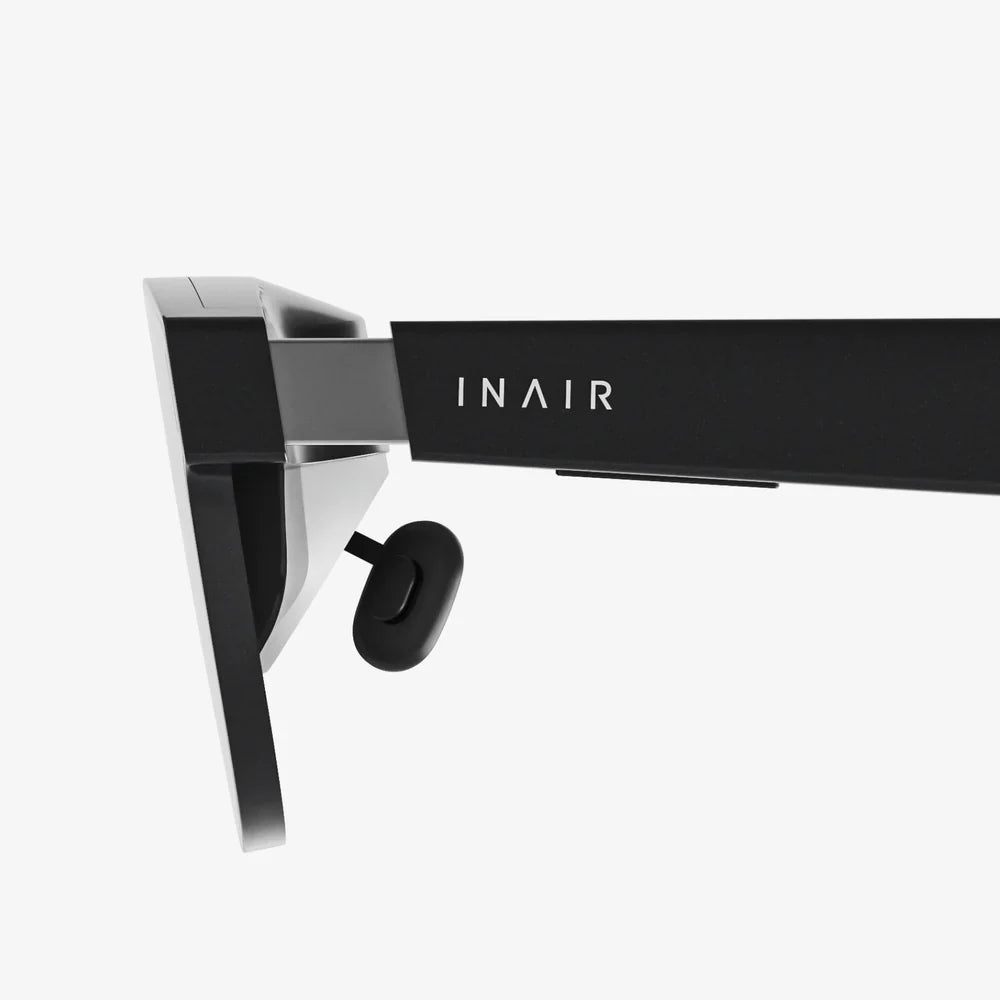
3. The AR Smart Glasses Prototype
While true consumer-grade AR glasses are still emerging, they represent the next evolution. These devices aim to overlay digital information onto transparent lenses, much more elegantly than holding up a phone. Early prototypes and developer kits often rely on a companion Android smartphone for heavy processing (acting as the "brain"), while the glasses themselves act as a sophisticated display and sensor hub. This symbiotic relationship creates a new class of Android XR supported devices, where the combined system must meet the stringent latency and performance requirements for a seamless experience.
Future-Proofing: What's Next for Android XR Hardware?
The trajectory of Android XR is toward greater immersion, accessibility, and utility. The next generation of supported devices will likely be defined by several key advancements.
- 5G Connectivity: Ultra-low latency and high bandwidth will enable cloud-based rendering, where complex graphics are processed on remote servers and streamed to the device, potentially reducing hardware costs and power consumption.
- Advanced Haptics: Controllers and wearables will provide more nuanced tactile feedback, allowing users to "feel" virtual objects.
- Eye and Face Tracking: Cameras inside the headset will track eye movement and facial expressions, enabling more natural social interactions in virtual spaces and foveated rendering—a technique that drastically boosts performance by rendering only the area you're directly looking at in full detail.
- Broader Compatibility: As the underlying technology matures and becomes more efficient, high-quality XR experiences will trickle down to more affordable hardware tiers, expanding the ecosystem dramatically.
Making Your Choice: A User-Centric Approach
Selecting the right Android XR device isn't about finding the one with the highest numbers on a spec sheet; it's about finding the tool that aligns with your intended use.
- The Curious Explorer: If you're new to XR and want to dip your toes in, your current high-end smartphone might be a perfect starting point. Explore the AR apps available on major app stores to see how digital content can enhance your world.
- The Immersive Gamer and Media Consumer: A standalone VR headset is your destination. Prioritize models with high-resolution displays, a high refresh rate, a wide field of view, and a robust library of games and immersive content.
- The Professional and Creator: For enterprise applications—design, training, remote assistance—look for standalone headsets with enterprise-grade software support, precise controller tracking, and comfort for extended wear. Compatibility with professional software suites is key.
Always research the specific content library and software ecosystem tied to a device. The most powerful hardware is meaningless without compelling experiences to run on it.
The world of Android XR supported devices is a dynamic and exciting frontier, a testament to the power of open platforms driving innovation. It’s a ecosystem where your smartphone can transform into a window to another dimension, and where self-contained headsets can build entire universes from pure computation. This isn't just about the technology we hold today; it's about laying the groundwork for a future where our physical and digital realities are woven together into a seamless, interactive tapestry. The devices are the keys—and they're waiting to unlock experiences that will fundamentally change your perspective.
Share:
VR Headset at Home: The Ultimate Portal to New Realities and Experiences
Android AR: The Invisible Revolution Reshaping Our Digital and Physical Worlds