


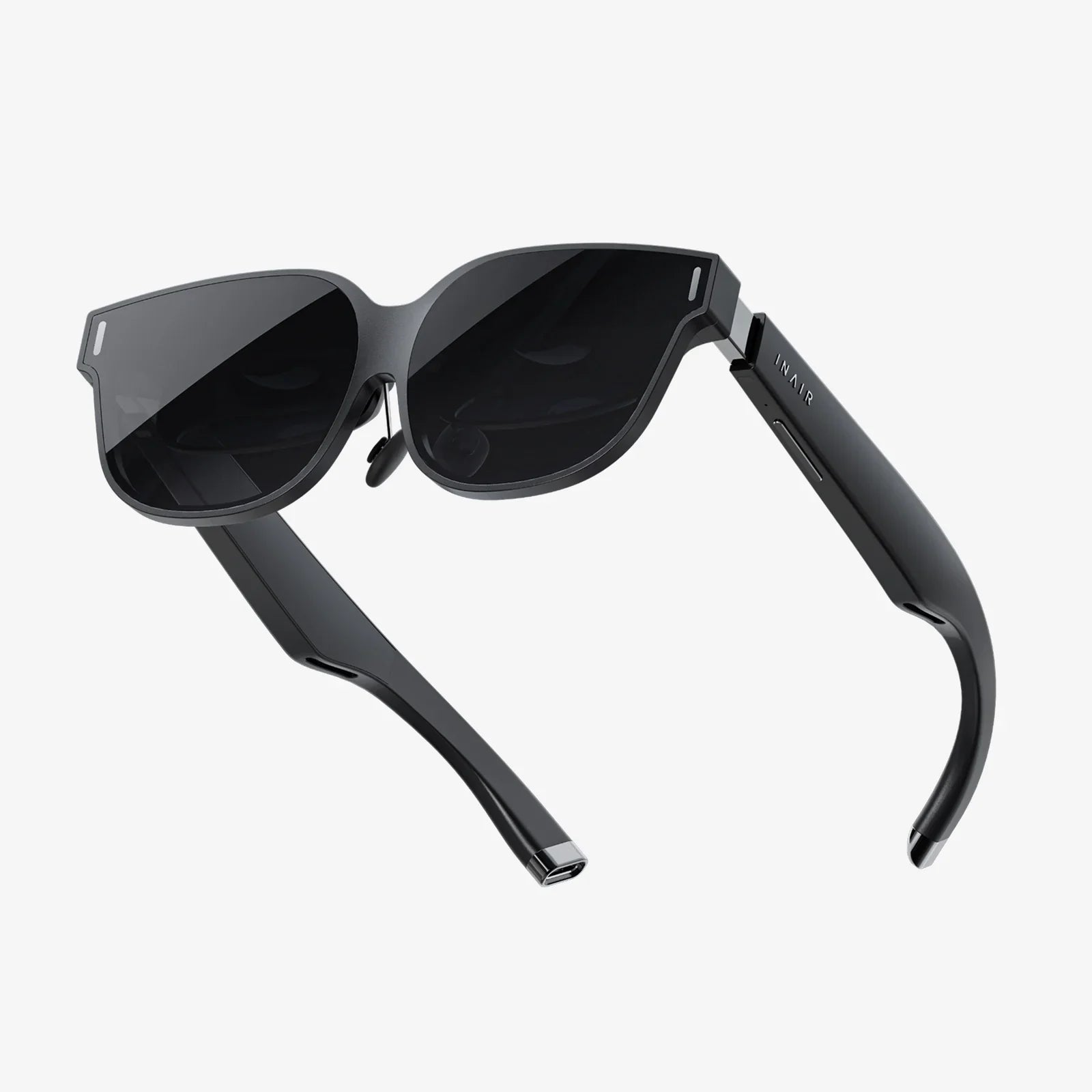
Imagine a world where the digital and physical seamlessly intertwine, where information floats before your eyes, virtual meetings feel as tangible as face-to-face conversations, and learning is an immersive journey through time and space. This isn't a distant sci-fi fantasy; it's the imminent future being built today on the foundation of Android XR, a technological evolution poised to redefine our reality. The convergence of powerful hardware and sophisticated software is creating a new paradigm for human-computer interaction, and at the heart of this revolution lies an open-source giant ready to power it all.
Demystifying the XR Spectrum: More Than Just a Buzzword
Before diving into the specifics of the Android platform, it's crucial to understand the landscape it aims to dominate. Extended Reality, or XR, is not a single technology but an umbrella term encompassing a spectrum of immersive technologies.
Virtual Reality (VR) is the most well-known, offering a fully digital, computer-generated environment that completely replaces the user's real-world surroundings. Using a head-mounted display, users are transported to entirely new worlds, from the depths of the ocean to the surface of Mars, for gaming, training simulations, and virtual tourism.
Augmented Reality (AR) overlays digital information and objects onto the user's view of the physical world. Unlike VR, it does not replace reality but enhances it. Think of navigation arrows painted onto the road through your smart glasses or a virtual dinosaur appearing to stomp through your living room via a smartphone screen.
Mixed Reality (MR) is a more advanced form of AR where digital and physical objects not only coexist but can interact with each other in real-time. A virtual ball in an MR experience could bounce off your real-world coffee table, and a digital character could sit convincingly on your actual sofa, understanding and reacting to the geometry and physics of your environment.
Android XR is the foundational software framework designed to power devices across this entire spectrum, providing the tools and ecosystem necessary to build these compelling experiences.
The Architectural Powerhouse: How Android Evolved for XR
Adapting an operating system designed for flat, touch-based screens to handle the demanding, three-dimensional, and spatially-aware requirements of XR was a monumental engineering feat. The Android XR platform represents a significant evolution of the classic Android architecture, introducing critical new components and APIs.
At its core, the system must achieve phenomenally low latency—the delay between a user's head movement and the corresponding update of the display. Even a few milliseconds of lag can break immersion and cause discomfort. The Android XR stack is meticulously optimized to minimize this latency at every level, from the kernel to the graphics rendering engine.
A cornerstone of this optimized stack is the Robust Pose Estimation system. This is the technology that allows a device to understand its precise position and orientation in space. Using a combination of cameras, sensors (like gyroscopes and accelerometers), and sophisticated computer vision algorithms, the device constructs a real-time map of its environment. This is known as Simultaneous Localization and Mapping (SLAM). It’s what allows digital content to stay locked in place in the real world, whether it's a virtual painting on your wall or a holographic chess board on your desk.
Furthermore, Android XR provides developers with standardized APIs for critical inputs. Instead of each manufacturer creating their own proprietary method, developers can use unified interfaces for:
- 6DoF Controllers: Tracking controllers that understand not just rotation but full positional movement in three-dimensional space.
- Hand Tracking: Using the device's cameras to see and interpret the user's hands as the primary input, allowing for intuitive, controller-free interaction.
- Eye Tracking: Enabling foveated rendering (which sharply renders only where the user is looking to save processing power) and new forms of UI navigation.
- Voice Commands: Deep integration with speech recognition for hands-free control.
This common framework ensures a more consistent experience for users and a much larger potential market for developers, avoiding the fragmentation that could stifle innovation.
Beyond Gaming: The Transformative Applications of Android XR
While immersive gaming is a massive and obvious driver for XR adoption, the potential applications of Android XR extend far beyond entertainment, poised to revolutionize numerous sectors.
Revolutionizing Education and Training
Imagine medical students performing virtual dissections on hyper-realistic holograms, mechanics learning to repair complex engines with step-by-step AR instructions overlaid onto the actual machinery, or history classes taking a walking tour of ancient Rome. Android XR enables experiential learning, which dramatically improves knowledge retention and understanding. It allows for safe, repeatable, and cost-effective training for high-risk professions like surgery, aviation, and emergency response.
Redefining Remote Work and Collaboration
The concept of the "virtual office" will be transformed. Instead of a grid of faces on a video call, colleagues from around the world could meet as lifelike avatars in a shared virtual workspace. They could collaboratively interact with 3D models of products still in design, annotate virtual whiteboards in mid-air, and share a sense of physical presence that flat screens cannot provide. This has the potential to make remote collaboration more natural, productive, and emotionally connected.
Enhancing Industrial Design and Manufacturing
From architecture to automotive design, professionals can use MR to visualize full-scale prototypes in the real world before a single physical component is built. Engineers can see schematics overlaid on factory equipment to streamline maintenance and repair, reducing downtime and errors. This digital twin technology, powered by platforms like Android XR, is a cornerstone of Industry 4.0.
Transforming Retail and E-Commerce
Try before you buy will take on a new meaning. Shoppers could use AR to see how a new sofa would look in their living room, how a pair of glasses fits their face, or how a shade of paint changes a room's ambiance—all from their own home. This reduces purchase uncertainty and returns while creating engaging new shopping experiences.
Navigating the Challenges: The Roadblocks to Mass Adoption
Despite its immense potential, the path to ubiquitous Android XR is not without significant hurdles that engineers and designers are racing to overcome.
Hardware Limitations: For truly compelling wireless XR, we need devices that are lightweight, comfortable for all-day wear, have all-day battery life, and feature high-resolution displays with a wide field of view. Current technology often forces a trade-off between performance, form factor, and cost. Advancements in micro-OLED displays, pancake lenses, and more efficient processors are steadily closing this gap.
The Social Acceptance Hurdle: While headphones are now a common sight in public, wearing a conspicuous headset is still a social barrier. The ultimate goal is a pair of stylish, socially acceptable glasses that can deliver powerful AR/MR experiences. This requires monumental miniaturization of components and breakthroughs in waveguide and holographic optics to project images directly onto the lenses.
The User Interface Conundrum: We are still in the early days of defining what intuitive interaction looks like in XR. The paradigms of mouse, keyboard, and touchscreen do not directly translate to a 3D space. Establishing universal and ergonomic conventions for menus, selection, and manipulation is an ongoing challenge for the ecosystem.
Privacy and Security: XR devices, by their nature, are data collection powerhouses. They have always-on cameras and microphones mapping your personal environment. Ensuring this incredibly sensitive data is processed securely, stored responsibly, and not misused is perhaps the single most important challenge facing the industry. The open-source nature of Android allows for greater scrutiny of its security model, but it also demands rigorous vigilance from the community.
The Open Ecosystem: A Crucible for Innovation
The choice to base this new computing platform on Android is a strategic one with profound implications. Unlike closed, walled-garden ecosystems, Android's open-source model provides a fertile ground for rapid innovation and diversity.
It allows a vast range of manufacturers to enter the market, creating devices tailored for different purposes, price points, and form factors. This competition drives innovation downward, making the technology more accessible to a broader audience faster. It also empowers a global community of developers to contribute to the core platform, identify bugs, and enhance security.
This openness is critical for avoiding a future where our digital reality is controlled by a single corporate entity. It encourages the development of interoperable standards and ensures that the evolution of XR is driven by a multitude of voices and ideas, ultimately leading to a richer and more diverse metaverse—or more accurately, a multiverse of interconnected experiences.
The horizon for Android XR is dazzling. We are moving towards a contextually-aware computing environment where digital assistance is integrated seamlessly into our daily perceptions. Your XR device could recognize a person you meet and discreetly display their name and last meeting notes, translate foreign street signs in real-time, or provide you with nutritional information about the food on your plate just by looking at it. This ambient computing future, where technology understands you and your environment to proactively assist you, is the true endgame for Android XR. The journey from a pocketable smartphone to a perceptual computing platform is underway, and it will fundamentally alter the fabric of how we work, learn, play, and connect with the world around us. The boundary between what is real and what is digital is about to become beautifully blurred.
Share:
How to Control VR Headset: Mastering Your Virtual Reality Experience
Augmented Reality Supported Android Phones: The Future in Your Pocket