


Imagine pointing your phone at a city street and seeing historical figures come to life, watching a virtual dinosaur stomp through your living room, or having a repair manual overlay instructions directly onto the broken appliance in front of you. This isn't science fiction; it's the reality available today on augmented reality supported Android phones. These powerful devices are no longer just communication tools; they are windows into a blended world where digital information and the physical environment coexist, creating experiences that are as revolutionary as they are practical. The journey into this enhanced dimension starts with the device in your pocket, and the possibilities are truly limitless.
The Core Technologies Powering Mobile AR
For an Android phone to deliver a seamless augmented reality experience, it relies on a sophisticated fusion of hardware and software. This isn't a simple software trick; it's a complex dance of sensors and processing power.
Advanced Sensor Suites
The foundation of any AR experience is understanding the world. Modern AR-capable Android phones are equipped with a suite of sensors that act as its eyes and brain. The accelerometer, gyroscope, and magnetometer work in tandem to track the phone's precise orientation and movement in real-time. This ensures that a virtual object placed on a table stays there, even if you walk around it. More advanced devices feature time-of-flight (ToF) sensors or dedicated depth sensors, which map the environment in three dimensions. This depth perception is crucial for realistic occlusion—allowing a virtual character to hide behind your real-world sofa, for instance.
Computational Prowess
Processing the immense amount of data from these sensors requires serious computational muscle. The powerful processors found in modern Android phones, often with dedicated cores for AI and machine learning tasks, are up to the challenge. They handle simultaneous localization and mapping (SLAM), a process where the phone both maps its environment and tracks its own position within it. This happens instantaneously, creating a spatial understanding that allows digital content to anchor itself firmly to the real world.
High-Fidelity Displays and Cameras
A high-resolution, high-refresh-rate display is essential for blending digital content convincingly. The camera system, often featuring wide-angle and ultra-wide-angle lenses, captures the real world with clarity, serving as the canvas onto which AR elements are projected. The combination of a sharp display and a capable camera ensures that the illusion of augmented reality remains stable and believable.
A World of Applications: Beyond Novelty
While fun filters and games brought AR into the mainstream, the technology's utility extends far beyond entertainment. Augmented reality supported Android phones are finding profound applications across numerous sectors.
Revolutionizing Retail and E-Commerce
The 'try before you buy' concept has been completely redefined. Users can now point their phone at their living room and see how a new piece of furniture would look and fit in the space, accurately scaled to real-world dimensions. Fashion retailers allow customers to virtually try on glasses, watches, and even makeup through their phone's camera. This reduces purchase hesitation and product returns, creating a more confident and engaging shopping experience from the comfort of home.
Transforming Education and Training
AR turns learning into an interactive, immersive adventure. Anatomy students can explore a detailed, interactive human body layer by layer. History classes can witness historical events unfold on their desks. Complex mechanical procedures, from engine repairs to surgical techniques, can be overlaid onto physical equipment, providing step-by-step visual guidance that dramatically improves comprehension and retention. This hands-on, visual learning style caters to a wide range of learning preferences and makes abstract concepts tangible.
Enhancing Navigation and Exploration
Forget looking down at a flat, 2D map. AR navigation apps use the phone's camera to overlay directional arrows, street names, and points of interest directly onto the real world. This allows users to navigate a new city by simply following a path projected onto the street in front of them. Museums and historical sites are employing AR to bring exhibits to life, providing additional information, reconstructions, and narratives when a phone is pointed at an artifact or location.
Boosting Industrial and Field Work
In professional settings, AR is a powerful tool for efficiency and accuracy. Field technicians can access schematics and diagnostic data overlaid on the machinery they are repairing. Architects and construction managers can visualize building plans on an empty plot of land, identifying potential issues before construction begins. This streamlines workflows, reduces errors, and provides instant access to critical information hands-free.
The Software Ecosystem: Frameworks and Development
The proliferation of AR on Android is largely thanks to accessible software development kits (SDKs) and frameworks that lower the barrier for creators. These toolkits provide the fundamental building blocks for AR experiences, handling the complex tasks of motion tracking, environmental understanding, and light estimation.
The most prominent platform is ARCore, a development platform that enables building AR experiences. It uses three key capabilities to integrate virtual content with the real world as seen through the phone's camera: motion tracking, environmental understanding, and light estimation. This allows developers to create apps that can understand their environment and interact with it. The open nature of the Android ecosystem means a vast community of developers is constantly innovating, pushing the boundaries of what's possible and creating a diverse and growing library of AR applications available through various digital distribution platforms.
Challenges and The Road Ahead
Despite rapid advancement, mobile AR still faces hurdles. Battery life remains a significant concern, as the constant use of cameras, sensors, and high-intensity processing is notoriously power-hungry. Processing AR in the cloud could offload this burden but introduces issues of latency, which can break the immersion of a real-time experience. Furthermore, creating truly persistent AR—where digital objects remain in a specific location for all users to see—requires a shared, universal understanding of space, a challenge often referred to as the "AR cloud."
Privacy is another paramount consideration. Because AR apps often need to scan and understand our personal spaces, robust data handling and privacy policies are essential to ensure user trust and safety. The future will involve overcoming these technical limitations through more efficient chipsets, better batteries, and advanced 5G and eventual 6G connectivity for low-latency cloud processing.
The Invisible Interface: A Blended Future
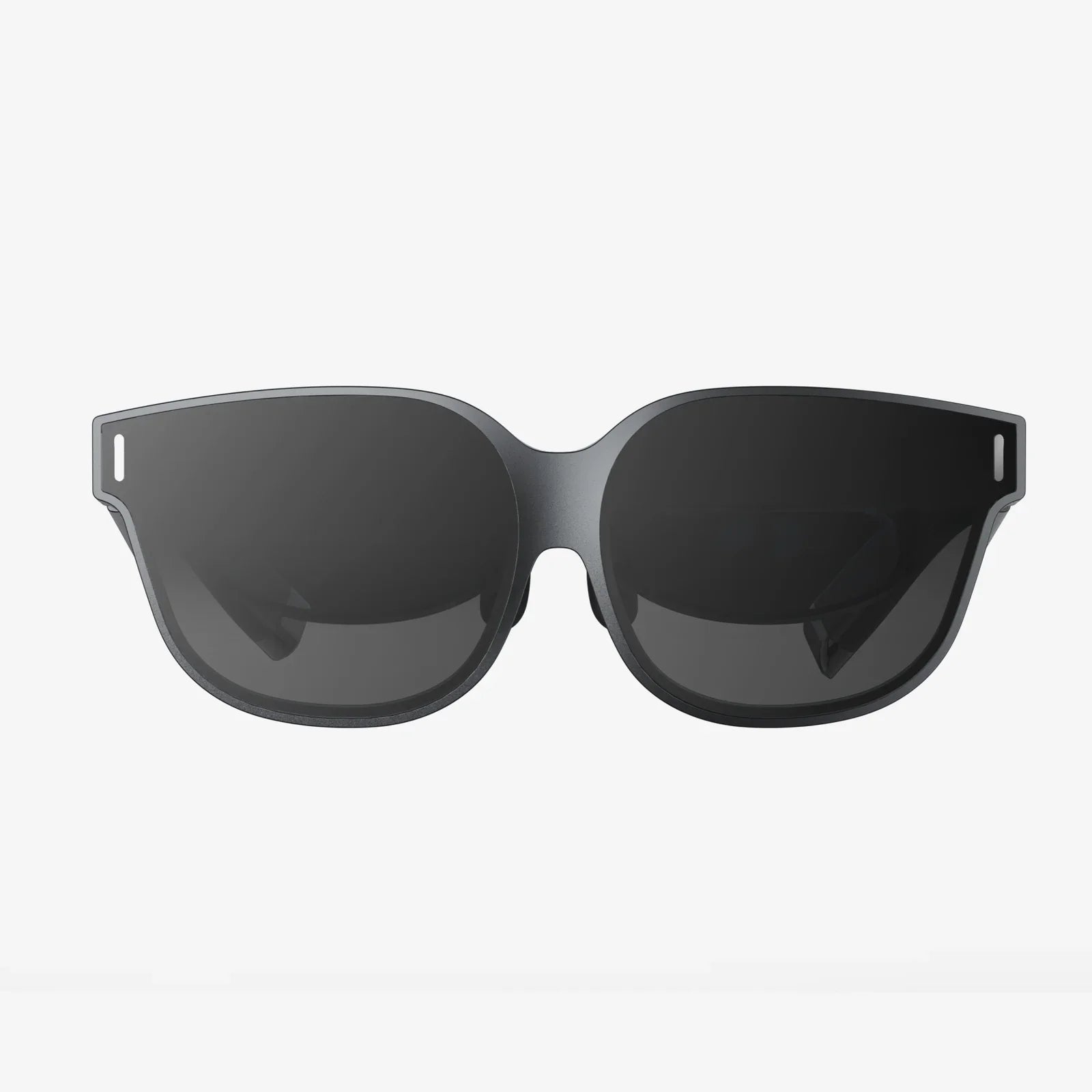
The ultimate goal of AR is to become an invisible interface, seamlessly integrating helpful information into our daily lives without the need to constantly look down at a screen. We are moving towards a future where your Android phone, and eventually more discreet wearables, will act as a lens for contextual computing. Imagine walking through a foreign city and seeing instant translations of street signs, having the name and artist of a song playing in a café appear in the air, or receiving subtle visual cues during a conversation to help remember a name. The device ceases to be a destination and becomes a guide, enhancing your perception of reality without isolating you from it.
The evolution of augmented reality supported Android phones is steering us toward a fundamentally new way of interacting with technology and information. They are democratizing access to powerful mixed-reality tools, putting the ability to create, learn, and explore in the hands of billions. This isn't just about adding a digital layer to our world; it's about deepening our understanding of it, enhancing our capabilities within it, and unlocking a new realm of human creativity and connection. The gateway to this enriched existence is already active, waiting for you to lift your phone and see the world not just as it is, but as it could be.
Share:
Android XR: The Future of Immersive Computing and How It Will Change Everything
Which VR Headset Has Highest Resolution? A Deep Dive into the Pixel Wars