


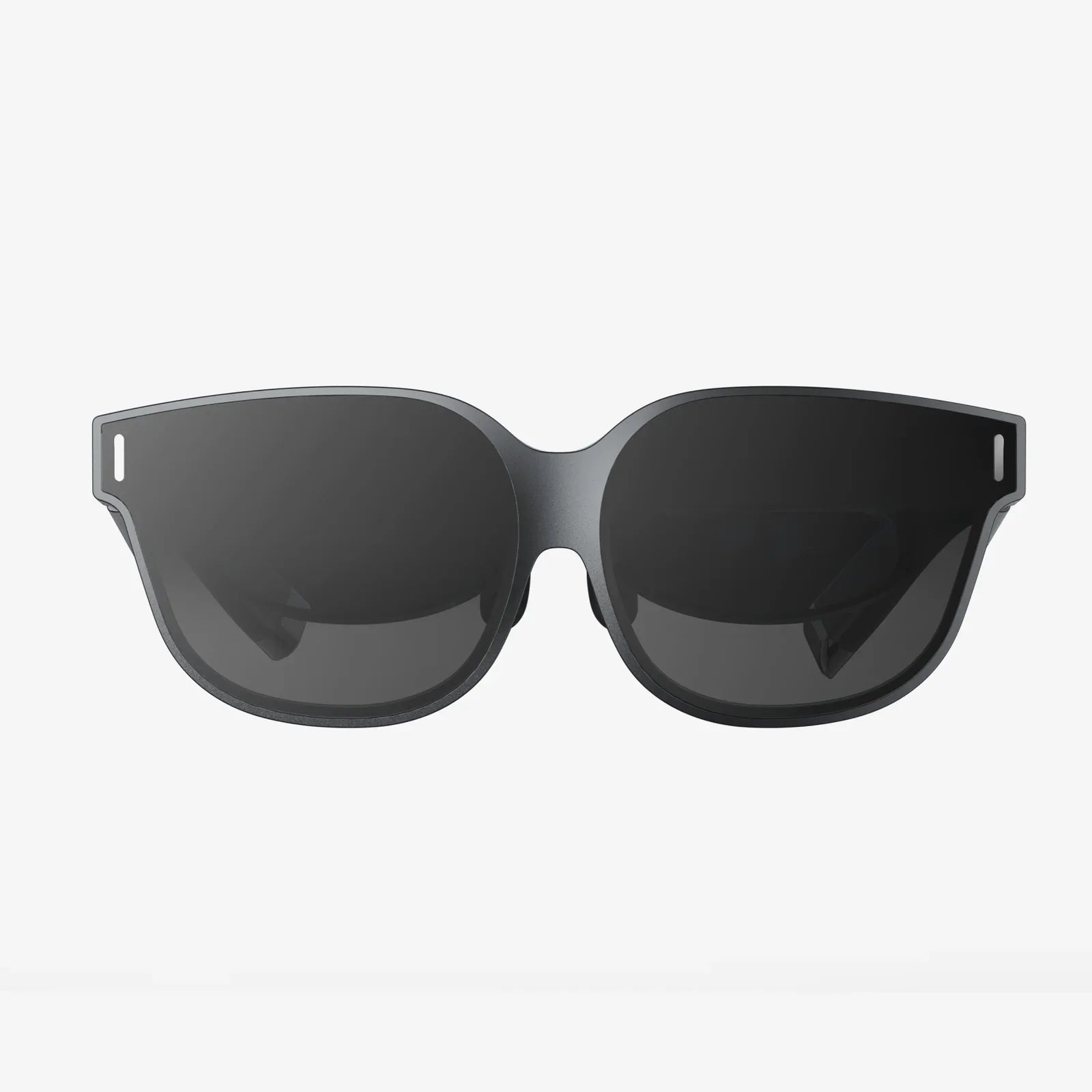
Imagine a world where the digital and physical seamlessly intertwine, where information overlays your vision like a persistent, helpful companion, and where virtual meetings feel as tangible as shaking a hand. This is the promise of immersive computing, a future that has felt perpetually on the horizon. For years, this landscape has been fragmented, a collection of walled gardens where development for one platform often meant starting from scratch for another. This fragmentation stifled innovation, confused consumers, and limited the potential of what could be. But now, a seismic shift is underway, one that promises to tear down these walls and build a unified, open foundation for the next generation of computing. The catalyst for this change is AndroidXR, a development that is not just another update but a fundamental reimagining of how we will build and experience the blended realities of tomorrow.
The Fractured Past: A History of Closed Ecosystems
To understand the profound importance of a unified platform, we must first look back at the state of the industry that preceded it. The initial waves of augmented reality (AR) and virtual reality (VR) were characterized by intense competition and proprietary technology stacks. Major players built their own operating systems, their own software development kits (SDKs), and their own storefronts. For a developer, this created an immense burden. Creating an application that could run on multiple types of devices required maintaining multiple codebases, each with its own unique APIs, design paradigms, and performance quirks.
This model was unsustainable. It drained resources, limited audience reach, and created a inconsistent user experience. A user's journey was locked to their chosen hardware, unable to access the full breadth of software available across the ecosystem. This stagnation threatened to derail the entire immersive computing movement before it ever reached mainstream adoption. The industry needed a unifying force, a common language that every device, from the most powerful tethered headset to the most lightweight AR glasses, could speak. It needed the equivalent of what Android did for smartphones: democratize access and create a thriving, open ecosystem.
Enter AndroidXR: The Unifying Foundation
AndroidXR represents the culmination of this need. It is not a piece of hardware but a software platform and a set of open-source tools designed to be the bedrock for all immersive experiences. At its core, it is a robust, scalable runtime and API that abstracts away the underlying hardware complexities. For a developer, this means they can write their application once using the AndroidXR SDK and have it run across a wide spectrum of compatible devices, regardless of the manufacturer.
This shift is monumental. It decouples software innovation from hardware cycles. Developers can now focus on creating breathtaking experiences, compelling narratives, and powerful utility apps without worrying about the specific sensors or displays in a user's headset. They can leverage a standardized set of features for tracking, rendering, input, and spatial mapping, confident that their work will perform optimally on any certified device. This opens the floodgates for creativity and utility, inviting a much larger community of developers to participate in building the metaverse and spatial web.
Technical Deep Dive: The Pillars of the Platform
The power of AndroidXR lies in its sophisticated architecture, which is built upon several key technical pillars that ensure performance, flexibility, and security.
1. The Runtime and System Layer
At the lowest level, the platform provides a high-performance runtime environment that manages the critical timing and sensor fusion required for convincing XR. It handles the complex task of pose prediction—anticipating the user's head and hand movements to render frames with incredibly low latency, which is absolutely essential to preventing motion sickness and maintaining immersion. This system layer is tightly integrated with the device's core Android operating system, allowing for efficient resource management and battery optimization, a crucial consideration for mobile and standalone devices.
2. The Input Framework
One of the biggest challenges in XR is input. How does a user interact with a digital world that has no physical buttons? AndroidXR provides a comprehensive and extensible input framework that supports a vast array of modalities. This includes:
- 6-Degree-of-Freedom (6DoF) Controllers: Standardizing the way applications receive data from handheld motion controllers, including button presses, haptic feedback, and precise positional tracking.
- Hand Tracking: Enabling users to use their bare hands as the primary input mechanism, with APIs for recognizing gestures like pinching, pointing, and grabbing.
- Gaze and Commit: Providing a fallback or complementary input method using where the user is looking.
- Future Modalities: The framework is designed to be forward-compatible, ready to incorporate new forms of input like eye-tracking, neural interfaces, or wearable sensors.
3. Spatial Understanding and Scene Semantics
For AR to be truly persuasive, digital objects must understand and interact with the physical world. AndroidXR provides APIs for spatial mapping, allowing applications to create a mesh of the user's environment. Beyond simple geometry, it aims to understand scene semantics—identifying that a flat, raised surface is a "table," that a vertical plane is a "wall," and that a surface is the "floor." This allows a virtual character to convincingly sit on a real couch or for a digital lamp to cast shadows appropriately in your living room.
4. Performance and Power Management
XR is computationally intensive. AndroidXR includes sophisticated tools for developers to monitor and optimize their applications. Features like foveated rendering (dynamically reducing rendering resolution in the peripheral vision where the eye cannot perceive detail) can be implemented more easily, dramatically reducing the GPU load. The platform works in concert with the device's system-on-a-chip to manage thermals and battery consumption, ensuring a comfortable and extended user experience.
The Ripple Effect: Impact on Developers, Manufacturers, and Users
The adoption of a unified platform like AndroidXR sends ripples through every corner of the industry, fundamentally altering the dynamics for all involved parties.
For Developers: Unleashing Creativity
The developer experience is transformed. The reduced complexity and lower barrier to entry will attract indie developers, large studios, and enterprise solution providers alike. They can invest more time in perfecting their core product instead of porting it. Furthermore, they gain access to a potentially massive installed base of users from day one, as their app is no longer confined to a single device family. This economic incentive is powerful and will rapidly accelerate the quantity and quality of available content.
For Device Manufacturers: Focusing on Innovation
For hardware companies, AndroidXR removes the enormous cost and effort of developing and maintaining a full-stack OS and SDK. Instead, they can focus their engineering resources on what they do best: innovating on hardware. They can compete on superior displays, more ergonomic designs, longer battery life, unique form factors, and advanced sensor packages, all while being assured that a rich library of software will be available for their device at launch. This levels the playing field and encourages a new wave of hardware experimentation and specialization.
For Users: Freedom, Choice, and a Cohesive Experience
The end-user stands to gain the most. They are no longer forced into a siloed ecosystem based on an early hardware purchase. Their software library becomes portable across devices. If they upgrade to a new headset from a different brand, their favorite apps and experiences come with them. This fosters true consumer choice, allowing users to select hardware based on its merits—price, design, comfort, features—rather than being locked into a specific software ecosystem. It also promises a more consistent and intuitive user interface across devices, reducing the learning curve and making the technology more accessible to a non-technical audience.
Beyond Entertainment: The Enterprise and Social Implications
While gaming and entertainment are the most visible applications, the true transformative power of AndroidXR may lie in enterprise and social connectivity.
In fields like architecture, medicine, and manufacturing, standardized AR tools can revolutionize workflows. A surgeon could access a standardized medical visualization platform across different AR headsets in the operating room. A factory technician, wearing AR glasses, could receive the same remote assistance application to help repair machinery, regardless of the brand of glasses their company provides. This interoperability is critical for large-scale enterprise adoption.
Socially, a common platform is the prerequisite for a truly open and interconnected metaverse—a network of persistent virtual spaces, not owned by any single corporation. It prevents the balkanization of our digital social lives and ensures that the next evolution of the internet is built on a foundation of openness and user agency, rather than corporate control.
Challenges and the Road Ahead
The path forward is not without its challenges. Ensuring a consistent "quality bar" across a wide range of hardware is difficult; a poor experience on a low-end device could tarnish the perception of the entire platform. Privacy and security are paramount concerns, especially with devices that have always-on cameras and microphones mapping our most intimate spaces. The platform must enforce strict permissions and data handling policies. Furthermore, achieving true interoperability for complex social and persistent experiences requires robust and standardized networking and identity layers that are still in their infancy.
Despite these hurdles, the direction is clear. The industry is rallying around this open approach. The commitment to building a common foundation signals a maturation of the entire sector, moving from a period of exploration and experimentation to one of consolidation and scalable growth.
The dream of immersive computing has always been about expanding human potential, about augmenting our reality with information and connection. For too long, that dream was constrained by technological tribalism and closed systems. AndroidXR shatters those constraints, offering a glimpse of a future where our digital experiences are as fluid, personal, and interconnected as we are. It’s the key that unlocks the door, and the world on the other side is waiting to be built. The next chapter of computing is being written not by a single company, but by an entire ecosystem, and it starts here.
Share:
Buy Wearable Tech: The Ultimate Guide to Navigating the Connected Future on Your Wrist
Buy Wearable Tech: The Ultimate Guide to Navigating the Connected Future on Your Wrist