


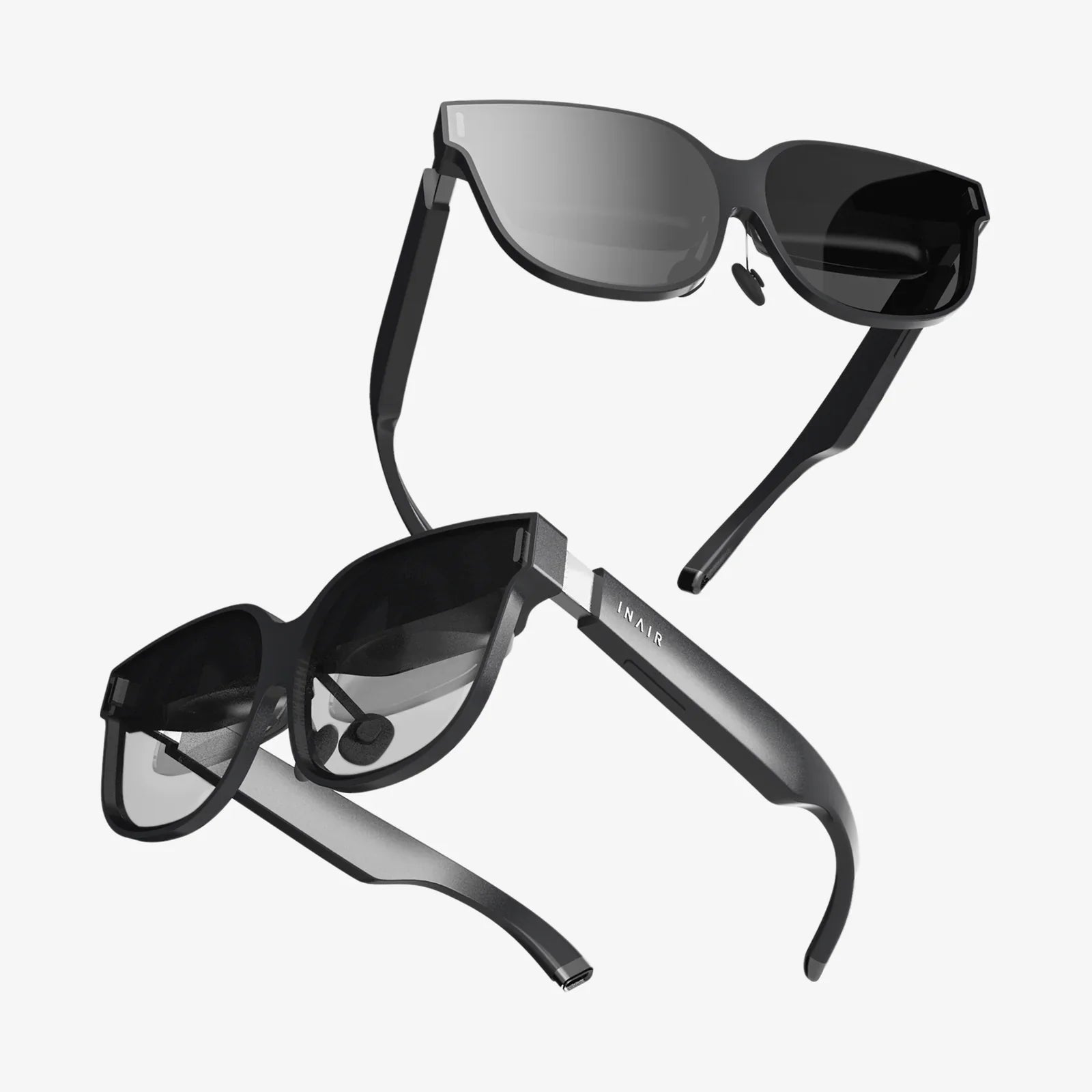
Imagine a world where your watch doesn't just tell time—it tells you your heart needs a break, your glasses don't just correct your vision—they overlay digital directions onto the real street in front of you, and your ring doesn't just accessorize—it silently pays for your coffee. This isn't a distant sci-fi fantasy; it's the palpable reality of today, powered by the relentless innovation in wearable technology. The decision to buy wearable tech is no longer a question of if but which and why. It's a step into a more connected, data-rich, and intuitively interactive life. But with a market exploding with options, from the utilitarian to the whimsical, how do you navigate this new terrain to find the perfect extension of yourself? This definitive guide cuts through the noise, offering a deep dive into the ecosystem of wearables, ensuring your next purchase isn't just a gadget, but a genuine life upgrade.
The Wearable Revolution: More Than Just a Step Counter
The journey to buy wearable tech often begins with a simple desire: to count steps. But today's devices have evolved into sophisticated health guardians, communication hubs, and personal assistants. This revolution is built on a convergence of miniaturized sensors, powerful low-energy processors, and advanced algorithms that can decipher the complex language of the human body and its environment.
The core appeal lies in the seamless integration of technology into the fabric of daily life. Unlike a smartphone that demands to be pulled out of a pocket, wearable tech operates on the principle of ambient computing. It provides information and functionality without interruption, delivering notifications with a subtle buzz on your wrist, tracking your sleep simply because you're wearing it, or monitoring your blood oxygen levels while you read a book. This passive data collection creates a rich, continuous stream of personal analytics, offering insights that were previously inaccessible without professional medical equipment.
A Spectrum of Devices: Finding Your Wearable Fit
The term "wearable tech" encompasses a vast array of form factors, each designed for a specific purpose and lifestyle. Understanding this spectrum is the first step to a smart purchase.
1. Fitness Trackers: The Gatekeepers of Wellness
Often the entry point for many, these devices are hyper-focused on health and activity metrics. They are typically lightweight, feature long battery life measured in weeks, and prioritize simplicity.
- Core Functions: Step counting, distance traveled, calories burned, heart rate monitoring, sleep stage analysis (light, deep, REM), and SpO2 tracking.
- Ideal For: The fitness enthusiast who wants detailed activity data without the complexity of a full smartwatch. They are perfect for runners, swimmers (look for high water resistance ratings), and anyone starting their wellness journey.
- Considerations: Display is often limited, and smartphone integration is primarily for data syncing rather than interaction.
2. Smartwatches: The Wrist-Worn Command Center
These are the powerhouses of wearable tech, acting as a miniature smartphone on your wrist. They run operating systems capable of supporting third-party applications.
- Core Functions: Everything a fitness tracker does, plus call and message handling, app ecosystem (music, navigation, productivity), contactless payments, GPS tracking, and often cellular connectivity for complete phone independence.
- Ideal For: The connected professional, the multitasker, or anyone who wants maximum utility from their device. They are excellent for those who need to stay informed and connected without constantly checking their phone.
- Considerations: Battery life is shorter, often requiring daily or nightly charging. They are also typically larger and more expensive than basic fitness trackers.
3. Smart Rings: Discreet and Continuous Monitoring
This emerging category offers a compelling alternative for those who prefer minimalism or want 24/7 data without a screen on their wrist.
- Core Functions: Superior sleep tracking due to their comfortable, unobtrusive design, all-day activity and heart rate monitoring, and often NFC for payments. Their form factor allows for incredibly consistent wear.
- Ideal For: Individuals who find watches uncomfortable to sleep in, those who want a truly invisible health monitor, or anyone seeking a stylish, tech-augmented piece of jewelry.
- Considerations: The tiny size means a very small battery, though optimized hardware can still yield multi-day life. The lack of a screen means all data must be viewed on a paired smartphone.
4. Advanced Smart Glasses: The Next Computing Platform
While still in earlier stages of consumer adoption, smart glasses represent the cutting edge, aiming to blend the digital and physical worlds through Augmented Reality (AR).
- Core Functions: Displaying information in your field of view (notifications, directions, translations), recording video and taking photos hands-free, and immersive AR experiences for gaming and learning.
- Ideal For: Tech pioneers, content creators, and professionals in fields like engineering or medicine where hands-free access to information provides a significant advantage.
- Considerations: Battery life, style, and social acceptance are still evolving. This is a higher-risk, higher-reward category for early adopters.
Key Considerations Before You Buy Wearable Tech
Impulse buys in the tech world often lead to regret. To ensure your investment enhances your life, methodically evaluate these critical factors.
Battery Life and Charging
This is arguably the most practical consideration. There's a vast range, from devices that last a single day to those that go a month on a charge. Ask yourself:
- Am I willing to charge a device every night alongside my phone?
- Do I travel frequently or go on multi-day hikes where charging is inconvenient?
- Does the charging mechanism use a proprietary cable or a universal standard like USB-C or Qi wireless charging?
A device that dies constantly becomes a useless piece of jewelry. Your routine should dictate the battery life you require.
Ecosystem Compatibility
Wearables are not islands; they are extensions of your existing tech ecosystem. This is a non-negotiable checkpoint.
- Smartphone OS: Most wearables are designed to work seamlessly with either iOS or Android. Some offer cross-platform support, but features may be limited on one side. Ensure full compatibility with your phone.
- Smart Home & Services: If you use specific smart home platforms, music services, or payment systems (e.g., Google Wallet), verify the wearable supports them natively.
Health and Fitness Features
Dig deeper than the marketing claims. If health is a primary driver, scrutinize:
- Sensor Accuracy: Look for devices with validated heart rate sensors (e.g., PPG optical sensors) and multi-system GNSS for accurate GPS.
- Advanced Metrics: Consider if you need ECG for atrial fibrillation detection, skin temperature tracking for trend analysis, or a dedicated blood oxygen sensor.
- Recovery and Wellness: Features like sleep score, stress tracking through HRV (Heart Rate Variability), and guided breathing sessions are valuable for holistic health.
Design, Comfort, and Customization
You have to wear it. A device that is uncomfortable or clashes with your style will end up in a drawer.
- Form Factor: Do you prefer a circular or rectangular watch face? How does it look on your wrist? Is it too bulky?
- Materials: Options range from lightweight aluminum and composites to premium titanium, ceramic, or sapphire glass crystals.
- Bands: Interchangeable bands are a key feature. Consider silicone for workouts, leather for the office, and metal for formal occasions.
- Always-On Display: For a watch, this is a crucial feature for quick, discreet time checks without a exaggerated wrist gesture.
Durability and Water Resistance
Your lifestyle dictates the required ruggedness. Check the water resistance rating (e.g., 5 ATM is suitable for swimming and showering, while IP68 is for splashes). If you work in construction or lead an active outdoor life, look for military-grade durability certifications (e.g., MIL-STD-810H) and reinforced glass like Gorilla Glass.
The Data Dilemma: Privacy and Security in the Age of Wearables
To buy wearable tech is to invite a device to collect the most intimate data about you: your location, your bodily functions, your sleep patterns, and sometimes even your voice recordings. This treasure trove of personal information demands serious consideration.
Before purchasing, investigate the company's data privacy policy. Ask: Where is my data stored? Is it anonymized and aggregated? Who does the company share it with? Reputable companies will have clear, transparent policies and prioritize on-device processing, meaning your raw health data never leaves your wrist unless you grant permission. Encryption of data both in transit and at rest is a fundamental security feature to look for. Your biometric data is your identity; treat its security with the utmost importance.
The Future on Your Wrist: Where Wearable Tech is Headed
The evolution is rapid and breathtaking. The devices we buy today are stepping stones to a truly integrated future. We are moving towards non-invasive continuous glucose monitoring (CGM), which will revolutionize diabetes management and metabolic health for millions. Advanced sensors will provide deeper insights into hydration levels, blood pressure trends, and even early signs of illness. The convergence with AI will transform these devices from data recorders into proactive health coaches, offering personalized, predictive advice based on your unique physiology. Furthermore, the line between smart glasses and traditional eyewear will blur, making AR an ubiquitous tool for navigation, information retrieval, and social connection. The wearable of the future will be less of a device you wear and more of an intelligent layer between you and the world.
The journey to buy wearable tech is a deeply personal one, a balancing act between desire and practicality, between cutting-edge features and timeless design. It's about finding a device that doesn't just perform tasks but understands your rhythm, protects your health, and simplifies your chaos. By looking beyond the hype and focusing on the core considerations of compatibility, battery life, health features, and design, you can confidently select a companion that doesn't just live on your body, but improves the life within it. The perfect piece of technology is waiting to become a seamless part of your story—all it takes is a informed choice to let it in.
Share:
AndroidXR: The Open Future of Immersive Computing is Here
AndroidXR: The Open Future of Immersive Computing is Here