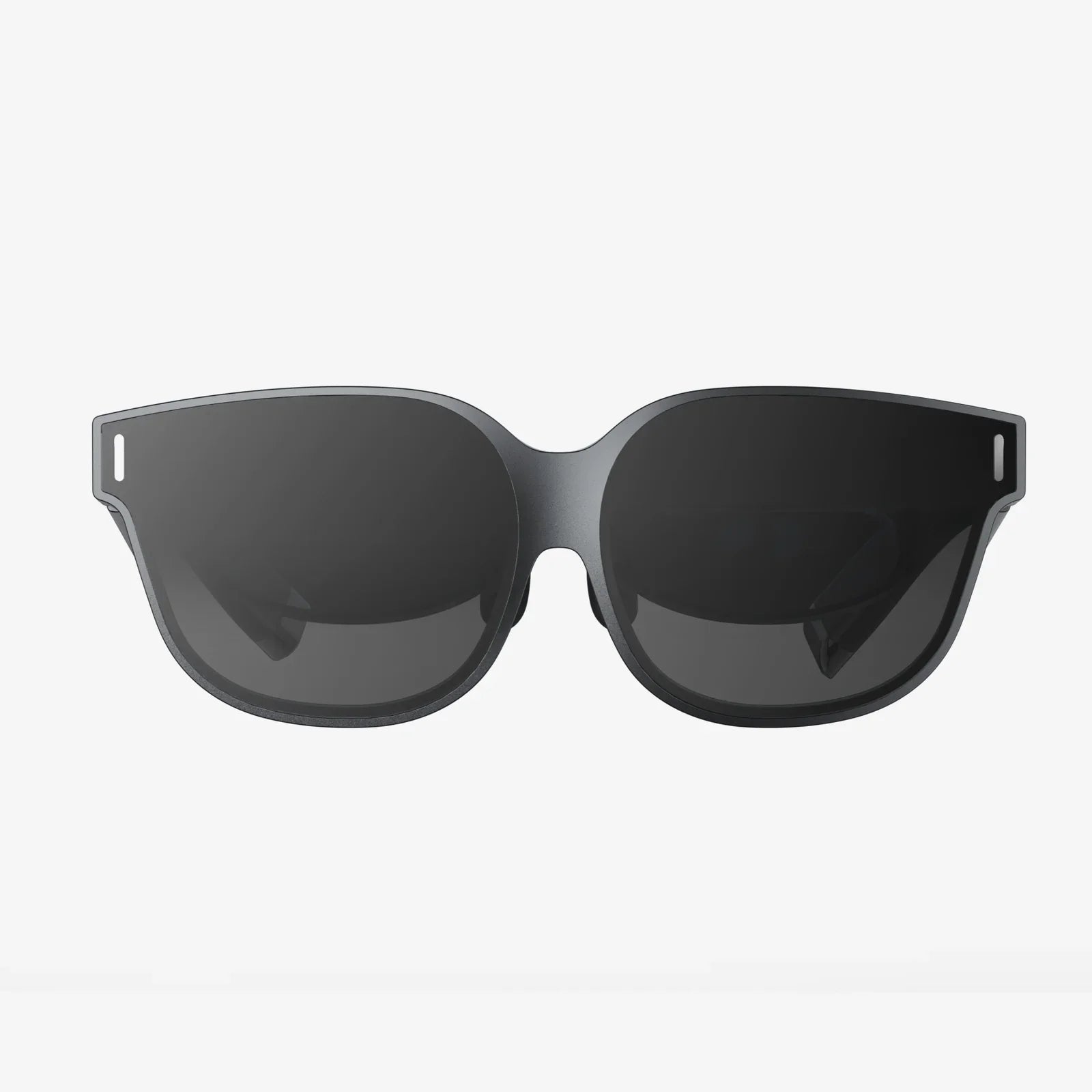
You’ve seen the headlines: a new device promises to replace your reality, while another overlays digital creatures onto your street. The battle between the virtual and the augmented seems to be the defining narrative of the next computing era. But what if this is a false dichotomy? What if, beneath the surface-level differences in application, these two technologies are not rivals but siblings, born from the same DNA and striving toward a unified goal of fundamentally altering our perception of the world? The truth is, the common ground shared by Augmented Reality (AR) and Virtual Reality (VR) is far more extensive and technologically fascinating than their divergences. Understanding these AR and VR similarities is key to appreciating the full spectrum of immersive computing and its inevitable convergence.
A Shared Foundation: The Technological Bedrock
At their core, both AR and VR are not magic; they are the culmination of decades of advancement across multiple engineering disciplines. They are built upon a remarkably similar technological bedrock, a fact often obscured by their final user experience.
Advanced Display Systems
Whether the goal is to transport a user to a fantastical realm or to pin a holographic spreadsheet to their wall, both technologies must solve the same primary challenge: presenting high-fidelity, believable digital imagery to the human eye. This necessitates sophisticated display technology with overlapping requirements.
-
High Resolution and Refresh Rates: To avoid the "screen door effect" (seeing the gaps between pixels) and to ensure smooth, comfortable visuals, both AR and VR headsets demand displays with incredibly high pixel density. Furthermore, they must operate at high refresh rates (90Hz and above) to prevent latency-induced motion sickness and to make the digital world feel responsive and real.
-
Low Persistence: This is a critical technique shared by both. Instead of keeping pixels illuminated constantly, displays flash them briefly. This reduces motion blur when the user moves their head, a vital factor in maintaining immersion and visual comfort in any immersive environment.
Precise Tracking and Sensing
An immersive experience is broken the moment the digital world doesn't align perfectly with the user's movements. This makes precise tracking—the ability for the device to understand its position and orientation in space—a non-negotiable similarity.
-
Inside-Out vs. Outside-In: Both AR and VR systems employ a mix of inside-out tracking (using cameras and sensors on the headset itself to map the environment) and outside-in tracking (using external sensors or base stations to track the headset). The choice depends on the need for precision versus convenience, a trade-off both technologies navigate.
-
Six Degrees of Freedom (6DoF): This is the gold standard for both. It means the headset tracks not just rotational movement (pitch, yaw, roll) but also translational movement (moving forward/backward, up/down, left/right). This allows a user to physically lean in to examine a virtual object or walk around a holographic model, a fundamental capability for true immersion in either technology.
-
Inertial Measurement Units (IMUs): Every modern AR and VR headset contains an IMU—a combination of accelerometers, gyroscopes, and magnetometers. These components work in tandem to provide high-frequency data on movement and orientation, serving as the crucial first layer of tracking that more advanced systems (like computer vision) refine.
Computational Power and Latency
The creation of believable digital worlds, whether they are entirely synthetic or layered onto our own, is an immensely computationally intensive task. It requires real-time rendering of complex 3D graphics, processing of multiple high-resolution camera feeds, and running sophisticated algorithms for tracking and environmental understanding.
-
The War on Latency: For both AR and VR, latency is the enemy. Latency is the delay between a user's movement and the corresponding update on the display. High latency is the primary cause of simulator sickness, a feeling of nausea and disorientation. Both technologies invest heavily in advanced rendering techniques, predictive algorithms, and custom hardware to drive this latency down to imperceptible levels, typically aiming for under 20 milliseconds.
-
Parallel Processing: The workloads are so demanding that they are often split across multiple processors. A dedicated GPU handles rendering, a CPU manages the application logic, and a specialized co-processor or DSP (Digital Signal Processor) handles the sensor fusion and tracking data from the IMU and cameras. This heterogeneous computing architecture is a hallmark of both AR and VR hardware.
The Human Factor: Shared User Experience Principles
Beyond the silicon and sensors, AR and VR are united by a common purpose: to interface with humans in a more natural and intuitive way. This leads to a deep overlap in the principles of user experience (UX) and interaction design.
Natural Interaction Paradigms
Both technologies seek to move beyond the abstract input of a mouse and keyboard or even a touchscreen. The goal is to leverage the way humans naturally interact with the world.
-
Gaze and Gesture: Using your eyes to look at an object and a hand gesture to select it is an intuitive interaction method explored in both VR and AR. It feels direct and magical, as if you are manipulating the digital elements with your own will.
-
Voice Control: Speaking to an assistant or issuing commands is a hands-free interaction model that is equally powerful in both contexts. Asking a virtual companion for information in VR or instructing a AR interface to open an app feels like a natural extension of how we already use technology.
-
Spatial UI: Instead of flat menus confined to a screen, both AR and VR utilize the three-dimensional space around the user. Interfaces can be pinned to walls, attached to physical objects, or simply float in the air, making them feel like a persistent part of the user's environment.
The Challenge of Comfort and Accessibility
Strapping a computer to your face presents a unique set of human-factor challenges that both AR and VR must solve in similar ways.
-
Ergonomics and Weight Distribution: A device that is too heavy, poorly balanced, or generates excessive heat will not be used for long periods. Both industries are engaged in a relentless pursuit of making headsets lighter, more comfortable, and less obtrusive, often using similar materials and design strategies for the headstrap and facial interface.
-
Addressing Vergence-Accommodation Conflict: This is a fundamental visual challenge for all stereoscopic 3D displays. In the real world, our eyes converge (cross) and accommodate (focus) on the same point. In most AR and VR displays, the eyes converge on a virtual object at a certain distance, but must focus on the fixed focal plane of the screen a few centimeters away. This disconnect can cause eye strain and is a active area of research for both fields, with solutions like varifocal displays and light fields being explored.
-
Designing for Safety: A user immersed in a VR world can easily trip over a real-world coffee table. A user engrossed in an AR experience walking down the street could step into traffic. Both technologies must develop robust safety systems, from digital boundary drawing (Guardian systems in VR) to environmental awareness and alerts in AR.
A Convergent Software Ecosystem
The software that powers these experiences, from game engines to development frameworks, highlights another profound similarity: a shared pipeline for creation.
The Dominance of Unified Game Engines
The most powerful tool driving the development of both AR and VR content is not a specialized, single-use program. It is the modern game engine. These platforms provide the essential toolkit for building 3D experiences.
-
Real-Time 3D Rendering: The core function of rendering complex scenes at high frame rates is identical for both. A 3D model, texture, and light source behave the same way in the engine whether they are part of a VR game or an AR visualization.
-
Physics and Logic: The systems for simulating gravity, collision, and object interaction are agnostic to the final medium. A developer writing a script to make a virtual door openable will use the same code and logic for both an AR and VR application.
-
Cross-Platform Deployment: Critically, these engines allow developers to build a project once and then deploy it to a wide range of platforms. With relatively minimal adjustments, a single project can be output to a high-end VR headset, a mobile AR platform, and even a traditional desktop screen. This drastically lowers the barrier to entry and encourages developers to think across the immersive spectrum rather than being siloed into one technology.
Overlapping Development Challenges
Developers working in either field face a parallel set of challenges that require similar skill sets and solutions.
-
Performance Optimization: Squeezing every last frame per second out of the hardware is a daily struggle for both AR and VR developers. Techniques like occlusion culling, level-of-detail (LOD) models, and efficient lighting are paramount in both domains.
-
Spatial Audio: Sound is half the immersion. Implementing 3D spatial audio—where sounds seem to come from specific points in space and change as the user moves their head—is a critical feature for creating believable experiences in both AR and VR. The underlying audio engines and middleware are often the same.
-
User Onboarding: Teaching a first-time user how to interact with a 3D spatial interface is a unique design challenge. Both AR and VR apps must develop intuitive tutorials that explain concepts like teleportation, gesture controls, and boundary setup without relying on traditional text-based instructions.
The Blurring Line: From AR to VR and the Spectrum of Reality
The most compelling evidence for the deep similarities between AR and VR is the fact that the line between them is already beginning to dissolve. They exist on a continuum, often referred to as the reality-virtuality continuum.
-
Passthrough VR - The Hybrid Experience: Modern VR headsets are increasingly featuring high-resolution color video passthrough. This allows users to see a video feed of their physical surroundings inside the headset. With this feature enabled, a VR headset can instantly become an AR device. Digital objects can be placed into this video feed, creating a mixed reality (MR) experience. This technological fusion demonstrates that the hardware is fundamentally capable of both ends of the spectrum.
-
Environmental Understanding: Both advanced AR and modern VR headsets use a technique called SLAM (Simultaneous Localization and Mapping) to understand the geometry of the user's environment. A VR headset uses this to place guardian boundaries and enable room-scale experiences. An AR headset uses it to anchor digital objects to the real world. The core technology is identical; it's the application that differs.
-
The End Goal of Contextual Computing: The ultimate ambition for both AR and VR is to create a form of contextual computing—technology that understands the user and their environment to provide information and functionality exactly when and where it is needed. Whether this is achieved by augmenting the user's field of view or by creating a fully digital workspace is, in many ways, an implementation detail. The underlying goal of seamless, intelligent assistance is a shared vision.
Imagine a future where the device on your face is not labeled as an AR or VR headset, but simply as a spatial computer. With a flick of a digital switch, it can shift from enhancing your reality with persistent digital aids to transporting you to a collaborative virtual boardroom, and then to a passthrough mode that lets you play a game with digital characters on your real living room table. This future isn't science fiction; it's the logical endpoint of the convergent path forged by the profound similarities between these two technologies. The hardware, the software, and the fundamental human desires they serve are already aligned, quietly building the foundation for a single, unified platform that will redefine reality itself.