


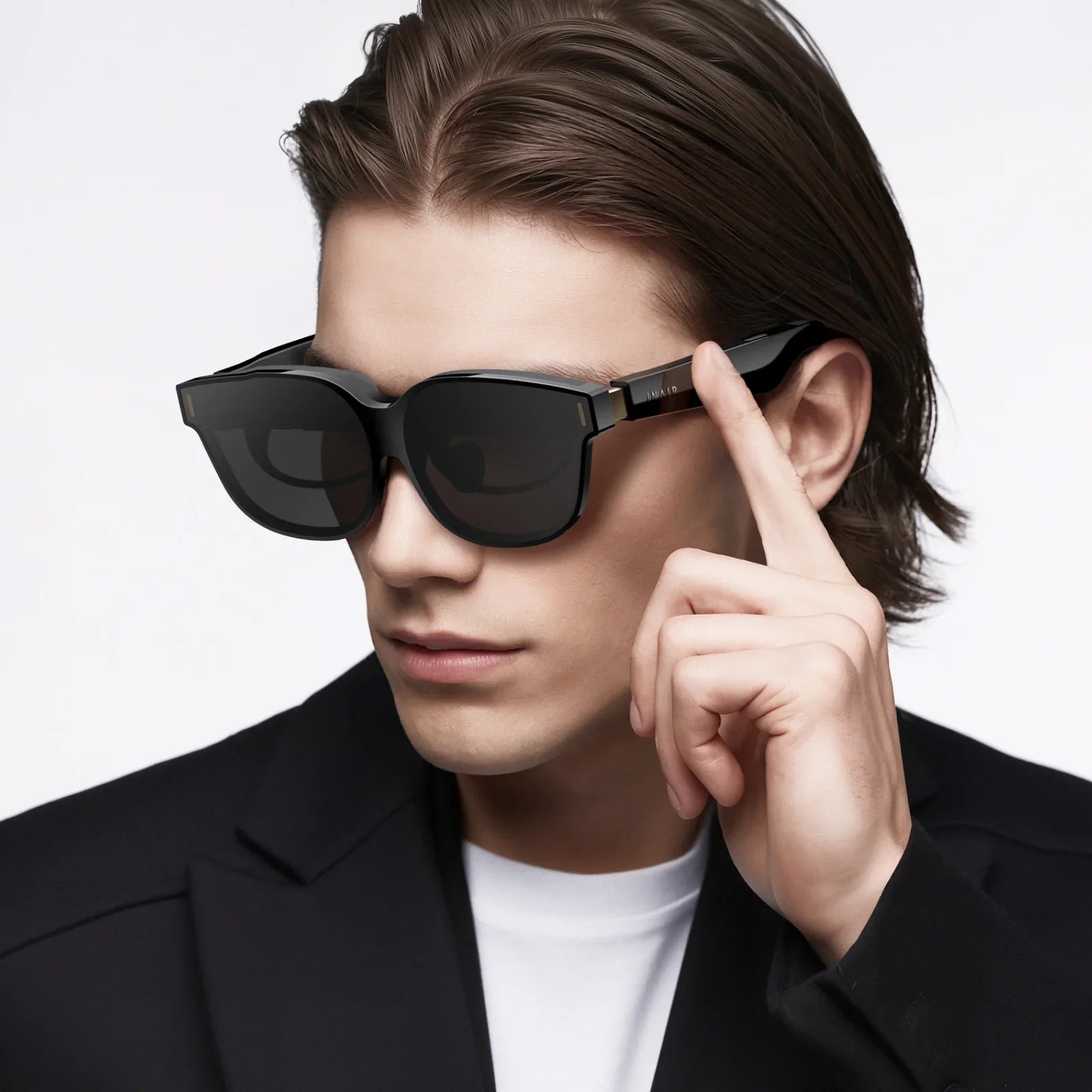
Imagine standing on a sun-drenched virtual beach, squinting at the brilliant glare, when with a simple voice command, a dozen pairs of designer sunglasses materialize before you. You reach out, select a pair with a subtle cat-eye frame, and watch as they instantly appear on your face, perfectly scaled to your features. You turn your head slightly, admiring how the light catches the lenses from different angles, all without ever having touched a physical product. This is not a scene from a science fiction film; this is the reality of shopping for eyewear today, powered by the revolutionary technology of augmented reality sunglasses try-on.
The Digital Try-On Revolution
The traditional process of shopping for sunglasses has long been fraught with inconvenience. Limited store inventories, the inability to compare multiple styles side-by-side, hygiene concerns with shared试用品, and the simple fact that how a frame looks on a display rack rarely translates to how it will look on one's unique face shape. These pain points created a significant barrier to purchase, often leading to buyer's remorse and high return rates for online retailers. The emergence of augmented reality (AR) technology has systematically dismantled each of these obstacles, offering a solution that is not merely incremental but transformative.
At its core, augmented reality sunglasses try-on uses advanced computer vision and facial mapping algorithms. Through the camera on a smartphone, tablet, or computer, the software detects and analyzes the user's face, identifying key landmarks like the pupils, the bridge of the nose, the temples, and the tops of the cheeks. It creates a precise 3D map of the individual's face, a digital twin that serves as the foundation for the virtual try-on. Frames from a retailer's catalog are themselves digitally modeled in 3D, accounting for their shape, size, color, material reflectivity, and even lens tint. The technology then seamlessly superimposes these digital frames onto the user's live video feed, ensuring they align perfectly with their facial geometry, move naturally with their head motions, and interact realistically with the ambient lighting in the room.
Beyond the Novelty: The Core Technologies Powering the Experience
The magic of a flawless virtual try-on experience is woven from several sophisticated technological threads. Understanding them reveals why this technology is so powerful and different from a simple photo filter.
- Precise Facial Mapping and Augmentation: This is the cornerstone. Advanced algorithms don't just place a 2D image of glasses over a face. They perform a deep analysis to understand the face's topology in three dimensions. This ensures the virtual sunglasses sit correctly on the nose bridge, the temples curve around the skull accurately, and the lenses are positioned at the right depth in front of the eyes. This level of precision prevents the awkward floating effect that plagued early AR attempts and creates a convincing, realistic simulation.
- Real-Time Light and Shadow Rendering: A critical aspect of choosing sunglasses is how they look in different lighting conditions. Sophisticated AR try-on solutions simulate how light interacts with the virtual frames and lenses. They can show the glare reduction of a polarized lens, the reflectivity of a mirrored coating, and even how shadows are cast by the frames onto the wearer's face. This photorealistic rendering is vital for consumers to make an informed decision about both the style and the functional performance of the sunglasses.
- Personalized Style Recommendations: The try-on experience is often integrated with AI-driven recommendation engines. As a user tries on different pairs, the system can learn their preferences—perhaps they consistently choose aviators or avoid certain colors. It can then suggest other styles from the inventory that align with their taste, effectively acting as a personal digital stylist and introducing users to options they might never have considered on their own.
A Transformation for Consumers and Retailers Alike
The impact of AR try-on technology is a classic win-win, delivering profound benefits to both ends of the retail spectrum.
For the Consumer:
The advantages for the shopper are immediate and tangible. Unprecedented Convenience is perhaps the most significant benefit. The entire catalog of a retailer is available to try on at any time, from anywhere, removing geographical and time constraints. This leads to Greater Confidence in purchase decisions. When a buyer can see exactly how a pair of sunglasses will look on their own face, from every angle, the uncertainty of online shopping evaporates. This directly translates to Higher Satisfaction and a reduction in the hassle and cost of returns for the consumer. Furthermore, it transforms shopping from a transactional chore into an Engaging and Fun Experience. Users can easily compare numerous styles, share looks with friends for feedback in real-time, and enjoy a playful, interactive way to shop.
For the Retailer:
For businesses, implementing AR try-on is a strategic investment with a clear return. The most direct benefit is a Significant Reduction in Return Rates, which are notoriously high for online eyewear. By ensuring customers know what they are getting, retailers save massively on reverse logistics and restocking. It also serves as a powerful tool for Driving Conversion Rates and Increasing Average Order Value. The engaging experience keeps users on the site or app longer, and the ability to easily try multiple styles often leads to the purchase of more than one pair. It also future-proofs the brand, positioning it as innovative and customer-centric. The technology also provides valuable Data and Analytics on user behavior—which styles are tried on most, which are converted to purchases, and what preferences different demographics have—offering insights that can inform future inventory and design choices.
Challenges and The Road Ahead
Despite its rapid advancement, AR try-on technology is not without its challenges. Achieving perfect photorealistic accuracy for every face shape, skin tone, and extreme lighting environment remains a work in progress. There is also the challenge of technological accessibility, ensuring the experience is smooth and high-fidelity across a vast array of consumer devices with varying processing powers. Furthermore, as with any data-centric technology, questions of privacy and data security regarding facial mapping information must be addressed with utmost transparency and robust protocols by companies adopting the technology.
Looking forward, the future of augmented reality sunglasses try-on is inextricably linked to the development of true AR smart glasses. The next evolutionary step is moving the experience from a smartphone screen to a pair of lightweight, stylish AR glasses. Imagine walking down a street on a bright day, and through your lenses, a virtual display appears overlayed on a store window, allowing you to instantly try on the sunglasses inside without stepping foot in the store. Or having a digital stylist appear in your field of view, suggesting outfits and accessories based on the virtual sunglasses you have on. This seamless merger of the digital and physical shopping worlds is the ultimate destination.
The ability to try on a pair of sunglasses through a screen was once a fantastical concept. Today, it is a practical, powerful, and increasingly standard tool that has demystified online eyewear shopping. It has bridged the gap between the intangible digital catalog and the very tangible need to see how something looks on you. This is just the beginning. As the technology continues to refine its realism and integrate with the next generation of wearable hardware, the line between browsing online and trying on in-store will not just blur; it will vanish completely, creating a world where your next perfect pair of sunglasses is never more than a glance away.
Share:
Augmented Reality Technology Explained: A Comprehensive Guide to the Digital Overlay
AR and VR Similarities: The Twin Pillars of Immersive Technology