


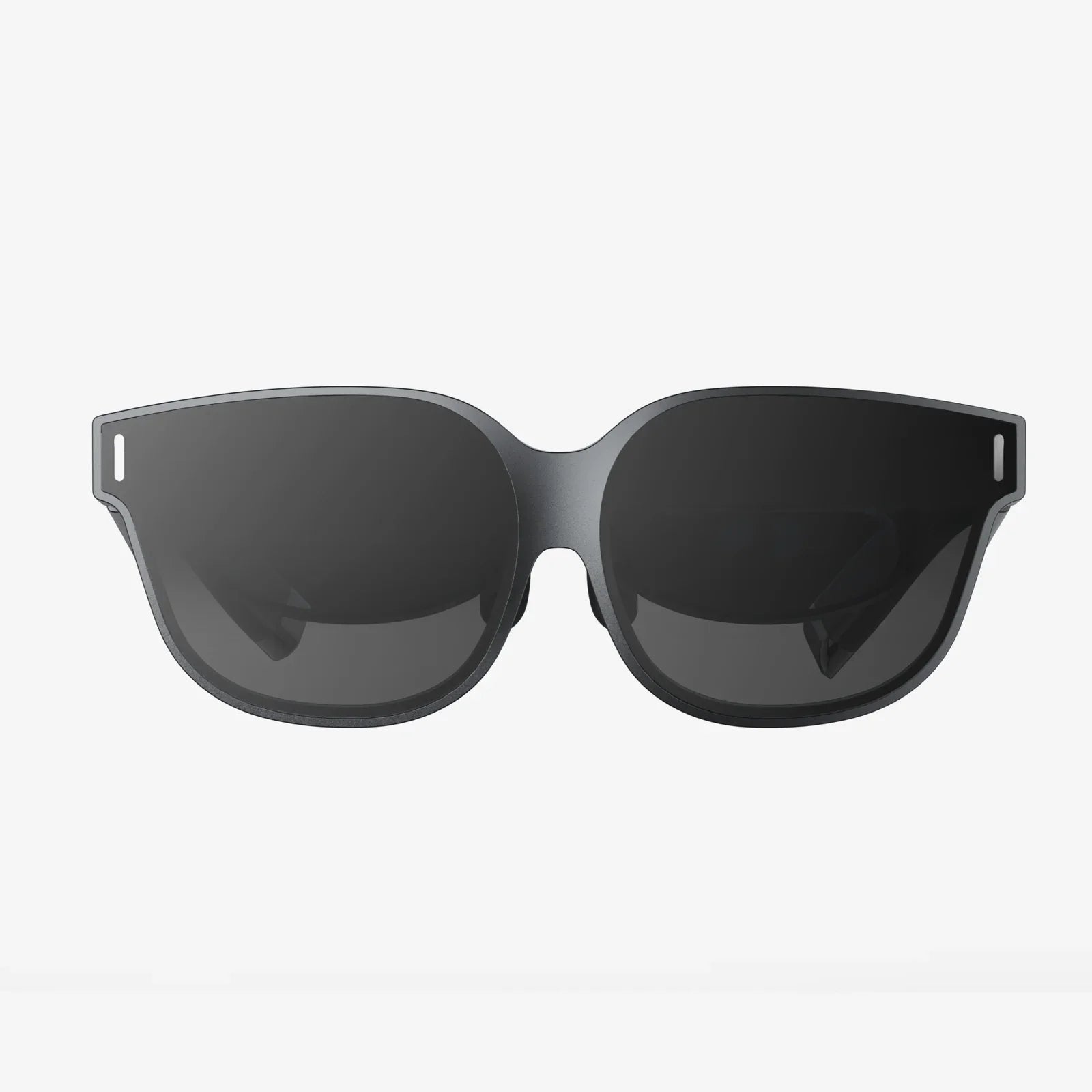
Imagine a world where digital information doesn't live on a screen in your hand, but is seamlessly woven into the very fabric of your reality. This is the promise held by the burgeoning AR and VR smart glasses market, a technological frontier that is rapidly evolving from science fiction fantasy into a tangible, world-altering commercial reality. This isn't just about the next gadget; it's about fundamentally reshaping how we work, learn, connect, and perceive the world around us.
The Confluence of Realities: Defining the Landscape
While often grouped together, Augmented Reality (AR) and Virtual Reality (VR) represent two distinct points on a spectrum of immersive experiences, and understanding this distinction is crucial to grasping the market's dynamics.
Augmented Reality (AR) Smart Glasses are designed to overlay digital information—images, text, data, 3D models—onto the user's view of the physical world. They enhance reality rather than replace it. Think of a mechanic seeing a holographic wiring diagram superimposed on an engine block, or a tourist viewing historical facts about a monument materialize before their eyes. The goal is contextually relevant information, available hands-free, right when and where it's needed.
Virtual Reality (VR) Smart Glasses, by contrast, are fully immersive devices that block out the physical world and transport the user into a completely computer-generated environment. They are primarily used for simulation, training, gaming, and virtual social spaces. While often bulkier due to the need for high-resolution displays close to the eyes, the race is on to make them as sleek and socially acceptable as their AR counterparts.
Bridging these two is a concept often referred to as Mixed Reality (MR), where digital and physical objects not only coexist but can interact in real-time. This represents the holy grail for many developers in the space, creating a continuum between the purely real and the purely virtual.
From Clunky Prototypes to Sleek Spectacles: A Historical Progression
The journey of smart glasses has been one of dramatic miniaturization and increasing sophistication. Early prototypes were often cumbersome, expensive, and limited to research labs and industrial applications. They were defined by low-resolution displays, short battery life, and limited field of view.
The true catalyst for public awareness was arguably the release of a high-profile early consumer model, which, despite its limited success, demonstrated the potential and ignited the imagination of developers and corporations worldwide. This was followed by a period of refinement focused on the enterprise sector, where the value proposition of hands-free, augmented work was immediately apparent and could justify the higher costs.
Today, the market is characterized by a dual-track approach: robust, feature-rich glasses for professional use and a new generation of sleeker, more affordable models aimed at early adopters and consumers. Advancements in micro-optics, waveguide technology, silicon efficiency, and battery chemistry are driving this revolution, making devices lighter, more powerful, and less obtrusive with each passing year.
Igniting the Engine: Key Drivers Propelling the Market Forward
The AR and VR smart glasses market is not growing in a vacuum. It is being propelled by a powerful confluence of technological, economic, and social factors.
- The 5G Revolution: The rollout of high-speed, low-latency 5G networks is a critical enabler. Streaming complex AR experiences and rich VR environments requires massive bandwidth, and 5G eliminates the lag that can break immersion or hinder real-time data overlay, paving the way for cloud-rendered experiences that don't require local heavyweight computing.
- Advances in Enabling Technologies: Breakthroughs in areas like computer vision, spatial mapping, and artificial intelligence are what make smart glasses truly "smart." AI algorithms allow the device to understand and interpret the environment, while improved sensors enable precise tracking of movement and gestures, creating a natural and intuitive user interface.
- The Metaverse Narrative: The burgeoning concept of the metaverse—a persistent network of shared 3D virtual spaces—has created a powerful vision that demands a gateway. Smart glasses are positioned as the primary hardware interface for accessing these future digital worlds, attracting massive investment and developer interest.
- Strong Enterprise Adoption: Beyond the consumer hype, the enterprise sector has been the steady backbone of the market. Industries are achieving significant ROI through applications in remote assistance, complex assembly guidance, training and simulation, and logistics, where smart glasses reduce errors, accelerate processes, and improve safety.
Navigating the Obstacle Course: Challenges and Hurdles
Despite the exciting progress, the path to ubiquitous adoption is fraught with significant challenges that manufacturers and developers must overcome.
- The Form Factor Conundrum: The fundamental trade-off between performance, battery life, and aesthetics remains the single biggest hurdle. Consumers are unwilling to wear bulky, socially awkward devices for extended periods. Achieving all-day battery life in a form factor that resembles regular eyeglasses is the industry's paramount challenge.
- Content and Ecosystem Development: Hardware is useless without compelling software. There is still a relative scarcity of "killer apps" that would drive mass consumer adoption. Building a robust ecosystem of developers and a rich library of applications is essential.
- Social and Privacy Concerns: The always-on, camera-equipped nature of smart glasses raises legitimate concerns about privacy and social etiquette. The concept of being recorded or having one's actions analyzed by someone wearing glasses creates a societal unease that must be addressed through clear norms, regulations, and technological safeguards like obvious recording indicators.
- Cost and Accessibility: High-quality devices remain expensive, putting them out of reach for the average consumer. Driving down costs through economies of scale and technological innovation is necessary for the market to expand beyond professionals and enthusiasts.
A World Transformed: Applications Across Industries
The true potential of AR and VR smart glasses is revealed in their transformative applications across a diverse range of sectors.
- Healthcare: Surgeons can access patient vitals and MRI overlays during procedures; medical students can practice complex surgeries in risk-free VR simulations; and remote experts can guide on-site personnel through delicate processes, visualized directly in their field of view.
- Manufacturing and Logistics: Warehouse workers can see optimal picking routes and instantly verify items, drastically reducing errors. Assembly line technicians can receive step-by-step digital instructions overlaid on machinery, simplifying complex tasks and reducing training time.
- Field Service and Maintenance: A technician repairing a complex piece of equipment can have a manual, schematic, or a live video feed from an expert remotely guiding their every move, all without looking away from the task at hand.
- Education and Training: History lessons can become immersive journeys where students witness historical events unfold around them. Mechanics can train on virtual engines, and astronauts can prepare for missions in simulated spacecraft, all providing experiential learning that is far more effective than textbooks or videos.
- Retail and Design: Imagine trying on clothes, glasses, or makeup virtually, or visualizing how a new piece of furniture would look in your living room at full scale before you buy it. Architects and interior designers can walk clients through digital mock-ups of unbuilt spaces.
Gazing into the Crystal Ball: The Future Outlook
The future of the AR and VR smart glasses market is one of convergence and normalization. We are moving towards a single device capable of seamlessly switching between AR passthrough and full VR immersion. Display technology will continue to improve, with resolutions approaching retinal clarity and fields of view expanding to fill our entire vision.
The user interface will evolve beyond controllers and simple gestures towards more advanced interactions like eye-tracking, neural input, and ultimately, direct brain-computer interfaces. The glasses themselves will become a powerful health sensor platform, monitoring everything from blood oxygen levels to neurological signals, acting as a guardian for our personal wellbeing.
As the technology fades into the background—becoming lighter, more powerful, and ultimately, as commonplace as a smartphone—it will cease to be a novelty and simply become another lens through which we experience and enhance our reality. The boundary between the digital and the physical will blur into irrelevance, creating a new, hybrid world limited only by our imagination.
The race to own your field of view is on, and the winners won't just be selling hardware; they will be defining the very architecture of our future reality. The next decade will see the transition of AR and VR smart glasses from specialized tools to universal companions, unlocking human potential in ways we are only beginning to comprehend and setting the stage for the most profound technological shift since the advent of the internet.
Share:
Best AR Glasses for Virtual Desktop: Your Ultimate Guide to a Portable Workspace
Public Augmented Reality Companies: Investing in the Overlay of the Future