


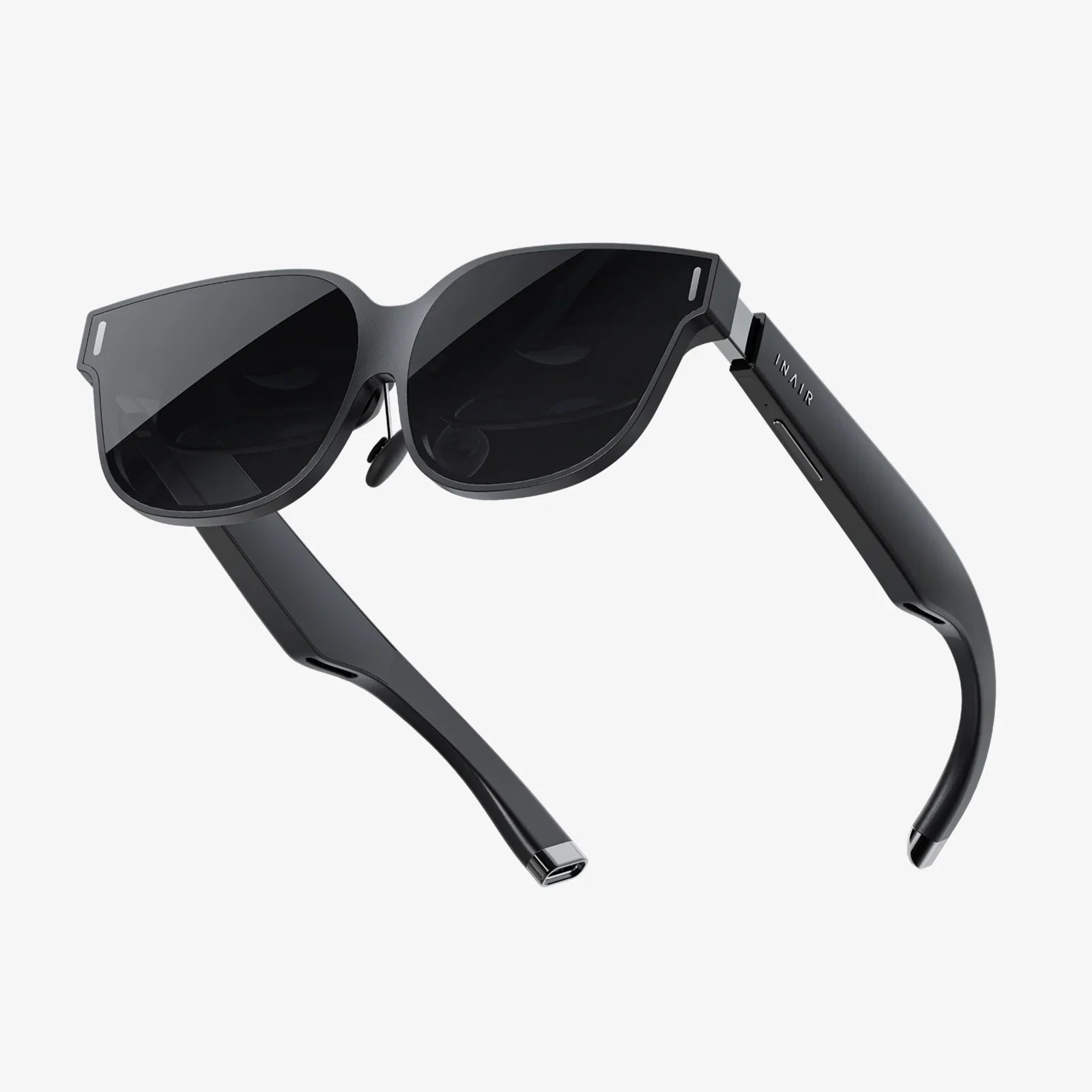
Imagine a world where your surroundings are not just seen but understood, where digital intelligence seamlessly blends with physical reality to anticipate your needs, guide your actions, and solve problems before you even recognize them. This isn't a distant sci-fi fantasy; it's the emerging reality powered by the convergence of two transformative technologies: Augmented Reality (AR) and automation. This fusion, which we can aptly term AR Automatic, is creating a new class of systems that don't just overlay information but actively interpret and interact with the environment in real-time. It’s the shift from a passive digital layer to an active, intelligent participant in our world.
The Genesis of a Intelligent Partnership: Beyond Simple Overlays
To understand AR Automatic, we must first dissect its core components. Augmented Reality, at its simplest, is the technology that superimposes computer-generated images, sounds, and other sensory enhancements onto our real-world view. For years, its primary function was informational—showing a floating navigation arrow, displaying a product's specs when pointed at, or adding a fun filter to a social media video. It was a brilliant but largely passive tool.
Automation, on the other hand, is the technology by which a process or procedure is performed with minimal human assistance. It's the realm of robotics, industrial control systems, and smart algorithms that execute predefined tasks. Traditionally, these automated systems operated in controlled, often isolated environments, blind to the unstructured chaos of the human world.
AR Automatic is the powerful synthesis of these two fields. It’s the point where the perceptual, contextual power of AR meets the decisive, action-oriented capability of automation. An AR Automatic system doesn't just show you an instruction manual over a machine; it uses computer vision to identify the machine, diagnose a fault, and then automatically guide a robotic arm or trigger an automated process to fix it. The AR provides the eyes and the brain; the automation provides the hands.
The Core Technologies Powering the Vision
This seamless marriage is made possible by advancements across several technological domains.
Advanced Computer Vision and Scene Understanding
This is the foundational sense of AR Automatic. Modern computer vision algorithms, supercharged by machine learning, have moved beyond simple object recognition. They can now understand depth, spatial relationships, material properties, and even the state of an object (e.g., is this valve open or closed?). This environmental intelligence allows the system to create a rich, dynamic 3D map of the world, which becomes the canvas upon which automated actions are planned and executed.
Edge Computing and 5G Connectivity
The decision-making required for true automation cannot tolerate latency. Sending visual data to a distant cloud server for processing and waiting for a command to return is too slow for real-time interaction. Edge computing solves this by processing data locally on the device or a nearby server. Coupled with the high bandwidth and low latency of 5G networks, this enables the instantaneous analysis and reaction that AR Automatic demands, whether it's on a factory floor, a construction site, or a city street.
AI and Predictive Analytics
Automation is most powerful when it's proactive. Machine learning models can analyze the vast streams of visual and sensor data from an AR system to not only understand the current state but also predict future states. This allows for predictive maintenance (flagging a component that shows signs of wear before it fails), optimized workflow suggestions, and intelligent resource allocation, all without human intervention.
Spatial Mapping and Digital Twins
An AR Automatic system often creates and maintains a digital twin—a virtual, real-time replica of a physical object, process, or system. This twin is continuously updated with data from the AR sensors. Automation systems can then run simulations, test scenarios, and execute commands on this digital twin first, verifying their safety and efficacy before deploying them in the physical world. This creates a feedback loop where the physical world informs the digital, and the digital guides the physical.
Revolutionizing Industries: From Assembly Lines to Operating Rooms
The practical applications of AR Automatic are vast and are already beginning to transform entire sectors.
The Industrial Metaverse: Smart Factories and Warehouses
This is perhaps the most fertile ground for AR Automatic. Imagine a warehouse where autonomous forklifts are not pre-programmed to follow magnetic tapes on the floor but navigate dynamically using AR vision systems that perceive workers, other vehicles, and obstacles in real-time, optimizing their path on the fly. On the assembly line, a robot equipped with an AR camera can automatically identify a unique product model coming down the line, access its digital twin for instructions, and perform the precise, customized assembly sequence required without any human reprogramming. Quality control becomes automated as AI-driven AR systems scan finished products, comparing them instantly to their perfect digital twin to detect microscopic defects invisible to the human eye.
Construction and Architecture: Building with Precision
In construction, AR Automatic can project building plans directly onto the physical site, but it can go much further. Automated robotic layout systems can use AR projections to mark precise points for walls, electrical conduits, and plumbing without a single piece of manual measuring tape. Drones equipped with AR and automation can autonomously fly pre-planned routes to survey progress, with their computer vision automatically identifying deviations from the architectural plans and flagging them for the project managers, all while generating updated 3D models.
Healthcare: The Augmented Surgeon and Automated Diagnostics
In healthcare, the stakes are high, and the potential is profound. Surgeons already use AR for visualizing anatomy beneath the skin. The automatic evolution involves systems that can automatically track instruments in real-time, ensuring count accuracy and preventing retained objects. More advanced systems could provide automated guidance, warning a surgeon if their instrument is approaching a critical nerve or vessel outside the planned surgical margin. In diagnostics, automated AR microscopes could scan slides, automatically highlighting and classifying cancerous cells for the pathologist, drastically reducing analysis time and improving accuracy.
Retail and Logistics: The Self-Managing Store
The retail experience is poised for an overhaul. Smart shelves with built-in AR sensors could automatically monitor inventory levels. When stock runs low, the system could automatically trigger a restock request to the backend inventory system, which then dispatches an automated cart or robot to bring out new stock. For customers, AR mirrors could automatically suggest matching items or different sizes without any manual input, creating a highly personalized and efficient shopping journey.
Navigating the Challenges: The Road to Ubiquity
Despite its immense potential, the path to widespread adoption of AR Automatic is not without significant hurdles.
The Latency Imperative: Zero Tolerance for Delay
For automation to be safe and effective, the entire process—from perception to analysis to action—must occur in milliseconds. Any lag in the AR system's processing or the automated response could have catastrophic consequences, especially in environments with heavy machinery or fast-moving components. This demands relentless optimization of hardware and software and robust, low-latency network infrastructure everywhere it's deployed.
Data Privacy and Security in an All-Seeing World
An AR Automatic system is, by its nature, a massive data collection engine. It is continuously capturing and processing highly detailed visual information about its environment, which often includes people. This raises profound questions about privacy, consent, and data ownership. Furthermore, these systems become high-value targets for cyberattacks. A hacked industrial AR Automatic system could be fed spoofed visual data, causing it to take dangerous, incorrect actions. Ensuring ironclad cybersecurity is not an optional feature; it is a fundamental requirement.
The Human Factor: Trust and the Changing Workforce
Introducing an autonomous system that "sees" and "acts" requires a monumental shift in human trust. Workers must be confident that the system will perform reliably and safely. This necessitates incredibly robust testing and validation frameworks, often using digital twins to prove system reliability in millions of simulated scenarios. Furthermore, the workforce needs to evolve. The demand will shift from manual laborers to individuals who can design, maintain, supervise, and collaborate with these intelligent systems, requiring significant investment in new skills and training.
Technical Hurdles: Uniform Standards and Computational Demands
The ecosystem for AR Automatic is still fragmented. A lack of universal standards for data formats, communication protocols, and hardware interfaces could stifle innovation and create compatibility nightmares. Moreover, the computational power required for real-time environmental understanding and automated decision-making is immense, pushing the limits of current battery technology and processing hardware for wearable devices.
The Next Frontier: What Lies Beyond the Horizon?
The evolution of AR Automatic is pointing toward even more deeply integrated and intelligent systems. We are moving towards a world of ambient computing, where these technologies fade into the background of our lives, functioning as an invisible, proactive assistant. Future developments could include predictive environment automation, where your smart office automatically adjusts lighting, temperature, and display configurations based on who enters the room and the task they are about to perform, all guided by AR perception. On a city scale, AR Automatic traffic management systems could use a network of cameras to perceive traffic flow in real-time and automatically optimize traffic light patterns to eliminate congestion without any human traffic controller.
The ultimate expression of this technology may be the creation of a responsive world—a physical environment that dynamically adapts to our presence and needs, blurring the line between the digital and the physical until the two are inextricably and usefully linked. This isn't about replacing humans; it's about augmenting our capabilities and offloading mundane, dangerous, and complex tasks to a symbiotic system of intelligence that allows us to focus on creativity, strategy, and connection.
The door to a world that doesn't just contain technology but is actively shaped and improved by it in real-time is now open. This is the promise of AR Automatic—a future where our environment is not a static stage but a dynamic partner, intelligently responding to our presence and amplifying our potential in ways we are only beginning to imagine. The revolution won't be just visualized; it will be automated.
Share:
VR Goggles Lenses: The Critical Gateway to Immersive Digital Realities
VR Goggles Lenses: The Critical Gateway to Immersive Digital Realities