


- by wangfred
VR Goggles Lenses: The Critical Gateway to Immersive Digital Realities
- by wangfred
You slip on the headset, the world around you fades to black, and in an instant, you’re transported. You’re standing on the surface of Mars, dodging bullets in a futuristic arena, or examining a human heart as if it were floating in your living room. This magic, this instantaneous leap into another dimension, feels like pure digital sorcery. But the true gateway to these impossible worlds isn’t just the code or the screens; it’s a meticulously engineered piece of optics often overlooked: the VR goggles lenses. These are not mere windows; they are the architects of perception, the final and most critical filter between the binary world of ones and zeros and the rich, believable reality your brain experiences. Understanding them is to understand the very heart of the virtual reality experience.
At its core, the function of a lens in a VR headset is deceptively simple: to take the focused image from tiny high-resolution displays positioned just inches from your eyes and refocus it to appear as a vast, panoramic scene in the distance. Your eyes and brain are not designed to focus on a screen two inches away; they need to relax as if gazing upon a horizon. The lenses make this physiological trick possible.
The challenge is immense. Engineers must combat a host of optical imperfections, known as aberrations, that can shatter immersion and cause discomfort. The most common of these is the "pincushion" effect inherent to the wide-field magnifying lenses used in VR. This distortion causes straight lines to appear curved outward. If left uncorrected, a virtual doorway would look like it was melting. The ingenious solution is a software-level "barrel distortion" applied to the rendered image before it reaches the display. This pre-warps the image in the opposite direction, so that when it is viewed through the physically distorting lenses, the two effects cancel each other out, resulting in a perfectly straight line. This symbiotic relationship between software and hardware is fundamental to all modern VR systems.
Not all VR lenses are created equal. The pursuit of visual perfection has led to several distinct types of lens technologies, each with its own set of trade-offs between cost, clarity, and comfort.
For years, the most common lens type has been the Fresnel lens. Inspired by lighthouse designs, these lenses use a series of concentric ridges or rings to achieve the same light-bending curvature as a traditional, thick, and heavy solid lens but in a dramatically thinner and lighter form factor. This is a crucial advantage for wearable technology where every gram counts.
However, the Fresnel design comes with significant optical compromises. The ridges can create two notorious artifacts: glare and god rays. Glare appears as a general haze or bloom around high-contrast elements, especially bright text on a dark background. God rays are more specific, manifesting as streaky, ethereal rays emanating from these bright points, which can be highly distracting in dark virtual environments. Furthermore, the design of Fresnel lenses often results in a smaller "sweet spot"—the area of perfect focus in the center of the lens. Move your eyes away from the center, and the image can quickly become blurry, forcing users to move their whole head instead of just their eyes.
A more recent and revolutionary advancement is the adoption of pancake lenses. This design uses a complex process of folding the light path between multiple lens elements and polarizing filters. The result is an incredibly slim profile that has enabled a new generation of compact, lightweight VR and mixed reality headsets.
Pancake lenses offer superior image quality in several key areas. They virtually eliminate the glare and god rays associated with Fresnel lenses, providing much higher contrast and black levels. They also typically feature a larger sweet spot and improved edge-to-edge clarity, making the visual experience more consistent and comfortable. The trade-off? Light efficiency. Because the light bounces through multiple layers, a significant amount of it is lost. This requires headsets using pancake lenses to employ much brighter displays and more efficient display technologies to compensate, which can impact power consumption and heat generation.
Beyond these two dominant types, high-end and experimental systems explore other designs. Aspheric lenses have a complex, non-spherical surface that can be designed to minimize distortions without the ringed structure of a Fresnel lens. While heavier and more expensive to manufacture, they can offer exceptional clarity and a large sweet spot. Many modern headsets now use hybrid designs, combining elements of Fresnel, aspheric, and pancake philosophies to create a bespoke optical stack that balances performance, size, and cost for a specific product vision.
The type and quality of lenses directly dictate several critical aspects of the user experience that go beyond mere resolution.
While a high-resolution display is vital, the lens is what delivers that resolution to your eye. A poor lens will smudge and blur the pixels, making even a 4K display look soft. The concept of pixels-per-degree (PPD) is key—it measures the angular density of pixels from the user's perspective. Higher PPD, achieved through a combination of high-res displays and high-quality optics, is the true metric for sharpness. A good lens also minimizes the "screen door effect" (the visible grid between pixels) by properly blending the pixels together, making the image appear as a seamless whole.
The lenses are the primary determinant of the headset's field of view (FOV). A wider FOV is more immersive, making the digital world feel vast and all-encompassing rather than like looking through a pair of binoculars. However, designing wide-FOV lenses that are also sharp, bright, and free of distortion is incredibly challenging and expensive. It’s a constant battle between immersion and optical integrity.
Lens technology is also deeply personal. The ability to adjust the interpupillary distance (IPD)—the physical distance between the lenses to match the user's own eye separation—is paramount. An incorrect IPD setting can lead to eye strain, headaches, and a failure to achieve a clear, comfortable 3D image. Furthermore, the growing inclusion of a diopter adjustment wheel is a game-changer for the millions of users who wear glasses. This built-in focus adjustment allows many near- or far-sighted users to experience VR clearly without the awkwardness and reduced FOV of squeezing their spectacles into the headset.
The evolution of VR lenses is far from over. Research labs are buzzing with concepts that sound like science fiction but are steadily approaching reality.
Varifocal lenses represent a monumental leap forward. Current VR lenses have a fixed focal plane, meaning the virtual world is always perceived at a single distance, typically a few meters away. This causes a conflict, known as the vergence-accommodation conflict, when you try to look at a virtual object very close to your face. Your eyes cross (verge) but cannot physically focus (accommodate), leading to discomfort and a subtly flat, unrealistic image. Varifocal lenses dynamically adjust their focal distance in real-time, tracking your eyes to focus on the virtual object you are looking at, just like the lens in your real eye. This resolves the conflict and adds a profound new layer of depth and comfort.
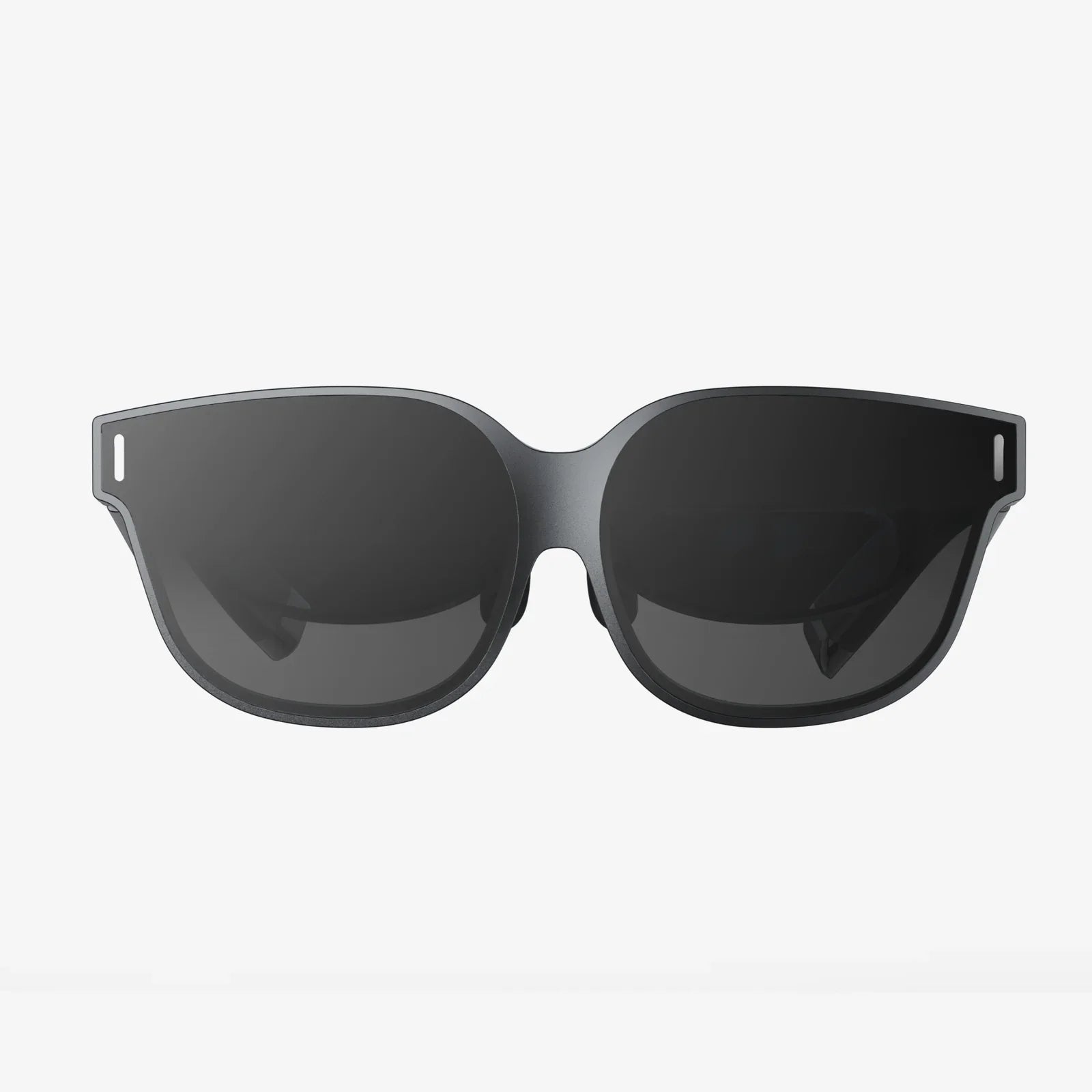
Even more futuristic are developments in holographic optics and metalenses. These technologies use microscopic structures to manipulate light in radically new ways, promising to create lenses that are thinner than a sheet of paper, completely free of traditional distortions, and capable of feats impossible for conventional glass. They could one day lead to VR headsets that are indistinguishable from a pair of ordinary sunglasses.
Finally, the integration of eye-tracking technology is becoming inseparable from advanced lens design. Beyond enabling varifocal systems, eye-tracking allows for foveated rendering, a technique where the full rendering detail of a scene is focused only on the tiny central area of your retina (the fovea) that perceives sharp detail. The periphery is rendered at a much lower resolution. Since the lenses are guiding the light from the display, they work in concert with this software trick to dramatically reduce the computational power required without the user ever noticing, enabling more complex and realistic virtual worlds.
So the next time you prepare for a journey into the virtual unknown, take a moment to consider the marvels housed within your headset. Those perfectly polished curves of glass or plastic are the silent, indispensable conductors of the entire symphony. They are the final, crucial translators, turning cold data into warm experience, and raw computation into pure wonder. The quest for deeper immersion, sharper clarity, and effortless comfort continues, and it will be won not just with faster processors, but with ever more clever and sophisticated bends of light. The true frontier of virtual reality isn't just about building bigger worlds—it's about building a better window to see them through.