


- by wangfred
AR Automation Technology: The Invisible Engine Reshaping Our World
- by wangfred
Imagine a world where complex repair instructions are projected directly onto a malfunctioning machine, where warehouse workers are guided by digital arrows to their next pick with superhuman efficiency, and where a surgeon can see a patient’s vital signs and 3D anatomical models superimposed over the operating field without ever looking away. This is not a distant science fiction fantasy; it is the rapidly emerging reality powered by the convergence of Augmented Reality and automation technology. This powerful synergy, often termed AR automation, is quietly building an invisible engine that is poised to reshape industries, redefine job roles, and revolutionize how we interact with the physical and digital worlds. The fusion of these two transformative forces is creating a new layer of intelligence over our reality, one that promises to enhance human capability, eliminate errors, and unlock unprecedented levels of productivity and insight.
To understand AR automation, we must first appreciate its constituent parts and their powerful symbiosis. Augmented Reality is a technology that overlays digital information—be it images, data, 3D models, or animations—onto a user’s view of the real world. Unlike Virtual Reality, which creates a fully immersive digital environment, AR enhances the real world by adding a contextual digital layer to it. Automation, on the other hand, refers to the use of technology to perform tasks with minimal human intervention. This can range from simple robotic process automation to complex AI-driven systems that make decisions and execute actions.
AR automation is the fusion of these concepts. It is the use of augmented interfaces to visualize, control, monitor, and interact with automated systems and the data they produce. It’s a two-way street: automation provides the data and actions, while AR provides the intuitive interface for humans to understand and command those actions. This creates a closed-loop system where digital instructions guide physical actions, and sensors on automated equipment feed real-time data back into the AR interface, creating a continuous cycle of optimization and feedback.
The seamless experience of AR automation is powered by a sophisticated stack of underlying technologies, each playing a critical role.
At the heart of any AR system is computer vision. This technology allows devices to understand their environment. Using cameras and sensors, the system can identify objects, recognize surfaces, and map the physical space in real-time. This spatial awareness is crucial for accurately anchoring digital content to the real world. For automation, this means an AR headset can recognize a specific valve on an industrial machine or a particular component on a circuit board, ensuring the correct instructions are displayed in the correct context.
Automated systems are rich with data. Sensors on machinery monitor temperature, pressure, throughput, and error states. IoT platforms aggregate this data. AR automation acts as the perfect visualization layer for this IoT data. Instead of a technician checking a dashboard on a tablet, they can look at a machine and see its real-time performance metrics, historical data, and predictive maintenance alerts floating beside it. This contextualizes data in an instantly understandable way, turning raw numbers into actionable insights.
AI is the brain that makes the system intelligent. Machine learning algorithms can analyze the vast streams of data from automated processes to predict failures, optimize workflows, and generate instructions. AR then becomes the delivery mechanism for this intelligence. For instance, an AI might predict that a specific tool on a production line will fail within 48 hours. An AR system could then guide a maintenance technician through the replacement procedure step-by-step, highlighting the exact tool and showing the correct installation technique.
The heavy processing required for advanced AR and AI often happens in the cloud. High-speed, low-latency connectivity, particularly with the rollout of 5G networks, is essential. It allows complex 3D models to be streamed instantly to lightweight AR glasses, enables real-time collaboration between remote experts and on-site workers, and ensures that the data overlays are always current and synced with the central automation system.
The most profound impact of AR automation is currently being felt in industrial and enterprise settings, where the ROI is clear and measurable.
On the factory floor, AR automation is a game-changer. Digital work instructions can be projected directly onto the assembly line, showing workers exactly which part to install, the precise torque sequence for fasteners, and highlighting potential quality checkpoints. This reduces errors, slashes training time for new employees, and increases overall production speed. Automated guided vehicles (AGVs) can be monitored and controlled via AR interfaces, and their routes can be visualized and adjusted in the context of the actual factory layout.
In massive distribution centers, AR-powered smart glasses can revolutionize order picking. The system automatically receives an order from the Warehouse Management System (an automated software), calculates the most efficient route, and then guides the picker with visual cues—arrows on the floor, flashing lights on the correct bin, and a confirmation checkmark once the item is scanned. This is a perfect example of automation handling the planning and logistics while AR optimizes the human execution, often leading to double-digit percentage increases in picking efficiency and accuracy.
This is one of the killer applications for AR automation. A field service engineer arrives at a remote wind turbine or a malfunctioning HVAC unit. Instead of lugging around massive paper manuals or scrolling through PDFs on a laptop, they don AR glasses. The glasses, connected to a centralized automated system, immediately recognize the equipment model via computer vision. They then overlay animated repair guides, highlight the components that need servicing, and provide real-time access to schematics. Furthermore, a remote expert can see what the technician sees and draw annotations directly into their field of view, guiding them through complex procedures without needing to travel to the site.
AR automation creates incredibly effective and safe training environments. New employees can learn to operate complex, expensive, or dangerous machinery by following AR instructions overlaid on physical equipment or high-fidelity digital twins. The system can guide them through procedures, warn them of incorrect actions, and provide instant feedback—all without the risk of damaging equipment or causing injury. This accelerates competency and builds confidence far more effectively than traditional classroom or video-based training.
While its industrial impact is staggering, AR automation is also poised to seep into our everyday lives.
Imagine pointing your phone at a product on a shelf and instantly seeing detailed specifications, customer reviews, and comparable items—all powered by automated product information systems. For home furnishings, AR can automate the process of visualizing how a new sofa or lamp will look in your living room, scaled to the correct size and matching your existing décor.
Surgeons are using AR to automate the visualization of critical data. Patient vitals, pre-operative scans (MRI, CT), and 3D anatomical models can be projected into the surgeon’s eyeline during a procedure. This automates the process of correlating diagnostic data with the physical patient, reducing cognitive load and improving surgical precision. It can also guide the placement of incisions or implants with sub-millimeter accuracy.
As our homes become more automated with smart devices, AR could become the primary interface for managing them. Looking at your thermostat could overlay energy usage data and suggested settings. Pointing your phone at a smart light could bring up a menu to change its color and brightness. On a city scale, AR could automate navigation by painting directions onto the street, display public transport schedules at bus stops, and reveal the hidden infrastructure beneath our feet.
Despite its immense potential, the path to ubiquitous AR automation is not without significant hurdles.
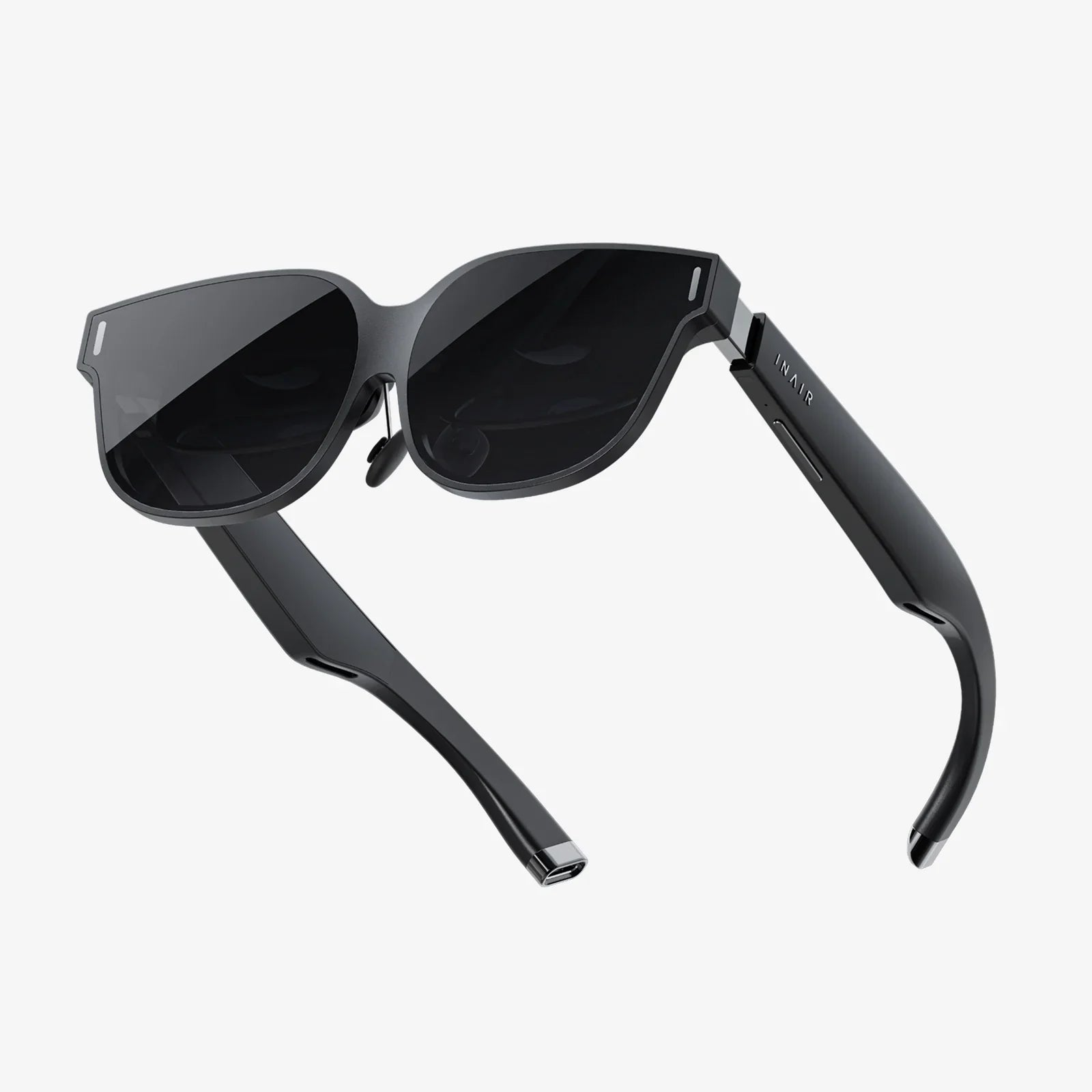
Hardware remains a challenge. For widespread enterprise adoption, AR glasses need to be lightweight, have all-day battery life, offer a wide field of view, and be durable enough for industrial environments—all at a reasonable cost. The technology is advancing rapidly, but the perfect form factor remains elusive. Furthermore, developing accurate and robust computer vision models that work in diverse and dynamic environments requires significant investment and expertise.
Most enterprises have a complex patchwork of legacy systems, modern automated machinery, and various software platforms. Getting these systems to communicate seamlessly and feed data into a unified AR experience is a monumental task. A lack of universal standards can make integration expensive and time-consuming.
AR devices are data collection powerhouses, with cameras and sensors constantly capturing their surroundings. This raises serious concerns about privacy, especially in workplaces, and the security of potentially sensitive operational data that is being processed and displayed. Robust cybersecurity protocols are non-negotiable.
Introducing any new technology requires careful change management. Workers may fear that AR automation is a step toward replacing them, rather than a tool to augment their skills. There are concerns about digital eye strain, cognitive overload from too much information, and the social acceptance of wearing cameras on one’s face. Successful implementation requires extensive training and a focus on demonstrating clear employee benefits, not just corporate ROI.
The trajectory of AR automation points toward a future that is more intuitive, efficient, and interconnected. We are moving toward what is often called the "Enterprise Metaverse" or the "Industrial Metaverse"—a persistent, digital layer over the physical world where automated systems and human workers interact in real-time. In this future, digital twins will become standard, allowing managers to simulate, optimize, and control entire factories from an AR interface before deploying changes to the physical floor. The line between instruction and action will blur further as AR systems evolve to understand natural language and gesture commands, creating a truly hands-free operational experience.
The convergence with Artificial Intelligence will also deepen. We will see the rise of generative AR, where AI doesn't just display pre-programmed instructions but dynamically generates the optimal guidance for a unique situation in real-time. This will make AR systems more adaptive and capable of handling novel problems without human programming. As the technology matures and becomes more affordable, it will inevitably trickle down from large enterprises to small and medium-sized businesses, democratizing access to what was once a futuristic capability.
We are standing at the precipice of a fundamental shift in human-computer interaction. The command-line interface and the graphical user interface (GUI) defined the past decades of computing. The next paradigm is the spatially aware, contextually intelligent interface that AR automation promises. It’s an interface that doesn’t sit on a desk but exists integrated within our environment, understanding what we see and providing information and control exactly when and where we need it. This isn’t just about putting a "heads-up display" on life; it’s about weaving a thread of intelligent, automated assistance into the very fabric of our reality, making the complex simple and the impossible, possible. The invisible engine is already humming; the question is no longer if it will power our future, but how quickly we will learn to harness its transformative potential.