


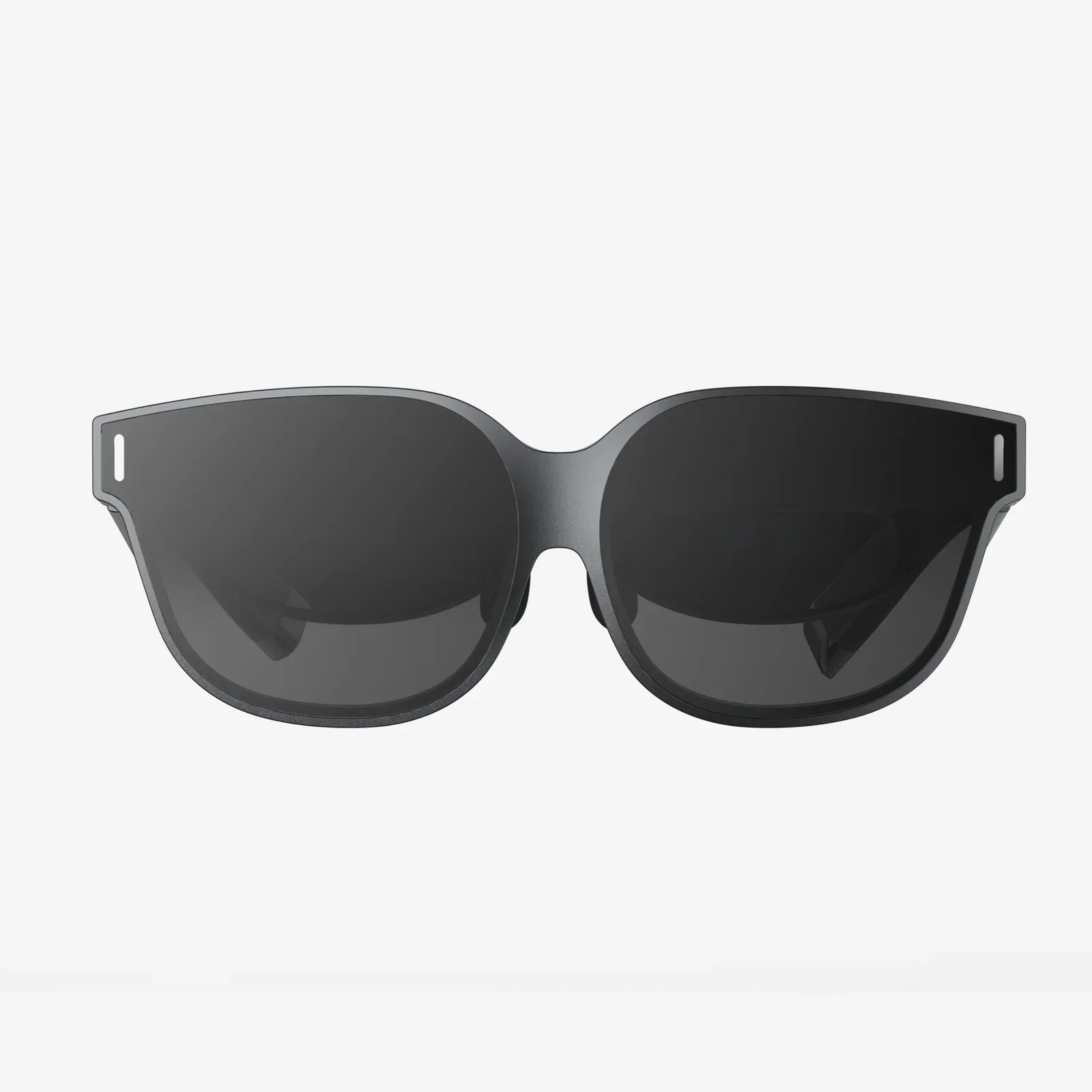
Imagine a world where digital information doesn't just live on a screen but is seamlessly woven into the fabric of your physical reality, enhancing everything you see, learn, and do. This is no longer the stuff of science fiction; it is the present and future being built by Augmented Reality (AR), a technology poised to revolutionize our interaction with the world. From trying on furniture in your living room before you buy it to receiving real-time repair instructions overlaid on a malfunctioning engine, AR is breaking down the barriers between the digital and the physical. But to truly grasp its potential, we must first answer a fundamental question: what is this powerful technology, and how does it actually work?
Defining the Digital Layer: Beyond the Hype
At its core, Augmented Reality (AR) is an interactive experience that enhances the real world by superimposing computer-generated perceptual information onto it. Unlike Virtual Reality (VR), which creates a completely artificial, immersive environment, AR takes your existing reality and adds to it. The key differentiator is that AR allows you to remain present in your environment while digital content is composited onto your view of that environment. This digital content can take myriad forms: 3D models, text, images, videos, and even complex data visualizations.
The concept is often grouped with other "reality" technologies under the umbrella term Extended Reality (XR). Within XR, AR sits between the purely physical world and the fully digital world of VR. A close cousin, Mixed Reality (MR), is sometimes used interchangeably with AR, though it typically refers to more advanced implementations where digital objects can interact with and be occluded by the physical world in a physically believable way. The ultimate goal of AR is to create a system where the user cannot distinguish between the real and the augmented, making the technology an intuitive and natural extension of human capability.
The Engine Room: The Core Components of AR Technology
For AR to function, it relies on a sophisticated symphony of hardware and software components working in perfect harmony. The process is more complex than simply projecting an image; it's about understanding the world and placing digital content within it contextually and persistently.
Sensors and Cameras: The Eyes of the System
The first step is perception. AR devices are equipped with a suite of sensors, primarily cameras, that act as their eyes. These cameras continuously capture the live video feed of the user's surroundings. However, a simple camera isn't enough. Advanced AR systems utilize a combination of sensors including:
- Depth Sensors: These measure the distance to objects in the environment, creating a 3D map of the space. Technologies like time-of-flight sensors or structured light project patterns of light to accurately gauge depth and volume.
- LiDAR (Light Detection and Ranging): Popularized in mobile devices, LiDAR scanners fire out millions of laser points to create a detailed depth map of the environment with incredible speed and accuracy, crucial for occlusion and placement.
- IMUs (Inertial Measurement Units): These include accelerometers and gyroscopes that track the movement, rotation, and orientation of the device itself. This is vital for understanding how the user's perspective is changing in real-time.
Processing: The Brain Behind the Operation
The raw data from the sensors is meaningless without a brain to interpret it. This is where the processing unit, often a powerful CPU and GPU, comes into play. This hardware runs complex computer vision algorithms and machine learning models that perform several critical tasks simultaneously:
- SLAM (Simultaneous Localization and Mapping): This is the cornerstone technology for most modern AR. SLAM allows the device to both map an unknown environment (mapping) and understand its own position within that environment (localization) in real-time. It creates a feature points map of the space, tracking key visual details to understand the device's movement through it.
- Object Recognition: Using trained AI models, the system can identify specific objects, surfaces, and images. This allows it to trigger specific AR experiences when it sees a recognized target, like a textbook illustration or a product package.
- Surface Detection: The algorithms analyze the sensor data to identify horizontal planes (like floors and tables) and vertical planes (like walls). This is essential for placing digital objects convincingly onto real-world surfaces.
Projection and Display: Painting the Digital Light
Once the environment is understood and the digital content is ready, it must be displayed to the user. This is achieved through various display technologies, each with its own advantages:
- Smartphone and Tablet Screens: The most accessible form of AR, using the device's screen to display the camera feed with the digital overlay composited on top. It's a "window" into an augmented world.
- Smart Glasses and Headsets: These wearable devices use optical see-through or video see-through displays. Optical see-through uses semi-transparent mirrors or waveguides to project light into the user's eyes, allowing them to see the real world directly with digital images superimposed. Video see-through uses cameras to capture the real world and then displays the combined real and digital feed on internal screens.
- HUDs (Heads-Up Displays): Common in aviation and increasingly in automotive applications, these project information directly onto a transparent screen or the windshield, allowing the user to keep their "head up" and focused on their task.
The User's Journey: A Step-by-Step Walkthrough of an AR Experience
To tie these components together, let's walk through what happens from the moment a user launches an AR application on a modern smartphone:
- Activation: The user points their device's camera at a scene or a specific trigger image.
- Data Capture: The camera and sensors (LiDAR, IMU) instantly begin capturing a high-fidelity video feed and depth data of the environment.
- Environmental Processing: The SLAM algorithm kicks in, creating a rough 3D mesh of the space by identifying feature points and tracking the device's movement relative to them. It identifies flat surfaces like a tabletop or the floor.
- Anchor Placement: The user or the application selects a point in the real world—an "anchor"—to place the digital object. This anchor is locked in place based on the SLAM-generated map.
- Rendering and Compositing: The GPU renders the 3D digital object (e.g., a virtual chair). Crucially, it uses the depth data to handle occlusion (ensuring a real-world coffee mug in front of the camera would correctly block the view of the virtual chair behind it) and lighting (adjusting the virtual object's shadows and highlights to match the real-world light sources).
- Display: The final composited image—the live camera feed plus the realistically rendered and integrated 3D object—is displayed on the screen.
- Persistence and Interaction: As the user moves the device, the SLAM system continuously updates the device's position, and the rendering engine adjusts the perspective of the virtual object in real-time, making it appear locked in place. The user can then often interact with it—rotating, moving, or triggering animations.
Beyond the Novelty: The Transformative Applications of AR
While fun filters and games brought AR to the masses, its true power lies in its practical, transformative applications across nearly every sector.
Revolutionizing Retail and E-Commerce
AR is solving the fundamental problem of online shopping: the inability to try before you buy. Customers can now use their phones to see how a piece of furniture would fit and look in their room, how a new shade of paint would appear on their wall, or how a pair of glasses frames would suit their face. This not only enhances consumer confidence and reduces return rates but also creates a deeply engaging shopping experience.
Empowering Industry and Manufacturing
On factory floors and in field service, AR is a powerful tool for efficiency and accuracy. Technicians wearing AR smart glasses can see schematics, instruction manuals, and animated repair guides overlaid directly on the equipment they are fixing, allowing them to work hands-free. This can drastically reduce errors, lower training time for new employees, and provide remote experts with a "see-what-I-see" view to guide them through complex procedures from anywhere in the world.
Advancing Healthcare and Medicine
In healthcare, AR is saving lives and improving outcomes. Surgeons can use AR overlays to visualize a patient's anatomy, such as the precise location of tumors or blood vessels, directly on their body during procedures, minimizing risk and improving precision. Medical students can practice complex surgeries on detailed holographic models, and patients can use AR to better understand their conditions and treatment plans.
Redefining Education and Training
AR brings learning to life. Instead of reading about ancient Rome, students can walk through a digitally reconstructed Colosseum from their classroom. Mechanics-in-training can practice on virtual engines, and chemistry students can combine virtual elements to see reactions without any safety risks. This interactive, immersive form of learning boosts engagement and retention of complex information.
Challenges and The Path Forward
Despite its rapid advancement, AR still faces hurdles. Creating socially acceptable, comfortable, and stylish wearable hardware with all-day battery life remains a significant challenge. There are also concerns around privacy, as these devices constantly capture data about our environments and, by extension, our lives. Furthermore, developing content and establishing universal standards for the "AR cloud"—a persistent digital layer of the world—are ongoing efforts.
The future, however, is incredibly bright. The convergence of AR with Artificial Intelligence and 5G connectivity will unlock new capabilities. AI will make object recognition and contextual understanding instantaneous and flawless, while 5G's high bandwidth and low latency will enable complex rendering to be done in the cloud, allowing for lighter, more powerful wearable devices. We are moving towards a future where spatially aware, contextually intelligent digital assistants reside in our field of view, seamlessly helping us navigate and interact with our world.
The line between our physical reality and the digital universe is not just blurring; it is being intentionally and intelligently woven together. Understanding how Augmented Reality works is the first step to actively participating in this next chapter of human-computer interaction, a chapter where our environment becomes an infinite, interactive canvas limited only by our imagination.
Share:
Smart Glasses That Adjust to Your Vision: The End of Prescription Lenses Is Here
AR Automation Technology: The Invisible Engine Reshaping Our World