


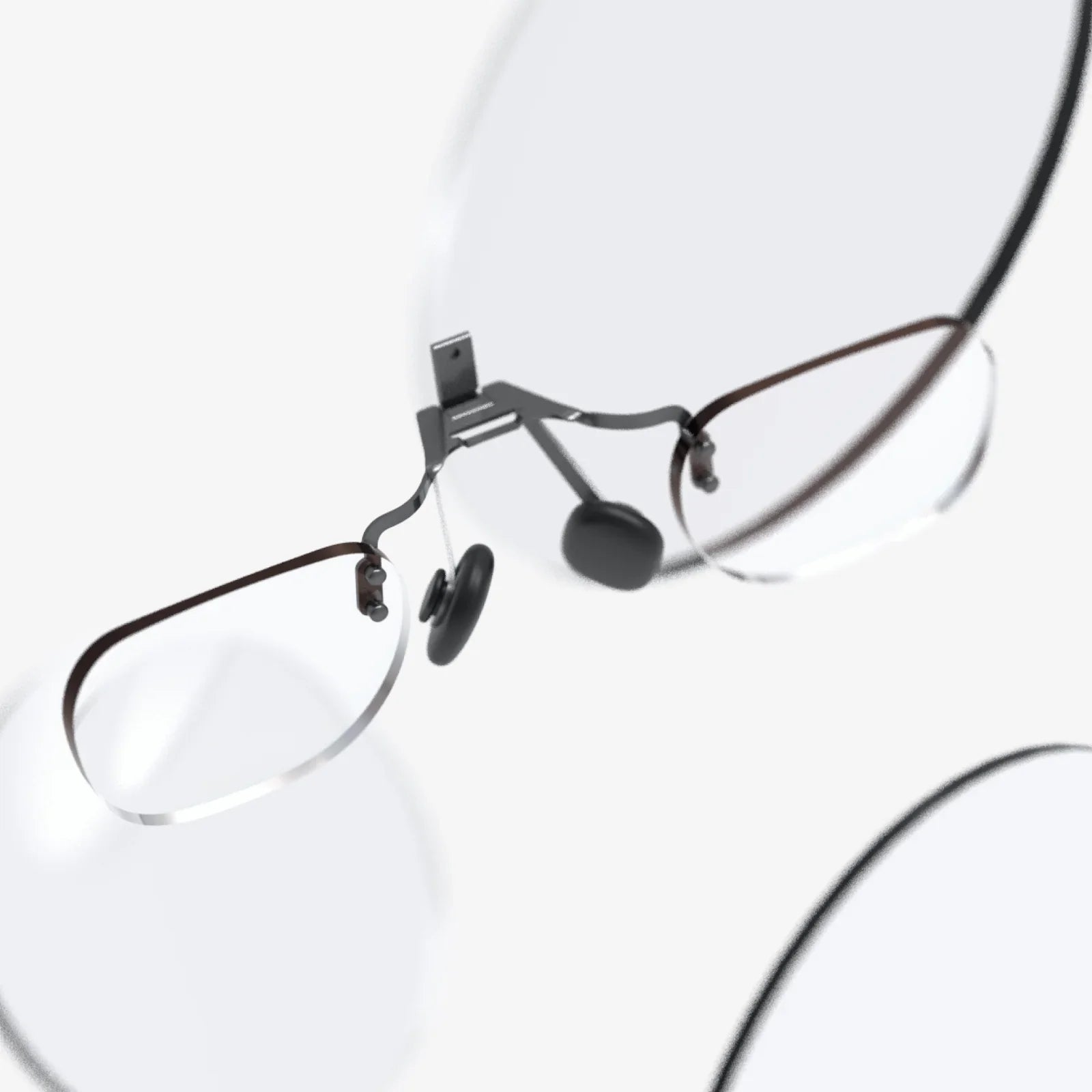
Imagine a world where the blurry transition from reading a book to looking across the room happens not with a clumsy swap of spectacles or a tilt of bifocal lenses, but with the effortless, silent focus of your own eyes, aided by technology so seamless it feels like magic. This is no longer the stuff of science fiction. The emergence of smart glasses that adjust to your vision represents a seismic shift in personal technology and optical health, promising to liberate millions from the static constraints of traditional corrective lenses and redefine our relationship with the world we see.
The Historical Burden of Static Vision Correction
For centuries, the fundamental principle of vision correction remained unchanged: a precisely ground piece of glass or plastic, shaped to compensate for a specific, measured refractive error. Whether single-vision, bifocal, or progressive, these lenses are static. They are engineered for a particular distance, forcing the wearer to adapt to their limitations. This one-size-fits-most approach, while revolutionary in its time, comes with inherent compromises. Bifocals create a jarring visual jump; progressives require learning a specific head tilt to find the correct focal zone. Reading glasses are constantly lost and found. This static nature means our eyes are often straining, even with correction, as we navigate a dynamic world that demands constant refocusing.
The human eye is a magnificent and dynamic organ, its lens flexing and changing shape to focus on objects at varying distances—a process called accommodation. Traditional lenses cannot replicate this natural flexibility. They offer a fixed solution to a dynamic problem. The development of smart glasses that adjust to your vision is, therefore, not merely an incremental improvement but a complete paradigm shift. It moves away from passive correction and towards active, intelligent assistance that works in harmony with the eye's natural, albeit diminished, abilities.
How The Magic Works: A Dive into the Technology
The core innovation that powers these adaptive spectacles lies in the fusion of optics, micro-electronics, and sophisticated software. While technical approaches vary, the overarching principle involves creating a lens whose optical properties can be altered electronically in real-time.
The Liquid Crystal Lens
One prevalent method utilizes a lens constructed from a thin layer of liquid crystals—the same material found in many digital displays. Sandwiched between two transparent electrodes, these crystals are normally disorganized, scattering light. However, when a specific electrical current is applied, they align in a precise pattern. By controlling the voltage and pattern of this current, the device can effectively create a lens of any necessary power, altering the path of incoming light to correct for nearsightedness, farsightedness, and astigmatism dynamically. This allows the lens to become, in essence, an infinite number of prescriptions in one.
The Power of Sensing and Algorithms
A lens that can change is useless without knowing when and how to change. This is where the true "smart" element comes into play. Embedded within the frame are a suite of inconspicuous sensors. These typically include:
- Depth-sensing cameras or time-of-flight sensors: These measure the precise distance between the glasses and the object you are looking at, whether it's a smartphone screen 14 inches away or a street sign 50 feet away.
- Eye-tracking sensors: Sophisticated infrared sensors map the position and gaze of your pupils, determining exactly where you are trying to focus.
- Accelerometers and gyroscopes: These understand the orientation and movement of your head, providing context for what you might be doing (e.g., reading while walking, looking up at a whiteboard, descending stairs).
This constant stream of data is fed into a miniaturized onboard computer processor running machine learning algorithms. These algorithms interpret the sensor data thousands of times per second, predicting user intent and calculating the exact optical correction required at that precise moment. It then sends an instruction to the lenses to adjust their focal power accordingly. The entire process is designed to be instantaneous and imperceptible to the wearer, creating a fluid and natural visual experience.
Beyond Convenience: Profound Implications for Daily Life
The most immediate benefit of this technology is the sheer convenience of eliminating multiple pairs of glasses. But the implications run far deeper, touching on safety, productivity, and overall quality of life.
- Ergonomic and Safety Revolution: For individuals with presbyopia (age-related farsightedness), tasks that require rapid shifts in focus, like cooking while referring to a recipe, using tools, or driving, can be hazardous with traditional progressive lenses. The lag in finding the right zone can lead to missteps. Adaptive glasses remove this risk, providing clear vision at every distance instantly, potentially reducing accidents in the home and on the road.
- The Digital Life, Optimized: Modern life is a constant dance between physical and digital realms. We look from a computer monitor to a colleague, from a dashboard to the road, from a textbook to a lecturer. Static lenses are not optimized for this rapid, hybrid reality. Smart glasses that adjust to your vision are the first eyewear built for this exact purpose, ensuring seamless clarity whether you're engrossed in a spreadsheet or enjoying the scenery on a hike.
- A New Frontier for Eye Health: There is promising research into whether dynamically stimulating the eye's focusing system could help slow the progression of conditions like myopia in children, much like specialized contact lenses do today. Furthermore, the constant data collection on user focus and behavior provides an unprecedented dataset for optometrists and researchers to better understand visual demands and eye strain in the 21st century.
Navigating the Challenges and The Road Ahead
As with any transformative technology, significant hurdles remain before widespread adoption becomes a reality. The current iterations, while impressive, face questions of form factor, battery life, and cost. The integration of sensors, processors, and the lens technology itself can lead to frames that are thicker, heavier, and more expensive than traditional luxury eyewear. Engineers are engaged in a relentless pursuit of miniaturization, seeking to make the technology as lightweight and unobtrusive as possible.
Battery technology is another critical frontier. Powering a sophisticated computer and active lenses requires energy. Current models may need recharging daily, a new routine for most glasses-wearers. The goal is to achieve all-day battery life under typical usage patterns, with low-power modes and efficient energy management being key areas of development.
Finally, the question of data privacy and security is paramount. These devices collect a continuous stream of biometric and behavioral data—where you look, for how long, and at what. This is incredibly sensitive information. Manufacturers must prioritize robust encryption, transparent data policies, and on-device processing where possible to ensure user trust is never broken.
A Vision of the Future
The journey of smart glasses that adjust to your vision is just beginning. Future iterations will likely integrate augmented reality (AR) displays, overlaying digital information onto the real world—imagine navigation arrows painted onto the street or a translator superimposing subtitles on a foreign sign—all while perfectly correcting your vision. The combination of adaptive focus and AR could redefine assistance for those with low vision, highlighting obstacles and enhancing contrast in real-time.
We are moving towards a future where eyewear is no longer a passive tool but an active, intelligent partner in perception. It will learn our habits, anticipate our needs, and continuously optimize our view of the world. This technology promises to return a sense of visual freedom that many have not experienced since youth, making the act of seeing not just clearer, but truly effortless. The day is approaching where the first thing you do in the morning is not reach for your reading glasses, but simply put on a single pair of smart glasses that will handle the rest, quietly and brilliantly, from sunrise to sunset.
This isn't just an upgrade to your prescription; it's the dawn of a new era of sight, where your glasses don't just help you see the world—they help you see it better than ever before.
Share:
Price of Augmented Reality Device: A Deep Dive into Cost, Value, and Market Dynamics
What Is Augmented Reality AR and How Does It Work: A Deep Dive Into the Digital Overlay