


The shimmering promise of digital information seamlessly layered onto our physical world is no longer science fiction. The allure of augmented reality (AR) is palpable, from visualizing new furniture in your living room to receiving real-time data overlays for complex surgery. Yet, for many eager early adopters and curious consumers, the initial excitement is often met with a sobering reality check: the staggering price of augmented reality devices. This single figure, displayed on a product page or a store shelf, becomes the gatekeeper between imagination and experience. But what truly lies behind that number? Is it merely a reflection of cutting-edge technology, or are there deeper market forces, strategic decisions, and fundamental economic principles at play? Unpacking the anatomy of AR device pricing reveals a fascinating story of innovation, aspiration, and the inevitable march toward accessibility.
The Core Components: A Symphony of Expensive Technology
At its heart, the price of an augmented reality device is a direct function of the sophisticated and costly components required to create a convincing and functional mixed-reality experience. Unlike a standard mobile phone, an AR device is a marvel of miniaturization and precision engineering, packing an incredible amount of technology into a small, wearable form factor.
Optical Engines and Waveguides: The Windows to a New World
The most critical and often most expensive subsystem in any AR glasses or headset is the optical engine. This is the mechanism that generates the digital images and projects them onto the user's retina, making them appear as part of the real world. High-end devices frequently employ technologies like:
- Micro-OLED Displays: Offering incredibly high resolution, excellent color gamut, and fast response times in a tiny package. The manufacturing process for these micro-displays is complex and low-yield, driving costs up significantly.
- Laser Beam Scanning (LBS): Using miniature lasers and mirrors to "draw" images directly onto the retina. This technology allows for always-in-focus images but requires extremely precise and expensive micro-electrical-mechanical systems (MEMS).
- Waveguides: These are transparent pieces of glass or plastic that act like a highway for light, channeling the image from the projectors on the temple of the glasses to the user's eyes. Manufacturing waveguides with high transparency, wide field of view, and minimal "rainbow" artifacts is a notoriously difficult and expensive process, involving nano-imprinting lithography or other complex techniques.
The research and development (R&D) for these optical systems is immense, and the capital expenditure (CapEx) for the specialized manufacturing equipment runs into the hundreds of millions of dollars. These costs are inevitably passed on to the consumer in the early stages of the technology's lifecycle.
Sensors and Cameras: Mapping the Real World
For digital content to interact convincingly with the physical environment, the device must understand that environment in real-time. This requires a suite of advanced sensors, each adding to the final price of augmented reality device units.
- Depth Sensors: Time-of-Flight (ToF) sensors or structured light projectors measure the distance to objects, creating a 3D map of the room. These are specialized components not found in most consumer electronics.
- High-Resolution Cameras: Multiple cameras are used for computer vision tasks, such as tracking hand gestures, recognizing surfaces, and capturing the environment for pass-through AR experiences.
- Inertial Measurement Units (IMUs): These accelerometers and gyroscopes track the precise movement and orientation of the user's head with extremely low latency to prevent motion sickness.
- Eye-Tracking Cameras: Essential for advanced features like foveated rendering (which reduces rendering load by focusing detail only where the user is looking) and intuitive menu interaction.
Each sensor requires its own calibration, software integration, and processing power, compounding both the hardware cost and the software complexity.
Processing Power and Battery Life
Fusing all this sensor data, running complex simultaneous localization and mapping (SLAM) algorithms, rendering high-fidelity 3D graphics, and managing wireless connectivity demands serious computational horsepower. High-end standalone AR devices essentially contain a smartphone's worth of processing power—if not more—condensed into a much smaller thermal envelope. This requires custom-built Systems on a Chip (SoCs) and efficient, active cooling systems. Furthermore, this processing drain necessitates large batteries to achieve usable battery life, which are heavy, expensive, and pose a challenge for comfortable wearability. The quest for performance and endurance is a constant battle against physics and cost.
Beyond the Bill of Materials: The Hidden Cost Drivers
While the physical components (the Bill of Materials or BoM) account for a large portion of the price, they are far from the whole story. Several other critical factors inflate the final retail figure.
Research and Development (R&D): The Invisible Investment
The price of your augmented reality device isn't just paying for the parts in the box; it's paying for the last decade of scientific research, failed prototypes, and countless engineering hours that made the device possible. Companies invest billions of dollars in R&D to solve fundamental challenges in optics, battery technology, and human-computer interaction. This massive upfront investment must be recouped over the lifetime of the product, and for nascent product categories like AR, the initial addressable market is small. Therefore, the R&D amortization cost per unit is extremely high in the early years.
Software and Ecosystem Development
Hardware is useless without software. Developing a robust operating system, intuitive user interfaces, software development kits (SDKs) for third-party developers, and maintaining cloud services for content and updates represents an ongoing and enormous expense. The price of the device helps fund not only the current software but also future updates and the cultivation of an application ecosystem that will give the hardware long-term value.
Manufacturing at Scale (or Lack Thereof)
Consumer electronics achieve affordability through economies of scale. Producing millions of units allows companies to negotiate better prices for components, optimize assembly lines, and spread fixed costs thin. The AR market, while growing, is still in its relative infancy. Factories are producing hundreds of thousands of units, not tens of millions. This low-volume manufacturing is inherently more expensive, with higher per-unit costs for components and assembly. As volume increases, we can expect a significant downward pressure on prices.
Market Positioning and Target Audience
The intended user dramatically influences the pricing strategy. Devices aimed at enterprise, industrial, and medical markets are priced very differently from those targeting consumers.
- Enterprise-Grade Devices: These are built for ruggedness, reliability, and mission-critical applications. A factory technician using AR for equipment repair or a surgeon using it for guidance represents a high-value use case where downtime is unacceptable. For these customers, the price of augmented reality device is justified by immense gains in productivity, reduction in errors, and training efficiency. A cost of several thousand dollars is easily offset by the business value it provides, allowing manufacturers to price accordingly.
- Consumer-Grade Devices: These devices must prioritize style, comfort, and affordability. While they may share some technology with enterprise gear, they often make compromises on processing power, field of view, or sensor suite to hit a lower price point. The pricing strategy here is about achieving mass-market adoption, which requires a much more aggressive cost structure.
The Spectrum of AR: From Your Smartphone to Standalone Headsets
The term "augmented reality device" encompasses a wide range of products, and the price spectrum is equally broad. Understanding these categories is key to contextualizing cost.
Smartphone-Based AR: The Gateway Drug
The most accessible tier uses the smartphone already in your pocket. By leveraging its camera, sensors, and processing power, apps can create AR experiences viewed through the phone's screen. The price of this augmented reality experience is effectively zero for the hardware (beyond the phone itself), but the experience is often limited, requiring the user to hold up their device and lacking true immersion.
Standalone AR Headsets: The Power of All-in-One
These are self-contained units housing all the necessary processors, sensors, batteries, and optics. They offer the most immersive and untethered experience but also represent the highest cost category due to the reasons outlined above. They are the pinnacle of current AR technology and are priced to match.
Tethered AR Glasses: A Balanced Compromise
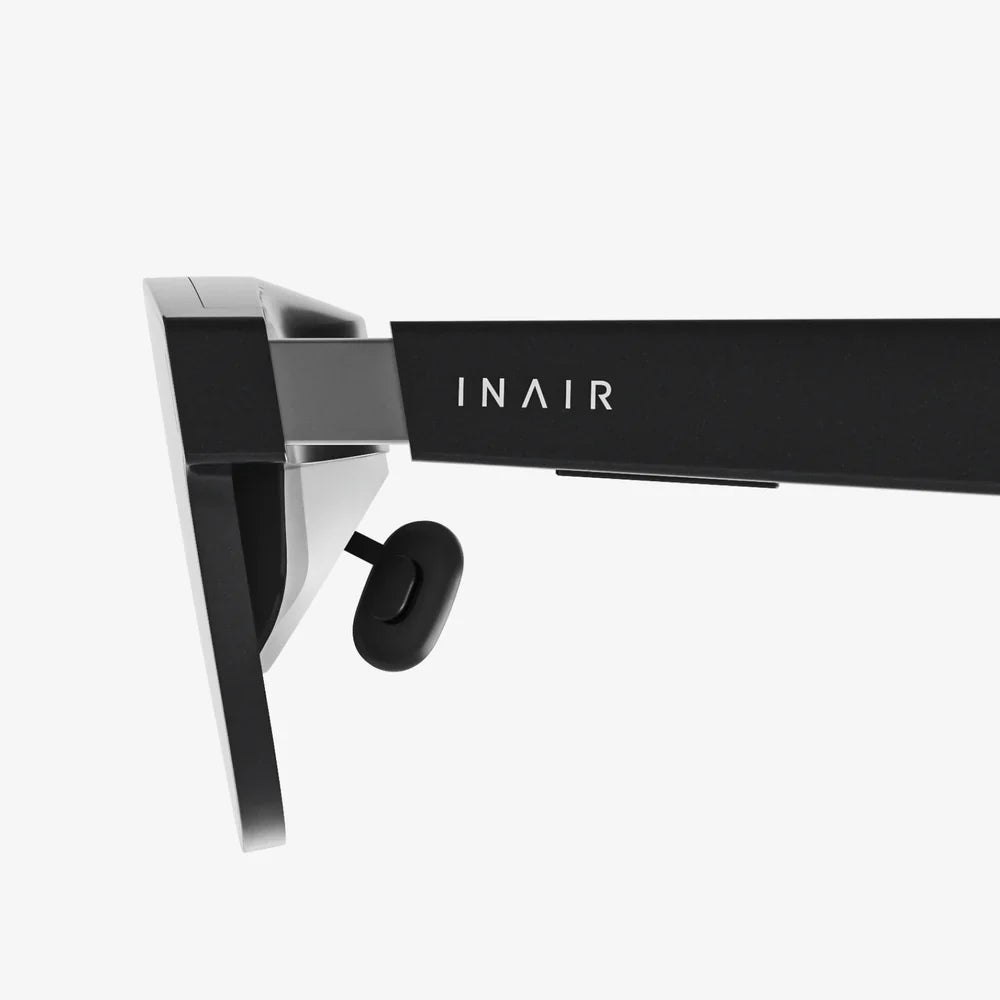
This emerging category consists of lighter, glasses-like devices that offload the heavy processing to a companion device like a phone, computer, or a small wearable compute pack. By stripping out the onboard compute and larger battery, these devices can be made smaller, lighter, and significantly cheaper than standalone headsets, while still offering a better experience than phone-only AR. This model represents a very promising path to lowering the barrier to entry for consumers.
The Future Trajectory: When Will AR Be Affordable?
The historical precedent of technology adoption, from personal computers to flat-screen TVs and smartphones, provides a clear roadmap. The price of augmented reality devices will follow a predictable downward trend, but the timing depends on several converging factors.
- Technological Advancements: Innovations in display technology (like surface-lit waveguides), more efficient processors, and improved battery chemistry will continuously lower the BoM.
- Manufacturing Scale: As consumer demand grows and production volumes increase, economies of scale will kick in, dramatically reducing per-unit costs.
- Market Competition: Increased competition will force companies to optimize their costs and offer more value at lower price points to win market share.
- Specialized Components Becoming Commodities: Components like depth sensors and micro-OLED displays, which are now specialized and expensive, will become more standardized and cheaper to produce as they are adopted across more devices.
We can expect a gradual proliferation of devices across different price tiers. Enterprise will continue to see powerful, expensive systems, while the consumer market will see a flood of more affordable tethered glasses and, eventually, capable standalone devices at mainstream price points. The "iPhone moment" for AR—a device that perfectly blends style, functionality, and desirability at a mass-market price—is still on the horizon, but the path to get there is becoming clearer every day.
So, the next time you balk at the price of an augmented reality headset, look beyond the sticker shock. See it for what it is: a compact marvel of engineering, a vessel for billions in R&D, and a promise of a future being built today. That high initial investment is what funds the innovation that will eventually bring this transformative technology to everyone. The question is no longer if immersive AR will become a ubiquitous part of our lives, but simply how soon the price point will drop to unlock a revolution waiting to happen in our field of view. The era of pervasive augmented reality is coming, and its affordability is just a matter of time.
Share:
Augmented Reality and Virtual Reality AR VR Services: The Ultimate Guide to Immersive Business Transformation
Smart Glasses That Adjust to Your Vision: The End of Prescription Lenses Is Here