


The digital and physical worlds are colliding, and at the intersection lies a universe of professional opportunity. Imagine a workplace where complex data floats seamlessly in your field of vision, where remote experts can guide your hands with holographic annotations, and where prototypes materialize from thin air. This isn't science fiction; it's the present and future being built by professionals in augmented reality (AR) careers. The demand for skilled individuals who can bridge the gap between our reality and a digitally enhanced one is exploding, creating a vibrant and rapidly evolving job market for those ready to step into the next dimension of technology.
The Foundation: What Exactly Are AR Careers?
At its core, augmented reality overlays digital information—images, sounds, text—onto the user's real-world environment. Unlike virtual reality, which creates a completely immersive digital experience, AR enhances reality rather than replacing it. Careers in this field, therefore, encompass every aspect of creating, developing, and implementing these immersive experiences. This is a deeply interdisciplinary domain, requiring a fusion of technical prowess, artistic vision, and strategic thinking. Professionals in this space are not just coding; they are designing new ways for humans to interact with information, machinery, and each other.
The ecosystem supporting AR is vast. It includes the hardware engineers designing the next generation of smart glasses and headsets, the software developers building the platforms and engines, the 3D artists and designers crafting believable digital assets, the UX/UI specialists ensuring intuitive interaction, and the project managers and strategists who bring these complex projects to life. An AR career can mean working for a large technology corporation, a innovative startup, a dedicated agency, or even within the R&D department of a traditional industry like manufacturing or healthcare that is adopting AR solutions.
The Essential Toolkit: Skills for a Successful AR Career
Breaking into the AR field requires a specific and diverse set of skills. While the exact requirements vary by role, a combination of hard technical skills and soft creative skills is non-negotiable.
Technical Proficiency
The bedrock of any AR development role is strong programming knowledge. Key languages and platforms include:
- Game Engines: Proficiency in industry-standard game engines is paramount. Unity with C# and Unreal Engine with C++ are the dominant forces, providing the tools needed to render 3D objects, handle physics, and manage complex interactions in real-time.
- Platform-Specific SDKs: Experience with Software Development Kits (SDKs) like ARKit for iOS and ARCore for Android is crucial for developing mobile-based AR applications, which represent a huge segment of the market.
- 3D Mathematics: A solid grasp of linear algebra, vectors, matrices, and quaternions is essential for understanding object placement, rotation, and movement in 3D space.
- Cloud Computing & APIs: Many advanced AR experiences rely on cloud-based data processing, storage, and machine learning APIs for features like object recognition and persistent world anchors.
Design and Creative Acumen
Technology is useless without thoughtful design. This side of the field demands:
- 3D Modeling & Animation: The ability to create, optimize, and animate high-quality 3D assets is critical. Tools like Blender, Maya, and 3ds Max are staples.
- User Experience (UX) Design: AR UX is a unique challenge. Designers must consider spatial awareness, user safety, gesture controls, and information hierarchy in a 3D context, ensuring experiences are intuitive and not overwhelming.
- User Interface (UI) Design: Designing interfaces that exist in the user's environment requires a new way of thinking about typography, iconography, and menu systems that complement rather than obstruct the real world.
The Soft Skills That Set You Apart
Beyond technical and design skills, successful AR professionals are often exceptional problem-solvers, collaborators, and communicators. They must be able to translate abstract concepts into tangible experiences, work seamlessly with cross-functional teams of engineers and artists, and constantly adapt to a technology landscape that shifts on a monthly basis. A passion for learning and a innate curiosity about how things work are invaluable traits.
A World of Roles: Exploring Different AR Career Paths
The term "AR professional" is an umbrella covering a stunning array of specific job titles and specializations.
- AR Developer: The backbone of the industry. These programmers write the code that makes AR experiences function, handling everything from image recognition and tracking to environmental understanding and multiplayer networking.
- AR Designer (UX/UI): These visionaries focus on the human element. They storyboard interactions, prototype user flows, and design the visual language of the AR experience, ensuring it is accessible, useful, and magical.
- 3D Artist: They are the digital sculptors and painters. This role involves creating the photorealistic or stylized 3D models, textures, and animations that populate the AR world, with a keen eye for optimization to ensure smooth performance on mobile devices.
- AR Product Manager: The strategic helmsman. They guide the vision for an AR product, defining its features, roadmap, and business goals while balancing technical constraints with user needs and market opportunities.
- Computer Vision Engineer: A highly specialized and technical role focused on developing the algorithms that allow AR systems to "see" and understand the environment through camera data, enabling features like plane detection and object occlusion.
- Technical Artist: The crucial bridge between artists and engineers. They develop the tools and pipelines that allow 3D assets to be efficiently imported and rendered within the AR engine, often writing shaders and optimizing assets for performance.
Industry Applications: Where AR Professionals Are Making an Impact
AR is not confined to gaming and entertainment. Its practical applications are transforming established industries, creating demand for AR talent in surprising sectors.
- Manufacturing & Industrial Design: AR is revolutionizing factories and workshops. Technicians use AR glasses to see assembly instructions overlaid on machinery, engineers visualize full-scale prototypes before physical production begins, and remote experts can guide on-site workers with digital annotations, reducing downtime and errors.
- Healthcare & Medicine: From medical students practicing surgery on holographic patients to surgeons using AR for visualizing MRI data during an operation, the technology is enhancing precision and improving outcomes. It's also used for physical therapy guidance and patient education.
- Retail & E-Commerce: Try before you buy has been redefined. Customers can use their smartphones to see how furniture looks in their living room, how clothes fit on their avatar, or how a new shade of paint appears on their wall, drastically reducing purchase uncertainty.
- Education & Training: AR creates immersive, interactive learning experiences. Students can explore the solar system, dissect a frog, or walk through ancient historical sites, all from their classroom. It provides safe, repeatable, and cost-effective training for high-risk professions.
- Architecture, Engineering, and Construction (AEC): Architects and clients can walk through holographic models of buildings long before ground is broken. On construction sites, workers can see BIM data overlaid on structures, ensuring accuracy and identifying potential clashes between systems.
Navigating the Job Market and Building Your Portfolio
Landing a role in this competitive field requires more than just a resume; it requires demonstrable proof of your skills.
Education and Training: While traditional computer science or design degrees are excellent foundations, many successful AR professionals are self-taught or have completed specialized bootcamps and online courses focused on Unity, Unreal Engine, and AR development. The key is a proven ability to build.
The Non-Negotiable Portfolio: Your portfolio is your most important asset. It should not just list projects; it should showcase them. Create a website or video reel that highlights your best AR work. For developers, include links to app stores or provide demo videos with clear explanations of your technical contributions. For designers, show your process: wireframes, user flows, and final interactive prototypes. For artists, display high-quality renders and animations of your 3D assets. Every project should answer: What problem did it solve? What was your specific role? What tools did you use?
Networking and Community: The AR community is active and collaborative. Engage with it. Attend conferences (virtual or in-person), participate in online forums and Discord channels, contribute to open-source AR projects, and connect with professionals on social media platforms. Sharing your work and learning from others is often the fastest way to discover new opportunities and stay on top of trends.
The Future is Augmented: Trends Shaping Tomorrow's AR Careers
The AR landscape is anything but static. Several key trends are poised to define the next wave of innovation and employment.
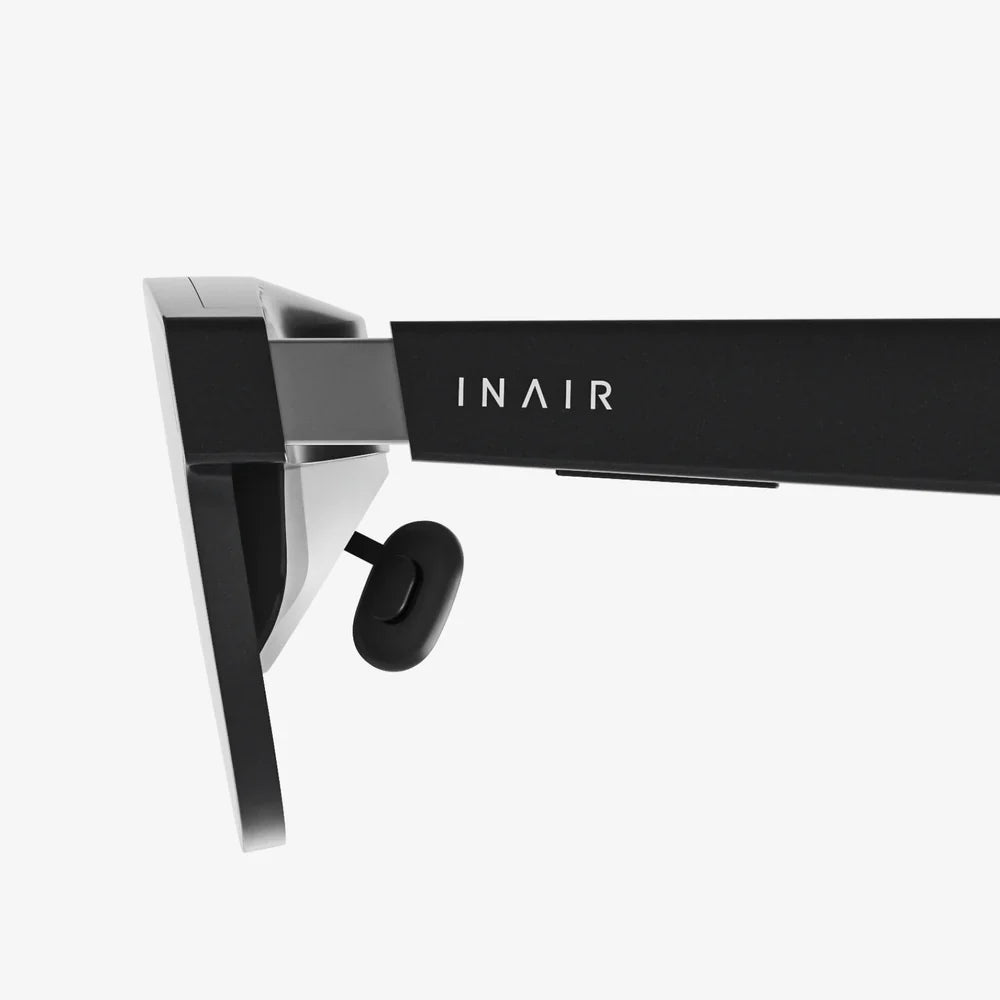
- The Rise of Wearable AR: The eventual shift from smartphone-based AR to comfortable, socially acceptable smart glasses will be a quantum leap, unlocking always-available, hands-free applications and creating massive demand for new types of spatial interface design.
- The Spatial Web: The internet will evolve from pages on a screen to a vast, interconnected set of experiences anchored to locations and objects in the real world. This will require a new generation of developers and designers to build this pervasive layer of digital information.
- Integration with AI and Machine Learning: AI will supercharge AR. Machine learning models will enable more robust world understanding, real-time object recognition and translation, and the generation of dynamic AR content, leading to more intelligent and context-aware experiences.
- WebAR Growth: The ability to deliver AR experiences directly through a web browser, without the need to download a dedicated app, will lower the barrier to entry for users and create new opportunities for marketing, education, and entertainment.
The door to a career in augmented reality is wide open, but it doesn't lead to a single room—it opens into an entire universe of possibility. This is a field where creativity is as valuable as code, where the only constant is change, and where the work you do literally has the potential to change how everyone sees the world. For the curious, the passionate, and the builders of tomorrow, the tools to shape reality are now within reach. The question is no longer if AR will transform industries, but who will have the vision and skill to lead that transformation.
Share:
Right AR: The Future of Augmented Reality in Industrial and Medical Applications
Wearable Identification: The Future of Personal Security and Seamless Interaction