


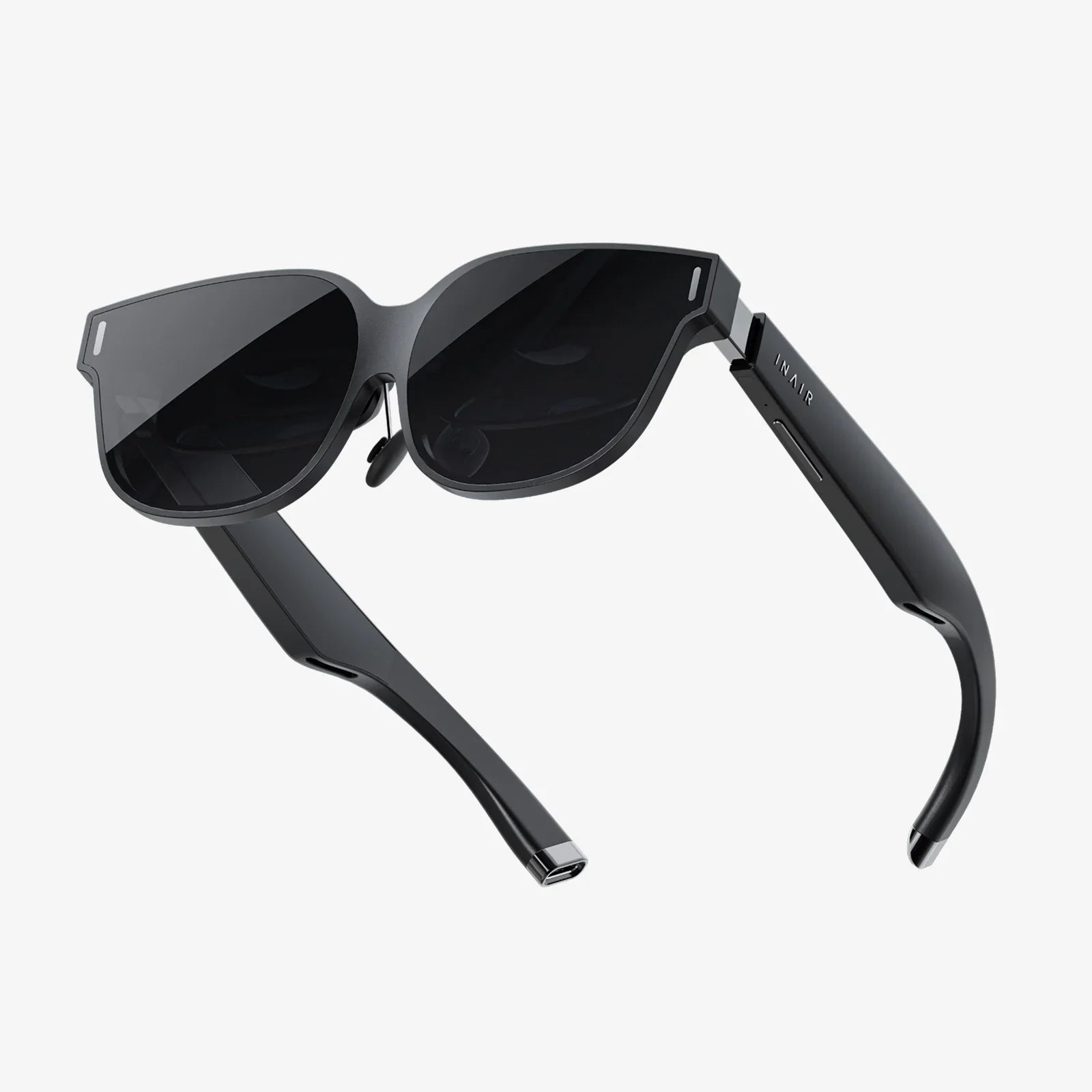
- by wangfred
Right AR: The Future of Augmented Reality in Industrial and Medical Applications
- by wangfred
Imagine a world where a surgeon sees a patient's vital signs and a 3D model of their anatomy superimposed directly onto the operating field, where a field engineer sees the exact wiring instructions overlaid on a complex circuit board, or where a warehouse worker instantly sees the optimal picking path glowing on the floor before them. This is not science fiction; this is the tangible, transformative power of Right Augmented Reality, a specialized technological approach poised to redefine precision and efficiency in the most demanding professional environments.
At its core, Augmented Reality (AR) is the integration of digital information with the user's environment in real-time. Unlike Virtual Reality (VR), which creates a completely artificial environment, AR augments the real world. The term "Right AR" does not refer to a specific product but to a paradigm. It signifies the application of AR technology for precision, accuracy, and correctness in mission-critical tasks. It's AR that is contextually appropriate, informationally accurate, and spatially precise. It's about getting the right information, to the right person, at the right time, and in the right place within their field of view. This concept moves beyond consumer-grade filters and games into a realm where error margins are measured in millimeters and seconds, and where the quality of the digital overlay has direct consequences on safety, efficacy, and success.
Delivering a "right" AR experience hinges on the seamless integration of several advanced technologies. The illusion of a digital object coexisting solidly in our world is broken if it jitters, drifts, or is placed inaccurately.
The foundation of any high-fidelity AR system is its understanding of the physical world. Through a combination of cameras, sensors, and sophisticated algorithms, the device must construct a detailed 3D map of its surroundings in real-time. This process, known as simultaneous localization and mapping (SLAM), allows the system to understand its own position and orientation within the space. For Right AR, this mapping must be exceptionally granular. It needs to recognize not just a flat surface, but the intricate contours of a machine, the subtle curve of a human body, or the specific model of a component. This enables persistent and precise anchoring of digital content.
Precision tracking is non-negotiable. Systems often combine inertial measurement units (IMUs) with external optical or sensor-based tracking for ultra-high accuracy. In medical settings, for example, systems may integrate with infrared cameras and reflective markers to achieve sub-millimeter tracking of surgical instruments and the patient's anatomy. This ensures that a digital guide or a tumor's outline remains locked in its correct spatial position even as the user's head moves.
The hardware must be designed for extended use in complex environments. This often means lightweight, wearable headsets with a wide field of view and high resolution. The display technology itself is crucial; see-through optical systems must render graphics that are bright enough to be visible under various lighting conditions without obscuring the user's view of the real world. The challenge is to overlay information without overwhelming the user, presenting data that is immediately comprehensible and actionable.
Perhaps the most profound application of Right AR is in the field of medicine, where its impact can be measured in lives improved and saved.
Surgeons are leveraging AR to gain X-ray vision. Pre-operative scans from CT or MRI are converted into 3D models and projected onto the patient's body, precisely aligned through tracking markers. This allows a surgeon to "see" exactly where to make an incision, navigate around critical blood vessels, and visualize the exact location and size of a tumor before cutting. This enhances surgical precision, minimizes damage to healthy tissue, and can significantly reduce operation time. In complex spinal surgeries, for example, AR can guide the perfect placement of screws, drastically reducing the risk of neurological damage compared to traditional methods.
Right AR is a powerful tool for education. Medical students can practice procedures on hyper-realistic AR simulations that provide haptic feedback. They can explore detailed, interactive 3D models of human anatomy, peeling back layers of muscle, tissue, and bone, gaining an understanding that textbooks cannot provide. This technology allows for repetitive, risk-free training, accelerating the learning curve and preparing the next generation of healthcare professionals for real-world scenarios.
A specialist located across the globe can see what a local surgeon or nurse sees through a shared AR view. The remote expert can then annotate the real-world view, drawing circles, arrows, and notes that appear in the local user's display to guide them through a complex procedure. This democratizes expertise, allowing top-tier surgical knowledge to be delivered anywhere there is a network connection, potentially standardizing care across urban and rural settings.
Beyond medicine, industrial sectors are experiencing massive gains in efficiency, safety, and quality through the adoption of Right AR.
In industries like aerospace and automotive, assembly processes can involve thousands of parts and hundreds of intricate steps. AR headsets can guide technicians through each stage, displaying digital work instructions directly on the assembly itself. They can highlight the exact bolt to tighten, show the correct torque value, and display an animation of the proper installation sequence. This reduces errors, slashes training time for new employees, and ensures consistent quality control. It also allows for hands-free operation, as workers no longer need to constantly consult paper manuals or computer screens.
Field technicians servicing complex machinery can use AR to visualize internal components, access schematics, and view a library of repair videos overlaid on the equipment they are fixing. By pointing a device at a machine, they can instantly call up its service history, see sensor data in real-time, and receive step-by-step guidance for diagnostics and repair. This minimizes downtime, empowers less-experienced technicians to perform complex tasks, and ensures procedures are followed correctly every time.
In massive distribution centers, AR smart glasses can optimize the order picking process. They visually guide workers along the most efficient route, highlighting the exact shelf and bin location of items, and even indicating the number of items to pick. This leads to a dramatic increase in picking speed and accuracy, reducing operational costs and improving order fulfillment rates. Furthermore, AR can assist in loading trucks by visually mapping out the optimal placement of packages to maximize space utilization.
Despite its immense potential, the path to ubiquitous Right AR is not without obstacles. Technical challenges include achieving real-time, low-latency processing to prevent a disconnect between user movement and digital overlay, which can cause nausea. Battery life for powerful, untethered devices remains a constraint for long shifts. Perhaps the biggest hurdle is the creation of robust digital content and workflows. Developing accurate 3D models and intuitive user interfaces for each specific application requires significant investment and expertise. Furthermore, issues of data security, user privacy, and the need for industry-wide standards must be addressed to build trust and ensure interoperability between systems.
The trajectory of Right AR points towards even greater integration into our professional lives. We can expect the technology to become lighter, more powerful, and eventually evolve towards more socially acceptable form factors like smart glasses. The integration of Artificial Intelligence will be a game-changer; AI algorithms will be able to analyze the user's environment in real-time, anticipate their needs, and proactively serve up the most relevant information without being explicitly asked. Imagine an AR system that not only shows a repair instruction but also diagnoses the fault itself by analyzing visual and sensor data. As 5G and future networks reduce latency to near zero, the potential for complex, cloud-rendered AR and seamless remote collaboration will become a reality.
The line between the digital and physical worlds is blurring, and Right AR is the lens bringing it into focus. This is more than a new tool; it is a fundamental shift in how we interact with information and execute tasks that require utmost precision. From saving lives on the operating table to optimizing global supply chains, the ability to augment our reality with perfect, contextual data is unlocking human potential in ways we are only beginning to understand. The next time you see a professional in a complex environment, don't be surprised if they are being guided by an invisible, digital co-pilot—a silent partner powered by the remarkable promise of Right AR.