


- by wangfred
AR Collaboration Tools: Redefining the Future of Remote and Co-Located Teamwork
- by wangfred
Imagine a world where your colleague, sitting thousands of miles away, can reach into your workspace, point to a specific component on a physical prototype, and draw a complex 3D schematic that hangs in the air between you. This is no longer the stuff of science fiction. The emergence of sophisticated AR collaboration tools is fundamentally reshaping the landscape of work, creating a seamless blend of physical and digital realms that promises to eradicate the limitations of distance and screen-bound communication forever. For businesses and teams willing to embrace this new paradigm, the rewards are nothing short of revolutionary.
The journey of workplace collaboration has been a relentless march towards greater fidelity and immediacy. We began with letters and memos, evolved to email and instant messaging, and then embraced video conferencing, which promised a more human connection. Yet, even video calls have profound limitations. They flatten three-dimensional reality onto a two-dimensional screen, creating a literal barrier to understanding. Participants share screens, not spaces. They point with cursors, not with their hands. Complex ideas, especially those involving spatial relationships, physical objects, or intricate designs, are often lost in translation, requiring lengthy explanations and often resulting in costly misunderstandings.
This gap in collaborative bandwidth is where AR collaboration tools make their grand entrance. They represent the next logical step: moving from observing a shared document to inhabiting a shared space. By overlaying persistent digital information—annotations, 3D models, instructions, and data visualizations—onto the user's view of their real environment, these tools create a common ground that is both intuitive and incredibly rich. They don't just facilitate communication; they create a shared context that was previously impossible to achieve remotely.
At its core, an AR collaboration platform is a sophisticated suite of technologies working in concert. Understanding the mechanics demystifies the magic and reveals the engineering marvel it truly is.
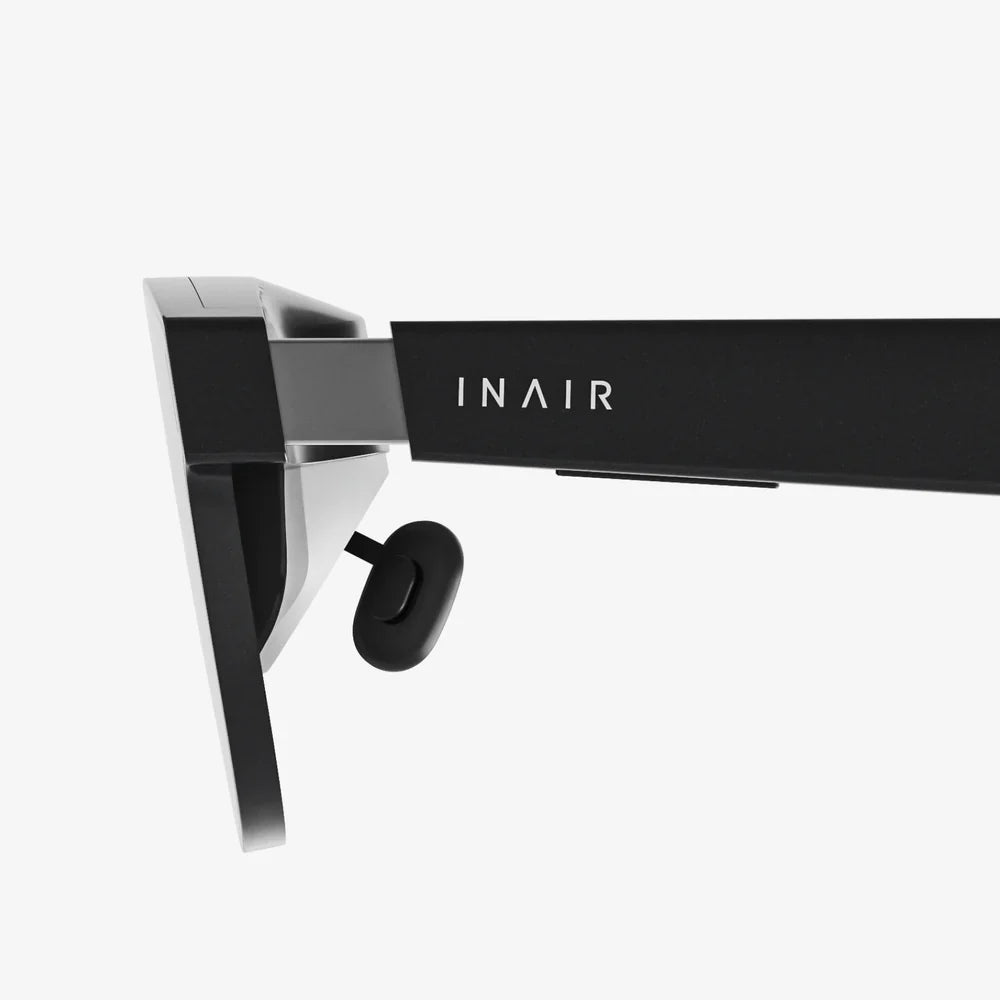
Display Devices: The window to the augmented world. This can range from consumer-grade smartphones and tablets, which use their screens to display the augmented overlay, to more advanced head-mounted displays (HMDs) like smart glasses. These glasses, either optical see-through or video see-through, project imagery directly into the user's field of vision, offering a hands-free experience that is crucial for many industrial and field service applications.
Spatial Mapping and Tracking: This is the brains of the operation. Using a combination of cameras, sensors (like LiDAR, depth sensors, and IMUs), and sophisticated computer vision algorithms, the device constructs a real-time understanding of the physical environment. It identifies surfaces (floors, walls, tables), maps the geometry of the space, and precisely tracks the user's position and orientation within it. This allows digital objects to be placed and remain locked in place, as if they were truly part of the physical world.
Cloud Connectivity and Synchronization: The heart of collaboration. Multiple users, often on different devices and in different locations, must see the same digital content in the same real-world location. This is achieved through cloud-based synchronization. When one user places a holographic note on a machine, the cloud service calculates its precise coordinates and instantly transmits that data to all other participants' devices, ensuring everyone sees the note in the exact same spot.
Interaction Modalities: How users manipulate the digital layer. This includes hand-tracking for natural gestures (pinching, dragging, rotating), voice commands for hands-free control, and sometimes traditional controllers. The goal is always to make interaction as intuitive as possible, reducing the cognitive load and allowing users to focus on the task, not the tool.
The applications for AR collaboration are vast and are already delivering tangible ROI across numerous sectors.
This is perhaps the most natural fit. Design reviews are transformed from examining 2D blueprints on a monitor to walking around a full-scale, photorealistic 3D model of a new building or product prototype. Engineers in different countries can stand around a virtual engine block, discussing the placement of a specific part, annotating potential interference issues directly onto the model, and making decisions with a complete spatial understanding that eliminates ambiguity. This drastically reduces the number of physical prototypes needed, accelerating time-to-market and saving significant costs.
On the factory floor, an expert engineer can see exactly what a technician on-site sees through their smart glasses. The expert can then draw arrows, highlight components, and pull up schematics or instruction manuals, pinning them directly to the machinery the technician is working on. This "see-what-I-see" remote guidance empowers less experienced workers to perform complex tasks, reduces downtime by resolving issues faster, and minimizes travel costs for specialists. Furthermore, digital work instructions can be overlaid onto assembly lines, guiding workers through each step with visual cues, reducing errors and improving efficiency.
Surgeons can use AR to visualize a patient's anatomy—such as CT scans or MRI data—overlaid directly onto their body during preoperative planning or even in the operating room. For collaboration, a senior surgeon can remotely guide a junior colleague through a complex procedure, annotating the surgical field in real-time. Medical students can learn anatomy by exploring interactive 3D holograms of the human body together, from anywhere in the world.
Stakeholders can don a headset and walk through a full-scale holographic version of a building before a single brick is laid. They can assess spatial relationships, experiment with different materials and lighting, and identify potential design flaws that would be invisible on a screen. This collaborative walkthrough ensures everyone—from the architect to the client—is aligned, preventing expensive change orders during construction.
AR creates immersive, interactive learning experiences. Instead of reading about ancient Rome, students can explore a collaboratively built model of the Forum. Trainee mechanics can practice disassembling a complex holographic engine with a instructor guiding them, without the risk of damaging expensive physical equipment. This learn-by-doing approach in a shared AR space dramatically improves knowledge retention and skill acquisition.
Despite its immense potential, the path to ubiquitous AR collaboration is not without obstacles.
Hardware Limitations: For a truly immersive experience, hardware needs to be lightweight, have all-day battery life, offer a wide field of view, and be socially acceptable to wear. While rapidly improving, hardware still has room to grow before it becomes as commonplace as a laptop.
Network Dependency: Seamless, low-latency collaboration requires robust, high-speed connectivity, especially 5G networks, to handle the massive data transfer of real-time 3D environments. In areas with poor connectivity, the experience can degrade.
Interoperability: For these tools to reach their full potential, they need to work seamlessly with existing enterprise software ecosystems like product lifecycle management systems, computer-aided design software, and enterprise resource planning platforms.
Cost and ROI Justification: The initial investment in hardware and software can be significant. Organizations need to clearly identify high-value use cases that deliver a strong and measurable return on investment to secure buy-in.
User Experience and Training: The interface must be intuitive. If the tool is cumbersome or difficult to use, adoption will fail. Organizations must also invest in change management and training to onboard employees effectively.
Privacy and Security: Cameras and sensors in the workplace raise valid concerns about data privacy and security. Transparent policies and robust cybersecurity measures are non-negotiable to protect sensitive information and ensure employee trust.
The trajectory of AR collaboration is clear: it is moving towards greater immersion, accessibility, and intelligence. We are progressing towards lightweight, consumer-grade glasses that will be as normal as wearing sunglasses. The spatial understanding of these devices will become so advanced that they will understand context and semantics—knowing the difference between a wall, a window, and a specific machine part. Furthermore, the integration of artificial intelligence will be a game-changer. AI assistants could participate in collaborative sessions, automatically retrieving relevant data, translating annotations between languages in real-time, or even suggesting solutions based on historical data.
This will eventually evolve into the concept of the "metaverse"—a persistent, shared digital layer over the entire physical world. Your physical office will also be your digital office, accessible and malleable to authorized colleagues globally. The line between working remotely and being physically present will become increasingly blurred, opening up new possibilities for talent acquisition, global teamwork, and innovative product development.
The question for modern businesses is no longer if they will adopt AR collaboration tools, but when. The organizations that begin experimenting now, identifying their most painful collaboration bottlenecks, will be the ones poised to lead in the next decade. They will attract top talent with cutting-edge tools, operate with unparalleled efficiency, and innovate at a speed their competitors cannot match. The tools to build this future are already here, waiting to transform a flat screen into a universe of shared potential.