


Imagine a world where the line between the digital and the physical doesn't just blur—it vanishes. Where the information you seek doesn't live on a screen in your hand, but is painted onto the world itself, accessible with a glance, a gesture, or a spoken word. This isn't a distant science fiction fantasy; it is the powerful, imminent promise of the Augmented Reality concept, a technological paradigm shift poised to become the next great interface between humanity and the vast digital universe we've created.
Defining the Digital Veil: What Exactly is the AR Concept?
At its most fundamental level, the AR concept is the real-time, interactive integration of digital information and experiences into a user's perception of their physical environment. Unlike Virtual Reality (VR), which seeks to replace the real world with a simulated one, AR aims to supplement and enhance reality by superimposing computer-generated perceptual information upon it. This can include a myriad of data types: visual graphics, audio, haptic feedback, and even olfactory sensations.
The magic of the AR concept lies in its three core pillars:
- Seamless Fusion of Real and Virtual: The digital content must appear to coexist with the physical world, anchored to specific locations, objects, or surfaces.
- Real-Time Interaction: The augmentation must happen instantaneously, responding to changes in the user's environment and perspective.
- Accurate 3D Registration: Virtual objects must be precisely aligned and tracked within the physical space, maintaining their position and scale as the user moves.
This is achieved through a sophisticated symphony of technologies. Computer vision algorithms interpret the world through cameras, identifying surfaces, objects, and spatial geometry. Simultaneous Localization and Mapping (SLAM) technology constructs a real-time map of the environment while tracking the user's position within it. Powerful processors then render complex digital models and anchor them into this understood space, all in a fraction of a second.
Beyond the Novelty: The Foundational Technologies Powering AR
The seemingly effortless overlay of a digital dinosaur in your living room is, in fact, a monumental computational achievement. The AR concept rests on a bedrock of advanced technologies that work in concert to create a convincing illusion.
Sensing and Perception
AR systems are, first and foremost, expert observers. They employ a suite of sensors to perceive the world:
- Cameras: Capture the live video feed of the user's surroundings, the primary data source for visual-based AR.
- Depth Sensors (LiDAR, ToF): Project invisible infrared dots or lasers to measure the exact distance to objects, creating a precise 3D depth map of the environment. This is crucial for understanding where the floor, walls, and furniture are, allowing virtual objects to occlude and be occluded by real ones.
- Inertial Measurement Units (IMUs): Comprising accelerometers, gyroscopes, and magnetometers, these track the device's (or user's) movement, orientation, and rotation with extreme speed, providing critical data between camera frames.
Processing and Computation
The raw sensor data is meaningless without interpretation. This is where the heavy lifting occurs:
- Computer Vision: Algorithms analyze the camera feed to identify flat planes (like a table), recognize specific objects (like a product box), and even understand human gestures and facial expressions.
- SLAM (Simultaneous Localization and Mapping): This is the true brain of the operation. SLAM technology uses the sensor data to simultaneously create a map of the unknown environment and pinpoint the user's location within that map. It's what allows a virtual character to hide behind your real sofa convincingly.
- Rendering Engines: Once the system understands the world and the user's place in it, powerful graphics processors render high-fidelity 3D models, textures, and animations, compositing them into the live video feed in perfect perspective.
Display and Interaction
The final step is presenting the augmented world to the user and enabling them to interact with it. Display technologies range from the commonplace to the futuristic:
- Handheld Devices: Smartphones and tablets act as a window into AR, using their screens to display the augmented view. While accessible, they require a user to hold up a device, breaking immersion.
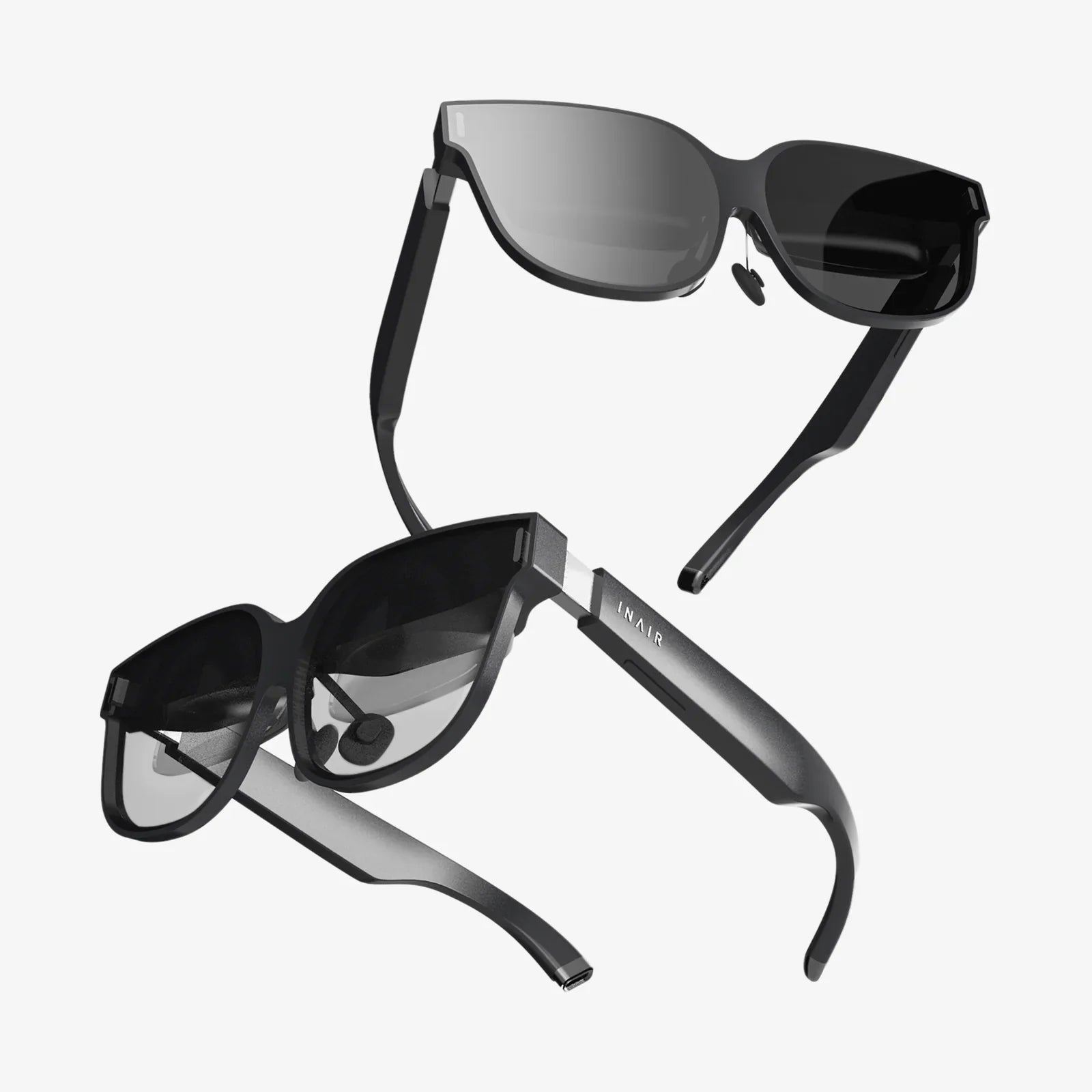
- Smart Glasses: These wearable devices project images directly onto the user's retina or onto transparent lenses, allowing them to see digital content overlaid on the real world without obstructing their view. This is considered the ultimate form factor for the AR concept, enabling true contextual computing.
- Spatial Projectors: Instead of displaying content on a personal screen, these systems project light directly onto physical surfaces, turning any wall or table into an interactive display.
Interaction paradigms are equally diverse, moving beyond the touchscreen to include voice commands, hand and gesture tracking, eye-tracking, and even brain-computer interfaces in experimental stages.
Transforming Industries: The Practical Application of the AR Concept
The true power of the AR concept is revealed not in tech demos, but in its profound ability to solve real-world problems across every sector of society.
Revolutionizing Enterprise and Manufacturing
Perhaps the most immediate and valuable applications of AR are emerging in industrial settings. Here, the AR concept is a tool for enhancing precision, efficiency, and safety.
- Complex Assembly and Maintenance: Technicians working on intricate machinery, from jet engines to complex wiring harnesses, can use AR glasses to see digital work instructions overlaid directly on the components in front of them. Arrows can point to specific bolts, animations can show the correct assembly sequence, and manuals are always in their field of view, freeing their hands for the task.
- Remote Expert Assistance: A field technician stuck on a problem can stream their live view to an expert thousands of miles away. The expert can then draw annotations—"Turn this valve," "Check this connection"—that appear anchored to the real equipment in the technician's vision, enabling expert guidance without travel costs or delays.
- Logistics and Warehouse Management: In vast fulfillment centers, workers wearing AR devices can have the most efficient picking routes displayed on the floor in front of them, with digital indicators highlighting the exact shelf and item to grab, dramatically speeding up order fulfillment and reducing errors.
Redefining Healthcare and Medicine
In medicine, where accuracy is paramount, the AR concept is proving to be a life-saving innovation.
- Enhanced Surgical Planning and Navigation: Surgeons can overlay 3D reconstructions of a patient's anatomy from CT or MRI scans directly onto the patient's body during surgery. This provides an "X-ray vision" effect, allowing them to see precisely where to make an incision or avoid critical blood vessels and nerves.
- Medical Training and Education: Medical students can practice procedures on hyper-realistic virtual patients, and AR can transform anatomical textbooks into interactive, life-size 3D models that can be explored from every angle.
- Patient Care and Rehabilitation: AR can guide patients through physical therapy exercises by demonstrating movements and providing real-time feedback on their form. It can also help individuals with low vision by highlighting obstacles and enhancing text in their environment.
Reshaping Retail and E-Commerce
The AR concept is dissolving the final barrier to online shopping: the inability to try before you buy.
- Virtual Try-On: Consumers can see how glasses, makeup, or clothing will look on them from the comfort of their home using their smartphone camera or webcam.
- Preview Products in Your Space: Perhaps the most popularized application, this allows users to place virtual furniture, appliances, and decor into their actual living room to check for size, style, and fit before making a purchase, drastically reducing return rates and increasing consumer confidence.
- Interactive In-Store Experiences: Physical stores can use AR to create engaging experiences. Pointing a phone at a product could reveal detailed specifications, customer reviews, or demonstration videos, blending the best of online and offline shopping.
Reimagining Education and Storytelling
AR has the unique power to make learning immersive, interactive, and deeply memorable.
- Interactive Textbooks: A chapter on the solar system can come alive with planets orbiting around the student's classroom. A history lesson can include AR reenactments of historical events on their desk.
- Museum and Cultural Heritage: Visiting an ancient ruin? AR can reconstruct the site as it once was, overlaying crumbling structures with digitally restored buildings and populating them with virtual inhabitants, bringing history vividly to life.
- New Narrative Forms: Artists and creators are exploring AR as a medium for storytelling, creating narratives that unfold in the user's own environment, blending the fictional and the real in powerful new ways.
The Flip Side of the Digital Coin: Challenges and Ethical Considerations
For all its promise, the widespread adoption of the AR concept is not without significant hurdles and profound ethical questions that society must grapple with.
Technical and Social Hurdles
- Hardware Limitations: For the AR concept to reach its potential, devices need to be socially acceptable (lightweight, fashionable glasses), have all-day battery life, offer a wide field of view, and possess immense computing power—all at a consumer-friendly price point. We are not there yet.
- Digital Divide: There is a risk that AR technologies could exacerbate social and economic inequalities, creating a gap between those who can afford these advanced tools and those who cannot.
- Privacy and Data Security: AR devices, by their very nature, are data collection powerhouses. They have always-on cameras and microphones, constantly scanning and interpreting the user's environment. This raises monumental privacy concerns. Who owns the spatial data of your home? Could you be recorded without your knowledge in a public space? How is this incredibly intimate data stored and secured?
Profound Ethical and Societal Questions
- The Attention Economy and Reality: If companies can place persistent digital advertisements on every physical surface we look at, will our world become a cluttered, dystopian billboard? How do we manage this new frontier of advertising and avoid reality spam?
- Manipulation and Perception: The ability to alter perceived reality is a power that can be used for both good and ill. Malicious actors could create convincing AR content to mislead, defraud, or harass individuals. The concept of "deepfakes" for the physical world is a terrifying prospect.
- Ownership of the Physical World: If a company can digitally augment a public park or a famous landmark, who controls that digital layer? Can a corporation effectively claim a part of our shared reality for commercial purposes? This will require new legal and philosophical frameworks.
The Invisible Infrastructure of Tomorrow
The ultimate evolution of the AR concept is its disappearance. The goal is not to create a world where we are constantly aware of wearing technology, but to create an interface so intuitive and seamless that it feels like a natural extension of our own cognition. This is often referred to as "Ambient Computing" or the "Spatial Web." In this future, information will be contextually relevant and available on-demand, woven into the very fabric of our existence. We will not "use" AR; we will simply live in an augmented world, interacting with a digital layer that enhances our abilities, answers our questions before we even ask them, and connects us to people and information in ways we can scarcely imagine today. It will become the invisible infrastructure that underpins modern life, as fundamental as the electrical grid or the internet itself.
The journey to this future has already begun. It starts with a simple question: what if your world could talk back? What if every street sign could offer translations, every historical building could tell its story, and every person you meet could have a contextual digital business card appear next to them? This is the breathtaking potential of the AR concept—not to escape our reality, but to unlock its full, hidden depth, transforming the mundane into the magical and empowering humanity with a new layer of perception. The world is about to get a major software update, and it will change everything.
Share:
Top 10 Wearable Technology: The Future on Your Wrist and Beyond
Wearable Technology for Women: The Ultimate Guide to Style, Health, and Empowerment