


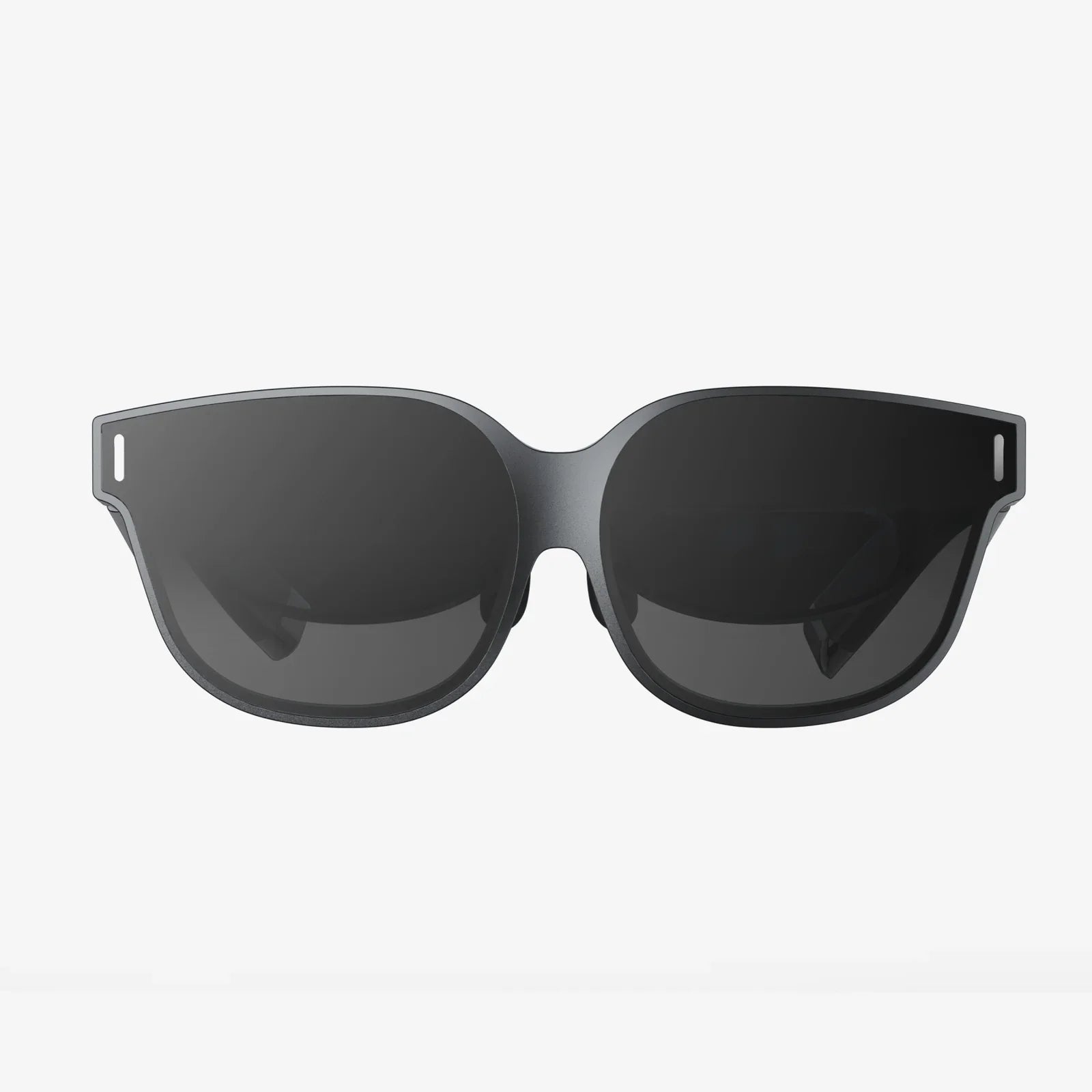
- by wangfred
AR Detail: The Microscopic Revolution Reshaping Our Perception of Reality
- by wangfred
Imagine pointing your device at a complex engine and seeing not just a static 3D model, but a living, breathing schematic. Every component is labeled in crisp, high-definition text. As you focus on a specific bolt, a micro-animation illustrates its precise torque specification. A faint heat haze, visible only through your screen, indicates a potential friction point. This isn't science fiction; it's the emerging frontier of hyper-detailed augmented reality, a technological shift poised to change how we see, understand, and interact with the world down to the most minute level. The era of simplistic AR overlays is over; we are entering the age of AR detail.
At its core, AR detail refers to the resolution, accuracy, and contextual richness of digital information superimposed onto the physical environment. It's the difference between seeing a floating cartoon character in your living room and seeing a photorealistic historical figure who casts a shadow, leaves footprints on your carpet, and interacts with the physical objects around them. This concept transcends mere visual fidelity. It encompasses a multi-sensory and deeply informational layer of reality, characterized by:
This leap in fidelity doesn't happen by magic. It is the culmination of several converging technologies, each pushing the boundaries of what's possible.
Modern systems do more than just recognize flat images. They understand scenes in three dimensions. Using Simultaneous Localization and Mapping (SLAM) algorithms, they construct a real-time map of the environment, understanding the geometry of surfaces, their texture, and their spatial relationship. More advanced systems employ machine learning to achieve semantic understanding: they don't just see a "flat surface," they recognize it as a "wooden desk" or a "concrete wall," allowing for more intelligent and context-aware digital interactions.
The quest for detail is driving a hardware revolution. High-resolution, wide-field-of-view optics in headsets are becoming more common. More critically, a suite of sophisticated sensors—LiDAR scanners, depth sensors, and high-fidelity inertial measurement units (IMUs)—work in concert to map the world with incredible accuracy. LiDAR, in particular, fires out a grid of invisible laser dots, measuring their return time to create a precise depth map of the surroundings. This dense point cloud is the foundational canvas upon which detailed AR is painted, ensuring perfect placement and occlusion.
Processing the immense amount of data from these sensors and rendering complex, detailed graphics in real-time is a monumental computational task. To avoid lag—the absolute killer of immersion—this processing is increasingly handled by powerful onboard processors (edge computing) or offloaded via high-bandwidth, low-latency 5G networks to powerful cloud servers. This seamless flow of data is what allows a technician in the field to stream incredibly detailed, complex engine models without a tethered computer.
The impact of detailed AR is not a future promise; it is actively reshaping professional landscapes today, moving from novelty to necessity.
In healthcare, detail is not a feature; it is a matter of life and death. Surgeons are using AR headsets to overlay precise, patient-specific anatomical models directly onto the surgical field. A surgeon preparing to remove a tumor can see its exact boundaries, its proximity to critical arteries and nerves, and the optimal incision path—all visualized in stunning detail over the patient's body. Medical students can dissect virtual cadavers with layers of detail that surpass a physical specimen, peeling back muscles, organs, and circulatory systems to understand their complex interrelationships.
On the factory floor, AR detail is a powerful tool for efficiency and error reduction. An assembly line worker wearing smart glasses no longer needs to consult a thick, confusing manual. Instead, they see numbered, animated instructions projected directly onto the assembly jig, showing the exact order to install components, the required torque for each fastener, and a digital checklist that ticks off steps as they are completed. For maintenance on complex machinery like wind turbines or aircraft engines, a technician can point a tablet at a component to see a live "X-ray" view, identifying internal wear and tear, highlighting the specific part number for replacement, and providing a detailed, hands-free tutorial for the repair procedure.
The AEC industry is being revolutionized by the ability to see the unseen. An architect can walk through a physical construction site and see their detailed Building Information Model (BIM) perfectly aligned with the steel and concrete skeleton. They can visualize where electrical conduits, plumbing, and HVAC systems will run inside the walls before they are closed up, identifying clashes and resolving them before they become costly on-site errors. Clients can take a virtual walkthrough of their finished space, examining the grain of the virtual wood flooring and the texture of the paint, making informed decisions long before construction is complete.
Retail is moving from a transactional experience to an experiential one. Detailed AR allows customers to visualize products in their home with unprecedented accuracy. It’s no longer just about seeing if a new sofa fits; it’s about seeing how the sunlight from your window reflects off its fabric at different times of day, how its texture complements your existing rug, and how its scale feels in the room. For fashion, apps can map the drape and flow of virtual clothing onto your body, replicating the weight and movement of different materials to give a true sense of how a garment will look and feel.
Beyond practical applications, the rise of detailed AR has profound implications for human cognition and education. It effectively externalizes complex information, transforming abstract concepts into tangible, interactive experiences. This aligns with cognitive load theory, which posits that our working memory has limited capacity. By offloading information onto the world itself, AR detail reduces cognitive load, allowing us to focus on problem-solving and deeper understanding rather than memorization and interpretation of 2D instructions.
This creates a new paradigm for learning: situated learning. Instead of learning about the mechanics of a pump in a classroom and then later applying that knowledge on the factory floor, a trainee can learn while looking at the actual pump. The information is contextual, immediate, and actionable. This accelerates skill acquisition, enhances knowledge retention, and drastically reduces the margin for error, creating a more competent and confident workforce.
Despite its immense potential, the path to ubiquitous, high-detail AR is fraught with technical and societal challenges.
The trajectory is clear: AR will continue to become more detailed, more integrated, and more intelligent. We are moving towards a future where the line between the digital and physical will be virtually imperceptible. The next leaps will likely involve:
The potential is staggering, a world where expertise is democratized through visual clarity, where complex systems are demystified, and where our digital and physical realities are woven together with invisible, intelligent thread. The magic won't be in the flashy graphics, but in the quiet, confident whisper of perfect information, delivered exactly where and when it's needed. This is the true promise of AR detail: not to overwhelm our world with digital noise, but to illuminate it with profound understanding, empowering us to build, repair, learn, and see in ways we never thought possible.