


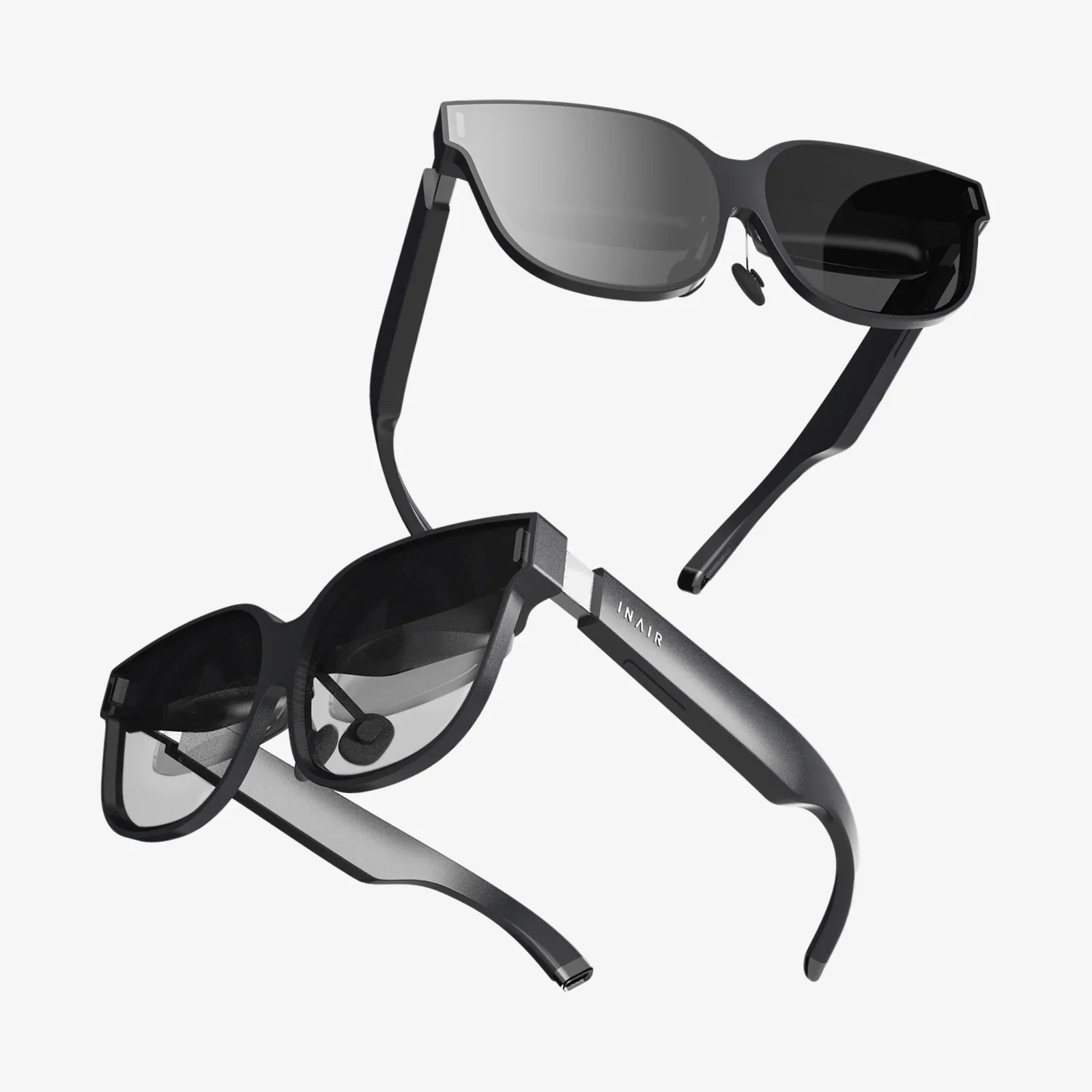
Imagine a world where digital information doesn't just live on a screen but is seamlessly woven into the fabric of your reality. This is the promise of the AR display market, a technological frontier exploding with potential and poised to redefine how we work, learn, play, and connect. The journey from clunky prototypes to sleek, powerful devices is accelerating, signaling a paradigm shift in human-computer interaction that is capturing the attention of investors, developers, and consumers alike. The race to own a piece of this immersive future is on, and the stakes have never been higher.
The Technological Engine: Core Components Powering the Revolution
At the heart of the AR display market lies a complex interplay of advanced technologies, each pushing the boundaries of physics and engineering. Understanding these core components is essential to appreciating the market's trajectory and challenges.
Waveguide and Optical Combiners
This technology is arguably the most critical for creating sleek, consumer-friendly AR glasses. Waveguides act as transparent conduits, piping light from micro-displays on the temple of the glasses to the user's eye. They use principles of diffraction or reflection to "bend" light, overlaying digital images onto the real world. The race is on to develop waveguides that are thinner, more efficient, offer a wider field of view, and can be mass-produced at a lower cost, as they are a primary determinant of both form factor and visual fidelity.
Microdisplay Technologies
These are the tiny, high-resolution screens that generate the digital image. Several technologies are vying for dominance. MicroLED is widely seen as the holy grail, offering exceptional brightness, high contrast, and low power consumption, but it faces significant manufacturing hurdles. Liquid Crystal on Silicon (LCoS) and Digital Light Processing (DLP) are more mature, offering good performance but with trade-offs in size and efficiency. The development of these microdisplays directly impacts the clarity, brightness, and battery life of AR devices.
Spatial Computing and Tracking Systems
A display is useless without knowing what to show and where to show it. This is the domain of spatial computing. Advanced systems combine a suite of sensors—including cameras, depth sensors (like LiDAR), inertial measurement units (IMUs), and sometimes ultrasonic sensors—to create a real-time, 3D map of the environment. This allows the device to understand surfaces, track the user's head and eye movements with six degrees of freedom (6DoF), and anchor digital content persistently to a physical location. The sophistication of this tracking is what separates true AR from simple heads-up displays.
Processing Power and Connectivity
Fusing high-fidelity graphics with real-world sensor data in milliseconds requires immense computational power. Early systems often relied on a tether to a powerful external computer. The market is now shifting towards standalone devices with onboard processors specifically designed for the complex tasks of computer vision and machine learning. Furthermore, the rollout of high-bandwidth, low-latency 5G networks is poised to unlock cloud-based rendering, offloading processing and enabling even more complex experiences on lighter, less power-hungry devices.
Market Dynamics: Powerful Forces Driving Exponential Growth
The AR display market is not growing in a vacuum. It is being propelled by a powerful convergence of technological advancement, changing consumer behaviors, and significant economic incentives.
The Enterprise: A Proven Ground for ROI
While consumer applications capture the imagination, the enterprise sector has been the early and most robust driver of the AR display market. Companies are adopting AR to solve concrete business problems with a clear return on investment. On factory floors, technicians use AR glasses to see assembly instructions overlaid on machinery, reducing errors and training time. Field service engineers can access schematics and receive remote expert guidance hands-free, dramatically improving first-time fix rates. In logistics and warehousing, AR displays guide workers to items with visual cues, optimizing pick-and-pack processes. This proven utility in enhancing productivity, safety, and efficiency continues to fuel enterprise spending and market validation.
The Consumer Aspiration: From Gaming to Everyday Life
The consumer segment represents the massive, long-term opportunity. The catalyst was a popular mobile game that introduced millions to the concept of AR on their smartphones. This paved the way for a broader acceptance of augmented experiences. The vision for consumer AR displays is to move beyond gaming into social connection, navigation, content consumption, and personal assistance. Imagine seeing directions painted onto the street, having recipe instructions float beside your mixing bowl, or watching a sports game with live stats hovering over your coffee table. The quest for a device that is socially acceptable, comfortable for all-day wear, and delivers truly magical experiences is the central challenge and opportunity for the market.
Investment and Ecosystem Development
Billions of dollars in venture capital and corporate R&D are flowing into the AR display ecosystem. This investment is not limited to hardware manufacturers alone. It encompasses a vast network of software developers creating authoring tools and applications, content producers designing immersive experiences, and component suppliers innovating on displays, sensors, and batteries. Major technology platforms are building entire operating systems and developer frameworks specifically for AR, betting that it will be the next primary computing platform. This vibrant and well-funded ecosystem is accelerating innovation and driving down costs.
Sector-Specific Applications: Transforming Industries from Within
The impact of the AR display market is being felt across a diverse range of sectors, each with its own unique use cases and requirements.
Healthcare and Medicine: Enhancing Precision and Care
In healthcare, AR displays are moving from experimental to essential. Surgeons use them to visualize critical information like patient vitals or 3D anatomical models directly in their line of sight without looking away from the operating field. This can improve precision and reduce procedure times. Medical students can learn complex anatomy through interactive, life-size holograms. AR is also being used for vein visualization, making it easier to insert IVs, and for physical therapy, guiding patients through exercises with proper form.
Retail and E-Commerce: Bridging the Physical-Digital Divide
The retail sector is leveraging AR displays to create try-before-you-buy experiences that were previously impossible. Customers can use their smartphones or, in the future, AR glasses to see how furniture would look in their home, how clothes would fit on their body, or how makeup would appear on their skin. This reduces purchase uncertainty and lowers return rates. In physical stores, AR can provide additional product information, highlight promotions, and guide shoppers to items, enhancing the customer journey and driving sales.
Education and Training: Learning by Doing in 3D
AR has the potential to revolutionize education by making learning immersive and interactive. Instead of reading about ancient Rome, students can walk through a virtual reconstruction of it. Mechanics-in-training can practice disassembling a complex engine with step-by-step instructions overlaid on the physical components. This hands-on, visual approach can improve knowledge retention and understanding of complex spatial subjects, from astronomy to molecular biology.
Military and Defense: Providing a Tactical Advantage
This was one of the earliest sectors to invest in head-mounted displays. Modern military AR systems provide soldiers with a immense tactical advantage, projecting data like night vision, thermal imaging, navigational waypoints, and friendly force tracking directly onto their visors. This heightened situational awareness, known as the "God's eye view," allows for better decision-making and coordination in high-pressure environments.
Challenges and Hurdles on the Path to Mass Adoption
Despite the exciting progress, the AR display market must overcome significant technical and social challenges before it can achieve its full potential.
The Form Factor Conundrum
The ultimate goal is a pair of glasses that are indistinguishable from regular eyewear—lightweight, stylish, and comfortable for all-day use. Current technology often forces a trade-off between performance and form factor. High-field-of-view, bright displays require larger optics and more power, leading to bulkier devices. Achieving the desired social acceptance hinges on solving this fundamental engineering challenge.
Battery Life and Thermal Management
Powering high-resolution displays, multiple cameras, and powerful processors is incredibly energy-intensive. Many advanced AR prototypes struggle to offer more than a few hours of active use. This is a major barrier for enterprise applications that require a full shift of use and a complete non-starter for consumer all-day wear. Related to this is thermal management; dissipating the heat generated by these components in a device worn on the face is a delicate and unsolved problem.
Content and the Killer Application
Hardware is nothing without software. While enterprise has clear use cases, the consumer market is still searching for its "killer app"—the must-have application that drives widespread hardware adoption, similar to what spreadsheet software was for the personal computer. Whether it's a revolutionary social platform, a new form of gaming, or an indispensable productivity tool, compelling content is needed to create a sustainable ecosystem.
Privacy and Social Etiquette
The always-on cameras and sensors required for AR raise legitimate privacy concerns. The idea of people wearing devices that can record and analyze their surroundings makes many uncomfortable. Establishing clear social norms and robust technological safeguards—like physical shutter switches and clear recording indicators—will be critical for public acceptance. Furthermore, the social awkwardness of interacting with someone whose eyes are partially obscured by a display or who is distracted by digital content is a subtle but important hurdle.
The Future Roadmap: What Lies Beyond the Horizon
The trajectory of the AR display market points toward a future of increasingly invisible and powerful computing. We are moving towards contact-lens-based displays and even direct neural interfaces, though these are likely decades away from commercialization. In the nearer term, we will see displays with fields of view that approach the human visual periphery, photorealistic rendering of digital objects, and vastly improved battery life through more efficient components and heterogeneous computing architectures. The line between the digital and physical worlds will continue to blur, creating new industries and transforming existing ones in ways we are only beginning to imagine.
The true victory for the AR display market won't be a spec sheet or a quarterly sales report; it will be the moment the technology itself disappears. It will be when a surgeon saves a life with information only they can see, when a student grasps a complex concept through a 3D model that appears on their desk, or when you navigate a foreign city with arrows seamlessly guiding your path—all without ever feeling like you're using a "device." This is the silent revolution being built today in R&D labs around the world, and it's coming to change everything.
Share:
Fastest Smart Devices: The Unseen Race for Instantaneous Digital Life
Fastest Smart Devices: The Unseen Race for Instantaneous Digital Life