


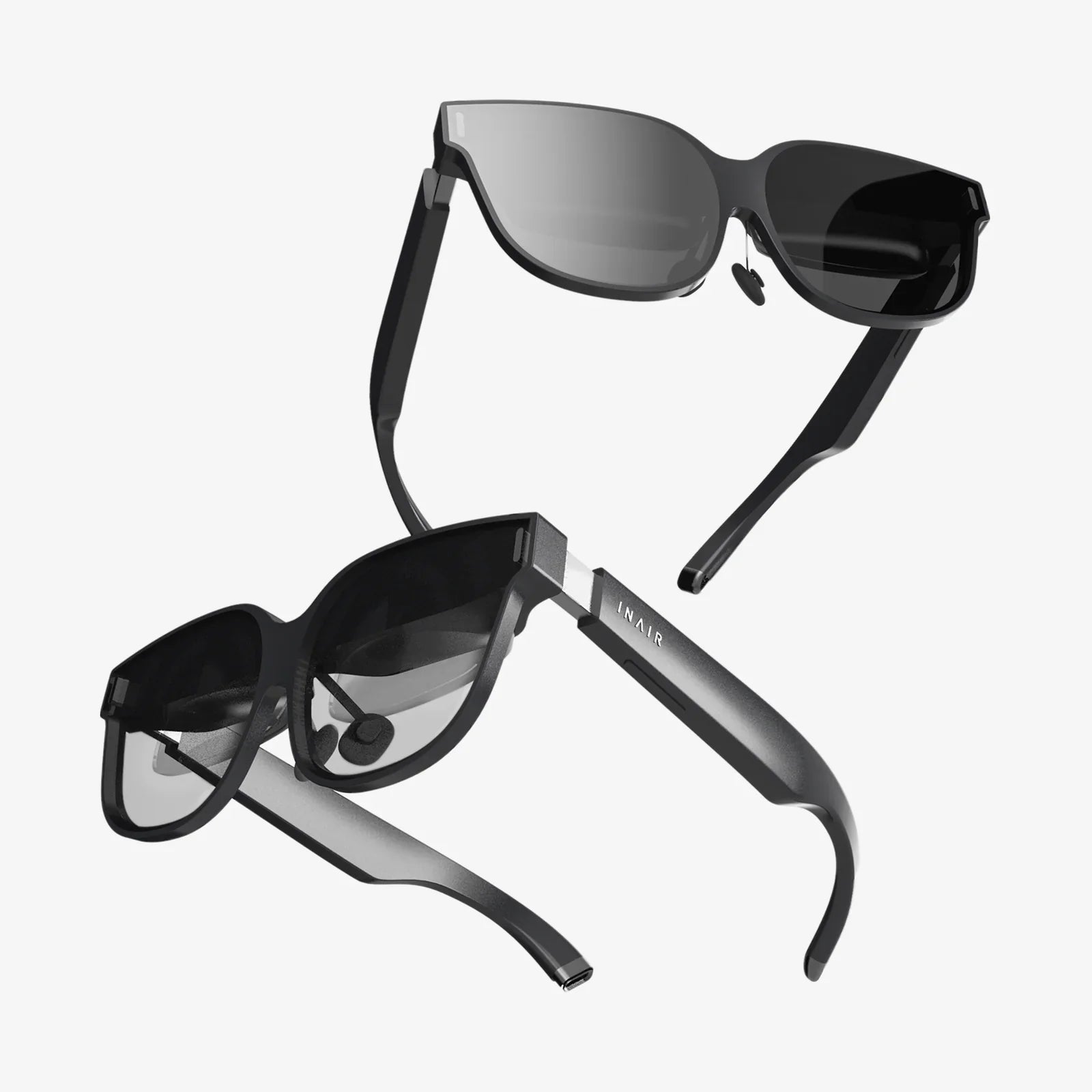
Imagine a world where waiting is a forgotten concept, where every digital interaction is instantaneous, and your devices anticipate your needs before you’ve even fully formed the thought. This isn't a distant sci-fi fantasy; it's the driving force behind the most significant revolution in consumer electronics. The quest for the fastest smart devices is fundamentally altering our relationship with technology, pushing the boundaries of what's possible and redefining convenience, productivity, and entertainment. This relentless pursuit of speed is an invisible arms race, happening not on battlefields, but in research labs, design studios, and the very fabric of our daily lives.
The Engine Room: Processing Power and the Heart of Speed
At the core of every smart device lies its processor, the silicon brain responsible for executing commands at breathtaking speeds. The evolution of these chips is a story of miniaturization and immense complexity. Modern processors are no longer just about higher clock speeds, measured in gigahertz; they are about architectural genius.
Manufacturers are packing more cores into these tiny powerhouses, creating specialized processing units that handle specific tasks with unparalleled efficiency. A dedicated neural processing unit (NPU) is a prime example, designed exclusively for artificial intelligence and machine learning operations. This means tasks like real-time language translation, complex image recognition in photography, and understanding nuanced voice commands are handled not by a general-purpose core, but by a specialist, resulting in near-instantaneous performance. This architectural shift is why the latest devices can perform complex feats that would have brought a top-tier machine from just a few years ago to its knees.
Furthermore, advancements in semiconductor manufacturing, such as the shift to smaller nanometer processes, allow for more transistors to be packed into the same physical space. More transistors equate to more computational power and, crucially, greater energy efficiency. This means devices can perform these lightning-fast operations without immediately draining their battery, making speed sustainable and practical for all-day use.
Beyond the Chip: The Symphony of Supporting Hardware
Raw processing power is nothing without a supporting cast of high-performance hardware. The quest for speed extends to every component within the device. The most critical ally to the processor is RAM (Random Access Memory). Think of the processor as a chef and RAM as their kitchen countertop. The larger and faster the countertop, the more ingredients and tools the chef can have ready at once, drastically reducing the time spent fetching them from the pantry (the storage drive). Generous and swift LPDDR5 RAM allows devices to keep numerous applications active and ready in the background, enabling true multitasking and eliminating the frustrating lag of reloading apps.
Similarly, storage technology has undergone a revolution. The move from traditional hard disk drives (HDDs) to solid-state drives (SSDs) and now to even faster NVMe-based storage has been a quantum leap. These storage solutions offer read and write speeds that are orders of magnitude faster, meaning everything from booting up the device and launching applications to saving large files and accessing your photo library happens in the blink of an eye. This eliminates one of the most common historical bottlenecks in computing performance.
The Invisible Highway: Network Connectivity and 5G
A device can be incredibly powerful on its own, but its true potential is unlocked when connected to the world. This is where network speed becomes paramount. The rollout of 5G technology represents the most significant upgrade to wireless connectivity in a decade, and it's a cornerstone of the fastest smart device ecosystem.
5G isn't just about faster download speeds for movies—though that is a benefit. Its lower latency is the real game-changer. Latency is the delay between sending a command and receiving a response. 5G slashes this delay to mere milliseconds. This enables a new class of real-time applications:
- Cloud Gaming: Streaming graphically intensive games from powerful remote servers becomes a seamless experience, indistinguishable from playing on a local console, as your controller inputs are reflected on-screen with no perceptible lag.
- Augmented Reality (AR): For AR to feel immersive and natural, digital overlays must interact with the real world instantaneously. High-speed, low-latency 5G makes this possible, paving the way for advanced navigation, remote assistance, and immersive shopping experiences.
- Real-Time Collaboration: Working on complex documents, 3D models, or video edits with colleagues across the globe feels natural, as everyone's changes sync and appear almost instantly.
Alongside 5G, the latest Wi-Fi 6 and Wi-Fi 6E standards bring similar benefits to the home and office environment, providing gigabit-speed, low-latency connections to multiple devices simultaneously without congestion, ensuring your smart home devices, laptops, and phones all operate at peak efficiency.
The Software Symphony: Optimizing the Code for Instant Gratification
Hardware provides the potential for speed, but it is software that unlocks it. The most powerful processor in the world can feel sluggish with poorly optimized software. Modern operating systems are increasingly focused on predictive loading and intelligent resource management.
Using machine learning, your device learns your routines. It may pre-load the news app you read every morning at 7:05 a.m. into fast memory, so it opens instantly when you tap the icon. It might keep your frequently used translation app ready to go the moment it detects you are in a foreign country. This shift from reactive computing—waiting for your command—to proactive computing—anticipating your needs—is the software hallmark of the fastest devices.
Furthermore, software optimization ensures that animations are smooth (running at 120Hz or higher refresh rates), transitions are fluid, and apps are designed to prioritize user input above all else. This creates a feeling of direct manipulation, where the device feels like a natural extension of your will, rather than a tool you are operating.
The Ecosystem Effect: When Devices Communicate at Light Speed
Speed is no longer just about a single device's performance. The true magic happens when multiple devices work together in a seamless ecosystem. The fastest experiences are now created through interoperability. Imagine taking a photo on your powerful smartphone and having it instantly appear on your tablet for editing, or copying text on your laptop and pasting it directly on your phone without any manual transfer steps.
This is made possible by ultra-high-speed peer-to-peer wireless protocols like Wi-Fi Direct and advanced Bluetooth standards. These technologies allow devices to discover each other and establish a direct, high-bandwidth connection almost instantly, creating a unified computing experience that is far greater than the sum of its parts. The speed of this handoff and data transfer is what makes an ecosystem feel intelligent and cohesive, rather than just a collection of separate gadgets.
The Human Impact: How Speed is Reshaping Our Lives
This relentless drive for speed is not just a technical spec; it has profound implications for how we live, work, and play.
- Productivity Reimagined: Tasks that used to take minutes now take seconds. Compiling code, rendering video, analyzing large datasets, and switching between complex professional applications are dramatically accelerated, freeing up cognitive energy for creative and strategic thinking.
- The Death of Friction: Speed kills friction. The minor frustrations of waiting for an app to load, a website to render, or a file to transfer create tiny mental barriers. Removing these barriers makes technology feel more fluid, intuitive, and enjoyable, encouraging deeper and more frequent use.
- New Realities Unleashed: As mentioned, technologies like AR and VR are entirely dependent on speed. Any lag or latency breaks immersion and can cause user discomfort. The processing and network speeds of modern devices are finally making these immersive experiences comfortable and compelling for mass adoption.
- Accessibility Enhanced: Instantaneous voice assistants and real-time translation services break down communication barriers for millions, providing greater independence and access to information.
The Future Horizon: What Comes After Instantaneous?
The race is far from over. The next frontiers of speed are already coming into view. The development of quantum computing, though in its infancy for consumer applications, promises a paradigm shift in processing power for specific tasks. Advances in photonic computing, which uses light instead of electricity, could lead to processors that are exponentially faster and more efficient than today's silicon-based chips.
Furthermore, the integration of AI at a fundamental level will continue to accelerate. We are moving towards on-device AI models that are large and powerful enough to handle incredibly complex tasks entirely locally, without needing to query a cloud server. This will bring a new level of speed, privacy, and reliability to features like transcription, photo enhancement, and predictive text.
The rollout of 5G Advanced and the early research into 6G suggest a future where multi-gigabit speeds and imperceptible latency are the global standard, truly making your geographical location irrelevant to your digital experience. The fastest smart devices of tomorrow will not just be fast; they will be anticipatory, contextual, and seamlessly integrated into the very fabric of our existence, making the line between human intention and digital execution vanish entirely.
We are standing on the precipice of a truly instantaneous world, where the last remnants of digital delay are being systematically eradicated. The devices in our pockets and homes are becoming portals to a frictionless reality, and this breakneck evolution shows no signs of slowing down. The future belongs to those who won't wait, and the race to build the technology to get us there is the most thrilling competition of our digital age.
Share:
AR Display Market: The Next Frontier in Visual Computing and Human-Machine Interaction
AR Display Market: The Next Frontier in Visual Computing and Human-Machine Interaction