Imagine a world where digital objects blend seamlessly with your physical surroundings, accessible not from a specialized headset, but from the powerful computer already in your pocket. This is the promise of AR Foundation, and it all starts with the device in your hand. The journey into cross-platform augmented reality is more accessible than ever, but knowing which gateways—your compatible devices—can unlock this experience is the first crucial step. Unlock the potential of blending realities and discover if your hardware holds the key to the next digital revolution.
Demystifying AR Foundation: The Engine Behind the Magic
Before we delve into the specific devices that power these experiences, it's essential to understand what AR Foundation is and why it has become a cornerstone of modern augmented reality development. In simple terms, AR Foundation is a powerful framework designed to unify the often-fragmented landscape of AR development. It provides a single, consistent API (Application Programming Interface) that allows creators to build immersive AR applications once and deploy them across a wide range of platforms and devices, primarily those running iOS and Android operating systems.
The core value proposition is monumental for developers. Instead of writing and maintaining two separate codebases—one for ARKit on Apple devices and another for ARCore on Google's platform—developers can use AR Foundation to handle the underlying complexity. It abstracts the platform-specific features, providing a common ground for core functionalities like plane detection (finding horizontal and vertical surfaces), tracking the device's position in space, understanding ambient lighting, and anchoring virtual content to the real world. This not only drastically reduces development time and cost but also ensures a more consistent user experience regardless of the device being used.
The Two Pillars: ARKit and ARCore Compatibility
AR Foundation itself is not a standalone AR engine; it is a layer that sits on top of the native AR platforms provided by the tech giants. Therefore, a device's compatibility with AR Foundation is intrinsically linked to its support for either Apple's ARKit or Google's ARCore. These are the underlying technologies that do the heavy lifting of fusing the digital and physical worlds.
For iOS Devices: The ARKit Requirement
On the Apple side, the primary gatekeeper for AR Foundation compatibility is ARKit. Apple introduces new versions of ARKit alongside its major iOS updates, and each iteration often brings more advanced capabilities.
-
Basic Requirements: For a device to support ARKit, and by extension AR Foundation, it must have an Apple-designed A9 processor or later. This includes models starting from the iPhone 6s and iPhone SE (1st generation) and newer, all iPad Pro models, the iPad (5th generation and newer), and the iPad Air (3rd generation and newer).
-
Advanced Features: While these older devices can run basic AR experiences, more sophisticated features like People Occlusion (where virtual content appears behind people in the real world), motion capture, and improved environmental tracking require the neural engine found in the A12 Bionic chip and later. This means an iPhone XS or newer for the most immersive experiences.
-
LiDAR Scanner: The most significant hardware differentiator is the addition of a LiDAR (Light Detection and Ranging) scanner on certain iPad Pro and iPhone Pro models. This sensor measures the distance to surrounding objects by bouncing laser light off them, creating a highly detailed depth map of the environment in real-time. This enables unparalleled scene understanding, faster and more accurate plane detection, and realistic occlusion, even in low-light conditions.
For Android Devices: The ARCore Mandate
The Android ecosystem is vastly more diverse, making compatibility a more nuanced topic. Google maintains a official list of ARCore supported devices, which is the definitive source for compatibility. The requirements are not solely about raw processing power but also about specific sensor calibration and capabilities.
-
Core Components: An ARCore-compatible Android device must have a capable processor (typically mid-range and above from the last several years), a camera that can focus, and most importantly, an Inertial Measurement Unit (IMU)—a combination of a gyroscope and accelerometer—that is accurately calibrated. This IMU is critical for tracking the device's movement through space.
-
The Role of Google Play Services for AR: Unlike a standard app, ARCore functionality is delivered through a separate, automatically updating package called Google Play Services for AR. This system-level service handles the complex computer vision algorithms. If a device is compatible, this service will be available for installation or will already be present.
-
Fragmentation and Performance: While a device may be on the official list, the quality of the AR experience can vary significantly based on the specific hardware. Factors like camera quality, sensor precision, and thermal management all play a role. A flagship device from a major manufacturer will almost always provide a smoother, more stable, and more feature-rich AR experience than a budget-friendly model that just meets the minimum requirements.
Key Hardware Specifications That Truly Matter
Beyond the simple yes/no of official compatibility, several hardware specifications directly influence the quality, stability, and capabilities of your AR Foundation experience. Understanding these will help you make an informed choice when selecting a device, whether for development or consumption.
-
Processor (CPU/GPU): AR is computationally intensive. It involves real-time computer vision, complex 3D rendering, and sophisticated physics calculations simultaneously. A powerful processor and a capable graphics processing unit (GPU) are non-negotiable for complex applications. Slower processors will lead to dropped frames, jittery tracking, and a less immersive experience.
-
Camera: The camera is the eye of the AR system. A higher resolution sensor with good low-light performance, fast autofocus, and a high frame rate will provide a clearer video passthrough and more reliable data for tracking and plane detection.
-
IMU (Inertial Measurement Unit): As mentioned, this sensor combo is vital. A high-quality, well-calibrated IMU provides smooth and responsive rotational and positional tracking, preventing the virtual world from drifting or feeling disconnected from the real one.
-
Display: A bright, high-resolution, high-refresh-rate display (90Hz or 120Hz) makes virtual content look crisp, vibrant, and seamlessly integrated into the real world. It reduces motion blur and makes interactions feel more immediate.
-
Battery Capacity and Thermal Design: AR applications are notorious for draining battery life and generating heat. A device with a robust battery and effective cooling will sustain peak performance for longer without throttling the processor, which would degrade the AR experience.
Beyond Smartphones and Tablets: The Expanding Universe of AR Hardware
While smartphones and tablets are the most common and accessible AR platforms today, the world of compatible devices is rapidly expanding. AR Foundation is evolving to support these new form factors, opening up entirely new use cases.
-
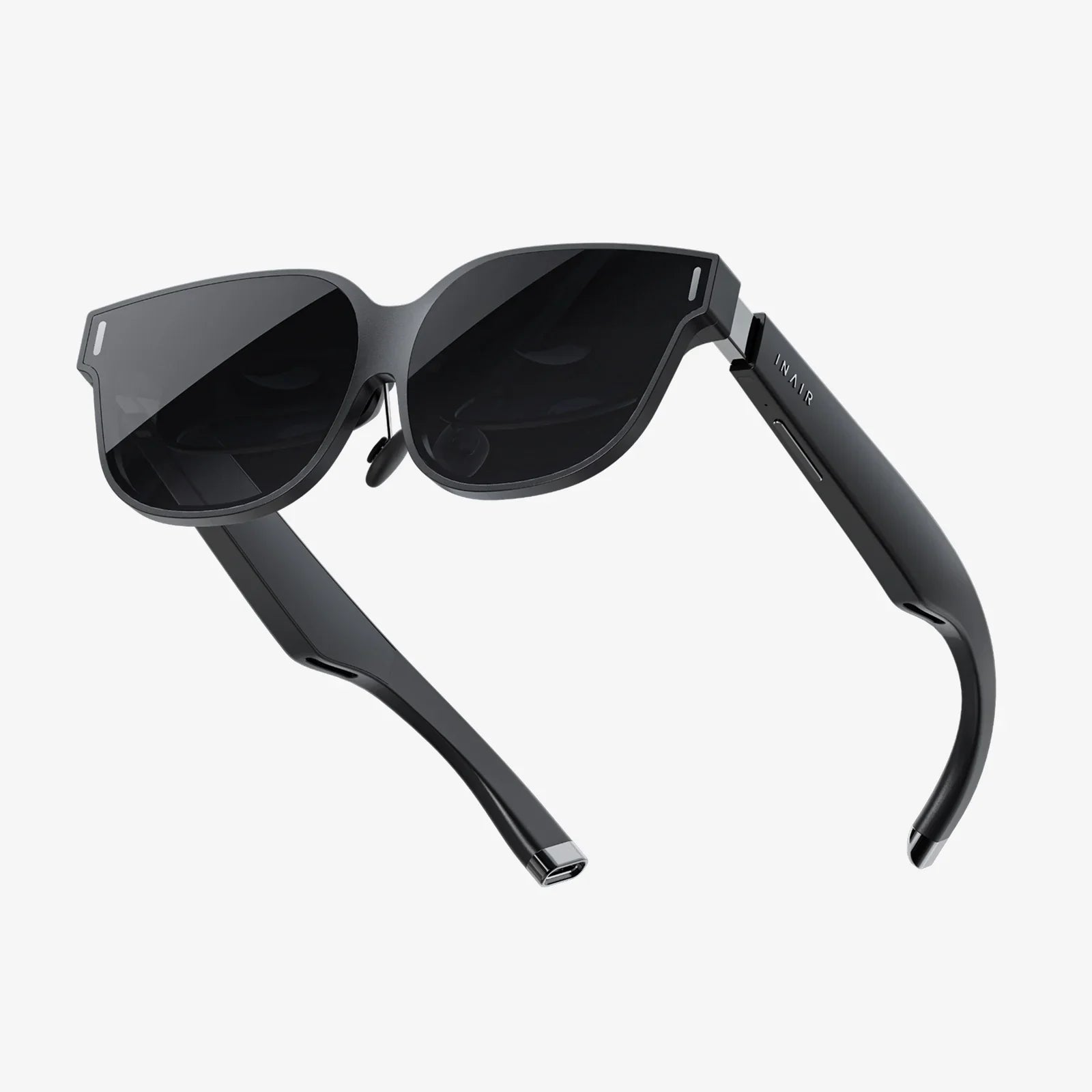
Wearable AR Glasses: The next frontier is eyewear. Devices like various standalone AR glasses can connect to an ARCore-certified Android phone to act as a private, heads-up display. The phone acts as the processing powerhouse, while the glasses provide the display. AR Foundation applications can be built to support this split architecture, offering a truly hands-free augmented reality experience.
-
Future-Proofing for Headsets: As technology progresses, fully self-contained AR and VR (Virtual Reality) headsets with passthrough camera capabilities are becoming more powerful. The underlying principles of AR Foundation—world tracking, plane detection, etc.—are directly applicable to these devices. The framework is poised to become the primary tool for developing experiences for this next generation of mixed-reality hardware.
Ensuring a Flawless Experience: Tips for Users and Developers
Compatibility is more than just a spec sheet check. For the best possible AR experience, both users and developers have roles to play.
For Users:
- Always ensure your device's operating system is up to date, as AR core capabilities are often tied to OS versions.
- Check for and update the "Google Play Services for AR" package on Android devices.
- Use AR in a well-lit environment. Low light is the biggest enemy of reliable AR tracking.
- Start with a clear, textured environment. Blank white walls and uniform carpets provide no visual landmarks for the device to track against.
- Keep your camera lens clean for a clear view of the world.
For Developers:
- Use the ARFoundation API to check for device support and specific feature availability at runtime. Never assume a feature is present.
- Implement graceful fallbacks. If a advanced feature like LiDAR scanning is not available, your app should fall back to a software-based method without crashing.
- Optimize, optimize, optimize. Complex 3D models and high-poly counts can bring even powerful devices to their knees. Efficient asset creation is key to a accessible experience across the device spectrum.
- Test on a wide range of devices, from the minimum-spec to the latest flagship, to understand the real-world performance envelope of your application.
The Horizon of AR Foundation and Device Compatibility
The trajectory of AR Foundation is one of increasing abstraction and capability. As underlying platforms like ARKit and ARCore add new features—better semantic understanding of scenes (recognizing chairs, tables, doors), more accurate mesh reconstruction, and collaborative multi-user experiences—AR Foundation will integrate these features, making them accessible to developers through its unified API.
Furthermore, the line between what is a "compatible device" will continue to blur. The eventual goal is a ubiquitous spatial computing platform where AR is a seamless layer over our reality, accessed through a variety of comfortable, powerful, and stylish wearables. AR Foundation is the crucial bridge being built today that will allow the digital experiences of tomorrow to run effortlessly across all of them.
The question is no longer if your device can handle augmented reality, but how profound and seamless the experience will be. From the smartphone in your pocket to the sleek glasses of tomorrow, the ecosystem of AR Foundation compatible devices is your portal. The hardware is here, the software is mature, and the only limit is the creativity of developers ready to build upon this unified framework, transforming our perception of reality itself with every new application.


Share:
XR is Android XR Headset: The Open Ecosystem Challenging the Status Quo
VR Head Mounted Display: A Portal to New Realities and Its Transformative Potential