


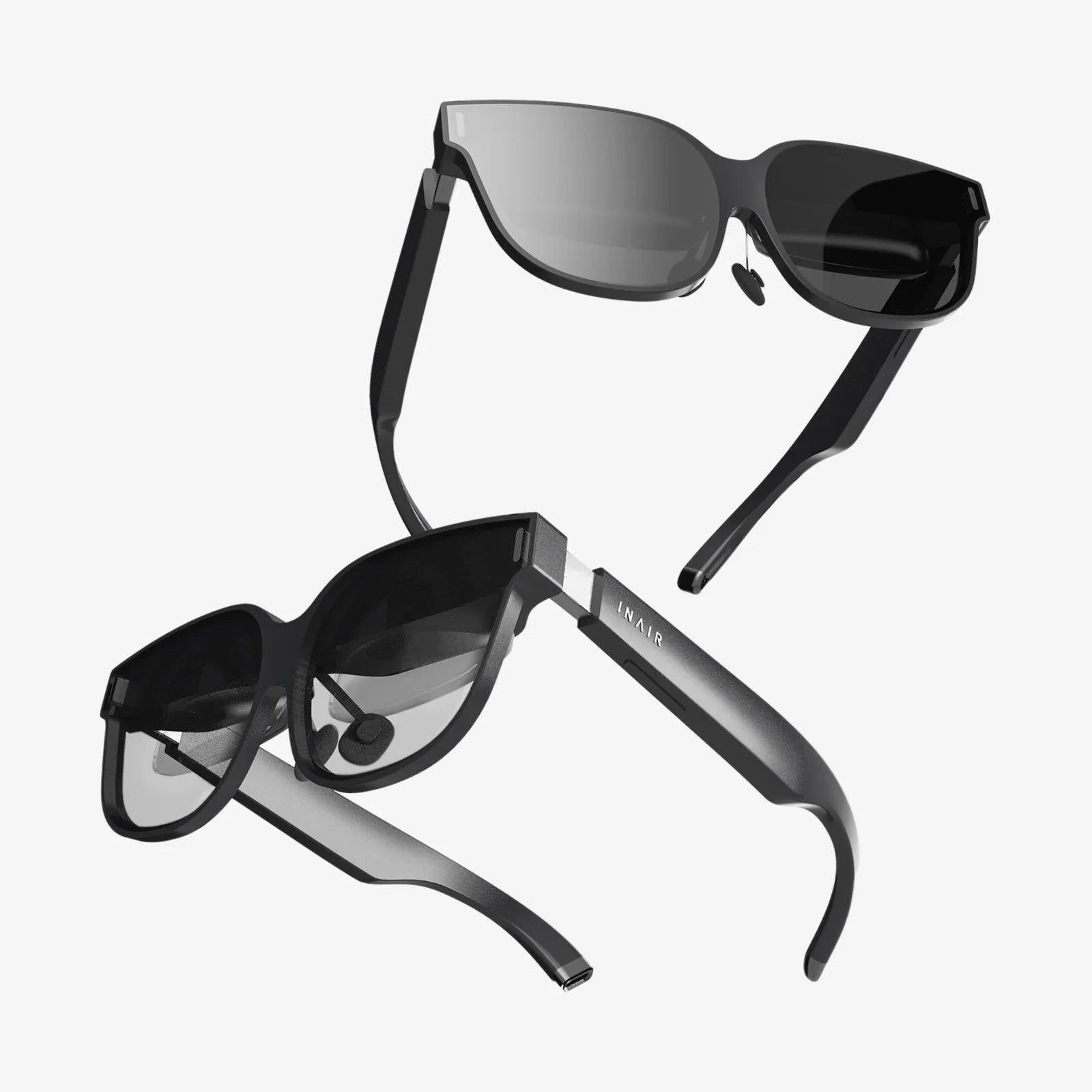
Imagine a world where information floats effortlessly before your eyes, where digital assistants manifest as holographic companions, and the line between your physical environment and the digital realm becomes beautifully, usefully blurred. This is not a distant science fiction fantasy; it is the tangible future being built in laboratories and design studios today, a future set to arrive on the bridge of your nose by 2025. The race to perfect augmented reality glasses is reaching a fever pitch, promising a revolution that will eclipse the impact of the smartphone. We are on the cusp of a paradigm shift in human-computer interaction, and the key to unlocking it all rests on a piece of optically advanced, intelligently powered glass.
The journey to the AR glasses of 2025 is a story of convergence. It is the culmination of decades of research in fields as diverse as optics, material science, microelectronics, artificial intelligence, and connectivity. Early attempts at wearable AR were often bulky, underwhelming, and tethered to powerful computers, confining them to industrial and enterprise applications. The vision for 2025, however, is one of sleek, socially acceptable, and truly standalone devices—eyewear that you would genuinely want to wear all day.
The Core Technological Leaps Driving Change
Several critical technological hurdles are being overcome to make this vision a consumer reality. The progress in these areas defines the roadmap to 2025.
Visual Fidelity and Waveguide Displays
The single most important element of any AR experience is the quality of the display. The goal is to project bright, high-resolution, full-color digital images that seamlessly blend with the real world, regardless of ambient lighting conditions. The technology of choice for achieving this in a compact form factor is the waveguide. These are transparent substrates, often made of specialized glass or plastic, that use diffraction gratings or other nano-structures to pipe light from a micro-display module at the temple into the user’s eye.
By 2025, we expect waveguides to become significantly more efficient, affordable, and capable. Advancements in manufacturing, particularly using nano-imprint lithography, will allow for mass production of complex optical elements that were previously lab curiosities. This will lead to a dramatic increase in field of view (FoV), moving from the narrow, postage-stamp view of early devices to an immersive, screen-like experience that encompasses a much larger portion of the user’s natural vision. Furthermore, expect major improvements in contrast and color gamut, eliminating the faint, ghost-like projections of the past for vibrant, solid virtual objects.
The Invisible Engine: AI and Spatial Computing
The glass itself is merely the window. The true magic lies in the intelligence behind it. For AR glasses to be useful, they must understand the world around them in real-time. This is the domain of artificial intelligence and spatial computing.
Powered by increasingly powerful and energy-efficient dedicated neural processing units (NPUs) housed within the frames, AR glasses will continuously analyze the video feed from their outward-facing cameras. They will perform simultaneous localization and mapping (SLAM) to create a precise 3D model of the environment, recognize objects and surfaces, and identify people and their gestures. This constant, real-time contextual awareness is what will allow digital content to not just appear in your world, but to interact with it—a virtual pet that runs around your actual furniture, a navigation arrow that paints itself onto the road, or a recipe that automatically advances to the next step when it sees you’ve finished chopping the vegetables.
By 2025, this on-device AI will be so advanced and low-latency that it will feel like a natural extension of your own perception, anticipating your needs and providing information without the need for clumsy voice commands or hand controllers.
Form Factor and Battery Life: The All-Day Wearable
Technology is useless if people won’t wear it. The societal acceptance of AR glasses hinges on them looking good and feeling comfortable. The archetype for 2025 is a device that is indistinguishable from high-end prescription eyewear or fashion sunglasses. This requires immense miniaturization.
MicroLED displays, which are incredibly bright and efficient while being tiny, will become the standard light source. Sensors will be shrunk down and elegantly integrated into the frame. Perhaps most critically, the battery challenge will be solved through a multi-pronged approach: ultra-low-power components, innovative new battery chemistries that offer higher energy density, and smart power management that only activates the most power-hungry systems when needed. The solution may also involve a combination of a small battery in the frames supplemented by a larger, pocketable battery pack for all-day use, all while maintaining a sleek and lightweight design.
Transforming Industries: The Professional Landscape
While consumer applications capture the imagination, the most immediate and profound impact of AR glasses will be felt in the workplace. By 2025, they will be standard issue in numerous fields, acting as a silent expert looking over your shoulder.
In manufacturing and field service, technicians will use AR glasses to see interactive repair manuals overlaid on the machinery they are fixing. They can receive remote expert guidance from a specialist who can see their view and draw annotations directly into their field of vision, drastically reducing downtime and errors. In healthcare, surgeons will have vital signs, 3D anatomical models, and ultrasound data projected into their line of sight during procedures, keeping their focus on the patient. Logistics and warehouse workers will see optimized picking routes and item information, supercharging efficiency.
For architects and designers, AR glasses will become the ultimate tool for visualization, allowing them to walk clients through a full-scale, photorealistic 3D model of an unbuilt structure. The ability to overlay digital twins onto physical assets will revolutionize everything from construction to urban planning.
The New Social and Consumer Experience
Beyond work, AR glasses will redefine our personal lives, creating a new layer of shared reality. Social interaction will be transformed. Instead of staring down at a phone, you could share a immersive holographic experience with a friend on the other side of the world, feeling as if you are both sitting in the same virtual space. Live events, from concerts to sports, will be enhanced with stats, player information, and different camera angles available only to those wearing AR glasses.
Navigation will become intuitive, with path arrows and points of interest painted onto the streets. Language barriers will crumble, with real-time translation of street signs and subtitles for conversations appearing in your vision. Your personal AI assistant will have a persistent, contextual presence, helping you remember names, manage your schedule, and make decisions based on a deep understanding of your surroundings and preferences.
This always-available, context-aware computing will challenge our current model of app-based interaction. The concept of opening an application will feel archaic. Instead, functionality will be triggered by your intent and your environment—looking at a restaurant might bring up its menu and reviews, while glancing at your smart oven could show the status of your dinner.
Navigating the Inevitable Challenges
This powerful technology does not arrive without significant questions and concerns that must be addressed by 2025 for widespread adoption to succeed.
Privacy and the Societal Gaze: AR glasses with always-on cameras represent perhaps the biggest shift in personal surveillance since the internet. The potential for unauthorized recording and data collection is immense. Robust privacy frameworks, clear social etiquette (e.g., visible indicators when recording), and perhaps even technological solutions like localized jamming signals in private spaces will be essential to prevent a dystopian future of constant surveillance.
The Digital Divide: As with any transformative technology, there is a risk of exacerbating social and economic inequalities. Will access to this enhanced layer of reality become a prerequisite for success in the job market and social inclusion? Ensuring the technology is accessible and does not create a new class of information haves and have-nots is a critical challenge.
Health and Safety: Long-term effects of having bright displays shining into users' eyes are still being studied. Furthermore, cognitive overload and distraction are real dangers—navigating a busy street while digital notifications pop up requires careful UI/UX design that prioritizes safety. The industry must establish and adhere to strict health and safety standards.
A Platform for a Future We Can Barely Imagine
The true potential of AR glasses lies not in the specific applications we can conceive of today, but in the fact that they create an entirely new platform for innovation. Just as the iPhone’s App Store unlocked possibilities its creators never imagined, the AR ecosystem of 2025 will become a playground for developers, artists, and creators to build experiences that will redefine human potential.
This platform will merge with other advancing technologies like 5G/6G connectivity, which will provide the high-bandwidth, low-latency connection needed for cloud rendering and shared experiences, and the Internet of Things, allowing your glasses to communicate with and control the smart world around you. We are moving towards a future where the digital, having been liberated from the black mirror of our phones, will be woven into the very fabric of our physical existence.
The year 2025 is not an end point, but a beginning. It marks the moment when AR glasses step out of the realm of early adopters and developers and into the mainstream, becoming as ubiquitous and essential as the smartphone is today. The pieces of the puzzle—the optics, the AI, the connectivity, the design—are all rapidly falling into place. The companies that succeed will be those that understand it’s not just about building a piece of advanced technology; it’s about crafting an intimate, human-centered experience that enhances our reality without replacing it. The world is about to get a new layer, and it will change everything.
We stand at the threshold of a world where your entire digital life—your work, your social circle, your entertainment, your knowledge—will be available instantly, contextually, and hands-free, projected onto the canvas of reality itself. The device that makes this possible will be the most personal computer ever created, sitting on your face and seeing the world through your eyes. The race to define this next era of computing is already underway, and the finish line is 2025. The future is transparent, and it’s coming into focus faster than anyone realizes.
Share:
Virtual Reality 3D Glasses for PC: Your Portal to Immersive Digital Worlds
Glass AI APK: The Future of Visual Intelligence in Your Pocket