


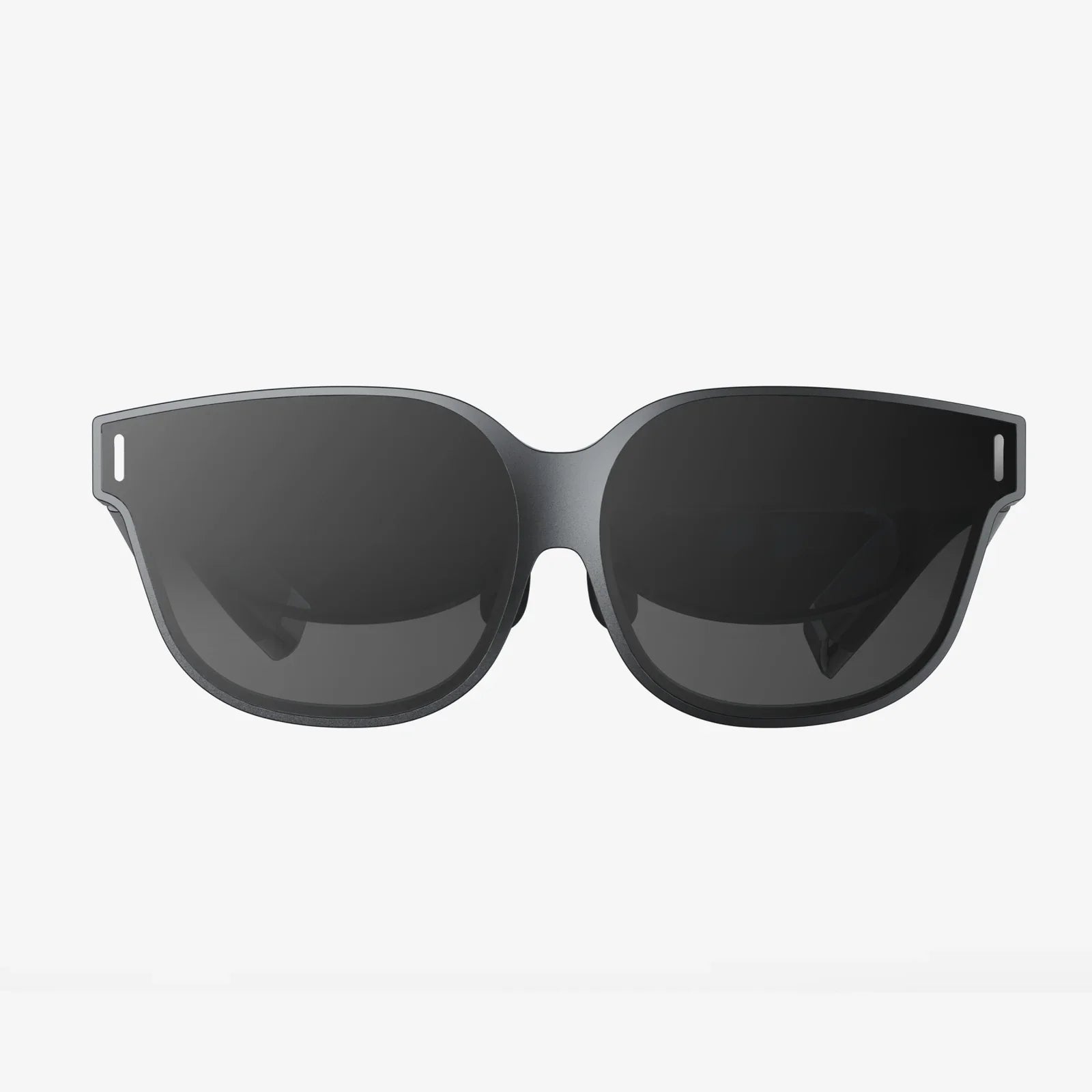
Imagine slipping on a pair of sophisticated goggles and instantly dissolving the barriers between you and a digital universe. The room around you vanishes, replaced by a breathtaking alien landscape, a meticulously recreated historical site, or the intricate inner workings of a human cell. This is the profound promise held within modern virtual reality 3D glasses for PC—a promise that is no longer science fiction but an accessible, transformative reality. The journey from a niche enthusiast's dream to a mainstream portal for exploration is one of the most exciting technological narratives of our time, and it all begins with the powerful synergy between a capable computer and a sophisticated head-mounted display.
At its core, a virtual reality system for a personal computer is a feat of sensory engineering. Unlike the passive experience of watching a 3D movie, true VR is an interactive and immersive loop. The primary hardware, the headset itself, functions as a pair of high-resolution screens housed in a wearable visor, positioned mere centimeters from your eyes. But its magic lies in the sophisticated array of sensors packed within—gyroscopes, accelerometers, and magnetometers—that work in concert to track the precise orientation of your head in three-dimensional space. As you turn your head left, look up, or crouch down, the sensors relay this data to the connected PC at astonishing speeds, often exceeding 1000 times per second.
The PC acts as the brain of the operation. It's a computational powerhouse that takes this constant stream of positional data and renders two distinct, high-frame-rate visual perspectives—one for each eye. This stereoscopic vision is the fundamental trick that creates depth and volume, making a flat image feel like a tangible space you can step into. The graphical fidelity, complexity of the virtual environment, and smoothness of the experience are directly tied to the processing power of the computer. This is why PC-based VR offers the highest-end experiences available to consumers; they harness the raw power of dedicated graphics cards and multi-core processors to create worlds of stunning detail and realism that standalone mobile-based systems simply cannot match.
The evolution of this technology has been rapid and remarkable. Early prototypes were cumbersome, low-resolution, and prohibitively expensive, confined to university labs and military simulations. The modern era of consumer VR began with the development of precise outside-in and inside-out positional tracking. Early systems often required external sensors or base stations placed around the room to triangulate the headset's position, creating a confined but highly accurate "play area." Newer generations have largely adopted inside-out tracking, where cameras mounted on the headset itself view the real world, using sophisticated algorithms to map the environment and track its own movement without any external hardware. This shift has dramatically reduced setup complexity and increased accessibility.
Choosing the right virtual reality setup for your PC is a balance between performance, convenience, and budget. The first consideration is always your computer's capability. VR applications are immensely demanding. Manufacturers provide minimum and recommended specifications, which typically involve a powerful multi-core processor, a sufficient amount of RAM, and, most critically, a modern, high-performance graphics card. Attempting to run a VR headset on an underpowered machine will result in a poor experience characterized by low framerates, graphical lag, and even motion sickness. Ensuring your PC is "VR-ready" is the essential first step on this journey.
Once your PC is confirmed to be capable, the choice of headset itself comes down to a few key factors. Display resolution is paramount; higher resolutions mean sharper images with less visible "screen door effect" (the faint grid lines between pixels). Refresh rate, measured in Hertz (Hz), determines how smoothly motion appears. A higher refresh rate (90Hz and above) is crucial for comfort and immersion. Field of view (FOV) describes how much of your vision is occupied by the virtual world; a wider FOV feels more natural and immersive. Finally, the tracking system—whether it uses external base stations or built-in cameras—will affect your available play space and setup process.
The applications for this technology extend far beyond the realm of gaming, which served as its initial catalyst. While soaring through fantasy realms, piloting starfighters, and solving puzzles in enchanted workshops remain incredible draws, the true potential of PC VR is being unlocked in other fields.
Revolutionizing Professional and Creative Fields
Architects and designers now use VR to walk clients through unbuilt structures, allowing them to experience the scale, lighting, and flow of a space long before ground is broken. Medical students are performing virtual dissections and practicing complex surgical procedures in risk-free simulations. Artists are using applications that allow them to sculpt, paint, and create in three dimensions, surrounded by their work in a way that is impossible on a flat monitor.
Transforming Social Connection and Entertainment
Social VR platforms have emerged as vibrant digital meeting places. Users embodied as customizable avatars can gather to watch movies, attend live concerts, visit virtual galleries, or simply chat in fantastical environments. This represents a new paradigm for human connection, transcending geographical limitations and creating a powerful sense of "shared presence." Furthermore, 360-degree films and documentaries allow viewers to stand at the center of the story, whether it's on the surface of Mars or in the midst of a bustling wildlife sanctuary.
Expanding Educational Horizons
Education is perhaps one of the most fertile grounds for VR. Imagine a history class where students can literally walk through ancient Rome, a biology lesson where they can shrink down to explore the bloodstream, or a geology module where they can stand on an active volcano. This experiential learning creates powerful memories and a deep, intuitive understanding of complex subjects that textbooks alone cannot provide.
Despite its incredible potential, the path forward for virtual reality is not without its challenges. Achieving true photorealistic graphics in real-time requires computational power that is still evolving. Making high-end hardware more affordable remains a key hurdle for widespread adoption. Furthermore, designing intuitive and comfortable user interfaces for navigating these boundless digital spaces is an ongoing area of innovation. The industry is also grappling with important questions around safety, privacy, and the long-term psychological effects of prolonged immersion in virtual spaces.
Yet, the trajectory is undeniably toward a more integrated and seamless future. Advancements in haptic feedback, which would allow users to feel virtual objects, are progressing rapidly. Eye-tracking technology is beginning to be integrated, allowing for more intuitive interaction and more efficient graphics rendering. The concept of the "metaverse"—a persistent, interconnected network of shared virtual spaces—is a direct extension of the technology pioneered by today's PC VR systems. We are moving toward a future where the line between our physical and digital lives becomes increasingly blurred, not through screens we look at, but through worlds we step into.
The humble PC, a machine once confined to desktops and defined by spreadsheets and documents, has become the most powerful engine for escape and exploration ever created. It is the key that unlocks these digital dimensions, rendering them with a fidelity that makes them believable. Virtual reality 3D glasses for PC are not merely a peripheral or a gaming accessory; they are a prototype for the next major computing platform, a window into the future of how we will work, learn, create, and connect. The door to these limitless worlds is now open, waiting for you to take that first step through and see what lies on the other side.
Share:
XR Glass Cover - The Ultimate Shield for Your Immersive Reality
AR Glass 2025: The Transparent Future of How We Live, Work, and Play