


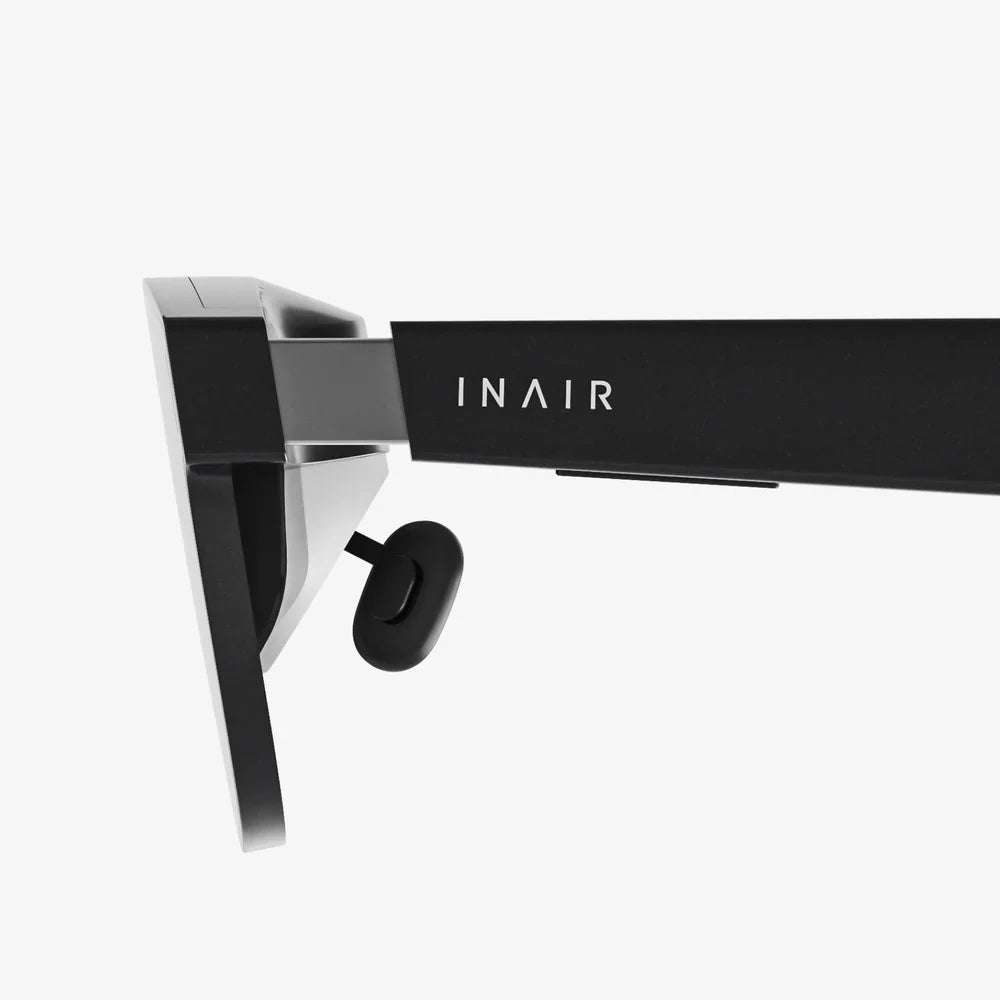
You’ve just unboxed your sleek new portal to other worlds, a device that promises to blend the digital and physical into a seamless tapestry of experience. Its lenses are pristine, its frame is flawless. But as you hold it up to the light, a nagging thought emerges: how do you keep it that way? The answer, and the first line of defense for your significant investment, lies in a component often overlooked until it’s too late—the XR glass cover.
Beyond a Simple Screen Protector: Defining the XR Glass Cover
To call an XR glass cover a mere 'screen protector' is a profound understatement. While a traditional screen protector for a smartphone is a largely two-dimensional shield, the cover for an Extended Reality device—encompassing Virtual Reality (VR), Augmented Reality (AR), and Mixed Reality (MR)—is a complex, often curved, optical component. It is a guardian that sits directly over the most critical part of the device: the optical lens assembly through which you perceive the entire digital universe.
Its primary function is multifaceted. Firstly, it acts as a sacrificial barrier, taking the brunt of physical impacts, scratches from accidental contact, and the daily wear-and-tear of handling. A scratch on the cover is a replaceable nuisance; a scratch on the device's native lenses is a catastrophic and often costly repair. Secondly, it serves as a hygiene layer, protecting the internal optics from skin oils, sweat, dust, and makeup, which can degrade performance and clarity over time.
The Anatomy of Protection: Materials and Engineering
The composition of a high-quality XR glass cover is a testament to material science. The substrate is typically a specially formulated tempered glass, chemically treated to enhance its strength. This process involves heating the glass to extreme temperatures and then rapidly cooling it, creating a surface that is significantly more resistant to impacts and pressure than standard glass.
Beyond the base material, advanced coatings are applied to serve specific purposes:
- Anti-Reflective (AR) Coating: This is arguably as crucial as impact resistance. Internal reflections, or 'god rays,' within the optical stack can severely break immersion. A high-quality AR coating on the cover glass mitigates these reflections, ensuring a clearer, more contrast-rich image by minimizing stray light.
- Oleophobic Coating: This oil-repelling layer makes the surface resistant to fingerprints and smudges, making it easier to clean and maintain a clear view.
- Hydrophobic Coating: Similar to oleophobic, this coating causes water to bead up and roll off the surface, protecting against moisture and making cleaning simpler.
The engineering also accounts for precise cutouts. Unlike a flat rectangle, an XR cover must be meticulously shaped to fit the unique contours of the device's front-facing sensors, cameras, and positional trackers without obstructing their function. Any misalignment can disrupt the delicate passthrough AR or inside-out tracking capabilities.
Preserving the Pixel-Perfect Illusion: Optical Clarity is Paramount
The single greatest sin an XR glass cover can commit is to degrade the visual fidelity of the experience. Manufacturers spend millions perfecting the optics inside the headset to minimize distortion, maximize field of view, and deliver a sharp image. A subpar cover can undo all that effort instantly.
Key optical properties a premium cover must maintain include:
- High Light Transmittance: The cover must allow as much light as possible to pass through. Any reduction in transmittance forces the displays to work harder, potentially dimming the image and affecting color vibrancy. Premium covers boast transmittance rates of 99% or higher.
- Minimal Distortion: The glass must be perfectly uniform and flat (or curved to a precise specification). Any warping or imperfection will act like a lens itself, bending light and creating blurring or a 'funhouse mirror' effect that can induce nausea.
- Precision Thickness: The cover's thickness must be engineered to maintain the exact focal distance designed by the headset's original equipment manufacturer (OEM). A cover that is too thick can subtly shift the focal plane, causing eye strain as the user's eyes struggle to accommodate.
The Invisible Guardian: Impact on Tracking and Sensors
Modern XR devices are a symphony of sensors. Cameras track your controllers and the environment, infrared projectors map the room, and LiDAR scanners measure depth. Many of these sensors operate on wavelengths of light invisible to the human eye.
A low-quality cover that is not optically neutral across the entire light spectrum can act as a filter, blocking or distorting the infrared or ultraviolet light these sensors rely on. The result? 'Controller drift,' where your virtual hands jitter or float away; loss of positional tracking, causing the world to stutter; or complete failure of passthrough features. A high-fidelity cover is engineered to be transparent to these critical wavelengths, ensuring the device's external vision remains as sharp as your internal one.
Installation: A Ritual of Precision
Applying an XR glass cover is a procedure that demands more care than slapping a film on a phone screen. The process typically involves:
- Immaculate Cleaning: Every single speck of dust on the native lens will be permanently visible once the cover is applied. The included microfiber cloths and lint-free wipes are used in a dust-free environment to achieve a perfect clean.
- Perfect Alignment: Using an application frame or a steady hand, the cover must be aligned perfectly with the device's contours. A misaligned cover can obstruct sensors and create uncomfortable pressure points on the face.
- Bubble-Free Adhesion: The adhesive layer is designed to be applied once. It uses a mechanism that allows bubbles to be squeezed out easily, but there are no second chances. The process requires patience and a methodical approach.
This ritual, while seemingly tedious, is the final step in ensuring the cover becomes an invisible, integrated part of the device rather than a noticeable add-on.
A Worthwhile Investment in Longevity and Experience
Given the complexity and precision required, a premium XR glass cover is not an insignificant purchase. However, when weighed against the alternative—the cost of a professional repair for a scratched lens, which can often run into hundreds of dollars and require shipping the device away for weeks—it is one of the most cost-effective accessories available.
It is an insurance policy that pays dividends daily in peace of mind. It allows you to share your device with friends and family without anxiety, to place it on a surface without first performing a microscopic inspection for dust, and to immerse yourself fully in the experience without the nagging worry of damaging your hardware. It protects not just the physical device, but the integrity of the immersive experience itself.
Imagine a frantic moment: your headset slips from your grip, tumbling toward the hard floor in what feels like slow motion. Your heart sinks. You scoop it up, dreading the spiderweb crack across the lens that will forever mar your view of the metaverse. But instead, you find only a small, superficial scuff on the replaceable cover. The relief is palpable. That moment of saved heartache and financial pain is the true value of this unassuming piece of engineered glass. It’s the barrier between a minor mishap and a major catastrophe, ensuring your window into other realities remains crystal clear and utterly breathtaking for years to come.
Share:
What Is Glass AI: The Transparent Future of Artificial Intelligence
Virtual Reality 3D Glasses for PC: Your Portal to Immersive Digital Worlds