


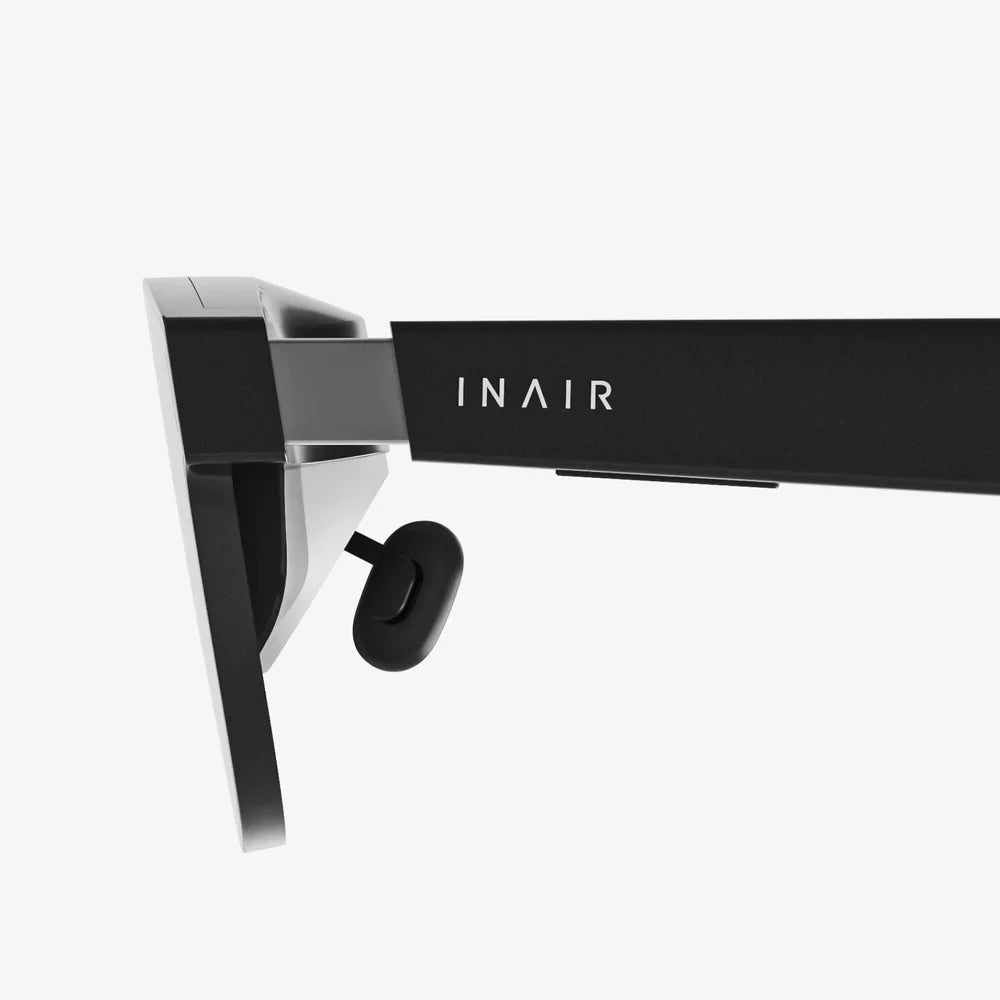
Imagine a world where information doesn’t live on a screen in your hand but is elegantly superimposed onto the very fabric of your reality. The directions to your destination float just above the road, the history of a centuries-old building is displayed beside it as you walk past, and a colleague from across the globe appears as a holographic presence in your living room, pointing to a 3D model you’re both designing. This is the breathtaking promise of AR glass technology, a transformative innovation poised to redefine our relationship with computing, information, and each other. It’s not just an upgrade to a device; it’s a gateway to an enriched layer of existence, and it’s closer to mainstream adoption than ever before.
The Foundational Principles: How AR Glass Technology Creates Magic
At its core, AR glass technology is an elegant solution to a complex problem: how to seamlessly blend computer-generated imagery with the user’s unaltered view of the real world. This magic is achieved through a sophisticated interplay of hardware and software components, each playing a critical role in creating a convincing and interactive experience.
Optical Engine: The Heart of the Experience
The most crucial component within any AR glass system is its optical engine. This is the mechanism responsible for generating the digital images and projecting them into the user’s eye. Unlike virtual reality, which blocks out the physical world, AR requires a transparent display. The dominant technologies achieving this are:
- Waveguide Displays: This is the most prevalent technology in modern, sleek AR glasses. It involves in-coupling digital light into a thin, transparent piece of glass or plastic (the waveguide). This light is then propagated through the material using principles of total internal reflection before being out-coupled towards the user’s eye. Waveguides allow for a compact form factor, as the projection system can be mounted on the temple of the glasses, directing light into the clear lens.
- Birdbath Optics: This design uses a beamsplitter, often shaped like a birdbath, to reflect the image from a micro-display into the user’s eye while still allowing ambient light to pass through. While often yielding a brighter and wider field of view, this method can result in a bulkier design.
- Retinal Projection: A more experimental approach, retinal projection systems aim to scan low-power laser light directly onto the user’s retina. This can create images that appear incredibly sharp and in focus regardless of the user’s eyesight, but it presents significant engineering and safety challenges.
Sensing the World: Cameras, Sensors, and SLAM
For digital content to interact convincingly with the real world, the AR system must understand its environment. This is accomplished through a suite of sensors:
- Cameras: Multiple cameras work in tandem for different purposes. Monochrome or RGB cameras capture the environment for object recognition, while depth-sensing cameras (like time-of-flight sensors) map the geometry of the space, understanding the distance to surfaces and objects.
- Inertial Measurement Units (IMUs): These sensors, including accelerometers and gyroscopes, track the precise movement and rotation of the user’s head. This allows the digital content to remain locked in place even as the user moves.
- Simultaneous Localization and Mapping (SLAM): This is the software magic that fuses all the sensor data. SLAM algorithms, in real-time, construct a map of the unknown environment while simultaneously tracking the user’s position within that map. This is what allows a virtual character to sit convincingly on your real-world sofa.
Processing Power and Connectivity
The immense data from these sensors requires significant processing power to run the SLAM algorithms, render complex 3D graphics, and handle AI tasks like voice and gesture recognition. This processing can be handled on-device with specialized chipsets or offloaded to a connected smartphone or even cloud servers via high-speed wireless connections like 5G, which offers the low latency necessary for a seamless experience.
Beyond Novelty: The Transformative Applications of AR Glasses
The true power of AR glass technology is revealed not in tech demos but in its practical, problem-solving applications across countless industries. It is moving from a consumer entertainment gadget to an essential enterprise tool and a future societal platform.
Revolutionizing Enterprise and Industrial Work
This is where AR glasses are currently having the most significant impact, driving efficiency, improving safety, and reducing errors.
- Manufacturing and Assembly: Technicians on the factory floor can see digital work instructions overlaid directly on the machinery they are repairing. They can access schematics hands-free, receive remote expert guidance with annotations they see in their field of view, and perform complex quality assurance checks with digital overlays highlighting areas of interest.
- Field Service and Maintenance: A engineer repairing a complex piece of equipment in a remote location can be guided by an expert thousands of miles away. The expert can see what the engineer sees and draw arrows or circles directly into their visual space, drastically reducing downtime and travel costs.
- Logistics and Warehousing: Warehouse workers equipped with AR glasses can have the most efficient picking routes displayed in their vision, with digital arrows guiding them through aisles. Items can be highlighted on shelves, and inventory data can be visualized instantly, dramatically speeding up order fulfillment.
- Healthcare and Surgery: Medical students can learn anatomy by examining detailed, interactive 3D holograms of the human body. Surgeons can have vital patient statistics, ultrasound data, or pre-operative plans projected within their line of sight during procedures, allowing them to maintain focus without looking away at a screen.
Redefining Consumer Experiences and Social Interaction
While the enterprise leads, the consumer future is incredibly compelling, promising to change how we learn, play, and connect.
- Navigation and Contextual Information: Walking through a new city, users could see historical facts pop up next to landmarks, get translated subtitles over street signs, and have directions to a restaurant appear as a glowing path on the sidewalk in front of them.
- Immersive Learning and Training: Imagine learning to play the piano by seeing digital keys light up on your actual keyboard or understanding complex astronomical concepts by having a model of the solar system rotate in the middle of your room. AR turns any space into an interactive classroom.
- Social Connection and Telepresence: The concept of a video call could evolve into a holographic presence, where remote participants feel as if they are sitting in the same room, able to interact with shared 3D objects. This could revolutionize remote work collaboration and personal connections.
- Gaming and Entertainment: Games will burst out of the television and into the user’s living environment, transforming tables into battlefields and walls into puzzle interfaces. This creates a shared, physically active form of entertainment that blends the real and the virtual.
Navigating the Obstacles: Challenges on the Path to Ubiquity
Despite its immense potential, AR glass technology must overcome significant hurdles before it can achieve widespread, all-day adoption.
The Form Factor Conundrum
For consumers to wear AR glasses daily, they must be socially acceptable, comfortable, and aesthetically pleasing. Current technology often forces a trade-off between performance and size. A high field of view, bright displays, and powerful compute modules generate heat and require larger batteries, leading to bulkier designs. The holy grail is a pair of glasses that look indistinguishable from regular eyewear but pack the power of a high-end computer—a goal that requires breakthroughs in materials science, battery technology, and miniaturization.
The Battery Life Barrier
Powering high-resolution displays, multiple sensors, and constant wireless data processing is incredibly energy-intensive. Achieving all-day battery life without resorting to a bulky, external battery pack is a major engineering challenge. Advancements in low-power chipsets, more efficient display technologies, and innovative battery chemistries are critical to solving this problem.
The User Interface Paradigm
How do you interact with an interface that floats in the air around you? The clumsy solutions of today—handheld controllers or basic voice commands—are not sufficient. The future lies in a combination of intuitive modalities: advanced voice control that understands natural language, subtle hand and finger gestures that feel natural and private, and ultimately, neural interfaces that respond to intention. Developing a UI that is powerful yet effortless is key to adoption.
The Privacy and Ethical Imperative
AR glasses, with their always-on cameras and microphones, represent a profound privacy challenge. The potential for constant, passive recording of people and environments raises serious ethical and legal questions. Who owns the data collected? How is it stored and used? Robust, transparent, and user-centric privacy frameworks must be built directly into the hardware and software. Features like obvious recording indicators, user-controlled data permissions, and on-device processing for sensitive information are non-negotiable for building public trust.
The Future Vision: A World Augmented
The trajectory of AR glass technology points toward a future where it becomes as ubiquitous and indispensable as the smartphone is today. We are moving toward a contextually aware, ambient computing environment where information is available precisely when and where it is needed, without the need to look down at a device. This "digital sixth sense" will augment human capability, making us more knowledgeable, efficient, and connected to the data that surrounds us. The distinction between accessing the internet and being present in the world will blur, then vanish entirely.
The journey from clunky prototype to a seamless pair of everyday glasses is still underway, but the pace of innovation is staggering. As the technology matures, overcoming hurdles of design, power, and interaction, it will cease to be a piece of technology we think about and will instead become a transparent lens through which we more deeply experience and understand our reality. The potential to enhance every facet of human endeavor—from the way we work and learn to the way we play and connect—is not just a promise for the distant future; it is a reality being built today. The age of staring into a palm-sized rectangle is drawing to a close, making way for a world where our entire field of view becomes a dynamic, intelligent, and interactive canvas.
Share:
What Smart Glasses Display Real-Time Subtitles for People Who Are Hard of Hearing
Wireless AR Glass: The Untethered Future of Reality is Here