


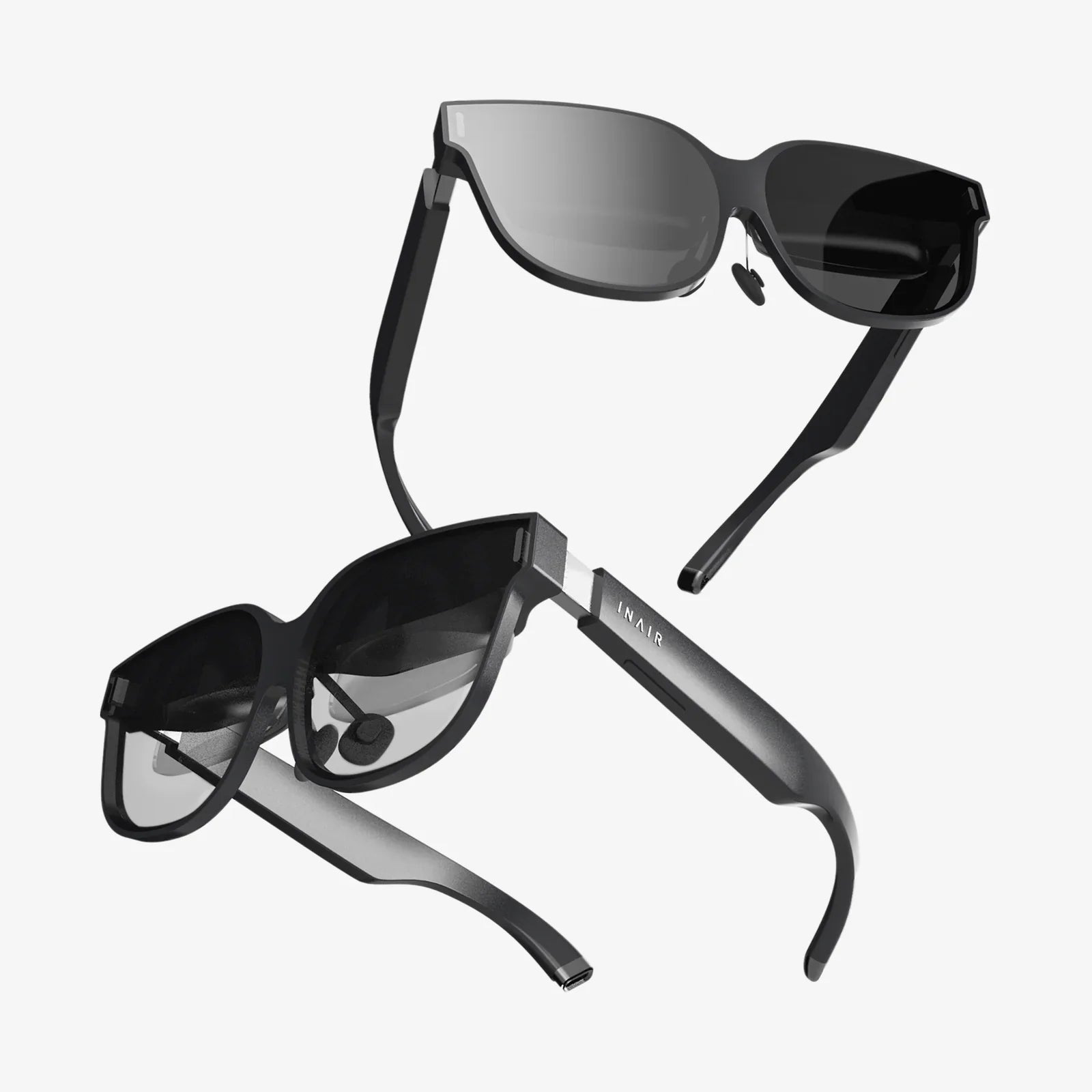
AR glasses as a standalone device are quietly turning into the most disruptive technology you are probably not paying enough attention to. While phones still dominate our digital lives, a new wave of lightweight, self-contained augmented reality headsets is preparing to move your screen from your pocket to your field of view. This shift is not just about cool visuals; it is about redefining how you access information, interact with the world, and even think about what a “computer” is.
For years, augmented reality felt like a futuristic promise: clunky headsets, limited apps, and experiences that were more novelty than necessity. That is changing fast. Advances in processors, displays, sensors, and battery technology are converging to make AR glasses as a standalone device genuinely practical. They no longer need to be tethered to a phone or a PC, and that independence is the key that unlocks their potential as the next major computing platform.
The Core Idea Behind AR Glasses as a Standalone Device
At their simplest, AR glasses overlay digital content onto your view of the real world. When they operate as standalone devices, they do not rely on external hardware to provide processing, connectivity, or power. Everything is built into the glasses themselves.
This independence matters because it changes how and where you can use them. Instead of thinking of AR as a feature of another device, you can think of the glasses as the primary device. They become the place where your apps run, where your notifications appear, and where your digital and physical worlds blend.
Standalone AR glasses typically integrate:
- On-board processors to handle graphics, AI, and sensor fusion
- Integrated displays embedded in lenses or optics that project images into your eyes
- Cameras and depth sensors to map the environment and track your position
- Wireless connectivity for cloud access, updates, and communication
- Batteries built into the frame or arms of the glasses
- Input methods such as voice, gesture, touch, or eye tracking
Because everything is self-contained, AR glasses as a standalone device can function like a wearable computer that is always available, always aware of your surroundings, and always ready to provide context-aware information.
Why Standalone Matters: From Accessory to Primary Device
There is a big difference between AR that depends on another device and AR glasses as a standalone device. When glasses are just an accessory to a phone or PC, they are limited by the capabilities, battery, and connectivity of that external device. They also feel like an add-on, something you use occasionally.
Standalone AR glasses, by contrast, can become the center of your digital life:
- Always-on computing: Information can appear whenever you need it, without taking out a phone.
- Hands-free interaction: You can work, navigate, or communicate while using your hands for other tasks.
- Contextual awareness: Because they see what you see, they can adapt content to your environment.
- Reduced friction: No cables, no docks, no pairing rituals; you just put them on and go.
This shift mirrors earlier transitions in computing: from mainframes to personal computers, from PCs to smartphones, and now from smartphones to spatial computing. AR glasses as a standalone device could be the next step in that chain.
Key Technologies Powering Standalone AR Glasses
The move to standalone AR is only possible because several technologies have matured at the same time. Each of these pieces plays a critical role in making AR glasses practical, comfortable, and useful.
On-Device Processing and Edge AI
Standalone AR glasses must process large amounts of data in real time: camera feeds, sensor data, voice commands, graphics rendering, and more. Modern low-power processors and dedicated AI accelerators make this possible without generating too much heat or draining the battery instantly.
Edge AI is especially important. Instead of sending all data to the cloud for analysis, AR glasses can run many AI tasks locally:
- Recognizing objects, text, and faces in the environment
- Tracking head and hand movements
- Understanding voice commands and natural language
- Predicting user intent to reduce latency
This local processing improves responsiveness and privacy, both critical for a device that sits on your face and sees everything you see.
Optics and Display Systems
The display is the heart of AR glasses. It must be bright enough to compete with daylight, sharp enough to be readable, and subtle enough that the glasses do not look like a science fiction prop. Several display technologies are used or explored:
- Waveguide optics to route light from a small projector into your eyes
- Micro-LED and micro-OLED panels for high brightness and contrast
- Holographic or diffractive elements to create lightweight, transparent lenses
Standalone AR glasses must balance field of view, resolution, and form factor. A wide field of view feels more immersive, but requires more complex optics. High resolution improves readability, but demands more processing power and battery capacity. Designers are constantly trading off these variables to reach a sweet spot that feels natural and practical.
Sensors, Tracking, and Environmental Understanding
To overlay digital content accurately on the real world, AR glasses must understand the physical space around you. That requires multiple sensors working together:
- Inertial measurement units for head tracking and orientation
- Depth sensors or stereo cameras to measure distance and build a 3D map
- RGB cameras to capture the environment and support computer vision
- Eye tracking to know where you are looking
These sensors feed into simultaneous localization and mapping algorithms, which allow the glasses to understand where they are in space and how the environment is structured. This is what makes it possible for virtual objects to “stick” to real surfaces instead of floating awkwardly.
Connectivity and Cloud Integration
Even though AR glasses as a standalone device can do a lot on their own, they still benefit from being connected. High-speed wireless links allow them to offload heavy computation to the cloud, stream content, and stay synced with your other devices.
Cloud services can provide:
- Real-time translation, transcription, and language understanding
- Access to large-scale 3D maps of cities and indoor spaces
- Shared AR experiences with other users in the same location
- Storage and sync for photos, notes, and work documents
The trick is to balance cloud reliance with local capabilities so that the glasses remain responsive even when connectivity is weak.
Battery and Power Management
Power is one of the main constraints on AR glasses. They must run displays, cameras, processors, and radios in a small frame without becoming heavy or hot. This forces designers to optimize every part of the system:
- Low-power processors and specialized chips for graphics and AI
- Efficient displays that waste as little energy as possible
- Smart power management that turns sensors on and off as needed
- Battery placement that balances weight and comfort
Early generations of AR glasses as a standalone device may only offer a few hours of heavy use, but improvements in battery chemistry and power efficiency are gradually extending that window, especially for mixed-use scenarios throughout a day.
How Standalone AR Glasses Could Transform Work
The workplace is one of the most promising arenas for AR glasses as a standalone device. Their hands-free nature and spatial awareness make them ideal for tasks where you need information without breaking your flow.
Field Service, Maintenance, and Industrial Work
Imagine a technician servicing complex equipment while wearing AR glasses. Instead of flipping through manuals or calling a remote expert, they see step-by-step instructions overlaid directly onto the machine. The glasses can highlight the exact component to inspect, show torque values, or warn of unsafe conditions.
Standalone AR glasses can:
- Provide visual guidance for repairs and installations
- Record work for documentation and training
- Enable remote experts to see what the worker sees and annotate the view
- Reduce errors by validating steps in real time
Because the glasses are self-contained, workers can use them in environments where carrying a laptop or handling a phone would be impractical or unsafe.
Remote Collaboration and Virtual Presence
Video calls could evolve into spatial collaboration sessions. With AR glasses as a standalone device, you might join a meeting where colleagues appear as life-sized avatars, or where 3D models of products float in the room for everyone to inspect.
Key benefits include:
- More natural eye contact and body language compared to flat screens
- Shared reference points, such as virtual whiteboards or models
- Reduced travel for site visits when remote participants can virtually “stand” in the same space
Standalone operation means you could join such sessions from almost anywhere, without needing a full workstation.
Product Design, Prototyping, and Visualization
Designers and engineers can use AR glasses to visualize 3D models at full scale in real spaces. Instead of relying on screens or physical prototypes, they can walk around a virtual object, inspect details, and test how it fits into an environment.
AR glasses as a standalone device make it easier to do this on-site, whether in a factory, a construction area, or a client’s office. The ability to bring digital prototypes into the real world accelerates iteration and reduces costly mistakes.
Everyday Life with Standalone AR Glasses
Beyond work, AR glasses as a standalone device could quietly reshape everyday routines. Many of the small interactions you currently have with your phone could migrate into your field of view.
Navigation and Exploration
Walking through a new city, you could see subtle arrows on the ground guiding your path, labels hovering over landmarks, and real-time transit information floating near bus stops. Instead of constantly checking a map, you simply follow cues that blend into your surroundings.
For drivers or cyclists, AR glasses might provide lane-level guidance, hazard warnings, or speed information without requiring a glance down at a dashboard or phone. As a standalone device, the glasses can keep doing this even when your phone is out of battery or out of reach.
Communication and Social Interaction
Notifications could become less intrusive and more context-aware. Instead of buzzing your pocket, messages might appear discreetly in the corner of your vision when you are not engaged in conversation. During a meeting or social event, the glasses could automatically silence non-critical alerts.
Some people imagine features like real-time captions for in-person conversations, helpful for those with hearing difficulties or for communication across languages. AR glasses as a standalone device can process audio and display text without relying on another gadget, making accessibility features more seamless.
Entertainment and Media
Standalone AR glasses open up new ways to consume media. You could watch a movie on a virtual screen that appears to float in front of you, read news articles pinned to a wall in your living room, or play games where characters and objects interact with your furniture.
Location-based experiences become richer as well. A walk in the park could turn into an interactive story, with characters appearing along the path. Historical sites might offer layered reconstructions that show how a building looked centuries ago, all without needing to hold up a phone.
Education, Training, and Skill Building
Education is another domain where AR glasses as a standalone device could have deep impact. By blending digital content with the physical world, they can make learning more immersive and practical.
Interactive Lessons and Visual Explanations
Complex concepts become easier to grasp when you can see them in 3D. Imagine students studying anatomy with virtual organs floating in front of them, or physics students visualizing forces and fields in real space. These experiences can be personalized, with interactive elements that respond to questions and exploration.
Because the glasses are standalone, students do not need access to powerful computers to benefit. A classroom set of AR glasses could deliver rich simulations without additional hardware.
On-the-Job Training and Skill Transfer
Instead of learning from manuals or passive videos, trainees can practice tasks with guidance overlaid on real equipment. AR glasses can highlight the next step, warn about mistakes, and adapt the difficulty level as skills improve.
This approach is particularly valuable in fields where hands-on experience is critical but mistakes are costly or dangerous. Standalone AR glasses can bring training into real environments without requiring instructors to be present at all times.
Healthcare and Wellness Applications
Healthcare stands to benefit significantly from AR glasses as a standalone device, from clinical settings to personal wellness.
Clinical Use and Surgery Assistance
In operating rooms, AR glasses could overlay critical information on the surgeon’s view: patient vitals, imaging data, or suggested incision lines. For procedures outside the operating room, clinicians might see vein maps, dosage guidelines, or checklists without turning away from the patient.
Because the glasses are self-contained, they can be used in environments where space, mobility, and sterility are concerns. They can also assist in telemedicine, allowing remote specialists to see what a local clinician sees and provide guidance.
Rehabilitation and Personal Health
For rehabilitation, AR glasses can turn exercises into interactive tasks, providing real-time feedback on posture, movement, and progress. Patients can perform routines at home while the glasses track compliance and performance.
In everyday wellness, AR glasses as a standalone device might offer posture reminders, subtle prompts to stand or stretch, or guided meditation experiences that blend with your surroundings. The key advantage is that these interventions can be integrated into daily life rather than confined to a screen or a scheduled session.
Design Challenges and Human Factors
Despite their promise, AR glasses as a standalone device face significant challenges before they can become mainstream. Many of these are not purely technical; they involve comfort, aesthetics, and social norms.
Comfort, Weight, and Ergonomics
People will only wear AR glasses for long periods if they are comfortable and unobtrusive. That means:
- Keeping weight low and distributing it evenly across the nose and ears
- Managing heat so that the glasses do not feel warm against the skin
- Ensuring that the optics do not cause eye strain or motion sickness
- Accommodating prescription lenses or vision correction
Designers must integrate batteries, processors, and sensors into a form factor that feels as close as possible to regular eyewear. This is a tough constraint that shapes every engineering decision.
Style and Social Acceptance
Even if AR glasses are technically impressive, people will hesitate to wear them if they look awkward or draw unwanted attention. Discreet, stylish designs are crucial for everyday adoption.
There is also a social dimension: how do others feel when someone near them is wearing AR glasses? Are they being recorded? Is the wearer distracted? Clear indicators, norms, and etiquette will need to evolve, just as they did with smartphones and headphones.
User Interface and Interaction
Traditional interfaces based on keyboards, mice, and touchscreens do not translate directly to AR glasses. New interaction paradigms are emerging:
- Voice commands for quick actions and information retrieval
- Gesture controls for manipulating virtual objects
- Eye tracking to select items by looking at them
- Minimalist menus that do not clutter the field of view
The challenge is to create interfaces that are powerful yet unobtrusive, allowing users to stay engaged with the real world while still accessing digital content when needed.
Privacy, Security, and Ethical Considerations
AR glasses as a standalone device raise important questions about privacy and ethics. Because they can see and hear what you do, and because they can potentially recognize people and places, their misuse could be harmful.
Data Collection and Consent
When AR glasses capture video or audio in public spaces, bystanders may not know they are being recorded. Regulations and social norms will need to address:
- What data can be collected and stored
- How long data is retained and who can access it
- How to signal when recording is active
- How to handle facial recognition or identity-related features
Responsible design might include visible indicators, restrictions on certain features, and strong on-device processing to minimize data sent to the cloud.
Security and Device Integrity
Because AR glasses can overlay information on your reality, compromised devices could be dangerous. Imagine navigation cues that direct you the wrong way, or malicious prompts that mimic trusted notifications.
Strong security measures are essential:
- Secure boot and firmware integrity checks
- Encrypted communication with cloud services
- Permission systems for apps that control access to sensors
- Clear indicators when critical functions like navigation are active
Users must be able to trust that what they see through their glasses has not been tampered with.
The Road Ahead for Standalone AR Glasses
AR glasses as a standalone device are still in the early stages of their evolution, but the trajectory is clear. Each generation brings better displays, longer battery life, more powerful processors, and more refined designs. At the same time, software ecosystems are expanding, with developers exploring new ways to use spatial computing.
Over the next decade, several trends are likely:
- Gradual integration into daily life: Early adopters in industry and specialized fields will pave the way for broader consumer use.
- Hybrid roles with smartphones: For a time, AR glasses may complement phones rather than replace them, sharing data and workloads.
- Richer spatial apps: From navigation and collaboration to gaming and creativity, new applications will emerge that make sense only in AR.
- Improved comfort and style: As components shrink, glasses will look and feel more like regular eyewear.
The most interesting part is that many of the most transformative uses of AR glasses as a standalone device probably have not been invented yet. Just as early smartphones could not predict the rise of ride-sharing or social media as we know it, today’s AR concepts only hint at what is possible.
If you are curious about where computing is headed, keep your eyes on AR glasses as a standalone device. They are not just another gadget; they are a new lens on reality itself. The moment they become light enough, subtle enough, and useful enough, they will stop being a niche technology and start becoming something you reach for every morning. When that happens, the line between the digital and physical worlds will blur in ways that make today’s screens feel surprisingly flat.
Share:
Stable Virtual Monitor Mastery for Seamless Multitasking and Productivity
Headset Screen Looks Fuzzy: Causes, Fixes, And Clear-View Strategies