


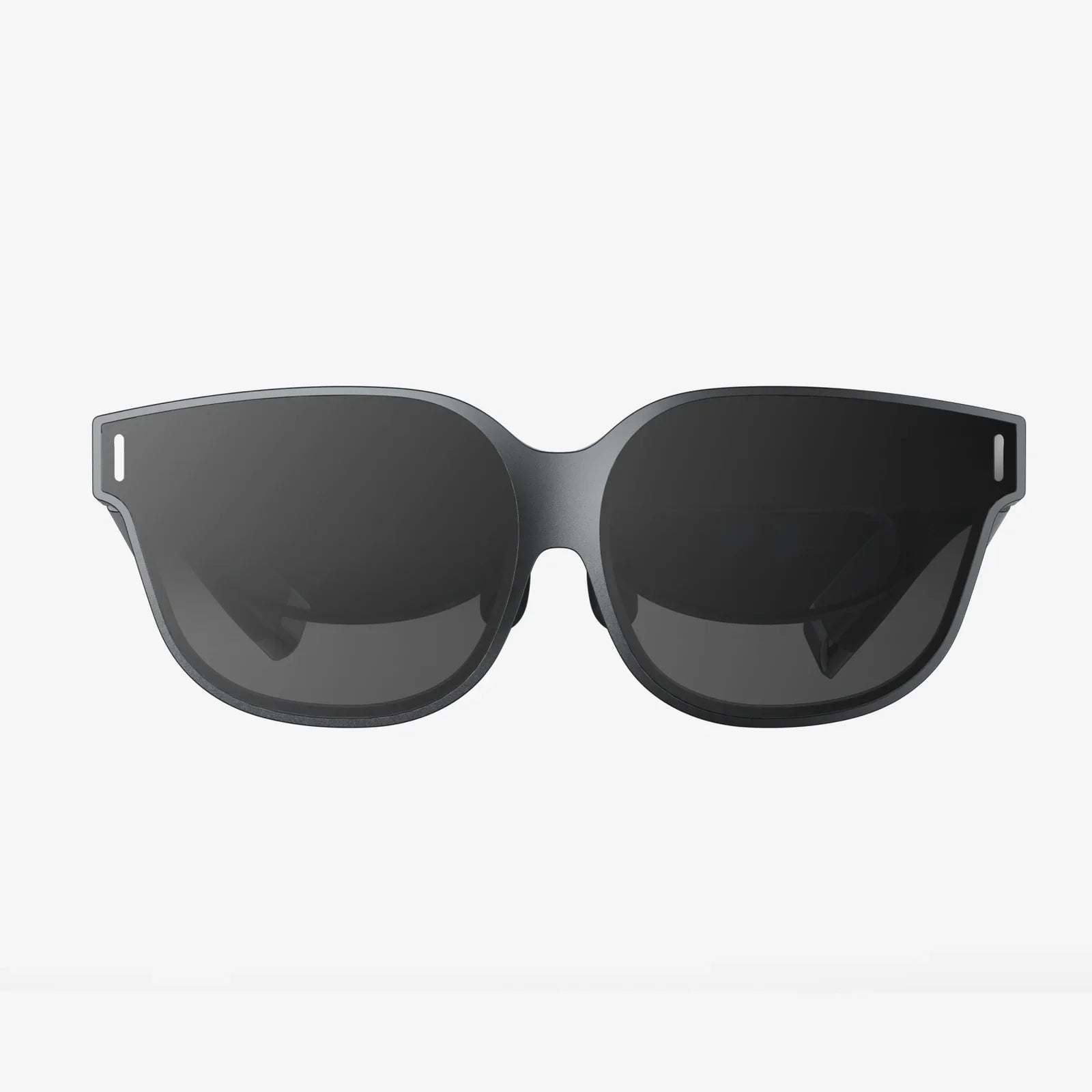
Imagine walking through the ancient sandstone corridors of the Royal Exhibition Building in Melbourne, and with a simple glance, seeing them restored to their 19th-century grandeur, complete with historical figures and exhibits materialising before your eyes. Or picture a surgeon in Perth receiving real-time, hands-free guidance from a specialist in Sydney during a complex procedure. This isn't a distant science fiction fantasy; this is the imminent future being unlocked by Augmented Reality (AR) glasses, a technological wave that is quietly building momentum across the sun-drenched landscapes and bustling cities of Australia. For Australian consumers, professionals, and innovators, the question is no longer if this technology will become mainstream, but how and when it will reshape their world.
The Foundation: Understanding Augmented Reality Glasses
Before diving into the Australian context, it's crucial to understand what AR glasses truly are. Unlike Virtual Reality (VR) headsets, which transport users to a completely digital environment, AR glasses overlay digital information—images, text, data, and 3D models—onto the user's view of the real world. This seamless blending of the physical and digital realms is what makes the technology so powerful and versatile.
The core components of most AR glasses include:
- Optical Systems: Using either optical waveguides or micro-displays projected onto transparent lenses, these systems beam imagery directly into the user's eyes while allowing them to see their surroundings.
- Sensors: A suite of cameras, accelerometers, gyroscopes, and depth sensors constantly map the environment, understanding surfaces, objects, and the user's position in space.
- Processing Unit: Either built into the frames or connected via a wired/wireless link to a powerful computing device, this unit processes sensor data and renders the digital content.
- Connectivity: 5G and Wi-Fi 6 are critical for streaming high-fidelity content and enabling real-time collaboration without lag.
This technology has evolved from clunky, expensive prototypes into increasingly sleek, wearable, and accessible devices, setting the stage for widespread adoption.
Beyond the Hype: Practical Applications Taking Root in Australia
The true potential of AR glasses is realised not in abstract concepts, but in tangible, problem-solving applications. Across Australia, pioneering industries are already deploying this technology to enhance safety, improve efficiency, and unlock new possibilities.
Transforming Australian Enterprise and Industry
Australia's robust mining, construction, and manufacturing sectors are at the forefront of AR adoption. In the harsh, remote environments of Western Australian mines or Queensland's gas fields, AR glasses provide field technicians with hands-free access to complex machinery schematics, safety protocols, and real-time data dashboards. A worker performing maintenance on a conveyor belt can see torque specifications and step-by-step instructions overlaid directly on the equipment, reducing errors and drastically improving training times for new recruits.
In architecture and construction, firms in Sydney and Melbourne are using AR glasses to visualise 3D BIM (Building Information Modelling) designs directly onto construction sites. Architects can walk through a skeletal building frame and see exactly where every electrical conduit, plumbing pipe, and structural beam should be placed, identifying clashes and issues long before they become costly on-site problems.
Revolutionising Healthcare and Medicine
The Australian healthcare system, with its vast distances and concentration of specialist expertise in major cities, stands to benefit enormously. AR glasses enable telemedicine to evolve from a simple video call into an immersive, collaborative experience. A rural GP wearing glasses can be guided by a specialist through a patient examination, with annotations and vital signs streamed directly into their field of view.
Medical training is also being transformed. Students at universities like the University of Melbourne or UNSW Sydney can use AR to practice procedures on hyper-realistic digital overlays, gaining valuable experience without risk to patients. Surgeons can have patient scans, such as MRI or CT data, projected onto their visual field during operations, effectively giving them "X-ray vision" to navigate critical anatomy with unparalleled precision.
Redefining Education and Remote Collaboration
In the classroom, AR glasses can turn abstract concepts into interactive, 3D experiences. Imagine history students exploring a holographic model of ancient Rome or biology students dissecting a virtual frog, all while sitting in a classroom in Brisbane. This immersive learning style caters to different learning methods and can significantly improve engagement and retention.
Furthermore, for a country as geographically dispersed as Australia, AR glasses are the ultimate tool for remote collaboration. Engineers in Adelaide can virtually "beam in" to a factory floor in Newcastle, seeing what the local technician sees and drawing digital arrows and circles into their environment to provide precise guidance, saving thousands in travel costs and time.
Enhancing Tourism and Cultural Experiences
Australia's tourism industry, a critical part of the economy, is a perfect playground for AR. Visitors exploring the Sydney Opera House could see a performance from the 1970s play out on the very stage they're looking at. Tourists at Uluru could witness ancient Aboriginal dreamtime stories animated across the landscape, adding deep cultural and historical context to the majestic natural wonder. This technology offers a way to create unique, personalised, and unforgettable experiences that extend far beyond the audio guide.
The Australian AR Landscape: A Market Poised for Growth
The market for AR glasses in Australia is maturing rapidly. While still considered an emerging technology, a vibrant ecosystem of developers, distributors, and enterprise solution providers has established itself. Local tech startups are creating bespoke software solutions tailored to Australian industry needs, from agricultural applications that overlay soil moisture data for farmers to logistics apps that streamline warehouse picking and packing.
Australian consumers are also becoming more aware and receptive. Tech expos and innovation festivals regularly showcase the latest hardware, generating excitement and demystifying the technology. Availability is increasing through specialist electronics retailers and online channels, making it easier for early adopters and businesses to acquire devices. However, the market does face challenges, including the higher initial cost of capable hardware, the need for robust and ubiquitous high-speed internet (a particular issue in regional areas), and the ongoing development of a killer consumer app that moves the technology beyond gaming and novelty.
Gazing into the Future: What's Next for AR in Australia?
The AR glasses we see today are merely the precursors to the truly transformative devices on the horizon. The future points towards:
- Sleeker Design: The ultimate goal is a form factor indistinguishable from regular eyeglasses, powered by advancements in nanotechnology and battery life.
- Spatial Computing: The line between device and environment will blur entirely. Your entire world will become the interface, where you can pin digital sticky notes to your physical fridge or have a persistent virtual monitor set up in your home office.
- AI Integration: Powerful on-device artificial intelligence will act as a proactive personal assistant, analysing what you see, providing context-relevant information, and translating foreign languages in real-time as you read a menu or street sign.
For Australia, this technology could be a great equaliser, mitigating the challenges of distance and connecting regional communities to metropolitan hubs like never before. It promises to create new industries, redefine existing jobs, and unlock creative and economic potential on a national scale.
The digital frontier is no longer confined to the screens in our pockets; it is spilling out into the world around us, waiting to be interacted with, learned from, and shaped. The era of peering at a world through a small, isolated rectangle is ending, replaced by a future where information and imagination are woven directly into the fabric of our reality. For those in Australia ready to look up and see this new world, the view will be breathtaking.
Share:
AR Glasses Demo: A Firsthand Journey Into the Future of Reality
AR Glasses Demo: A Firsthand Journey Into the Future of Reality