


You slip them on, and for a moment, nothing happens. Then, a soft chime sounds in your ears, and the world before your eyes begins to transform. Icons hover gently beside a coffee mug on your desk. A virtual screen, crisp and clear, hangs in the air next to your physical monitor. A notification for your next meeting materializes as a subtle, glowing orb in the corner of your vision. This isn't science fiction; this is the palpable, breath-taking reality of a modern AR glasses demo—a portal into a future where the digital and physical realms are not just connected, but seamlessly, intelligently woven together. The experience is nothing short of magical, a glimpse into a paradigm shift that promises to redefine human-computer interaction forever.
The Threshold Moment: Stepping Into the Demo
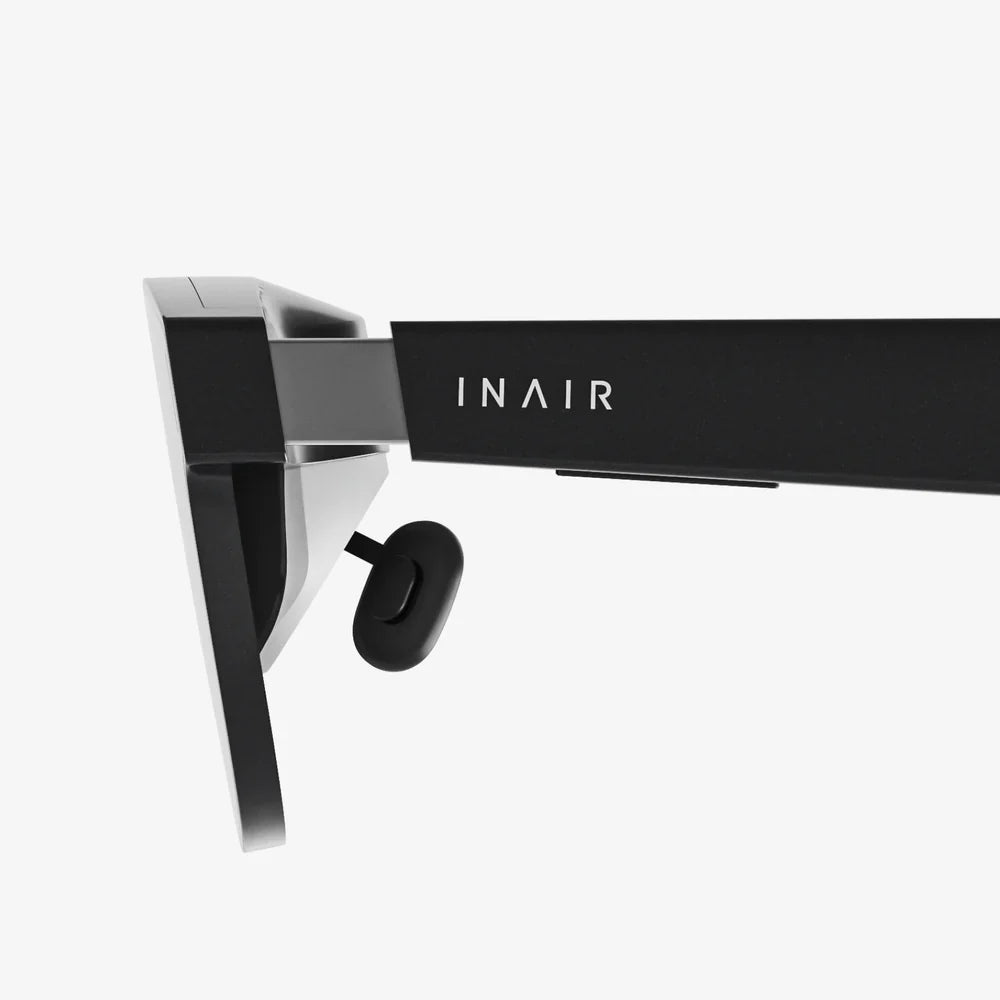
The journey begins not with a bang, but with a careful calibration. The process of starting an AR glasses demo is often an intimate one. A technician or a guided software walkthrough helps you adjust the fit—ensuring the nose pads are comfortable and the display is perfectly aligned with your pupils. There's a palpable sense of anticipation, the quiet before a storm of innovation. You're told to look around, to focus on different points in the room, allowing the glasses to map your environment through a sophisticated array of sensors and cameras hidden within the sleek frame.
This mapping process is the silent, unseen hero of the entire experience. It's what separates a gimmick from genuine augmented reality. As the glasses construct a real-time 3D model of your surroundings, you can almost feel the device getting smarter, understanding the geometry of the room, the location of surfaces, and the boundaries of your physical space. It's building a digital foundation upon which it will paint its illusions. The calibration complete, you take a deep breath. You are now ready to see the world through a new lens.
The Magic Unveiled: Core Experiences in a Modern Demo
A well-crafted AR glasses demo is a carefully orchestrated symphony of features designed to showcase the technology's potential. It's less about overwhelming the user with every possible function and more about demonstrating core competencies with flawless execution.
Spatial Computing and Persistent Anchoring
One of the first and most mind-bending feats demonstrated is the anchoring of digital objects in physical space. A virtual pet might be placed on your actual desk. You can walk around it, lean in close, and see it from every angle, perfectly locked in place. Even more impressive is the concept of persistence. In a advanced demo, you might place a virtual clock on your wall, leave the room, and return later to find it still there, keeping perfect time. This isn't just an overlay; it's the creation of a stable, hybrid reality where digital objects obey the rules of the physical world.
Information Layering and Contextual Awareness
The next stage often involves demonstrating the glasses' ability to be a contextually aware companion. Look at a plant on your desk, and its species and care instructions might gently fade into view. Glance at a complex piece of equipment, and animated repair instructions or performance metrics could overlay the device itself. This is the promise of AR made real: relevant information, presented precisely when and where you need it, eliminating the constant need to look down at a separate screen. It turns the entire world into an intuitive, interactive interface.
Immersive Entertainment and Social Connection
No demo is complete without a taste of its entertainment potential. You might be invited to play a board game that unfolds on your living room floor, with animated characters battling it out between your couch and coffee table. Or you could watch a movie on a virtual cinema screen that feels a hundred feet wide, all while sitting in your favorite armchair. Social demos are particularly powerful, showing how remote collaborators can appear as life-like avatars or holograms in your space, able to point to and manipulate shared 3D models as if they were standing right next to you. The sense of presence and shared experience is profoundly different from a standard video call.
The Technology Behind the Illusion: A Peek Under the Hood
The seamless experience of a great demo belies the immense technological complexity working behind the scenes. This is a symphony of hardware and software, each component pushing the boundaries of what's possible.
The Optical Heart: Waveguides and Micro-LEDs
At the core of the experience is the optical engine. How do you project bright, vibrant images onto clear lenses without blocking your view of the real world? The answer, in most high-end demos, lies in waveguide technology. These are incredibly thin, transparent glass or plastic plates etched with microscopic patterns. Light from tiny Micro-LED displays is injected into the edge of the waveguide and bounced along its length through a process called total internal reflection, before being finally directed into the user's eye. This creates the illusion that the images are floating out in the world itself. The precision required is astronomical, representing a monumental achievement in miniaturization and physics.
The Digital Nervous System: Sensors and Cameras
For the AR world to stay locked to the physical one, the glasses need to understand their environment in real-time. This is handled by a suite of sensors that typically include:
- Depth Sensors: Using technologies like LiDAR or structured light, these project thousands of invisible points into a room to accurately measure distances and build a 3D depth map.
- High-Resolution Cameras: These capture the world in detail, enabling features like object recognition and text scanning.
- Inertial Measurement Units (IMUs): These accelerometers and gyroscopes track the precise movement and rotation of your head with incredible speed and accuracy, ensuring the digital overlay doesn't lag or jitter as you move.
- Eye-Tracking Cameras: By monitoring where your pupils are focused, the system can enable intuitive interaction (just look at a button to select it) and also save processing power by rendering the area you're looking at in highest resolution.
The Invisible Brain: On-Device AI and Processing
All this sensor data creates a torrent of information that must be processed instantaneously. This is where powerful, miniaturized processors and dedicated AI neural processing units (NPUs) come in. They are the brain of the operation, fusing the camera feeds, sensor data, and pre-built maps to understand the scene. They identify surfaces, classify objects, and run the complex algorithms for simultaneous localization and mapping (SLAM), which allows the glasses to know their exact position in space at all times. This immense computational workload, once the domain of powerful desktop computers, is now happening on your face, a testament to the breakneck pace of innovation in mobile computing.
Beyond the Wow Factor: The Practical and Profound Implications
While the initial "wow" of a demo is powerful, the true value of AR glasses lies in their potential to solve real-world problems and create new forms of human expression.
Revolutionizing Enterprise and Workforce Training
The most immediate and impactful applications are emerging in enterprise. Imagine a field technician repairing a jet engine with animated schematics and torque specifications overlaid directly onto the components they are working on. Surgeons could have vital signs and 3D scans of a patient's anatomy visible during an operation without ever looking away from the surgical field. Architects and engineers could walk through full-scale holographic models of their designs before a single foundation is poured. The demo for these use cases isn't about games; it's about demonstrating tangible improvements in accuracy, efficiency, and safety.
Redefining Social Interaction and Remote Collaboration
AR glasses promise to tear down the limitations of geography in human connection. A demo might show a designer in Tokyo and an engineer in Munich interacting with the same prototype car as holograms, making adjustments in real-time as if they were in the same garage. Families separated by oceans could share a meal, with photorealistic avatars of loved ones sitting around the table. This spatial computing version of communication feels significantly more natural and engaging than a flat video call, fostering a genuine sense of co-presence.
The Invisible Interface and the End of the Screen?
Perhaps the most profound long-term implication is the potential for AR glasses to become the "invisible interface." The demo hints at a future where we are no longer tethered to rectangles of glass in our hands or on our desks. Information, communication, and entertainment become ambient, contextual, and integrated into the fabric of our lives. We might control our smart homes with glances and gestures, navigate a new city with arrows painted onto the sidewalk, or learn a new language by seeing subtitles appear under the lips of a person speaking to us. It's a move away from pulling a device out of our pocket to interact with it, and towards a world where technology fades into the background, enhancing our perception without demanding our primary attention.
Navigating the Challenges: The Road From Demo to Daily Driver
For all the promise shown in a controlled demo, significant hurdles remain before AR glasses can become a ubiquitous consumer product. The demo itself often exists in a carefully curated environment, masking the challenges that engineers are racing to solve.
- Form Factor and Social Acceptance: The ideal AR glasses should be indistinguishable from regular eyewear—light, stylish, and socially unobtrusive. Current technology often requires trade-offs between performance, battery life, and size. Making the technology disappear is as important a challenge as making the magic work.
- Battery Life: Powering the high-resolution displays, numerous sensors, and powerful processors is a immense drain. A full day of use on a single charge remains a holy grail, with many current prototypes lasting only a few hours under heavy use.
- The Killer App and Ecosystem: While enterprise has clear use cases, the consumer "killer app" for AR glasses is still emerging. A vibrant ecosystem of apps and experiences needs to be built to justify widespread adoption beyond the initial novelty.
- Privacy and Security: Glasses with always-on cameras and microphones understandably raise profound privacy concerns. Demos must be accompanied by clear and robust demonstrations of privacy controls—physical camera shutters, clear activity indicators, and on-device processing that ensures sensitive data never leaves the device without explicit permission.
Overcoming these challenges is the central mission of the industry. Each iteration of hardware brings us closer, making the glasses lighter, the batteries longer-lasting, and the software more intelligent and intuitive.
The memory of that first demo fades, but its impact does not. It leaves you with a lingering sensation, a subtle dissatisfaction with the "dumb" world you return to. You find yourself instinctively looking for icons that aren't there, wanting to pin a browser window to an empty wall or check the weather with a glance upward. The demo hasn't just shown you a new product; it has rewired your expectations for what is possible. It has planted a seed of a future where our reality is not something we merely observe, but something we can actively design, enhance, and interact with in ways we are only beginning to imagine. The true power of an AR glasses demo isn't in the spectacle it shows you today, but in the undeniable, inevitable future it makes you believe in tomorrow.
Share:
AR Glasses Australia: The Future of Seeing and Interacting is Here
AR Glasses Australia: The Future of Seeing and Interacting is Here