


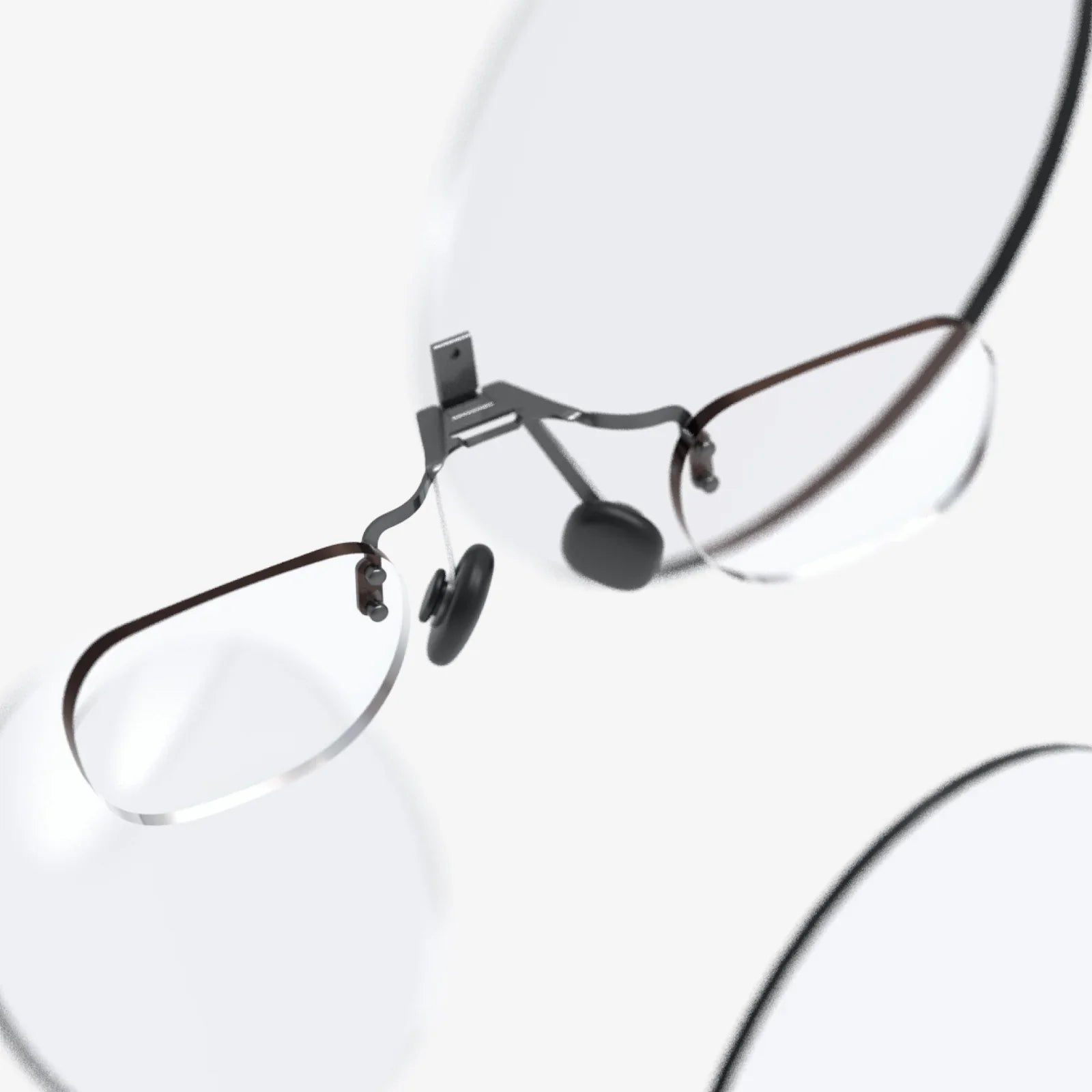
The digital and physical worlds are colliding on the factory floor, in the operating room, and across global supply chains, and it’s all happening right before our eyes. For years, the promise of augmented reality (AR) has shimmered on the horizon, a futuristic vision of information overlaid onto our reality. Today, that future is being written not in consumer gadget reviews but in the boardrooms and operational manuals of the world’s largest enterprises. A quiet but powerful revolution is underway, driven by a new generation of sophisticated AR glasses designed not for gaming, but for solving critical business challenges. The latest enterprise news points to a seismic shift where this technology is no longer a pilot project or a fancy demo; it’s becoming a core component of competitive strategy, delivering unprecedented returns on investment and redefining what’s possible in industrial productivity.
The Enterprise AR Landscape: From Novelty to Necessity
The journey of AR in the enterprise has been one of rapid maturation. Early adopters faced clunky hardware, limited field of view, battery life issues, and a lack of robust software ecosystems. The prevailing sentiment was one of curiosity rather than conviction. However, recent advancements have systematically dismantled these barriers. The current generation of enterprise-focused AR glasses boasts significant improvements in compute power, display clarity, ergonomics, and battery efficiency. More importantly, they are being built from the ground up with enterprise-grade security, manageability, and durability in mind—features that are non-negotiable for Fortune 500 IT departments.
This hardware evolution has been perfectly timed with a surge in sophisticated software platforms. These platforms allow companies to create, manage, and deploy AR experiences—often referred to as "digital work instructions" or "spatial guides"—across a global workforce without requiring extensive coding knowledge. The convergence of powerful hardware and scalable software has created a fertile ground for innovation, moving AR from a niche tool for a few forward-thinking companies to a mainstream solution with proven applications.
Transforming the Frontline Worker: The Rise of the Augmented Employee
At the heart of the enterprise AR revolution is the empowerment of the frontline worker. For decades, the knowledge and expertise of seasoned veterans remained locked in their minds or buried in thick, static PDF manuals. AR glasses are unlocking this tribal knowledge and making it instantly accessible to every employee, regardless of their experience level.
Imagine a maintenance technician facing a complex piece of machinery. Instead of fumbling through a manual or calling a remote expert, they don a pair of AR glasses. Instantly, animated arrows and holographic indicators overlay the physical equipment, guiding them step-by-step through a repair procedure. Safety warnings highlight high-voltage areas, torque specifications appear floating next to the correct bolt, and a list of required parts is visible in their periphery. This isn't a vision of the future; it's a reality being deployed today in aerospace, automotive, and energy sectors. The results are staggering: companies report up to a 30% reduction in task completion time and a 90% reduction in errors for complex assembly and maintenance tasks.
Remote Expertise: Bridging the Skills Gap Instantly
One of the most immediate and powerful use cases for enterprise AR is in remote assistance. The global skills gap and the rising cost of travel have made it increasingly difficult and expensive to get the right expert to the right location at the right time. AR glasses shatter these geographical and logistical constraints.
Through AR glasses, an on-site worker can share their first-person perspective with a senior engineer located thousands of miles away. The remote expert can then see exactly what the worker sees, annotate the live video feed with digital arrows, circles, and text, and guide their hands through the process. The expert can "see through the eyes" of the worker, effectively being teleported to the job site without ever leaving their desk. This application has proven invaluable during recent global disruptions, allowing critical infrastructure to be maintained and supported even when physical travel was impossible. It dramatically reduces mean-time-to-repair, slashes travel costs, and allows a single expert to support a vast number of field technicians across the globe.
Revolutionizing Training and Onboarding
Enterprise AR is fundamentally changing how companies train their workforce. Traditional training methods often involve expensive physical simulators, classroom learning that is disconnected from the actual work environment, and a steep on-the-job learning curve. AR creates immersive, hands-on training experiences that are both more effective and more efficient.
New employees can learn complex procedures by interacting with holographic models of equipment, practicing without risk to themselves or multi-million dollar machinery. They can receive contextual information overlaid on the actual tools they will use, reinforcing muscle memory and procedural knowledge. This "learning by doing" in an augmented environment leads to significantly higher knowledge retention and faster proficiency compared to traditional methods. For industries with high turnover or a retiring skilled workforce, AR-powered training is becoming a critical tool for capturing institutional knowledge and accelerating the development of new hires.
Logistics and Warehousing: The Vanguard of AR Adoption
Perhaps no sector has embraced enterprise AR more enthusiastically than logistics and warehousing. In these environments, speed and accuracy are directly tied to profitability. AR glasses are being used to supercharge the order picking and packing process. Instead of staring at a handheld scanner and a paper list, workers’ AR glasses visually guide them through the most efficient route in the warehouse. They display exactly which item to pick, the quantity, and the exact bin location, all hands-free. This allows workers to move faster and with both hands available, reducing walking time and eliminating errors. Major logistics firms have publicly reported productivity increases of 15% or more and near-zero error rates after implementation, making the business case for AR in this sector overwhelmingly clear.
Overcoming Implementation Hurdles
Despite the clear benefits, enterprise adoption is not without its challenges. The initial investment in hardware and software development can be significant. Success requires more than just a technology purchase; it necessitates a change management strategy that involves rethinking existing workflows and gaining buy-in from employees. Concerns around data privacy, security, and user comfort must be addressed head-on. The most successful implementations often start with a focused pilot program targeting a specific, high-value pain point. By demonstrating a clear return on investment in one area, companies can build the internal momentum and justification needed to expand the technology across other parts of the organization.
The Future is Spatial: What's Next for Enterprise AR?
The trajectory of enterprise AR points towards even deeper integration into the corporate technology stack. We are moving towards a future of the "connected worker," where AR glasses are the primary interface between humans and the complex digital systems that run modern industry. These devices will not only display instructions but also pull real-time data from Internet of Things (IoT) sensors, enterprise resource planning (ERP) systems, and AI-powered analytics engines. Predictive maintenance alerts will appear before a machine fails, supply chain disruptions will be visualized in real-time over a physical warehouse, and AI assistants will provide just-in-time coaching based on live performance data. The line between the digital twin and the physical asset will blur into irrelevance.
The latest enterprise news cycles are no longer asking "if" AR will become mainstream but "how fast."] As the technology continues to become lighter, more powerful, and more affordable, its adoption will accelerate beyond early innovators into the early majority. The companies making strategic investments today are not just buying a new piece of hardware; they are building a foundational capability that will define operational excellence for the next decade. They are future-proofing their workforce, closing the skills gap, and building a more resilient, agile, and efficient organization.
Imagine a world where complex machinery explains its own repair, where a global team of experts can lend their eyes and hands in an instant, and where every employee has the collective knowledge of the entire company at their fingertips. This is the promise that is being delivered right now, not in a distant sci-fi fantasy, but in the demanding, ROI-driven world of global enterprise. The businesses that learn to see the world through this new lens will be the ones leading the pack.
Share:
Ultra Portable Computer: The Complete Guide to Power and Freedom in Your Pocket
Adjustable Window Screens NYC: The Ultimate Urban Home Solution