


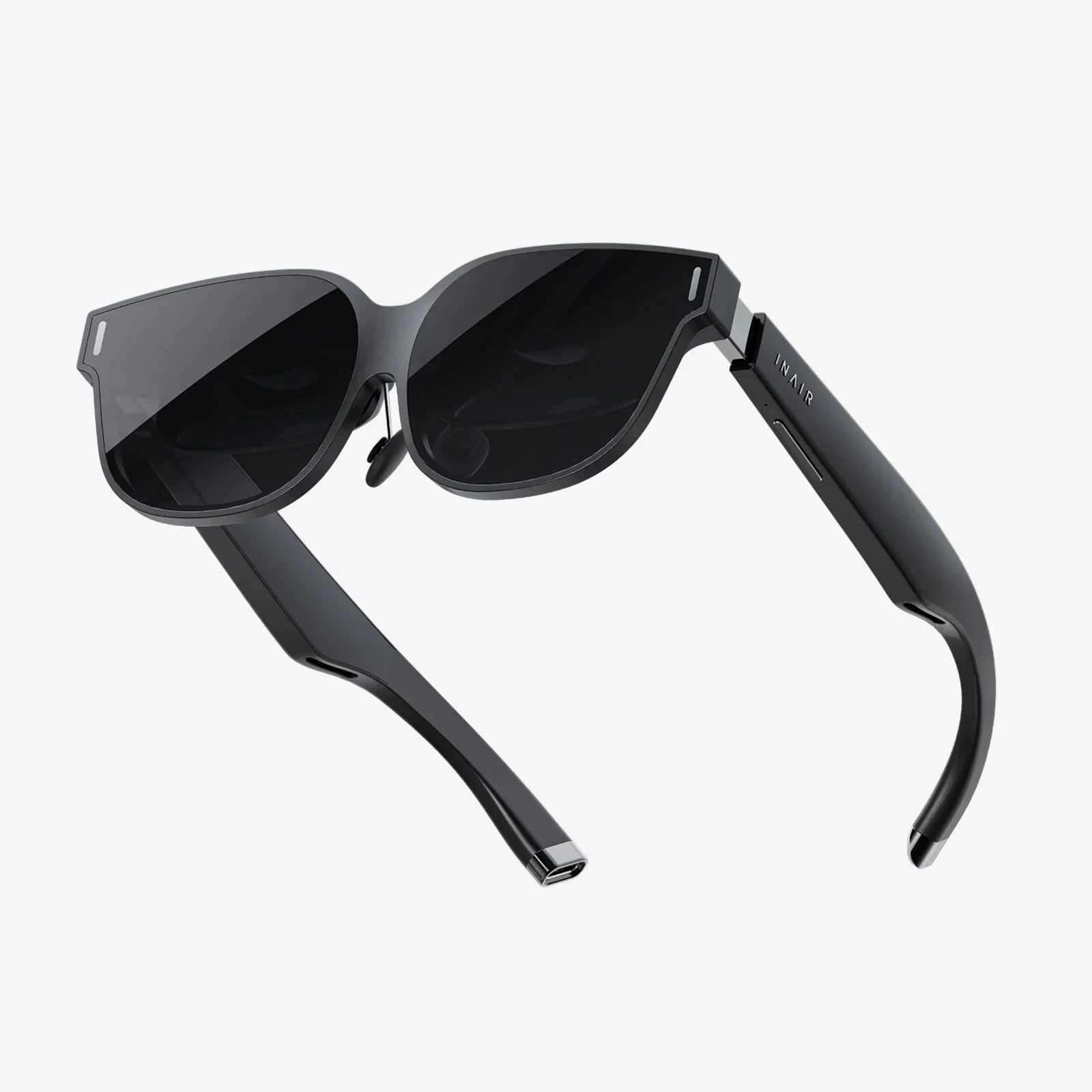
Imagine standing in a roaring stadium, not just watching the game but seeing real-time player stats float beside them, watching a crucial play from multiple angles materialize in the air before your eyes, or even seeing a mythical creature dash across the field during a timeout. This isn't a glimpse into a distant sci-fi future; it is the rapidly emerging present, powered by the transformative magic of AR glasses events. This technological revolution is poised to utterly dismantle our traditional understanding of a "live event," turning every attendee from a passive spectator into the protagonist of their own uniquely augmented narrative.
Beyond the Screen: The Paradigm Shift in Event Engagement
For decades, the evolution of the event experience has been incremental. We went from simple announcements to jumbotrons, from printed programs to smartphone apps. Each step added a layer of information or convenience, but the core dynamic remained the same: a one-to-many broadcast where the audience looks at a stage or a screen. Augmented Reality, particularly when delivered through dedicated AR glasses, shatters this model. It introduces a one-to-one, contextual, and spatial relationship between the attendee and the event.
The key differentiator is immersion without isolation. Unlike Virtual Reality, which replaces your entire field of vision with a digital construct, AR overlays digital content onto your real-world view. You remain present in the venue, surrounded by the energy of the crowd, but your perception is enhanced, annotated, and brought to life. This seamless blend is what makes AR glasses the perfect medium for events—it amplifies the real world instead of escaping from it.
The Anatomy of an AR Glasses Event Experience
So, what does it actually feel like to attend an event through AR glasses? The experience can be broken down into several powerful layers of interaction.
Contextual Information and Data Overlays
This is the most immediate and practical application. At a conference, as you look at a speaker on stage, their name, company, and key points from their presentation could appear next to them. A live poll could materialize in the center of the room for you to vote on simply by gazing at an option. At a sports game, looking at a player could instantly bring up their season statistics, recent performance metrics, or even their heart rate and speed, captured from wearable tech. This turns the entire venue into an interactive, intelligent dashboard.
Interactive Storytelling and Gamification
AR events can transform a passive viewing experience into an active adventure. Imagine a music festival where donning AR glasses unlocks a hidden narrative. Following a virtual spirit animal through the crowd leads you to a secret acoustic set by a headline artist. Scavenger hunts for virtual artifacts could reward you with exclusive merchandise discounts or backstage access. This layer adds a profound sense of discovery and play, creating memorable moments that extend far beyond the music itself.
Expanded Visuals and Augmented Performances
This is where the creative potential explodes. Instead of being confined to the physical screens on stage, digital artists can use the entire venue as their canvas. A musician's guitar solo could generate ethereal, glowing light trails that arc over the audience. A dancer's movements could leave behind persistent motion trails or summon abstract digital forms that interact with their performance. During a halftime show or a concert intermission, the entire field could be transformed into an alien landscape or a deep-sea wonderland, visible only to those wearing glasses. This allows for production value that is limitless, dynamic, and personalized.
Enhanced Navigation and Social Connection
Large venues can be disorienting. AR wayfinding can project a glowing path on the floor directly in your line of sight, guiding you to your seat, the nearest restroom, or a shorter concession line. Socially, you could opt-in to see virtual name tags above fellow attendees you're connected with professionally, making networking at a large conference intuitive and effortless. You could even receive a virtual nudge when a friend is nearby, overcoming the challenge of finding people in a dense crowd.
The Technology Behind the Magic: How It Works
Delivering a seamless, synchronized AR experience to hundreds or thousands of people simultaneously is a formidable technical challenge. It relies on a sophisticated stack of technologies working in concert.
The AR glasses themselves are the client device. They require a combination of high-resolution displays, precise tracking cameras, inertial measurement units (IMUs), powerful processors, and all-day battery life. They must be comfortable enough to wear for the duration of an event and socially acceptable in design.
On the backend, a critical component is a highly accurate indoor positioning system. GPS is far too imprecise for this task. Instead, venues use a combination of ultra-wideband (UWB) beacons, Wi-Fi RTT, and visual markers to pinpoint each user's location and orientation within centimeters. This ensures that a digital dragon lands on the exact same spot on stage for every single user.
Finally, a robust, low-latency 5G network is essential. The AR content—especially complex, high-fidelity animations—is often rendered in the cloud and streamed to the glasses in real-time. This "cloud rendering" approach means the glasses can be lighter and more affordable, but it demands an incredibly fast and stable wireless connection to avoid lag, which would break the illusion of the digital content being anchored in the real world.
Transforming Industries: Use Cases Across the Spectrum
The impact of AR glasses events is not limited to entertainment; it is set to revolutionize nearly every sector that relies on gatherings.
Music Festivals and Concerts
As previously described, this is a prime use case. Beyond spectacular visuals, artists can offer multiple AR "channels." One channel could provide a producer's view, with visualizations of the audio mix. Another could offer a sign-language interpreter stream, perfectly superimposed for deaf and hard-of-hearing attendees. The potential for accessibility and personalized experiences is enormous.
Professional Sports
Sports analytics will become a visceral, in-stadium experience. Fans could freeze a replay in mid-air to analyze a referee's call from every angle. They could choose to see the strategic "hot routes" of a wide receiver or the defensive formation breakdowns. This deepens fan engagement and understanding of the sport, making the live event vastly more informative than watching on television.
Conferences and Trade Shows
The death of the boring trade show booth is imminent. Instead of static posters, companies can demonstrate their products through interactive, life-size 3D models. A car manufacturer could let you configure a car's color and features virtually and then see it materialize on the show floor. Networking becomes frictionless with digital business card exchange via a simple glance and a voice command. Presentations become immersive data journeys.
Museums and Art Galleries
Static exhibits spring to life. Looking at a dinosaur skeleton could trigger a full-body reconstruction, showing how the creature moved and lived. A Renaissance painting could be annotated with details about the artist's technique, or the scene could extend beyond the frame into the room around you. This creates a deeply educational and engaging experience that caters to all learning styles.
Navigating the Challenges: The Path to Widespread Adoption
Despite the exciting potential, significant hurdles remain before AR glasses events become a mainstream commodity.
The foremost challenge is hardware
Content creation is another major hurdle. Designing experiences for a spatial, interactive medium requires entirely new skills and tools. Event producers, artists, and developers must learn to think in 3D space and narrative arcs that are user-centric and non-linear. Furthermore, privacy and social etiquette are critical concerns. Always-on cameras and sensors raise questions about data collection and surveillance. Societies will need to establish new norms for when it is appropriate to record and interact with AR in public spaces, ensuring the technology enhances shared experiences rather than fracturing them into isolated digital bubbles. The evolution of AR glasses events will be rapid and profound. We are moving towards a future where the line between the physical and digital attendee experience will blur into irrelevance. We can expect the rise of persistent AR layers tied to specific venues. A historic theater could have a permanent AR tour available, showing performances from different eras as you walk its halls. Sports stadiums could have statues of legendary players visible only through AR, standing guard at the entrance. Furthermore, the concept of a "shared" experience will be redefined. Future AR systems may allow you to see the avatars of remote attendees who are joining the event virtually, giving them a spatial presence in the crowd and enabling a new form of hybrid participation that feels genuinely inclusive. Ultimately, the technology will become invisible. The hardware will fade into the background, becoming as unnoticeable as a pair of everyday sunglasses. The focus will shift entirely to the experience itself—the magic, the connection, and the story. We are at the dawn of a new era of human gathering, one where our reality is not enough, and that is the most exciting prospect of all. The next ticket you buy might not just grant you entry to a venue—it might unlock an entire layer of reality, a secret world of magic and information waiting to be seen. The event is no longer just on the stage; it's all around you, and it's waiting for you to put on your glasses and step inside.The Future is Augmented: What's Next on the Horizon
Share:
Best AI Technology for Computer Vision Applications: A Deep Dive into Modern Capabilities
Best 3D Video Glasses: Your Ultimate Guide to Immersive Entertainment