


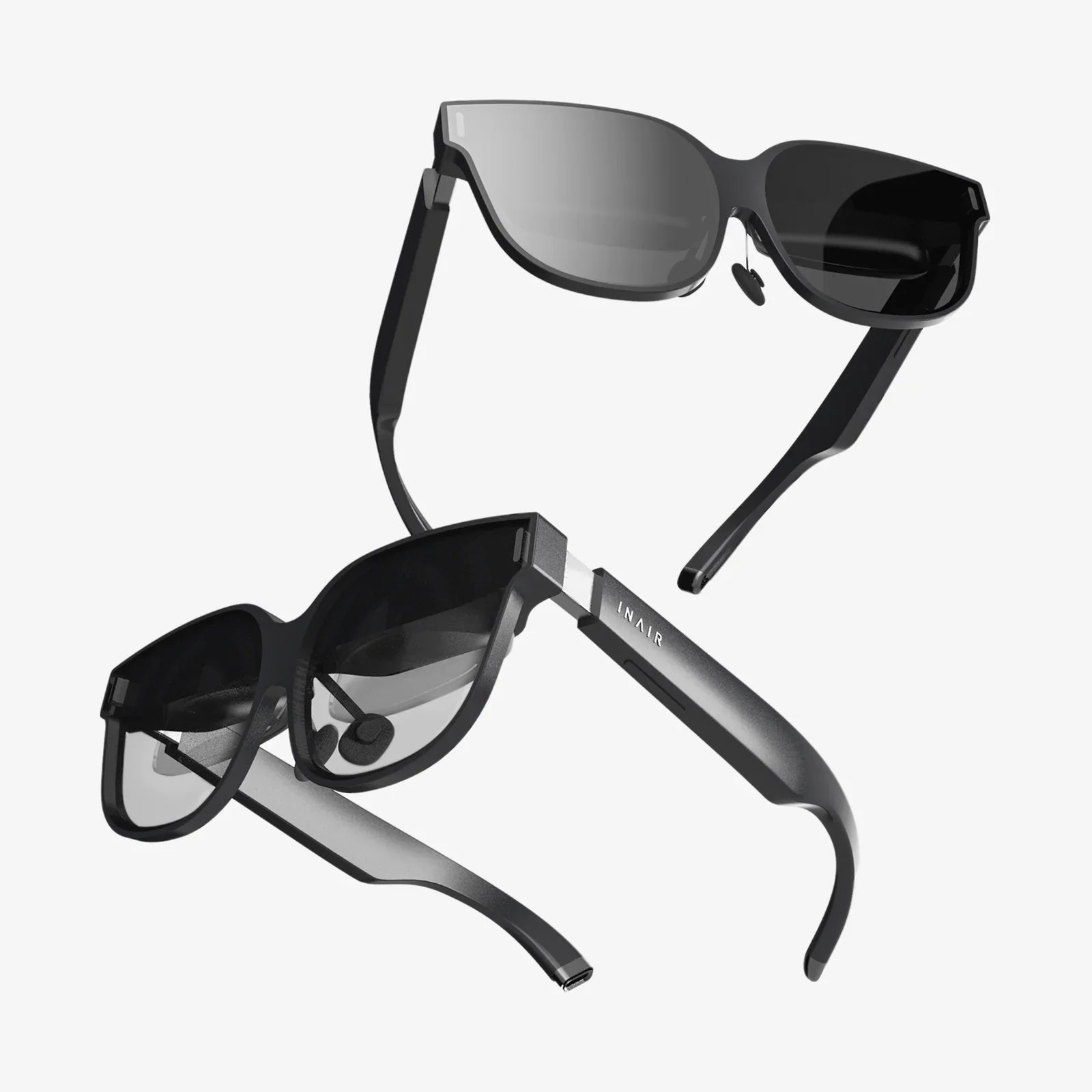
Imagine sitting in your living room, but instead of just watching a movie, you’re standing inside it. The world around you pulses with depth, creatures soar past your head, and every detail feels within arm’s reach. This isn’t a glimpse into a distant future; it’s the reality offered by today’s best 3D video glasses. This technology has exploded from a niche gimmick into a mainstream portal to other worlds, redefining our very concept of entertainment, productivity, and social connection. If you’ve ever wondered what it truly feels like to step through the screen, you’re about to find out.
The Evolution of Seeing in Three Dimensions
The quest for three-dimensional immersion is far older than most realize. The classic red-and-blue anaglyph glasses of the 1950s were the first widespread attempt, creating a simple illusion of depth by filtering colors. This was followed by polarized lenses in modern cinemas, which offered a superior, full-color experience by projecting two slightly different images that the glasses would separate for each eye. While revolutionary for their time, these technologies were merely a preview of what was to come. They were passive experiences, confined to a single location and a single screen.
The true paradigm shift began with the advent of active shutter technology. These more advanced glasses synchronized with a screen, rapidly alternating the darkening of the left and right lenses to match the images being displayed. This delivered a high-resolution, flicker-free 3D effect that became a staple in many home theaters. Yet, the ultimate leap forward has been the development of standalone, head-mounted displays—true 3D video glasses that completely enclose your vision and replace your reality with a digital one. They don’t just show you a 3D image; they place you inside it.
Unpacking the Technology: How Do 3D Glasses Create Depth?
At its core, all 3D technology exploits one fundamental principle: stereopsis. Humans perceive depth because our two eyes are spaced apart, each receiving a slightly different two-dimensional image. Our brain brilliantly merges these two images into a single, coherent three-dimensional picture. The best 3D video glasses are engineered to master and enhance this natural biological process.
Modern devices primarily use one of two methods:
1. Stereoscopic Displays
This is the most common approach found in today's high-end glasses. Two high-resolution micro-displays (one for each eye) are housed within the headset. These displays show two distinct images, each rendered from a perspective that matches the position of your eyes. The lenses inside the headset then focus your eyes on these screens, and your brain does the rest, weaving the two images into a convincing, deep environment. The quality of this effect hinges on factors like field of view (FOV), which determines how much of your vision is occupied by the virtual world, and resolution, which ensures the image is sharp and free of the "screen door effect" (seeing the gaps between pixels).
2. Volumetric and Light Field Technology
This represents the bleeding edge of visual immersion. Instead of simply showing two flat images, this more experimental technology aims to project light in a way that mimics how light behaves in the real world. It creates light fields, allowing your eyes to focus naturally on different depths within the virtual scene, just as you would focus on a nearby book or a distant mountain in reality. This technology significantly reduces the eye strain sometimes associated with stereoscopic displays and creates a more natural and comfortable experience, though it is not yet widely available in consumer devices.
Key Features to Look For in Your Next Pair
Navigating the market for the best 3D video glasses can be daunting. The terminology is complex and the specs are numerous. Cutting through the noise requires focusing on a few critical features that will directly dictate your experience.
- Resolution and Pixel Density: This is arguably the most important spec. Look for a per-eye resolution that is as high as possible. A higher resolution means a sharper, more detailed image where text is readable, and distant objects are clear, not blurry pixel clusters. Pixel density (pixels per inch, or PPI) is even more critical, as it determines how "real" the image appears up close.
- Field of View (FOV): Measured in degrees, the FOV is like the size of your virtual window. A narrow FOV can feel like looking through a pair of binoculars, constantly reminding you that you're wearing a headset. A wide FOV, often 100 degrees or more, provides a much greater sense of presence and immersion, making the digital world feel vast and all-encompassing.
- Refresh Rate: Measured in Hertz (Hz), the refresh rate is how many times per second the image on the screen updates. A higher refresh rate (90Hz, 120Hz, or even 144Hz) is essential for smooth, fluid motion. It prevents judder and lag, which are not only immersion-breaking but are also the primary causes of motion sickness and eye fatigue during fast-paced content like games or action films.
- Tracking: Degrees of Freedom (DoF): This defines how the glasses understand your movement. 3DoF (Three Degrees of Freedom) tracks rotational movements—you can look up, down, left, and right. 6DoF (Six Degrees of Freedom) is the gold standard, adding positional tracking. It means the system knows when you lean forward, crouch, duck, or walk around. This is non-negotiable for immersive gaming and interactive experiences, as it allows you to physically navigate the virtual space.
- Lens Quality and Adjustments: The lenses are your gateway to the virtual world. Look for glasses with high-quality optics to minimize distortion, god rays, and chromatic aberration. Physical adjustments for IPD (Interpupillary Distance)—the space between your pupils—are crucial. A proper IPD match ensures the image is as sharp and comfortable as possible for your unique physiology.
- Comfort and Ergonomics: The best technology is useless if the headset is too heavy, too tight, or gets too hot to wear for more than a few minutes. Consider weight distribution, padding materials, and strap design. If you wear prescription glasses, ensure the device has enough space to accommodate them comfortably or offers custom lens inserts.
A Universe of Applications: Far More Than Just Games
While gaming is the most famous driver of this technology, the applications for the best 3D video glasses extend into nearly every facet of modern life.
Revolutionizing Entertainment
Imagine a private IMAX theater that exists wherever you are. With 3D glasses, you can watch 3D films, immersive 360-degree videos, and live events from the best seat in the house, all on a virtual screen that feels stories high. Social viewing platforms allow you to join friends in a virtual cinema to watch a movie together, despite being miles apart, complete with avatars and shared reactions.
The Future of Work and Productivity
The concept of the office is being transformed. With 3D glasses, you can have multiple virtual monitors suspended in your personal space, allowing for a incredibly expansive digital workspace without the physical constraints of real desks and monitors. Architects and engineers can walk clients through full-scale 3D models of unbuilt structures. Remote collaboration becomes a tangible experience, with teams meeting around a virtual 3D model they can all manipulate and inspect together.
Education and Training
Learning becomes an experience. Instead of reading about ancient Rome, history students can take a guided tour through a meticulously reconstructed digital city. Medical students can practice complex surgical procedures on virtual patients without risk. Mechanics can train on virtual engines, and astronauts can simulate spacewalks. The potential for experiential, hands-on learning is limitless.
Social Connection and Travel
Social platforms within these glasses allow people to interact as expressive avatars, playing games, creating art, or simply chatting in fantastical virtual environments. Furthermore, through 360-degree videos and photorealistic CGI, you can take virtual tours of the world’s greatest museums, natural wonders, and cities, offering a powerful taste of travel from your home.
Overcoming the Hurdles: Comfort, Content, and Cost
Despite the incredible promise, the technology is not without its challenges. The quest for the perfect pair of 3D video glasses involves navigating a few significant considerations.
Comfort and Accessibility: Even the best-designed headsets are still a piece of hardware strapped to your face. Extended use can lead to face fatigue, heat buildup, and a feeling of isolation from your physical surroundings. Manufacturers are constantly innovating with lighter materials and better ergonomics, but it remains a key area for improvement.
The Content Ecosystem: A headset is a portal, but it needs destinations. While the library of native 3D and VR content is growing rapidly thanks to major film studios, independent creators, and game developers, it is not yet as vast as traditional 2D media libraries. The experience is also highly dependent on having access to high-bandwidth internet for streaming high-resolution content and a powerful computing device to run the most demanding applications.
The Investment: High-end 3D video glasses that deliver a truly premium, untethered experience represent a significant financial investment. Consumers must weigh the cost against the intended use—is it for daily productivity, hardcore gaming, or occasional entertainment? Thankfully, the market is expanding to include more affordable options that still deliver a compelling experience for newcomers.
Gazing into the Future: What Comes Next?
The technology behind the best 3D video glasses is advancing at a breathtaking pace. The near future promises even more staggering developments. We are moving towards varifocal lenses that dynamically adjust to where your eyes are focused, eliminating the vergence-accommodation conflict that can cause discomfort. Haptic feedback gloves and suits will add the sense of touch, letting you feel the virtual world. Brain-computer interfaces are being explored to allow navigation by thought alone. Furthermore, the line between augmented reality (AR) and virtual reality (VR) is blurring with mixed reality (MR) devices that seamlessly blend digital objects into your real environment, allowing you to interact with both simultaneously.
The journey of 3D video glasses is a testament to human ingenuity, transforming our screens from windows we look into into worlds we step inside. They are more than just a piece of consumer electronics; they are a new medium for human experience, a canvas for creativity, and a bridge to connection in an increasingly digital age. The question is no longer if you will try them, but when you will make the leap and which incredible world you will choose to explore first.
Your front-row seat to the next dimension is waiting. The only thing standing between you and a universe of immersive experiences is the decision to finally see what everyone is talking about—and truly, truly experience it for yourself.
Share:
AR Glasses Events: The New Frontier of Immersive Experiences
What's VR? The Ultimate Guide to Virtual Reality Technology and Its Impact